Electric vehicle (EV) fire risk has become an important topic in modern fire safety discussions. Unlike conventional fuel vehicle fires, electric vehicle fires are primarily driven by lithium-ion battery thermal runaway, which behaves differently and presents unique containment challenges.
Understanding EV fire risk is essential for safety planning, emergency response, and vehicle containment strategies.
Electric vehicle fires are typically caused by lithium-ion battery failure. When a battery cell becomes unstable due to mechanical damage, manufacturing defects, overheating, or electrical faults, it may trigger a chain reaction known as thermal runaway.
Thermal runaway is a self-accelerating chemical reaction within lithium-ion battery cells. Once triggered, temperatures can rise rapidly, releasing flammable gases and generating intense flames.
Key characteristics include:
This behavior makes EV fire containment more complex compared to traditional vehicle fires.
Unlike gasoline fires that can often be extinguished quickly, lithium battery fires may continue to burn internally even after visible flames are reduced.
Challenges include:
Fire containment strategies focus on limiting fire spread and isolating the vehicle. Common approaches include:
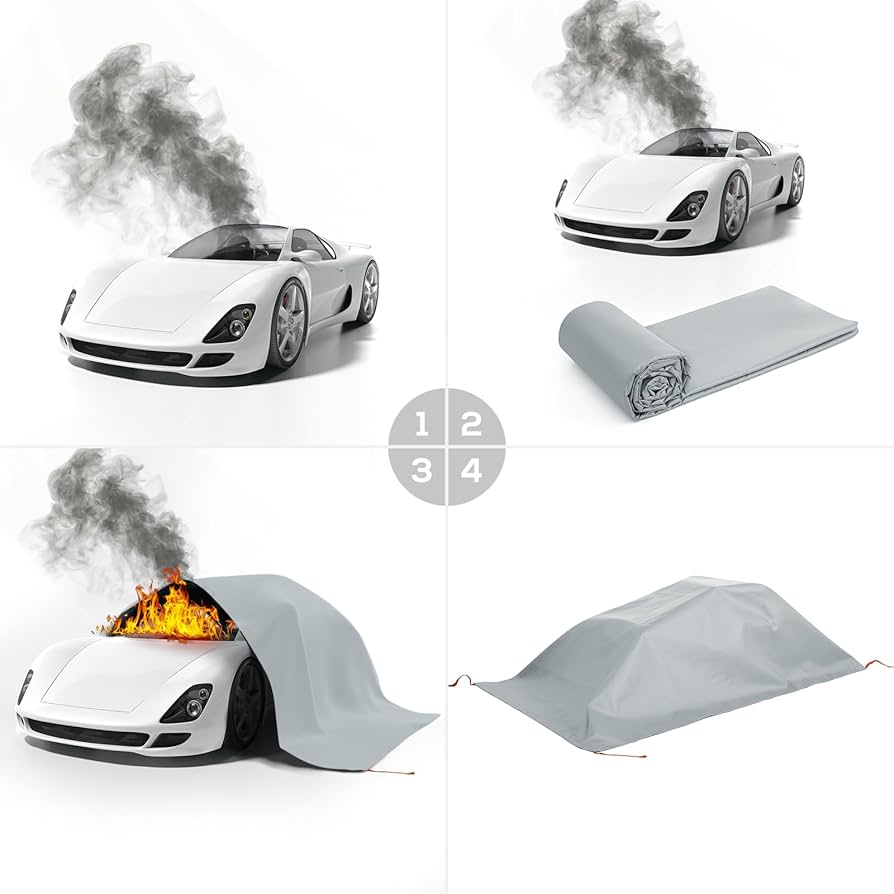
An Electric Vehicle Fire Blanket is designed to cover the vehicle, reduce oxygen supply, and contain flames and heat to prevent spread to surrounding property.
EV fires are statistically uncommon, but lithium battery fires behave differently and require specialized containment strategies.
Yes. Thermal runaway may cause delayed re-ignition due to internal battery reactions.
Temperatures during thermal runaway can exceed 1000°C in extreme conditions.
Containment strategies such as vehicle isolation and fire blankets can limit fire spread.
Containment methods depend on the situation. Fire blankets are often used to isolate vehicles and reduce oxygen exposure.

 français
 Deutsch
 русский
 italiano
 español
 português
 Nederlands
 العربية
 日本語
日本語 한국의
한국의 Türkçe
 Polski
 Tiếng Việt
 slovenský
 Indonesia