Hydraulic hoses, industrial tubes and cable assemblies often operate in environments where external damage is a greater risk than internal pressure failure. Continuous rubbing, sharp edges, vibration, machine movement and contact with metal structures can gradually damage the outer hose cover and shorten service life.
To reduce this type of damage, many manufacturers use protective hose sleeves. Two commonly selected solutions are Kevlar hose sleeve and nylon hose sleeve. Both materials can improve hose durability, but they are designed for different working conditions.
The right choice depends on the actual application: abrasion level, cutting risk, equipment movement, installation environment and required service life. This article compares Kevlar hose sleeve and nylon hose sleeve to help engineers, distributors and OEM manufacturers select the correct protection solution.
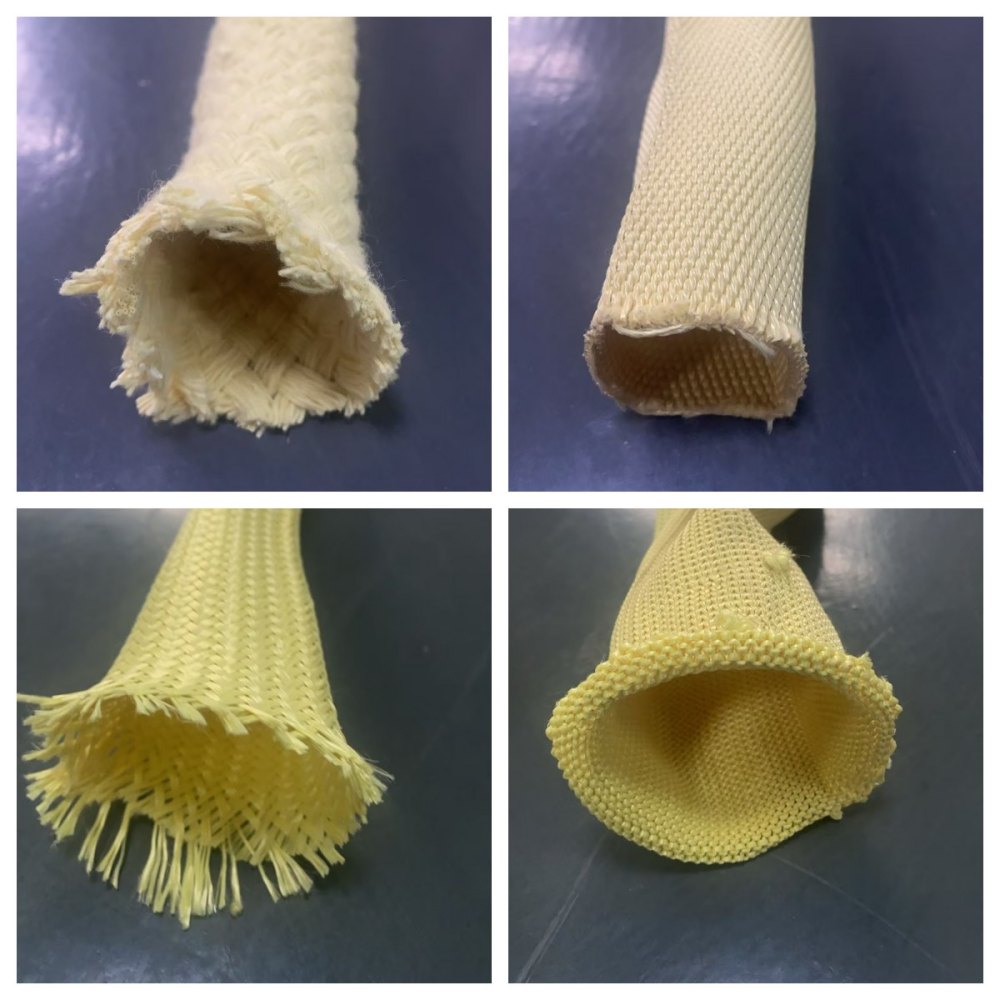
A Kevlar hose sleeve is a protective sleeve manufactured from para aramid fiber, a high-performance material known for its excellent strength-to-weight ratio, cut resistance and mechanical durability.
Kevlar sleeves are mainly used in applications where hoses are exposed to severe external conditions, including:
Compared with conventional textile sleeves, a Kevlar protective sleeve provides a stronger barrier against cutting, scraping and repeated mechanical wear.
PKFiresleeve provides different Kevlar sleeve structures for different applications:
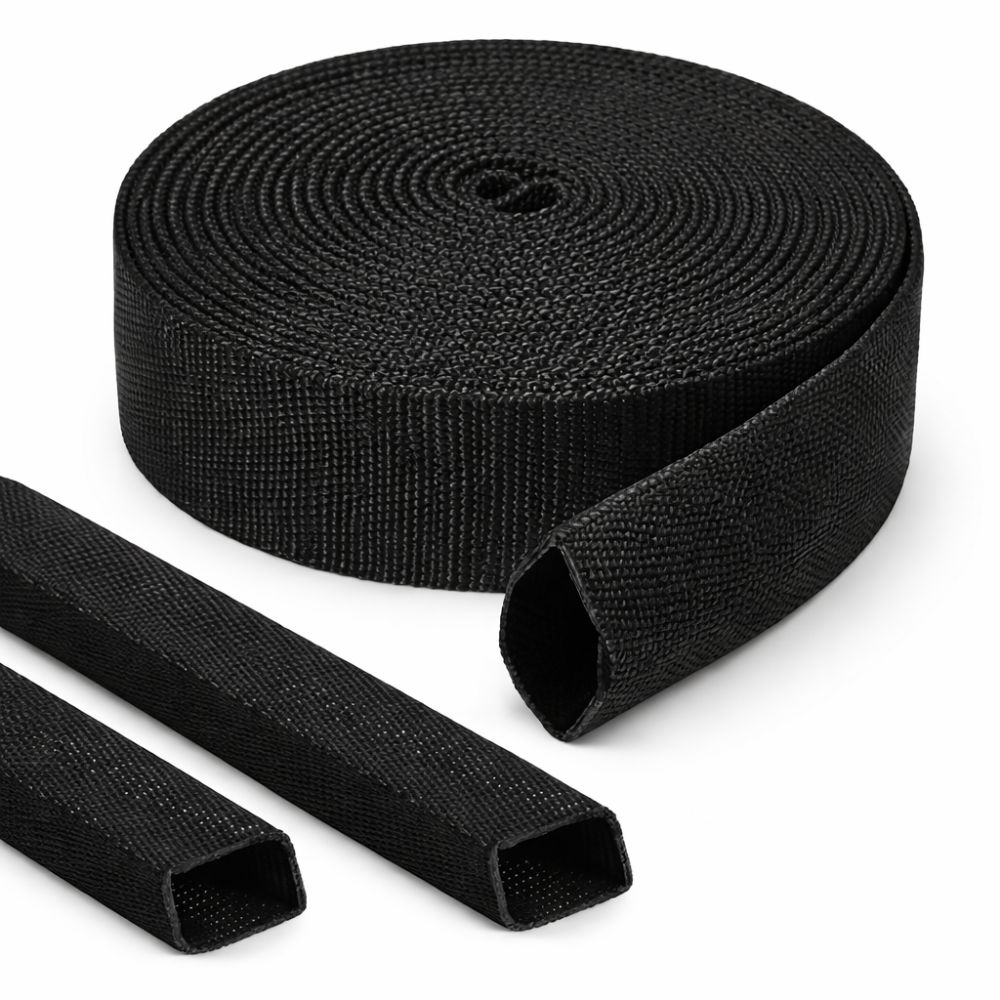
A nylon hose sleeve is a protective textile sleeve made from nylon fiber. Nylon is widely used for hydraulic hose protection because it provides good abrasion resistance, flexibility and cost efficiency.
Nylon hose sleeves are commonly selected for:
Nylon is a practical choice for standard working conditions where hoses experience normal rubbing, handling and environmental exposure.
However, when the application involves sharp edges, severe abrasion or repeated mechanical impact, a higher-performance material such as Kevlar may provide longer-lasting protection.
| Performance | Kevlar Hose Sleeve | Nylon Hose Sleeve |
| Material | Para aramid fiber | Nylon fiber |
| Abrasion Resistance | Excellent for severe wear environments | Good for general abrasion protection |
| Cut Resistance | Excellent resistance against sharp edges and cutting damage | Moderate cut resistance |
| Tensile Strength | Very high strength-to-weight ratio | Good mechanical strength |
| Flexibility | Flexible depending on sleeve structure | Very flexible and easy to install |
| Weight | Lightweight considering protection level | Lightweight |
| Cost | Higher initial investment | More economical |
| Recommended Application | Heavy-duty industrial and high-risk environments | Standard hose protection applications |
The answer depends on the severity of the environment.
For normal industrial applications, a nylon hose sleeve can provide reliable protection against daily wear, surface friction and general mechanical contact.
For demanding applications involving continuous movement, sharp edges or heavy machinery operation, a Kevlar hose sleeve provides better protection because para aramid fiber offers higher resistance against cutting and aggressive abrasion.
For example, hydraulic hoses installed on excavators, mining equipment or industrial robots may experience thousands of movement cycles. In these conditions, upgrading from nylon to Kevlar can significantly improve hose protection performance.
Hydraulic hose protection requirements vary depending on equipment design and operating conditions.
| Application Condition | Recommended Sleeve |
| Indoor machinery with normal abrasion | Nylon hose sleeve |
| Construction machinery exposed to rough conditions | Kevlar hose sleeve |
| Hoses near sharp metal structures | Kevlar hose sleeve |
| High-cycle moving hydraulic systems | Kevlar hose sleeve |
| Cost-sensitive general protection | Nylon hose sleeve |
For OEM equipment manufacturers, hose failure can create warranty issues, machine downtime and customer complaints. Selecting a stronger protective sleeve during the design stage can improve equipment reliability.
Kevlar hose sleeves are commonly selected by OEM customers because they provide:
Although the initial cost of Kevlar is higher than nylon, the total operating cost can be lower when hose replacement and maintenance downtime are considered.
Not all Kevlar sleeves have the same structure. The manufacturing method affects flexibility, coverage and installation performance.
A braided Kevlar hose sleeve provides balanced protection around round hoses and cables. It is suitable for hydraulic lines, industrial tubing and applications requiring all-around abrasion protection.
Recommended product: Braided Kevlar Hose Protective Sleeve
When abrasion is the primary concern, a high-strength braided Kevlar sleeve provides additional protection against continuous rubbing, friction and mechanical wear.
Recommended product: Abrasion Resistance Kevlar Braided Sleeving
Knitted Kevlar sleeves provide excellent flexibility and are suitable for applications where cables, hoses or irregular components require easier installation and movement capability.
Recommended product: Knitted Kevlar Aramid Sleeve
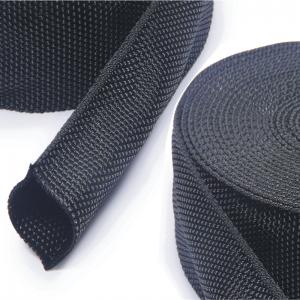
Flat woven Kevlar sleeves are designed for applications requiring wider coverage areas or special installation requirements where traditional round sleeves are not suitable.
Recommended product: Flat Woven Kevlar Aramid Hose Sleeve
Before selecting a protective sleeve, consider the following questions:
If the application involves severe mechanical risk, a Kevlar hose sleeve is usually the better long-term solution. If the application only requires basic abrasion protection, a nylon hose sleeve may provide sufficient performance at a lower cost.
Both Kevlar hose sleeves and nylon hose sleeves have their advantages. Nylon is an economical and flexible choice for standard hose protection applications. Kevlar is designed for more demanding environments where cutting resistance, abrasion resistance and long-term durability are critical.
For hydraulic hoses operating in construction machinery, industrial equipment, mining systems, robotics and heavy-duty applications, Kevlar hose sleeve provides a higher level of protection and reliability.
PKFiresleeve supplies customized Kevlar and aramid hose protection solutions for OEM manufacturers, distributors and industrial users. Contact us with your hose size, application conditions and required protection level to select the suitable sleeve structure.
Kevlar provides higher cut resistance and abrasion resistance than nylon, making it suitable for harsher environments. Nylon remains a good option for standard abrasion protection.
Yes. Kevlar hose sleeves are widely used to protect hydraulic hoses from abrasion, cutting, friction and mechanical damage.
Yes. Kevlar sleeves have a higher material cost, but they can reduce maintenance frequency and hose replacement costs in demanding applications.
The choice depends on the application. Braided sleeves are commonly used for hose protection, knitted sleeves for flexible assemblies, and flat woven sleeves for wider protection requirements.

 français
 Deutsch
 русский
 italiano
 español
 português
 Nederlands
 العربية
 日本語
日本語 한국의
한국의 Türkçe
 Polski
 Tiếng Việt
 slovenský
 Indonesia