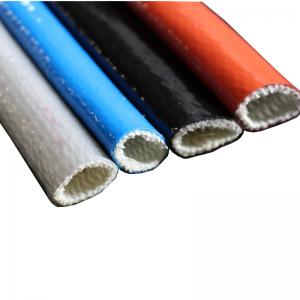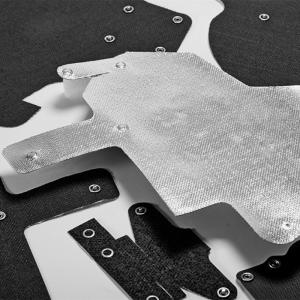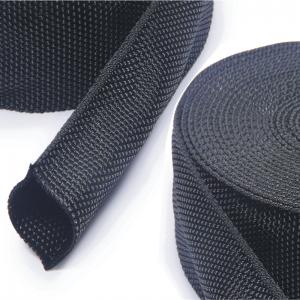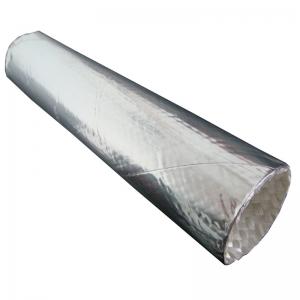
Kevlar Netting is a high-performance mesh material made from para aramid fiber, designed for applications requiring high tensile strength, lightweight reinforcement, abrasion resistance and long-term durability. Unlike conventional textile mesh materials, Kevlar Netting provides an excellent strength-to-weight ratio and maintains reliable mechanical performance in demanding industrial environments.
As industries continue to require lighter and stronger materials, Kevlar Netting has become an important solution for composite reinforcement, protective structures, automotive components, cable reinforcement and customized engineering applications.
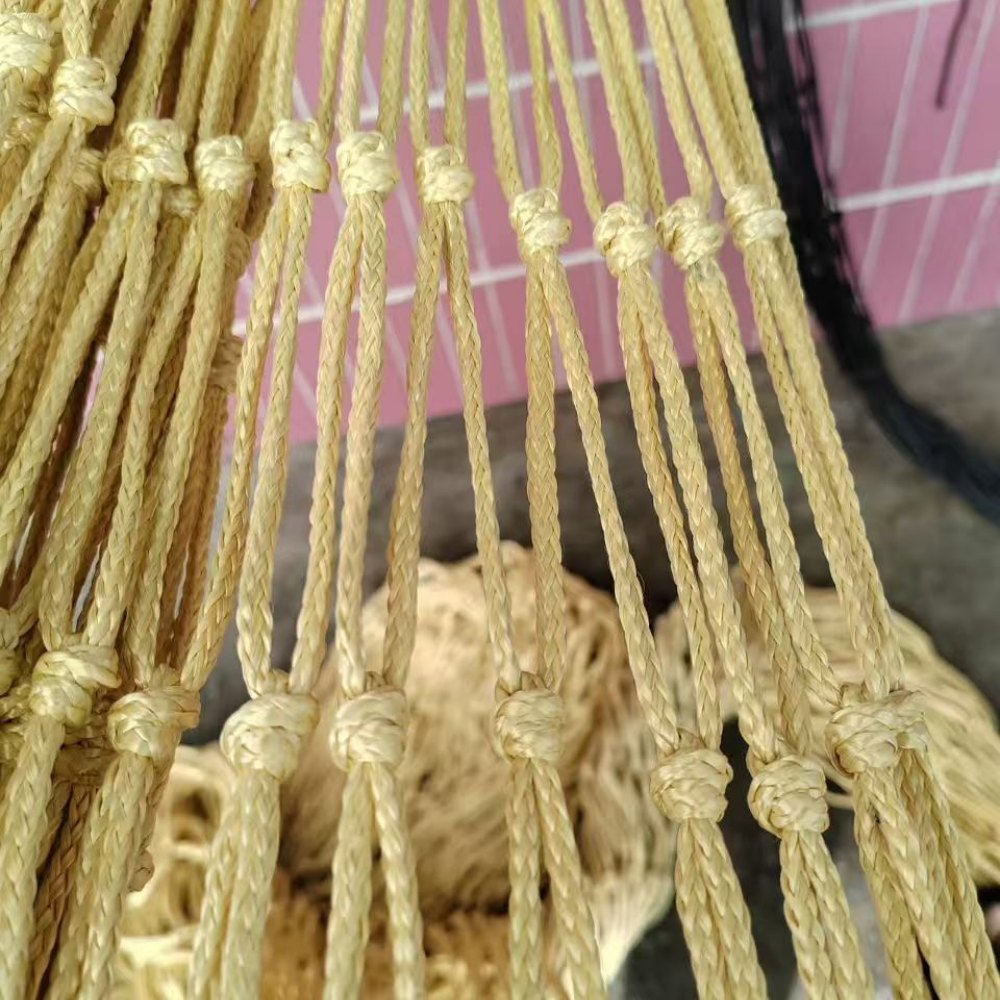
Kevlar Netting is an open mesh structure manufactured from high-performance para aramid fibers. The material combines the outstanding strength of Kevlar fiber with the flexibility and airflow advantages of a mesh design.
Compared with traditional fiberglass mesh, polyester mesh or nylon mesh, Kevlar Netting offers higher tensile strength, better cut resistance and improved dimensional stability while maintaining a lightweight construction.
The unique aramid fiber structure makes Kevlar Netting suitable for applications where mechanical protection, reinforcement capability and weight reduction are important factors.
| Property | Performance Advantage |
|---|---|
| High Tensile Strength | Provides excellent reinforcement performance with lightweight construction |
| Lightweight Structure | Reduces overall system weight compared with traditional reinforcement materials |
| Abrasion Resistance | Protects components against mechanical wear and friction damage |
| Cut Resistance | Provides additional protection in demanding industrial environments |
| Dimensional Stability | Maintains structural integrity under mechanical stress |
| Flexible Mesh Design | Allows easy installation and compatibility with composite materials |
Kevlar Netting is widely used in industries where high strength and lightweight reinforcement are required. The open mesh structure allows manufacturers to integrate the material into different products and engineering systems.
One of the most common applications of Kevlar Netting is composite reinforcement. The aramid mesh can be embedded into resin systems to improve impact resistance, mechanical strength and structural durability.
Typical applications include:
Automotive manufacturers and motorsport companies use Kevlar mesh materials where lightweight performance and impact resistance are critical.
Common applications include:
Kevlar Netting can also be used as a protective reinforcement layer for industrial products exposed to abrasion, vibration and mechanical stress.
Applications include:
Due to its high strength-to-weight ratio, Kevlar Netting is suitable for advanced engineering applications requiring lightweight materials with excellent mechanical performance.
| Comparison | Kevlar Netting | Fiberglass Mesh |
|---|---|---|
| Strength-to-weight ratio | Excellent | Good |
| Impact resistance | Superior | Moderate |
| Abrasion resistance | Excellent | Good |
| Weight | Lightweight | Higher weight |
| Typical applications | High-performance reinforcement | General reinforcement |
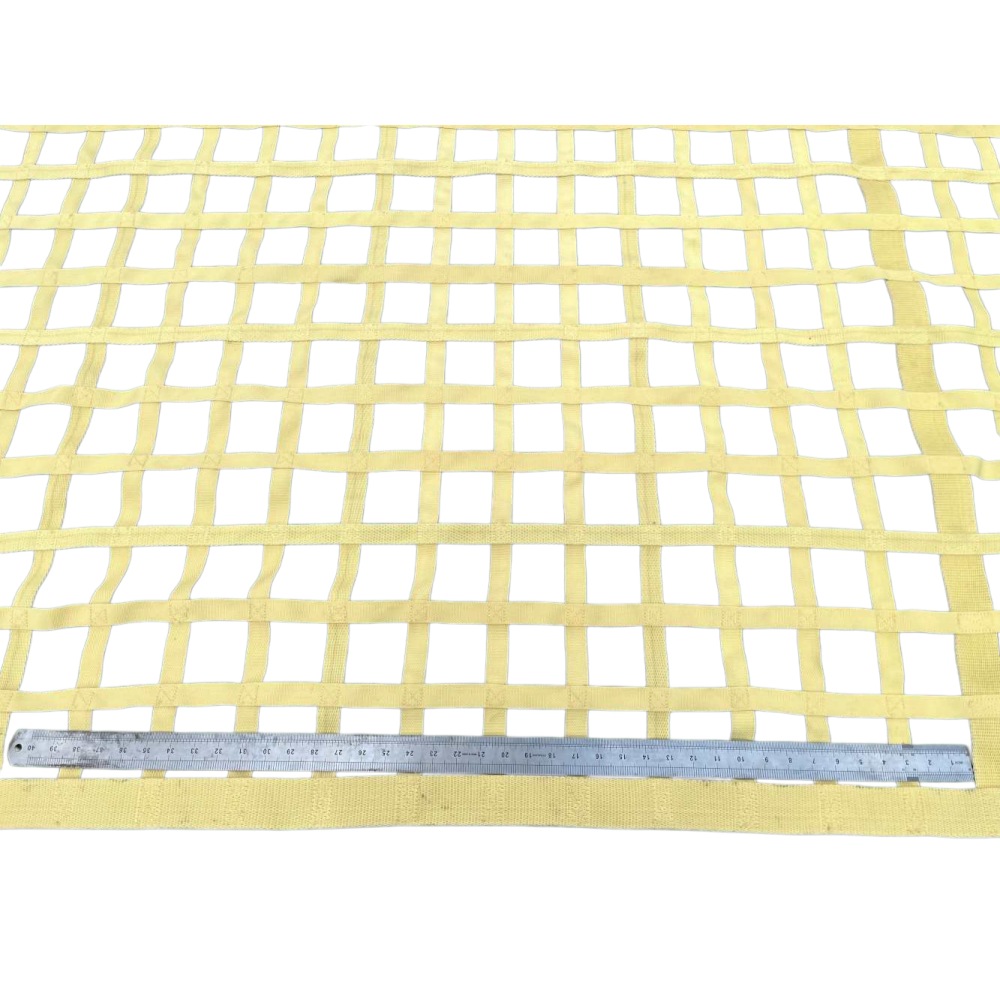
Selecting the correct Kevlar Netting depends on several engineering requirements, including mesh size, yarn specification, thickness, reinforcement purpose and operating environment.
Important factors include:
BSTFLEX specializes in manufacturing high-performance thermal protection and industrial textile products. Our Kevlar Netting solutions are developed for customers requiring reliable aramid fiber materials with customized specifications.
We provide:
For customized Kevlar Netting solutions, please visit our product page: Kevlar Netting Product Page
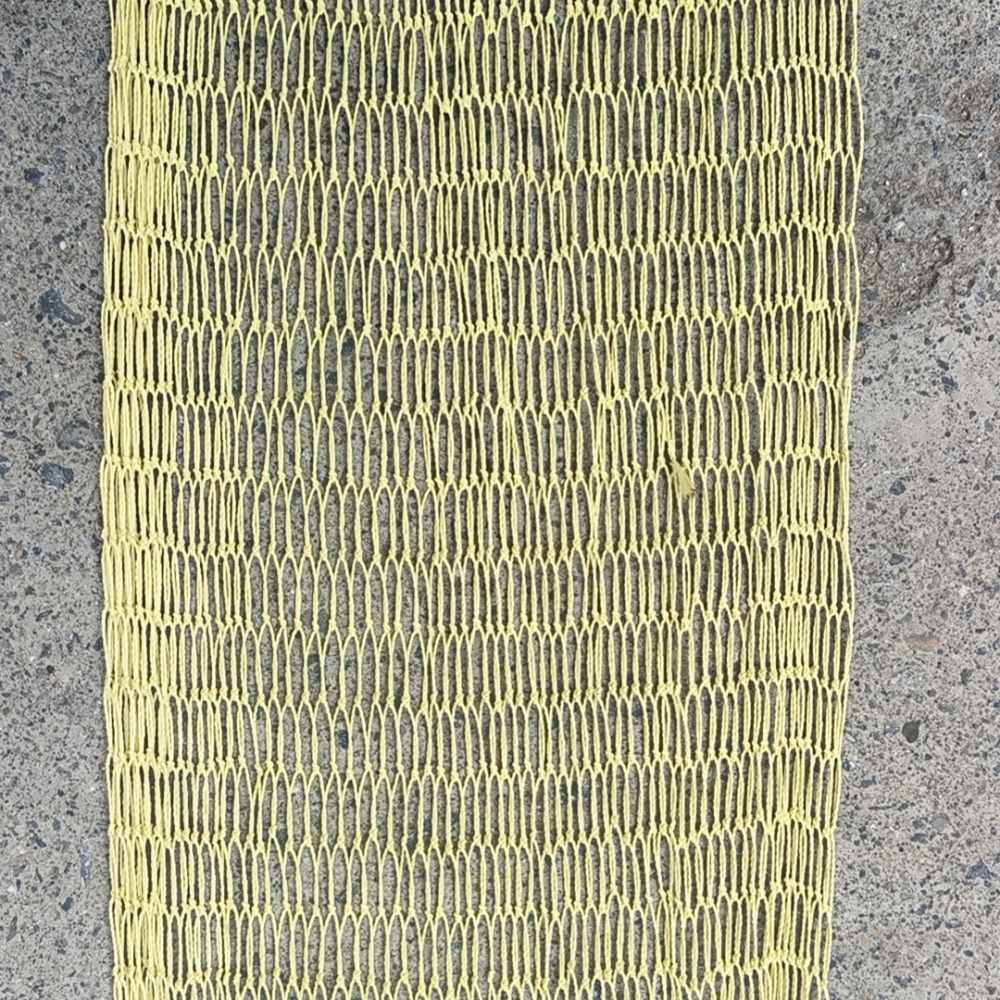
Kevlar Netting is made from para aramid fiber, a high-performance synthetic fiber known for its excellent strength, lightweight properties and abrasion resistance.
Yes. Kevlar Netting generally provides a higher strength-to-weight ratio and better impact resistance compared with standard fiberglass mesh.
Yes. Manufacturers can customize mesh size, width, yarn construction and other specifications according to different application requirements.
Kevlar Netting is commonly used in composite reinforcement, automotive components, industrial protection systems, aerospace applications and engineering projects.
To select the correct Kevlar Netting specification, customers should provide application details, required dimensions, mesh requirements and performance expectations for professional recommendations.

 français
 Deutsch
 русский
 italiano
 español
 português
 Nederlands
 العربية
 日本語
日本語 한국의
한국의 Türkçe
 Polski
 Tiếng Việt
 slovenský
 Indonesia