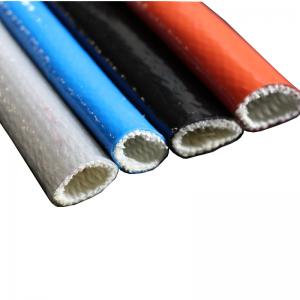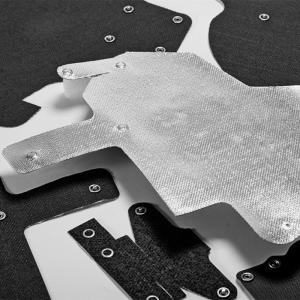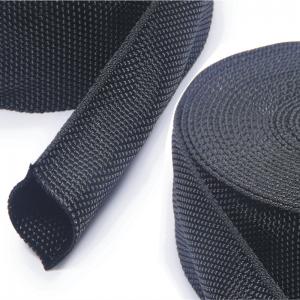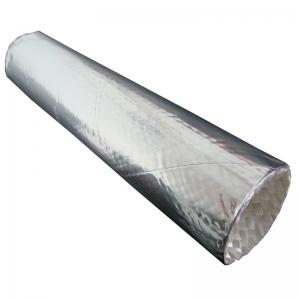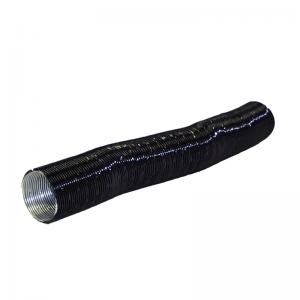
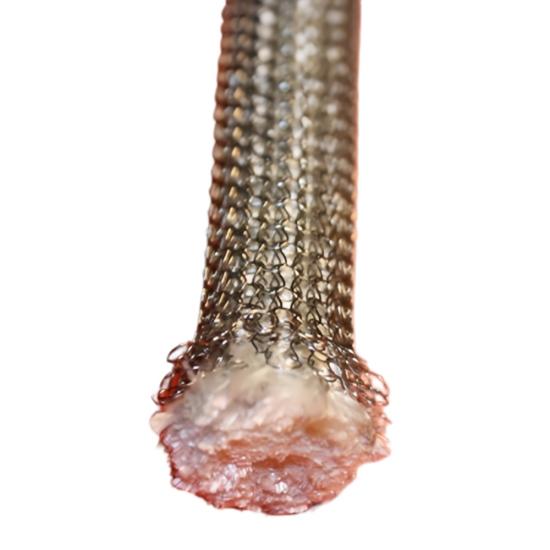
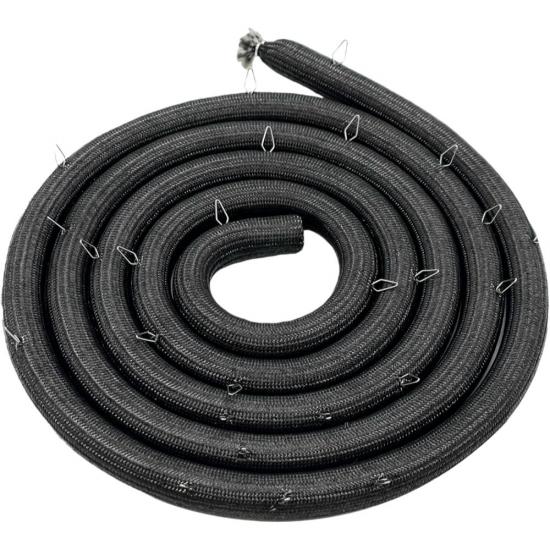
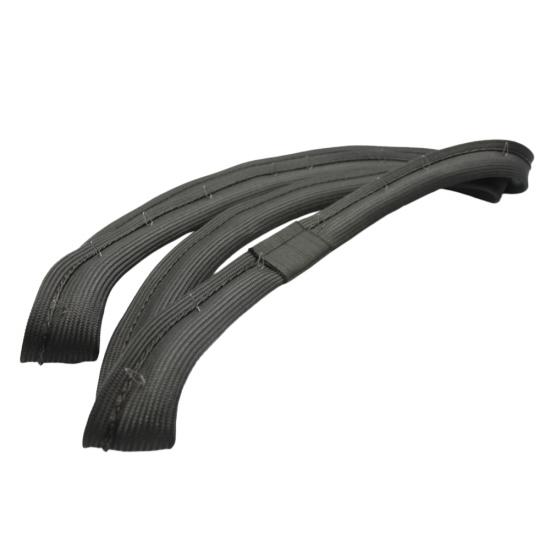
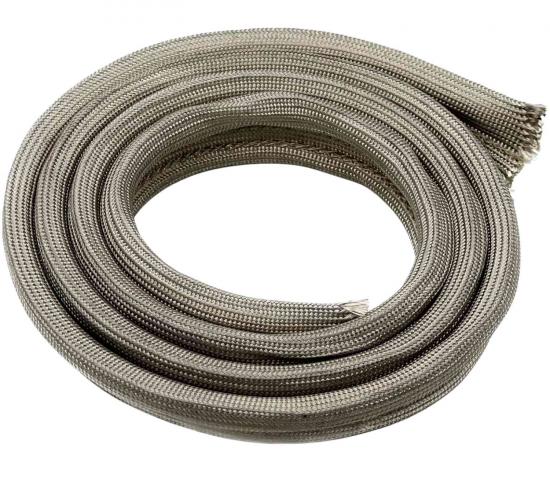
The Stainless Steel Wire Mesh Jacketed Fiberglass Oven & Kiln Door Gasket is a heavy-duty high-temperature sealing gasket designed for doors and access openings exposed to repeated compression, friction and mechanical wear.
The gasket combines a flexible fiberglass sealing body with an external stainless steel knitted wire mesh jacket. The fiberglass provides the thermal sealing structure, while the metal outer jacket protects the textile surface against abrasion generated by repeated opening and closing of oven, kiln and furnace doors.
BSTFLEX manufactures custom wire-jacketed fiberglass door gaskets in different diameters, profiles, lengths and internal constructions according to equipment drawings, sealing channels, samples and OEM requirements.
order(moq):
1product origin:
Chinashipping port:
Shanghai, NingboIn addition to heat exposure and compression, the gasket may repeatedly rub against metal door edges, channels, retainers or sealing surfaces every time the equipment is opened and closed. A conventional exposed textile gasket can therefore experience surface wear even when its basic thermal material remains suitable for the application.
The BSTFLEX Stainless Steel Wire Mesh Jacketed Fiberglass Oven & Kiln Door Gasket combines a flexible fiberglass sealing body with an external knitted stainless steel wire mesh jacket.
The construction provides the thermal sealing characteristics of fiberglass together with a mechanically protective outer surface for demanding industrial door applications.
The gasket consists of two main functional layers:
Fiberglass sealing body
→ provides the flexible thermal sealing structure
Knitted stainless steel wire mesh outer jacket
→ provides mechanical protection against abrasion and repeated surface contact
Different internal core constructions can be developed according to the required profile, compression behavior and equipment design.
The most distinctive feature of this gasket is the external metallic jacket.
A knitted stainless steel wire mesh is applied around the fiberglass gasket body, creating a flexible protective layer without converting the gasket into a rigid metal seal.
The wire mesh jacket can help protect the underlying fiberglass against:
Repeated rubbing
Sliding contact
Door movement
Metal-edge contact
Installation wear
High-cycle opening and closing
Mechanical handling during maintenance
This makes the construction particularly relevant to industrial equipment where the sealing surface experiences more mechanical wear than a conventional static gasket.
Fiberglass is widely used in high-temperature textile sealing products because it can be braided, knitted and formed into flexible gasket structures.
However, exposed fiberglass yarn can gradually wear when repeatedly dragged across rough metal surfaces.
Adding a stainless steel wire mesh jacket separates the textile sealing body from much of this direct mechanical contact.
The resulting gasket combines two functions:
Thermal sealing from the fiberglass construction
and
Surface reinforcement from the stainless steel wire jacket
The correct construction depends on the temperature, sealing gap, movement, compression and abrasion conditions of the equipment.
The external metal layer is not a solid tube.
It is produced as a flexible knitted wire mesh structure capable of following the gasket body and bending around equipment geometry.
This allows the finished gasket to remain suitable for:
Straight sealing channels
Curved sections
Large-radius corners
Door perimeters
Furnace access openings
Kiln door sealing channels
Custom equipment geometries
The metal jacket construction can be developed according to gasket diameter and application requirements.
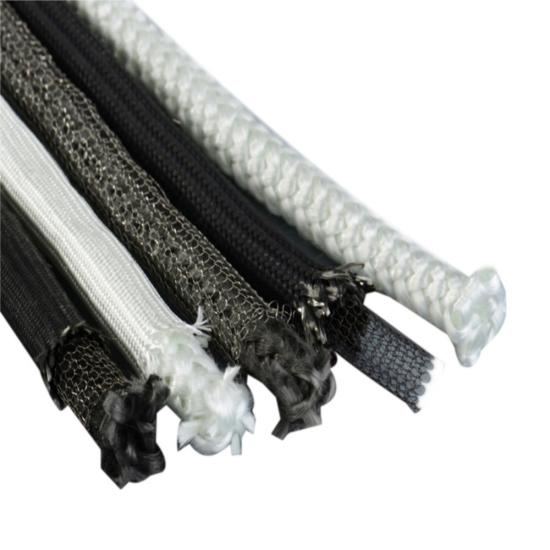
The outer stainless steel jacket can be combined with different internal gasket constructions depending on the application.
Possible constructions may include:
A fiberglass textile core provides a flexible and conformable sealing body.
A denser braided construction can be used where a more defined gasket profile is required.
A knitted core can provide a softer compression characteristic where greater conformity is required.
Where greater resilience is required, a metallic support structure can be incorporated into the gasket design.
The final construction should be selected from the actual sealing gap, closing force and compression requirement rather than from the outside diameter alone.
The most common construction is a round gasket profile.
However, industrial sealing channels do not always use simple round sections.
Depending on manufacturing feasibility and customer requirements, custom gasket constructions can be developed to suit different sealing geometries.
Important dimensions include:
Gasket outside diameter
Profile width
Profile height
Channel width
Channel depth
Closed sealing gap
Required compression
Overall gasket length
A drawing is recommended for non-standard profiles.
One of the main reasons for specifying a wire-jacketed gasket is repeated mechanical movement.
Typical industrial equipment may be opened and closed many times during production, loading, inspection or maintenance.
The gasket can be exposed to:
Repeated compression
Friction against the mating surface
Localized rubbing
Sliding movement
Door misalignment
Rough steel channels
Maintenance handling
For these applications, the stainless steel outer mesh provides additional mechanical protection compared with an exposed fiberglass surface.
Wire mesh jacketed fiberglass gaskets can be considered for:
Industrial oven doors
Kiln doors
Furnace doors
Heat treatment furnaces
Annealing equipment
Industrial dryers
Curing ovens
Powder coating ovens
Boiler access doors
Thermal processing equipment
High-temperature access panels
Industrial enclosure doors
Large equipment inspection doors
OEM thermal equipment
The suitability of the gasket should be evaluated according to the actual thermal and mechanical conditions of the equipment.
Kiln doors can create particularly demanding sealing conditions because the gasket may be exposed to large door structures, rough metal or refractory interfaces and repeated operating cycles.
A wire-jacketed fiberglass kiln door gasket can provide a flexible thermal seal while protecting the textile body against mechanical abrasion.
For kiln applications, buyers should specify:
Door dimensions
Gasket channel geometry
Sealing gap
Required gasket profile
Opening frequency
Compression requirement
Surface condition
Required length
Installation method
For industrial ovens, the correct gasket has to match both thermal exposure and door mechanics.
A wire mesh jacketed fiberglass oven door gasket may be suitable where an exposed textile gasket experiences excessive wear from repeated opening and closing.
Potential equipment includes:
Batch ovens
Drying ovens
Curing ovens
Paint ovens
Powder coating ovens
Heat treatment ovens
Process ovens
Industrial baking equipment
The gasket should be designed around the actual door gap and retention system.
Furnace access doors frequently use gasket channels or mechanical retainers to hold the thermal seal in position.
Where the gasket contacts rough steel or other hard surfaces, the wire mesh jacket can provide additional mechanical protection.
A custom furnace door gasket can be developed from the equipment drawing, existing seal sample or measured channel dimensions.
BSTFLEX can manufacture wire-jacketed fiberglass gasket material in custom lengths according to equipment requirements.
Depending on the installation method, products may be supplied as:
Straight cut lengths
Equipment-specific lengths
Multiple matched gasket sections
Replacement gasket sets
OEM production quantities
The required end treatment should be specified when requesting a quotation.
Custom manufacturing options can include:
Gasket diameter
Profile dimensions
Fiberglass construction
Internal core construction
Stainless steel wire mesh outer jacket
Finished length
End treatment
Cut-to-length supply
Equipment-specific gasket sets
Sample-based development
Drawing-based development
OEM packaging
Private-label packaging
Available constructions should be confirmed against the actual application before production.
A standard fiberglass gasket leaves the fiberglass textile surface directly exposed to the equipment.
A wire-jacketed gasket adds a flexible stainless steel mesh layer over that textile surface.
The principal reason for selecting the jacketed construction is therefore not simply higher temperature.
It is usually selected when the application combines high-temperature sealing with significant mechanical abrasion or repeated door movement.
If abrasion is minimal, a conventional fiberglass gasket may be sufficient.
If the gasket experiences substantial rubbing or repeated contact, the stainless steel jacket can provide an important mechanical advantage.
To specify a custom wire mesh jacketed fiberglass door gasket, provide:
Equipment type
Door or access opening dimensions
Gasket profile
Gasket diameter or width and height
Sealing channel dimensions
Closed sealing gap
Required compression behavior
Operating temperature
Opening and closing frequency
Installation method
Required gasket length
Existing gasket sample or photographs if available
Required quantity
Expected annual demand for OEM programs
A cross-sectional drawing of the sealing channel is particularly useful for custom industrial applications.
It is a high-temperature textile gasket with a fiberglass sealing body protected by an external flexible stainless steel wire mesh jacket.
The primary purpose is to improve resistance to mechanical abrasion and repeated contact with metal surfaces while retaining a flexible gasket construction.
No. It can also be developed for industrial ovens, furnaces, dryers, boilers, thermal processing equipment and other high-temperature access doors.
It depends on the application. The additional metal jacket is particularly useful when significant rubbing, sliding or repeated mechanical wear is present. An ordinary fiberglass gasket may be more appropriate where this additional protection is unnecessary.
Yes. Finished dimensions can be developed according to the sealing channel, gap, compression requirements and equipment drawing.
Different core constructions can be considered depending on the required compression, resilience and profile stability.
Yes. An existing gasket can be evaluated together with equipment dimensions and operating information when developing a custom replacement.
Yes. Equipment-specific lengths and OEM gasket sets can be produced according to confirmed specifications.
For a custom stainless steel wire mesh jacketed fiberglass gasket, send BSTFLEX your gasket dimensions, sealing channel drawing, operating conditions, required length and quantity.
For replacement applications, an existing gasket sample and photographs of the installation position can also assist product development.
BSTFLEX supports custom gasket construction, sample development, OEM supply and production according to customer drawings and application requirements.
If you have questions or suggestions, please leave us a message,we will reply you as soon as we can!





 français
 Deutsch
 русский
 italiano
 español
 português
 Nederlands
 العربية
 日本語
 한국의
 Türkçe
 Polski
 Tiếng Việt
 slovenský
 Indonesia