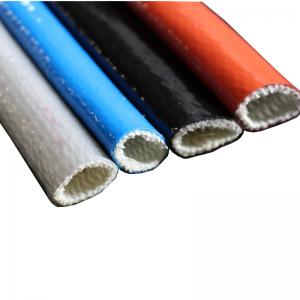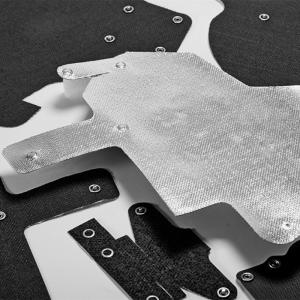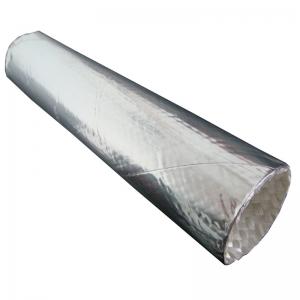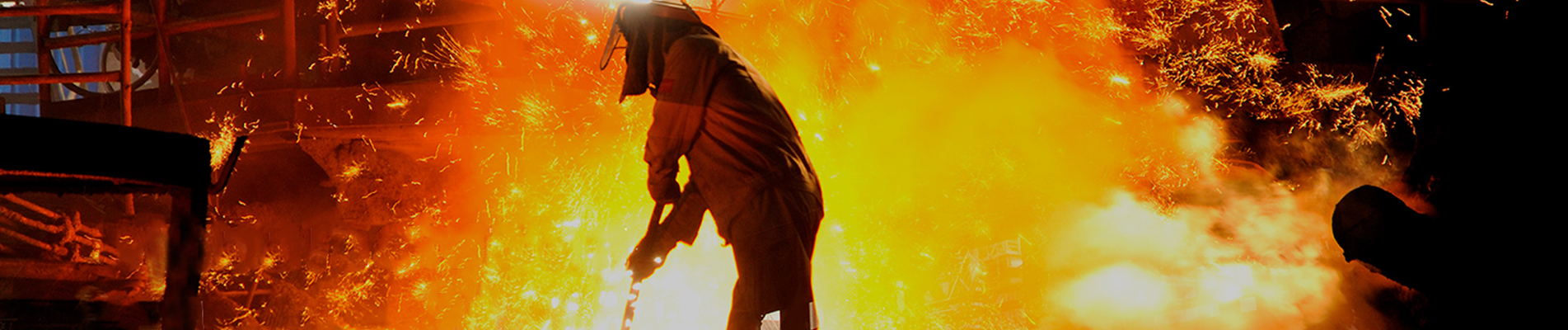
In hydraulic systems, mobile equipment, industrial machinery and vehicle assemblies, hoses are often damaged long before they fail from pressure or fluid compatibility. The most common reason is external damage: rubbing against steel edges, dragging across rough surfaces, vibration, sharp contact points, heat exposure or repeated movement inside a compact installation space.
A Kevlar sleeve is used to add a high-strength protective layer around hoses, cables, tubes or wire harnesses. It helps reduce abrasion, cutting, scuffing and mechanical wear, especially in applications where standard plastic spiral guards or ordinary textile sleeves may not provide enough resistance.
For industrial buyers, hose assembly companies and OEM manufacturers, a Kevlar sleeve is not only a protective accessory. It is a practical way to extend hose service life, reduce unplanned downtime and improve safety around moving or high-risk equipment.
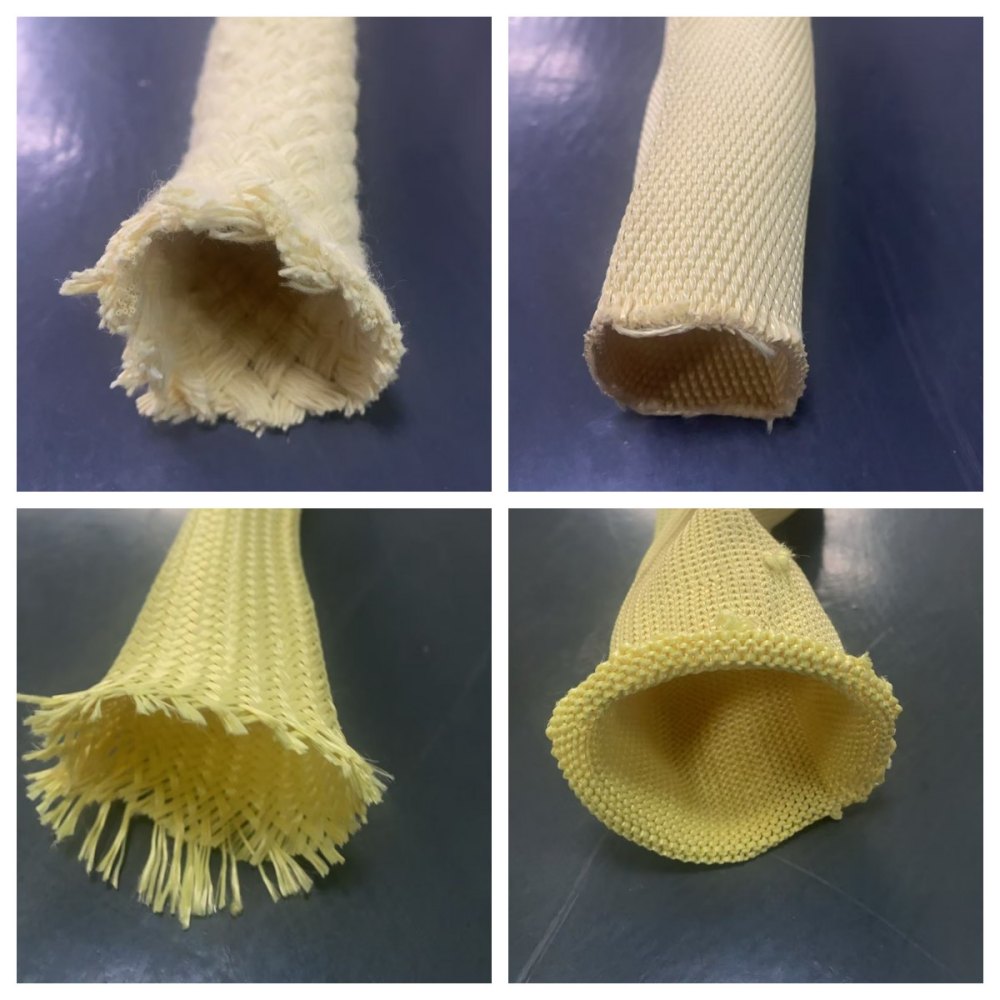
A Kevlar sleeve is a protective textile sleeve made from para-aramid fiber. Kevlar is commonly used as a trade name for this type of high-performance aramid material. In industrial hose protection, the sleeve is designed to cover hydraulic hoses, rubber hoses, cable bundles, pneumatic lines, fuel lines and other components that may be exposed to external mechanical damage.
Unlike a decorative cable sleeve, a Kevlar hose sleeve is selected for performance. It is used where the protected hose may contact metal frames, brackets, machine arms, guide rails, sharp corners, rough floors or other hard surfaces. The purpose is to create a stronger wear barrier between the hose surface and the external hazard.
PKFiresleeve supplies different Kevlar and aramid sleeve structures for different protection needs, including abrasion resistant Kevlar braided sleeving, braided Kevlar hose protective sleeve, knitted Kevlar aramid sleeve and flat woven Kevlar aramid hose sleeve.
Hose protection materials are chosen according to the type of damage expected in the working environment. Nylon sleeves, polyester sleeves, spiral guards and fiberglass sleeves each have their own use cases. Kevlar sleeve is normally selected when the application requires a stronger balance of cut resistance, abrasion resistance, tensile strength and heat tolerance.
Hydraulic hoses often work under pressure and movement. When the outer rubber cover is gradually worn away, the reinforcement layer becomes exposed and the hose failure risk increases. A Kevlar protective sleeve helps slow down this external wear process by placing a tough aramid barrier over the vulnerable hose surface.
This is especially important in equipment where hoses are expensive to replace, difficult to access or critical to machine operation. A small surface cut or abrasion mark may look minor at the beginning, but under pressure, vibration and continued movement, it can develop into a serious maintenance issue.
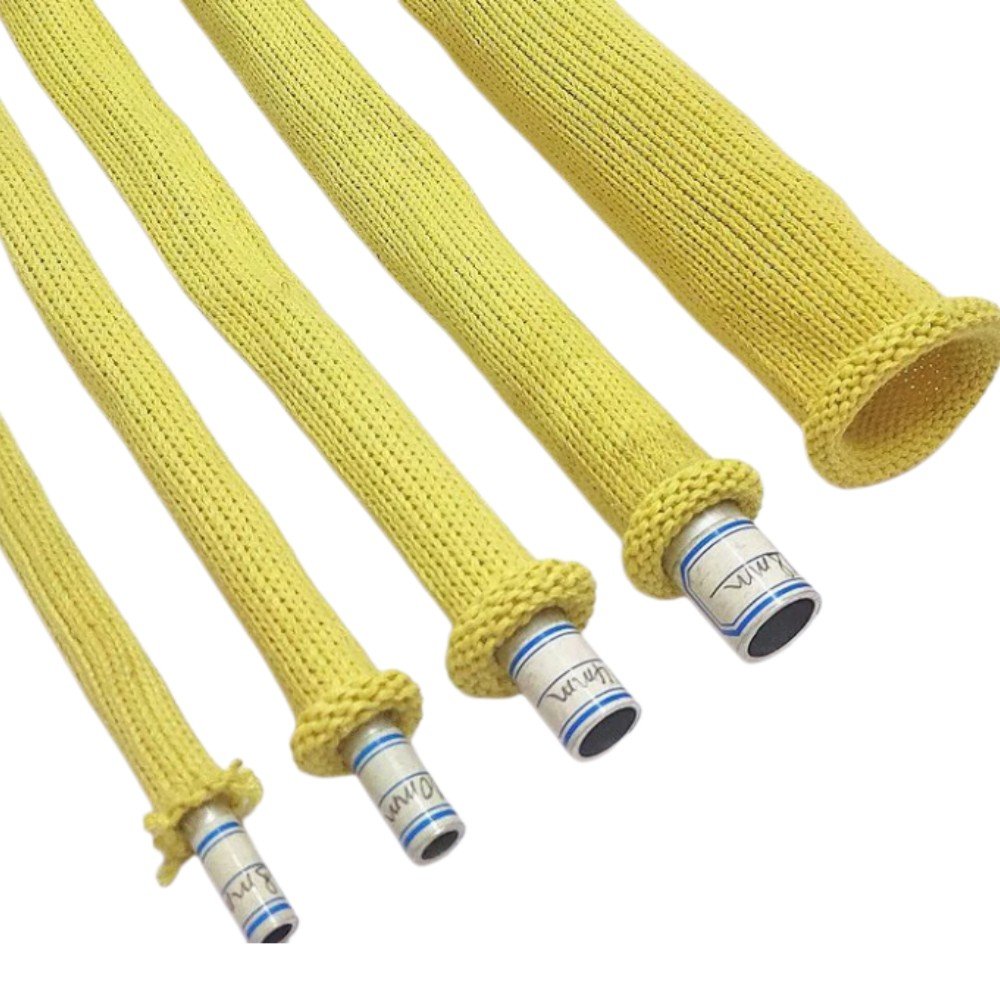
A properly selected Kevlar hose sleeve can help protect against several common field problems:
For these conditions, a Kevlar sleeve provides a stronger protective surface than many basic textile sleeves. It is particularly useful when the problem is not only heat, but also cutting, rubbing and mechanical abuse.
Kevlar sleeves are used in many industries where hoses and cables operate in aggressive environments. Common applications include:
In many of these applications, hose failure can stop a machine, delay production or create a safety risk. Adding an aramid protective sleeve is a low-bulk method to improve external protection without changing the hose itself.
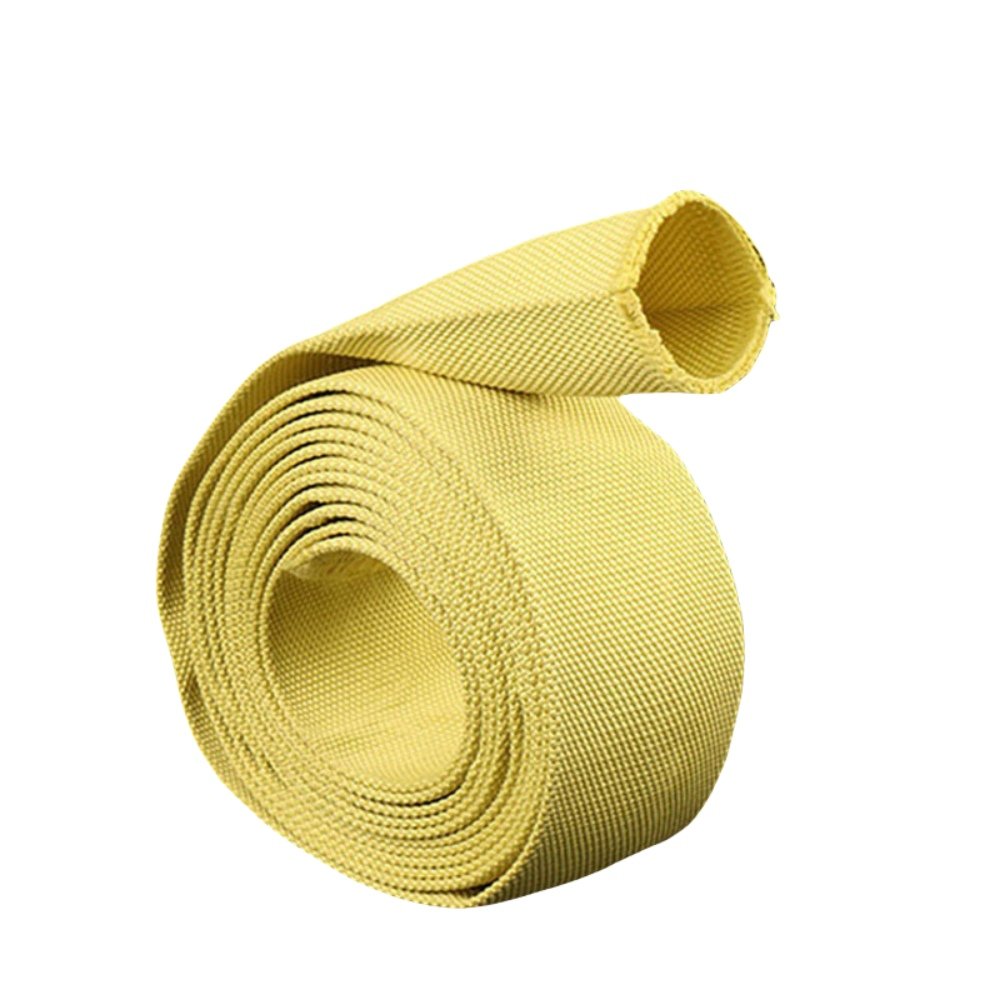
Not every Kevlar sleeve is made the same way. The structure of the sleeve affects how it fits, how it protects and where it should be used. Choosing the correct construction is important for both performance and installation efficiency.
A braided Kevlar sleeve is commonly used when a hose or cable requires strong all-around protection. The braided structure allows the sleeve to conform around round hoses and cable bundles while offering good resistance against surface wear.
For applications where abrasion is the main concern, Abrasion Resistance Kevlar Braided Sleeving is suitable for hoses, cables and wiring systems exposed to continuous friction, movement and contact damage.
When the main application is hydraulic hose protection, the sleeve should be selected with the hose outside diameter, bending area, movement range and abrasion condition in mind. A braided Kevlar hose sleeve is used to protect hose assemblies in construction equipment, industrial machinery and other demanding operating conditions.
For hydraulic hose applications, Braided Kevlar Hose Protective Sleeve is a direct product option for buyers looking for a Kevlar hose sleeve or aramid hose protection sleeve.
A knitted Kevlar sleeve is useful when flexibility and surface coverage are important. The knitted structure allows the sleeve to bend and adapt around irregular shapes, moving parts or bundled assemblies. It is often selected for wire harnesses, cable protection and hose areas that require softer handling.
For applications requiring a flexible aramid structure, Knitted Kevlar Aramid Sleeve is suitable for cable bundles, hoses, machinery protection and custom OEM assemblies.
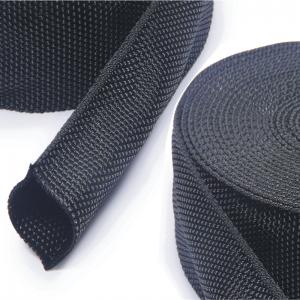
Some applications do not need a standard round sleeve. They require a wider, flatter protective textile layer that can cover a larger surface area or protect hose groups, flat cable routes or irregular components. In these cases, a flat woven aramid sleeve can be more practical.
Flat Woven Kevlar Aramid Hose Sleeve is designed for wider protection requirements and can be used where conventional round sleeving is not the best fit.
Standard hose protection products are often selected for general abrasion control or bundling. However, severe-duty applications may require a stronger material. Kevlar sleeve is usually chosen when the application involves sharper contact points, more aggressive wear or higher mechanical stress.
| Protection Need | Standard Textile Sleeve | Kevlar / Aramid Sleeve |
| General hose bundling | Suitable | Suitable, but often higher specification than needed |
| High abrasion areas | Depends on material and weave | Strong option for demanding wear conditions |
| Sharp edge contact | Limited protection | Better cut-resistant performance |
| Moving hydraulic hoses | May wear faster | Designed for stronger mechanical protection |
| OEM industrial use | Good for standard applications | Preferred for heavy-duty or high-value assemblies |
To choose the right Kevlar sleeve, buyers should consider the real working condition instead of selecting only by diameter. The correct sleeve depends on the hose size, movement, contact surface, installation method and protection priority.
Key selection points include:
If the hose is round and requires all-around protection, a braided Kevlar hose sleeve is often the first choice. If the assembly needs more flexibility, a knitted aramid sleeve may be better. If the protected area is wide or flat, a flat woven Kevlar sleeve can be more suitable.
OEM manufacturers and hose assembly suppliers often use Kevlar sleeves to reduce field failures and improve product reliability. In many machines, hoses are installed close to metal structures, moving arms, cylinders and other components. Once the machine starts working, vibration and movement gradually create wear points.
Adding a Kevlar protective sleeve during assembly can reduce direct contact between the hose cover and the surrounding structure. This helps the equipment builder deliver a more durable hose routing solution without redesigning the entire hydraulic system.
For distributors and maintenance companies, Kevlar sleeves also provide a practical upgrade product for customers who already experience repeated hose wear in the same machine area.
PKFiresleeve manufactures Kevlar and aramid sleeve products for hose protection, cable protection, wire harness protection and industrial mechanical protection. Custom options are available for diameter, flattened width, length, thickness, color, roll packing, cut pieces and OEM packaging.
For accurate selection, buyers can provide hose outside diameter, required sleeve length, working temperature, abrasion condition, installation method and order quantity. Based on the application, PKFiresleeve can recommend a suitable braided, knitted or flat woven Kevlar sleeve structure.
A Kevlar sleeve is used to protect hoses, cables, tubes and wire harnesses from abrasion, cutting, scraping and mechanical wear. It is commonly used in hydraulic systems, industrial machinery, vehicles and heavy equipment.
Yes. Kevlar hose sleeves are widely used for hydraulic hose protection, especially where hoses are exposed to friction, sharp edges, vibration or repeated movement.
Kevlar is a well-known para-aramid fiber name. In hose protection, Kevlar sleeve and aramid sleeve are often used to describe similar high-strength protective sleeves made from aramid fibers.
For round hose protection, braided Kevlar sleeve is commonly used. For flexible cable or harness protection, knitted Kevlar sleeve may be suitable. For wide or flat protection areas, flat woven Kevlar sleeve can be a better option.
Yes. Kevlar sleeves can be customized by size, length, width, thickness, color, packaging and OEM labeling according to the hose assembly or industrial project requirement.
If you need a Kevlar sleeve for hose protection, cable protection or industrial abrasion resistance, contact PKFiresleeve with your hose size, working environment and required quantity. Our team can help recommend the right aramid sleeve structure for your application and provide samples or OEM quotation for bulk orders.

 français
 Deutsch
 русский
 italiano
 español
 português
 Nederlands
 العربية
 日本語
日本語 한국의
한국의 Türkçe
 Polski
 Tiếng Việt
 slovenský
 Indonesia