français
 Deutsch
 русский
 italiano
 español
 português
 Nederlands
 العربية
 日本語
日本語 한국의
한국의 Türkçe
 Polski
 Tiếng Việt
 slovenský
 Indonesia



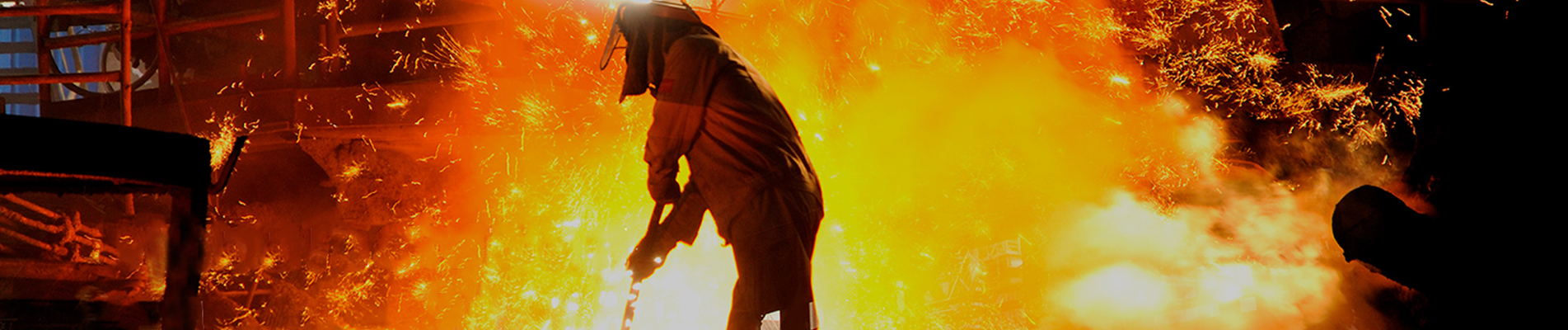
Aluminized Welding Blanket for Radiant Heat Protection
An aluminized welding blanket is designed primarily for radiant heat protection in industrial hot work environments. Unlike standard fiberglass or silica welding blankets that mainly stop sparks and molten spatter, aluminized surfaces reflect radiant heat away from protected equipment, operators, and sensitive components.
This type of blanket is widely used in welding, cutting, furnace maintenance, metal processing, foundries, shipbuilding, and high-temperature industrial operations where heat radiation is a critical risk factor.
Typical constructions use aluminized fiberglass fabric or aluminized silica fabric, depending on required temperature resistance and working severity.
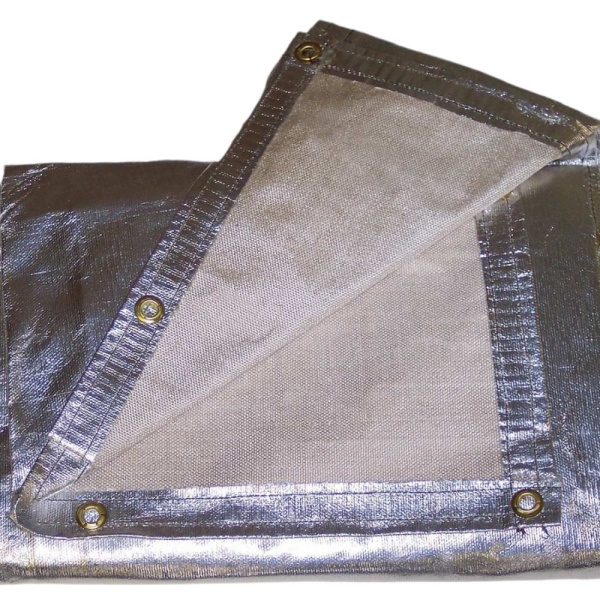
What Is an Aluminized Welding Blanket?
An aluminized welding blanket is a heat-resistant textile composite that combines a high-temperature fabric base with an aluminum reflective layer. The purpose of the aluminum layer is not to absorb heat, but to reflect radiant energy away from the protected area.
In industrial environments, heat transfer occurs in three ways: conduction, convection, and radiation. Standard welding blankets mainly handle conduction and direct spatter. Aluminized blankets are specifically engineered to address radiant heat, which is often overlooked but extremely important in high-temperature operations.
The most common base constructions include aluminized fiberglass blankets for general industrial use and aluminized silica blankets for higher temperature zones.
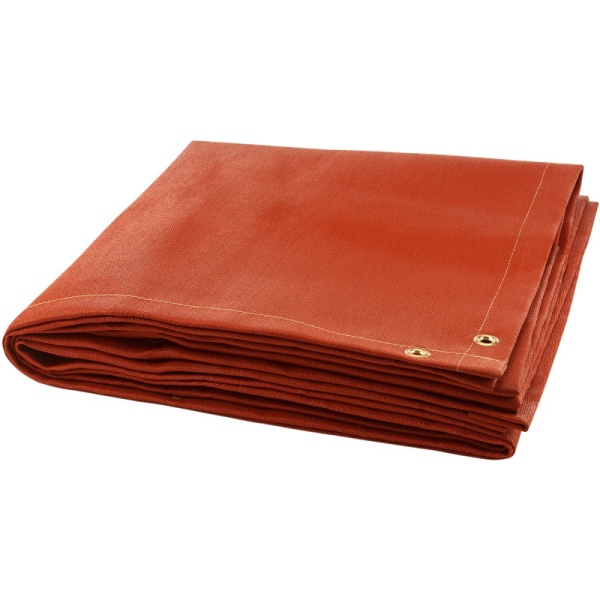
How Aluminized Welding Blankets Work
The aluminum surface acts as a reflective barrier. When exposed to radiant heat from welding arcs, molten metal, furnace walls, or cutting operations, the aluminum layer reflects a large portion of thermal radiation back into the environment.
The underlying fiberglass or silica fabric provides structural stability and prevents heat penetration. Together, they create a dual-layer protection system: reflection on the outside and insulation underneath.
Protection Mechanism
- Aluminum layer reflects radiant heat
- Fiberglass or silica fabric resists temperature transfer
- Composite structure reduces thermal load on protected surfaces
Aluminized Fiberglass vs Aluminized Silica Blanket
| Type | Performance Level | Recommended Application |
|---|---|---|
| Aluminized Fiberglass Welding Blanket | Medium radiant heat protection | Welding workshops, automotive repair, equipment shielding |
| Aluminized Silica Welding Blanket | Higher temperature resistance + radiant reflection | Furnace areas, heavy fabrication, foundries, high-heat zones |
Main Applications of Aluminized Welding Blankets
Aluminized welding blankets are not limited to welding protection. They are widely used in industrial environments where radiant heat exposure can damage equipment, cables, coatings, or surrounding structures.
When Should You Use an Aluminized Welding Blanket?
The key decision factor is radiant heat exposure. If the main risk comes from direct sparks or molten spatter, a standard fiberglass or silica blanket is sufficient. If the main risk is heat radiation from nearby high-temperature sources, aluminized protection becomes necessary.
Use Aluminized Blanket When:
- Working near furnaces, kilns, or molten metal sources
- Radiant heat is the primary thermal risk
- Equipment or cables must be protected from heat reflection
- Welding area has strong continuous heat exposure
- Standard welding blankets are not enough for heat shielding
Limitations Compared to Standard Welding Blankets
While aluminized welding blankets are highly effective for radiant heat, they are not always the best choice for direct molten spatter or heavy mechanical abrasion. In many cases, aluminized blankets are used together with fiberglass or silica welding blankets to form a complete protection system.
| Feature | Aluminized Blanket | Standard Welding Blanket |
|---|---|---|
| Radiant Heat Protection | Excellent | Moderate |
| Spatter Resistance | Limited | Strong (fiberglass/silica) |
| Abrasion Resistance | Moderate | Higher depending on coating |
| Best Function | Heat reflection | Spark and spatter blocking |
Recommended System Combination
In industrial practice, aluminized welding blankets are rarely used alone. They are typically combined with other welding protection products to achieve full coverage.
- Aluminized blanket → radiant heat protection
- Fiberglass/silica blanket → spark and spatter protection
- Fire sleeves → hose and cable protection
- Heat reflective sleeves → localized radiant shielding
Custom Options
Aluminized welding blankets can be manufactured in multiple formats depending on industrial requirements.
- Aluminized fiberglass fabric or aluminized silica fabric
- Custom size and thickness
- Edge reinforcement and high-temperature stitching
- Grommets for hanging installation
- Roll form for distributors and converters
- OEM labeling and packaging
Conclusion
An aluminized welding blanket is a specialized solution for radiant heat protection in industrial environments. It is not a replacement for standard welding blankets but a complementary system component that improves overall thermal safety in high-temperature operations.
For welding, cutting, and fabrication environments, combining aluminized heat reflection with fiberglass or silica spark protection provides a more complete safety solution.
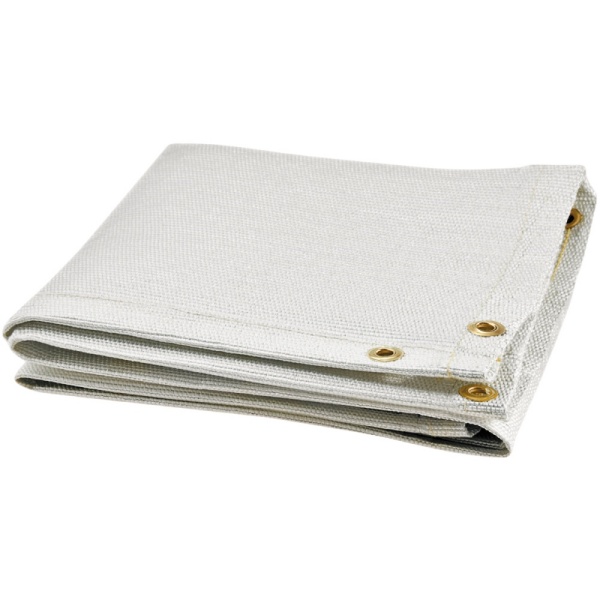
Request Aluminized Welding Blanket Solution
We supply aluminized fiberglass and aluminized silica welding blankets for industrial heat shielding, welding protection, and high-temperature applications.
- Radiant heat reflective welding blankets
- Custom industrial sizes and structures
- OEM production for distributors and projects
FAQ
What is an aluminized welding blanket used for?
It is used to reflect radiant heat and protect equipment, workers, and surroundings in high-temperature industrial environments.
Can aluminized blankets stop welding sparks?
They are not primarily designed for heavy spatter. They are best used for radiant heat reflection and should be combined with fiberglass or silica blankets for spark protection.
What is the difference between fiberglass and aluminized blanket?
Fiberglass blocks sparks and heat, while aluminized surfaces reflect radiant heat.
Where should aluminized welding blankets be used?
They are used near furnaces, welding arcs, cutting operations, and any environment with strong radiant heat exposure.