When selecting a protective sleeve for hydraulic hoses, cables, wire harnesses or industrial components, the material is only one part of the decision. The sleeve structure also plays an important role in protection performance, flexibility, installation method and application suitability.
Both knitted Kevlar sleeve and braided Kevlar sleeve are manufactured from high-strength para aramid fiber and provide excellent mechanical protection. However, their construction methods create different performance characteristics.
Understanding the difference between knitted and braided Kevlar sleeves helps engineers, OEM manufacturers and distributors select the right Kevlar hose sleeve for their specific working environment.
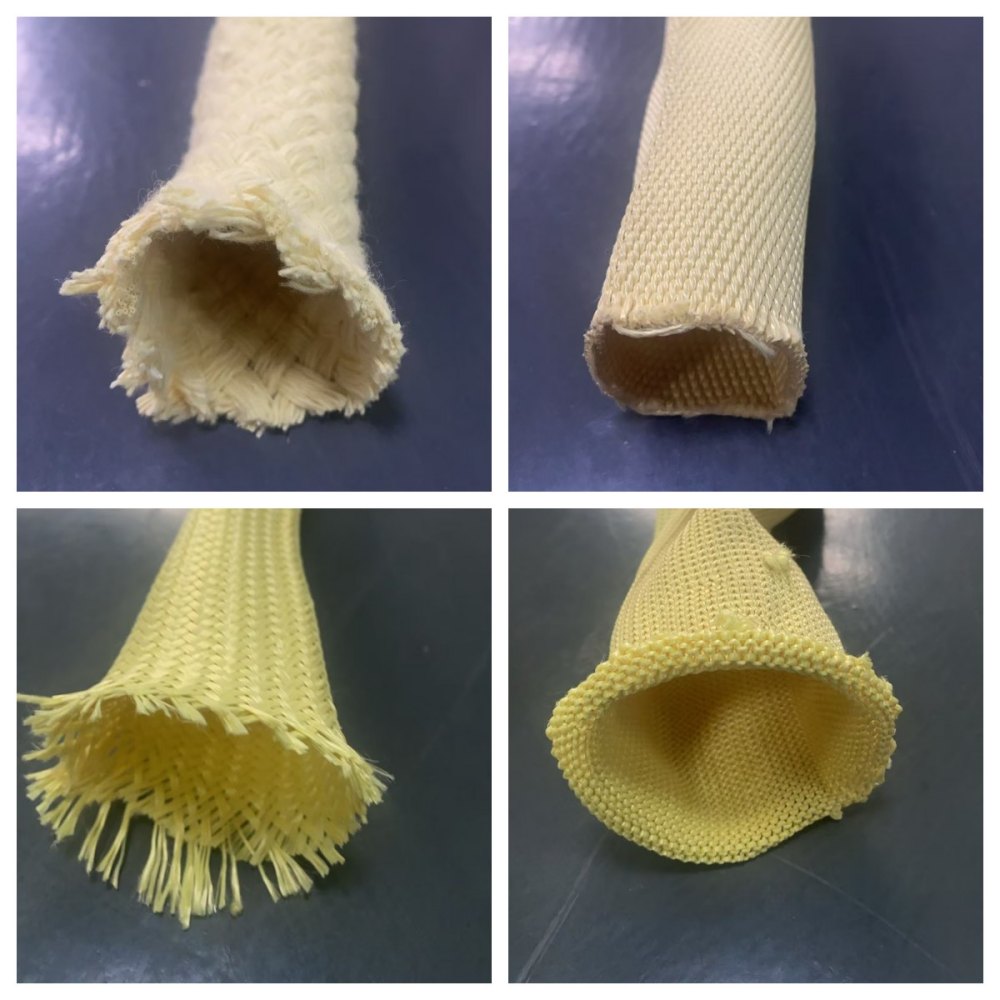
A Kevlar sleeve is a protective textile covering made from para aramid fiber. It is designed to protect hoses, cables, tubes and other components from external damage such as abrasion, cutting, friction and mechanical impact.
Kevlar fiber is widely recognized for its high tensile strength, excellent strength-to-weight ratio and resistance to mechanical wear. Because of these properties, Kevlar sleeves are commonly used in demanding applications where standard textile sleeves may not provide enough protection.
PKFiresleeve manufactures different Kevlar sleeve structures, including:
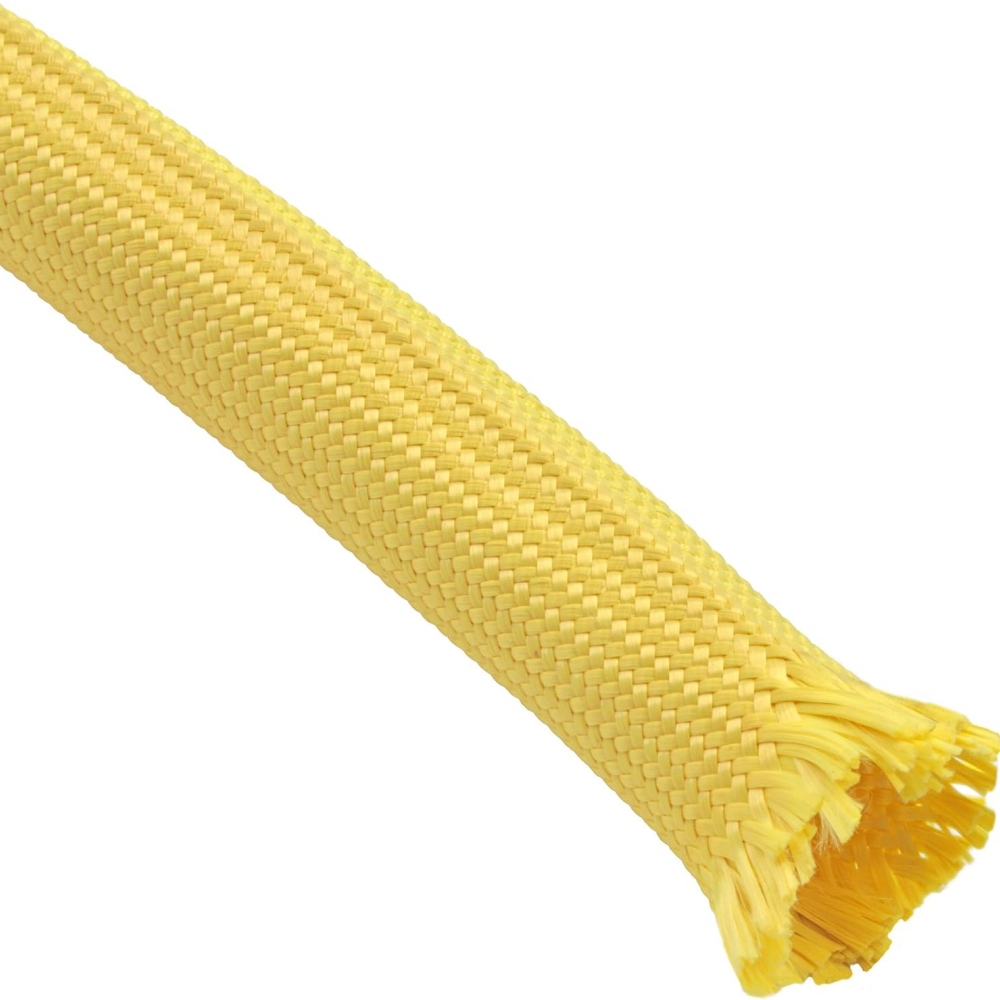
A knitted Kevlar sleeve is produced using a knitting process that creates an elastic and flexible tubular structure. The interlocking yarn loops allow the sleeve to expand, compress and adapt to different shapes.
The main advantage of knitted construction is flexibility. It can easily fit around irregular shapes, curved surfaces and assemblies where installation space is limited.
Knitted Kevlar sleeves are commonly selected for:
For applications where flexibility and coverage are more important than maximum abrasion resistance, a knitted aramid sleeve can provide an excellent balance between protection and usability.
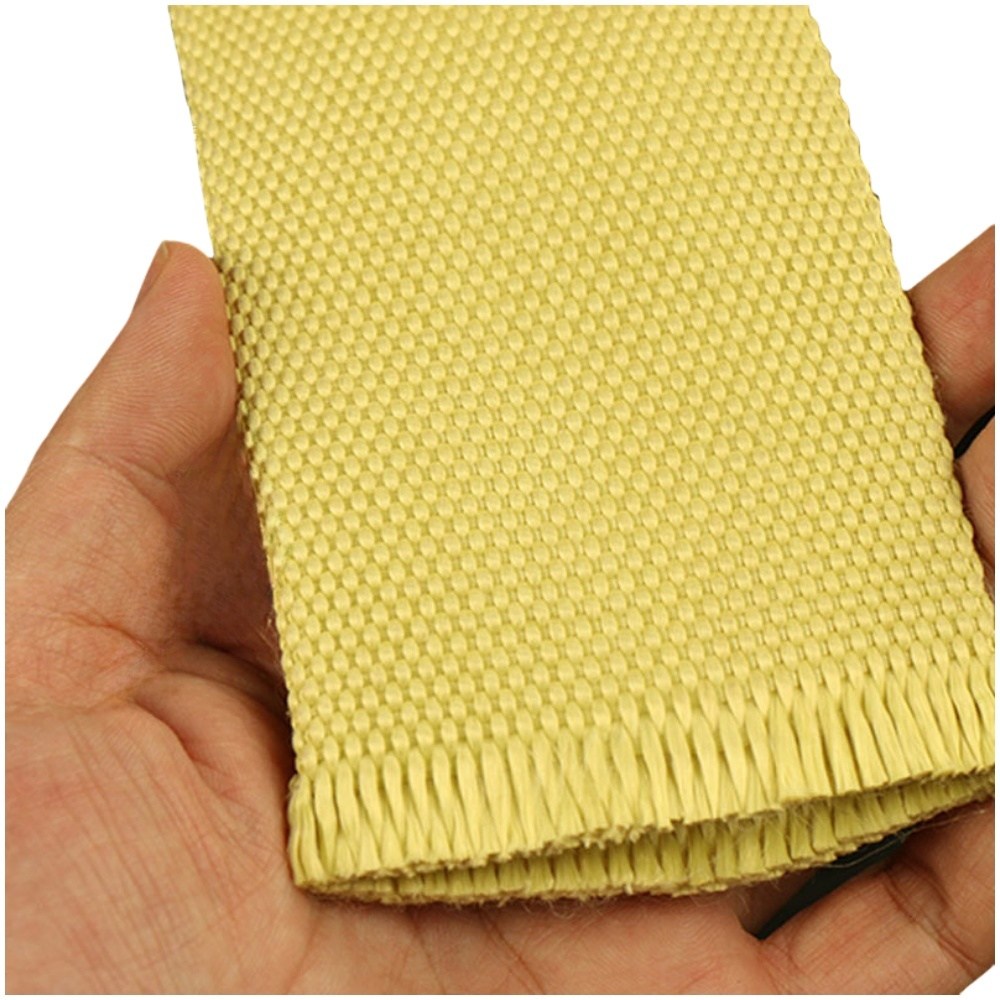
A braided Kevlar sleeve is manufactured by interweaving Kevlar yarns into a braided tubular structure. The crossing yarn pattern creates a strong protective layer with excellent resistance against abrasion, cutting and mechanical stress.
The braided construction provides excellent structural stability and is widely used for protecting hydraulic hoses, industrial tubing and cables exposed to harsh environments.
Braided Kevlar sleeves are commonly used in:
| Feature | Knitted Kevlar Sleeve | Braided Kevlar Sleeve |
| Manufacturing Structure | Interlocking knitted yarn loops | Crossed braided yarn structure |
| Flexibility | Excellent flexibility and expansion | Good flexibility with stronger structure |
| Shape Adaptability | Excellent for irregular shapes | Best for round hoses and cables |
| Abrasion Resistance | Very good | Excellent for severe abrasion |
| Cut Resistance | Good | Excellent depending on construction density |
| Installation | Easy installation on complex assemblies | Easy installation on standard hose and cable shapes |
| Main Application | Flexible protection | Heavy-duty mechanical protection |
A knitted Kevlar sleeve is usually the better choice when flexibility, movement and installation convenience are important.
Typical situations include:
For example, automotive wire harnesses, robotic cables and flexible industrial assemblies often benefit from knitted construction because the sleeve can follow movement without restricting the protected component.
Recommended product: Knitted Kevlar Aramid Sleeve
A braided Kevlar sleeve is preferred when the main requirement is stronger abrasion and mechanical protection.
Typical applications include:
The braided structure provides a durable outer layer that helps protect hoses and cables from repeated contact damage.
Recommended products:
Knitted Kevlar sleeves are widely used in applications requiring flexibility and lightweight protection.
Braided Kevlar sleeves are commonly used in environments where abrasion and mechanical damage are major concerns.
For most hydraulic hose applications, braided Kevlar sleeve is usually the preferred choice because hydraulic hoses are commonly exposed to abrasion, vibration and mechanical contact.
However, the best solution depends on the working environment.
| Working Condition | Recommended Sleeve |
| Heavy abrasion and friction | Braided Kevlar sleeve |
| Sharp edge contact | Braided Kevlar sleeve |
| Moving cables and irregular shapes | Knitted Kevlar sleeve |
| Flexible installation requirements | Knitted Kevlar sleeve |
| Hydraulic hose protection | Braided Kevlar hose sleeve |
OEM manufacturers usually evaluate several factors before selecting a Kevlar sleeve:
Selecting the correct sleeve structure during product design can improve equipment reliability and reduce maintenance costs.
PKFiresleeve provides customized Kevlar and aramid sleeve solutions for industrial customers, hose manufacturers and OEM projects.
Available customization options include:
Whether you need a flexible knitted Kevlar sleeve or a high-strength braided Kevlar sleeve, the correct structure depends on your application requirements.
Knitted Kevlar sleeves use a looped yarn structure for flexibility and expansion, while braided Kevlar sleeves use crossed yarns for stronger mechanical protection.
Braided Kevlar sleeve is generally preferred for hydraulic hoses because it provides excellent abrasion and mechanical protection.
Yes. Knitted Kevlar sleeves are commonly used for cable bundles, wire harnesses and flexible assemblies.
Yes. Kevlar sleeve sizes, lengths, packaging and construction options can be customized according to application requirements.
If you are looking for a knitted Kevlar sleeve or braided Kevlar sleeve for hose, cable or industrial protection, contact PKFiresleeve with your application details. Our team can recommend the suitable aramid sleeve structure according to your protection requirements.

 français
 Deutsch
 русский
 italiano
 español
 português
 Nederlands
 العربية
 日本語
日本語 한국의
한국의 Türkçe
 Polski
 Tiếng Việt
 slovenský
 Indonesia