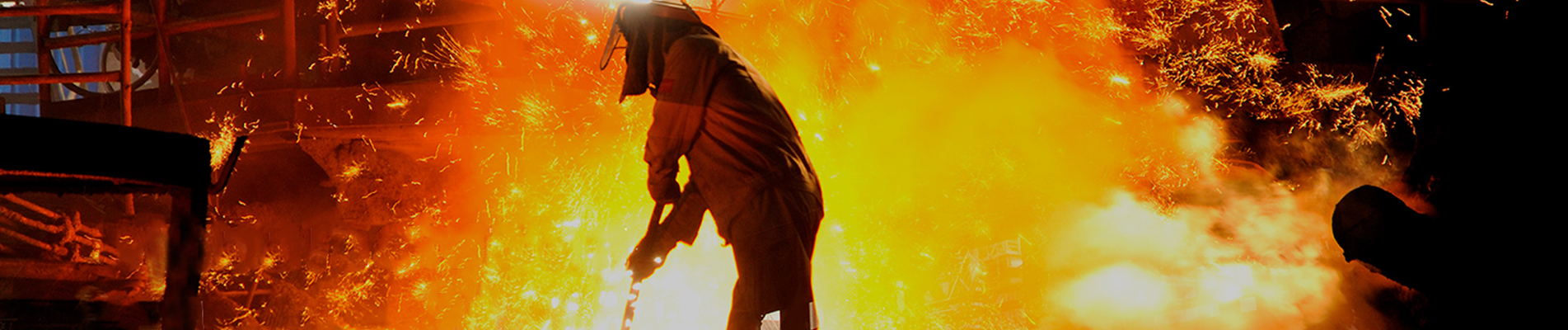
Carbon fiber felt is selected for thermal protection because it combines low weight, flexibility and strong resistance to high-temperature exposure. However, there is no single temperature rating that applies to every carbon felt product. Actual performance depends on the fiber precursor, carbonization level, density, thickness, construction and, critically, the atmosphere in which the material is used.
For welding protection, these distinctions matter. A carbon felt used inside a controlled-atmosphere industrial furnace is operating under very different conditions from a blanket exposed to air, welding sparks, hot slag and localized radiant heat.
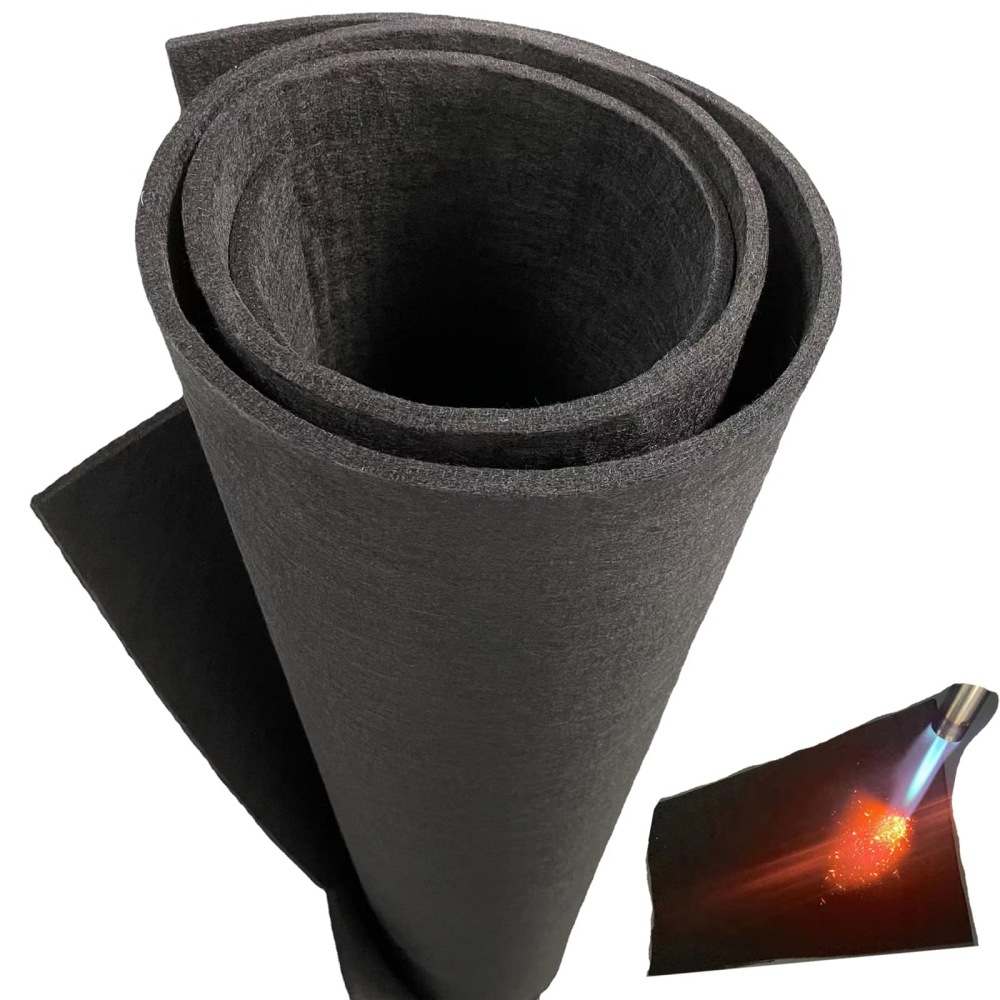
The Carbon Fiber Felt Welding Blanket supplied by PK Firesleeve is designed for demanding welding, cutting and metalworking environments and is rated for temperatures up to 1800°F (980°C). This makes it a practical thermal barrier where conventional light-duty welding protection may not provide sufficient heat resistance.
When discussing carbon fiber felt temperature resistance, it is important to separate the thermal capability of carbon material itself from the working temperature of a finished welding blanket.
Carbon-based fibers have excellent thermal stability, but their useful service temperature depends heavily on the operating environment. In vacuum or inert atmospheres, specialized carbon and graphite felts can be used in extremely high-temperature furnace systems. Welding blankets, however, normally operate in air. Their usable temperature must therefore be evaluated according to the complete blanket construction and the actual exposure conditions.
For this reason, engineers should use the specified working temperature of the finished product rather than applying a generic carbon-fiber temperature figure to every application.
PK Firesleeve's carbon fiber felt welding blanket is rated to withstand temperatures up to 1800°F (980°C). It is intended to provide a flexible protective layer between high-temperature work and nearby equipment, components or surfaces.
Typical exposure may include:
A temperature rating should not be interpreted as meaning that every part of the blanket can remain indefinitely in direct contact with a heat source at that temperature. Heat flux, exposure time, airflow, blanket thickness and whether the heat is radiant or direct all affect performance.
One of the most important considerations when evaluating carbon felt is whether the material is being used in air or in a controlled atmosphere.
Carbon materials behave differently in an oxygen-containing environment than they do under vacuum or inert gas. This explains why carbon felt used as furnace insulation can have very different operating limits from carbon felt manufactured as a welding protection blanket.
For a welding application, the relevant question is therefore not simply, "How hot can carbon fiber survive?" A better engineering question is:
What temperature can this finished carbon fiber felt welding blanket withstand under the actual welding conditions?
For the Tempguard product, the specified maximum temperature is 1800°F (980°C).
Temperature alone does not fully describe a welding blanket application. Two processes can reach the same peak temperature while imposing very different thermal loads on the protective material.
A blanket positioned near a welding operation may experience moderate radiant heat for an extended period. Another blanket may receive very brief but much more intense exposure from sparks or hot particles.
The main variables to evaluate include:
| Factor | Why It Matters |
|---|---|
| Peak temperature | Determines the maximum thermal exposure the blanket may encounter |
| Exposure duration | Longer exposure allows more heat to transfer through the material |
| Heat source | Radiant heat, direct flame, hot particles and surface contact create different thermal loads |
| Blanket thickness | Greater thickness can improve the thermal barrier between the heat source and protected surface |
| Distance from heat | Increasing separation from a radiant heat source can substantially change the thermal load |
| Airflow | Ventilation can influence both surface temperature and oxidation conditions |
| Installation | Gaps, compression and contact with hot components can change real-world performance |
Carbon felt has a porous, fibrous structure rather than the dense construction of a solid sheet. The network of fine fibers and void spaces helps limit heat transfer through the material while keeping the blanket relatively lightweight.
This structure is particularly useful for welding protection because the blanket can conform around equipment, irregular components, pipework and machinery that would be difficult to protect using rigid insulation.
The material can therefore provide both thermal separation and physical coverage without requiring a heavy rigid barrier around the work area.
Fiberglass remains one of the most widely used materials for general welding blankets, but carbon felt occupies a different position in the thermal protection range.
| Property | Carbon Fiber Felt | Fiberglass |
|---|---|---|
| Construction | Soft fibrous carbon felt | Typically woven or texturized glass fiber |
| Flexibility | Highly conformable | Depends on fabric construction and coating |
| Weight | Can provide a lightweight thermal barrier | Varies considerably with fabric weight and coating |
| Thermal insulation | Well suited to thermal barrier applications | Effective for general welding protection |
| Typical selection | Higher-demand heat protection and difficult geometries | General welding, spark and spatter protection |
The correct choice should be based on the actual temperature, heat source and service conditions rather than selecting a material solely by its nominal maximum temperature.
A carbon felt welding blanket can be used wherever welding or hot-work operations create a risk of heat damage to adjacent surfaces and equipment.
During fabrication, the blanket can be positioned around the work area to reduce exposure of nearby machinery, finished components and structural surfaces to sparks, spatter and heat.
Maintenance welding often takes place inside existing equipment installations where surrounding cables, hoses, painted surfaces or machinery cannot easily be removed. Flexible carbon felt can be arranged around these areas as a temporary thermal barrier.
Welding and repair work around vehicle assemblies may place heat-sensitive components close to the operation. A lightweight flexible blanket can help isolate the work zone without requiring a rigid enclosure.
Cutting, brazing, grinding and related hot-work processes generate both heat and hot particles. Carbon fiber felt welding blankets can be used to protect surrounding surfaces where a high-temperature flexible barrier is required.
The blanket can also be draped over machinery or wrapped around components that must remain in place while adjacent welding or repair operations are completed.
No. The highest temperature number should not be the only selection criterion.
A successful welding protection system must match the blanket to the actual hazard. For example, a blanket intended mainly for radiant heat shielding may require different characteristics from one repeatedly exposed to abrasive grinding debris or molten weld spatter.
Other factors can be equally important:
Where thermal insulation is the primary requirement, thickness becomes an important design parameter. A thicker felt layer generally creates a greater separation between the heat source and the protected component, but it also changes weight, flexibility and installation space.
Rather than specifying thickness from temperature alone, an industrial buyer should provide the supplier with the expected operating conditions.
Useful application information includes:
This information makes it possible to evaluate whether carbon felt is the correct material and what blanket configuration is appropriate.
Direct flame exposure should be evaluated separately from ambient or radiant temperature. A material may have a high thermal resistance while responding differently when placed continuously in a concentrated flame.
For welding and hot-work protection, users should therefore identify whether the blanket will experience occasional sparks, radiant heat, intermittent flame exposure or continuous direct flame contact.
Where the application involves unusual heat intensity or prolonged direct flame, sample testing under representative operating conditions is recommended before final production quantities are specified.
Carbon felt is used where a flexible and reusable high-temperature barrier is needed, but service life depends on the severity of each operation. Repeated contact with molten particles, abrasion, mechanical damage, contamination or excessive heat can gradually affect blanket condition.
Industrial users should inspect welding blankets regularly and replace them when there is visible thinning, tearing, severe surface damage or any other deterioration that may reduce protection.
For applications requiring a combination of high-temperature capability, flexibility and low weight, carbon fiber felt provides an alternative to conventional fiberglass-based welding protection.
Tempguard supplies a Carbon Fiber Felt Welding Blanket rated up to 1800°F (980°C) for welding, cutting, metalworking and industrial thermal protection applications.
Custom dimensions and application-specific configurations can be discussed for OEM, industrial maintenance, fabrication and equipment protection projects.
For a quotation or technical evaluation, provide the required size, quantity, expected temperature, heat source and application conditions. Sample evaluation can also be arranged where the actual thermal exposure needs to be verified before production.
The usable temperature of carbon fiber felt depends on its fiber grade, processing, construction and operating atmosphere. For welding applications, the temperature rating of the finished blanket should be used. PK Firesleeve's Carbon Fiber Felt Welding Blanket is rated up to 1800°F (980°C).
Maximum temperature varies by product construction. The Tempguard carbon felt welding blanket is specified for temperatures up to 1800°F (980°C).
Specialized furnace carbon felts may operate under vacuum or inert gas, while welding blankets are normally exposed to air. Because the surrounding atmosphere affects carbon materials at elevated temperatures, ratings from furnace insulation should not automatically be applied to welding blankets.
Yes. Carbon fiber felt can provide a lightweight, flexible thermal barrier for welding, brazing, cutting and other hot-work operations when the blanket is selected for the required temperature and exposure conditions.
Neither material is universally better. Carbon felt is attractive where flexibility, low weight and thermal insulation are important, while fiberglass offers a broad range of economical welding blanket constructions. Selection should be based on temperature, heat source, spatter exposure, installation and service conditions.
Yes. Industrial projects can require different blanket dimensions, thicknesses and finishing configurations. Buyers should provide operating temperature, application type, dimensions and quantity when requesting a custom solution.

 français
 Deutsch
 русский
 italiano
 español
 português
 Nederlands
 العربية
 日本語
日本語 한국의
한국의 Türkçe
 Polski
 Tiếng Việt
 slovenský
 Indonesia