A non metallic expansion joint is a flexible connection used in industrial ducting and gas-handling systems to accommodate thermal growth, vibration, offset and multidirectional movement. Instead of relying on a formed metal bellows as the primary flexible element, it uses engineered fabric, coated textile, elastomeric or composite layers selected for the operating environment.
These joints are especially common in large duct systems carrying hot air, exhaust gas, flue gas and other process gases where low reaction forces, large movement capability and custom geometry are important.
One of the most widely used forms is the non metallic fabric expansion joint, which combines flexible technical fabrics with sealing, reinforcement and insulation layers according to the application.
The term describes the material used for the flexible movement element.
A complete expansion joint assembly may still contain metal components such as:
However, the component that absorbs the primary system movement is based on a flexible non-metallic material system rather than a metallic bellows.
This distinction allows designers to create joints with very different mechanical behavior compared with conventional metallic expansion joints.
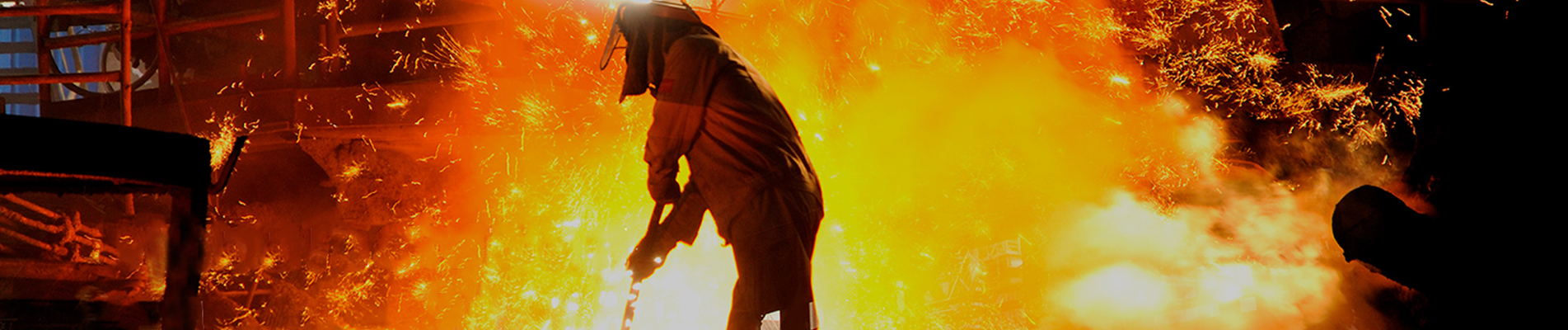
Non metallic expansion joints are most closely associated with industrial ducting rather than conventional high-pressure piping.
Typical installations include:
Boiler ducts, flue gas systems, fan connections and air handling equipment.
Kiln-related ductwork, process-air systems and hot gas lines.
Furnace exhaust, hot-air ducts and high-temperature process ventilation.
Connections between heated equipment and downstream ducting.
Scrubbers, filtration equipment and flue gas treatment systems.
Flexible connections used to reduce transfer of vibration into rigid ductwork.
Industrial duct systems are exposed to dimensional and mechanical changes during operation. Without a flexible connection, these changes can transfer unwanted loads into equipment, supports and duct structures.
Steel ducting expands as temperature rises. A non metallic expansion joint provides a controlled section where this movement can be absorbed.
During shutdown, ductwork cools and contracts. The joint must also accommodate the return movement without overstressing the flexible element.
Equipment and duct sections may move sideways relative to one another. Flexible fabric-based joints can often handle substantial lateral movement within a relatively short installation length.
When connecting surfaces rotate relative to one another, the joint can deform around its perimeter to accommodate the resulting angle.
Fans, blowers and rotating machinery can introduce vibration. A flexible non metallic joint helps reduce direct mechanical transmission into the connected duct system.
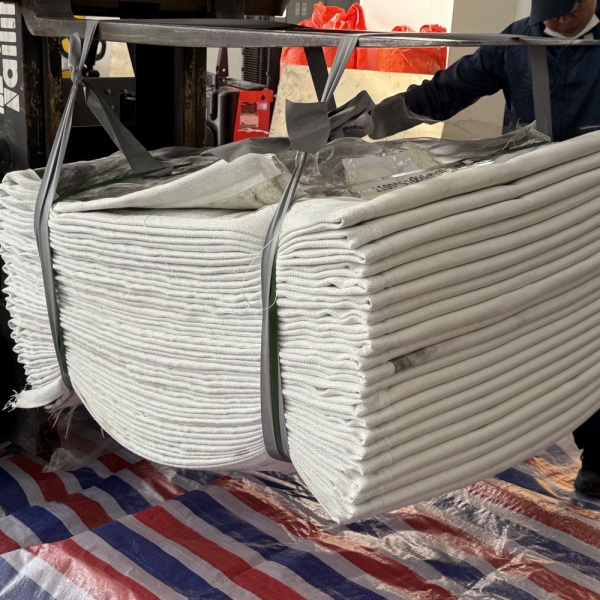
Not every non metallic joint uses the same construction. The design depends on temperature, chemical exposure, movement, pressure and equipment geometry.
| Type | Typical Construction | Typical Use |
|---|---|---|
| Fabric Expansion Joint | Technical textile and coated fabric layers | Hot-air, exhaust and flue-gas ducting |
| Multi-Layer Fabric Joint | Gas seal, reinforcement and insulation package | Higher-temperature or demanding process environments |
| Belt-Type Expansion Joint | Flexible belt attached to existing steelwork | Large duct systems and replacement applications |
| Flanged Fabric Expansion Joint | Flexible element integrated with fabricated flanges | Complete replacement assemblies |
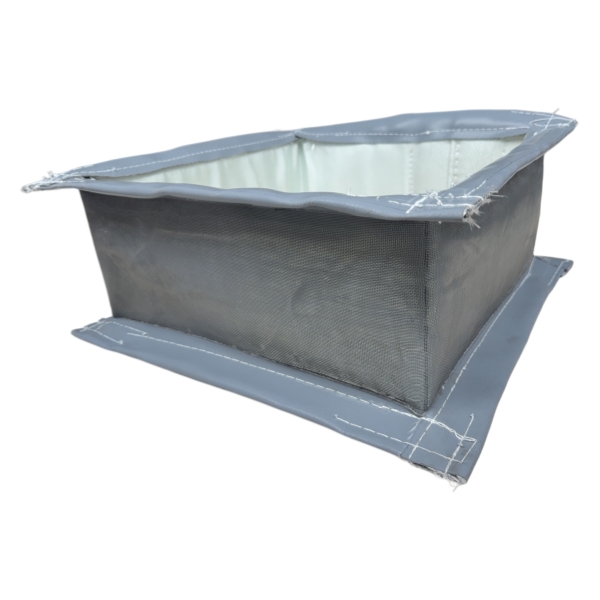
| Rectangular Expansion Joint | Fabric element designed around corners and straight sections | Large industrial rectangular ducts |
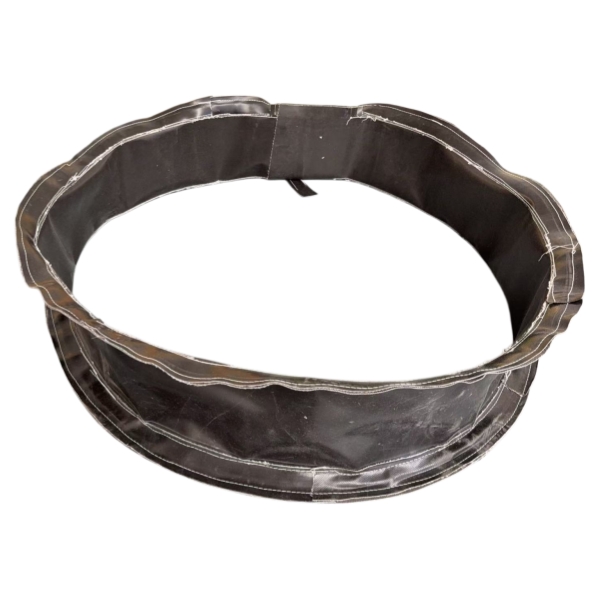
| Round Expansion Joint | Circular flexible element | Fans, exhaust ducts and cylindrical systems |
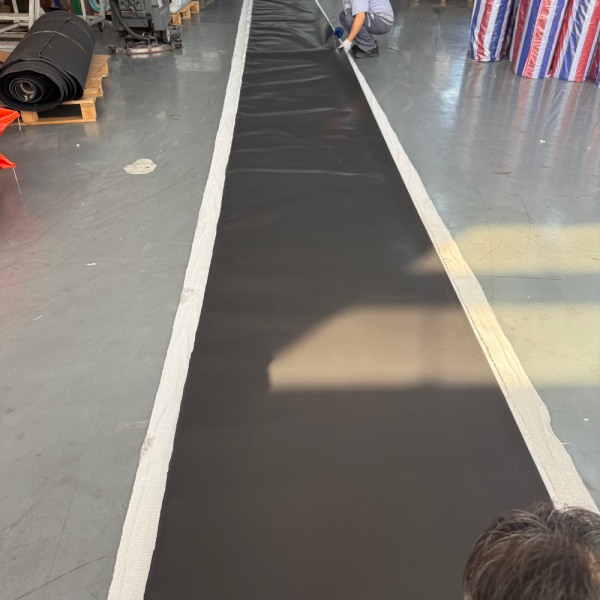
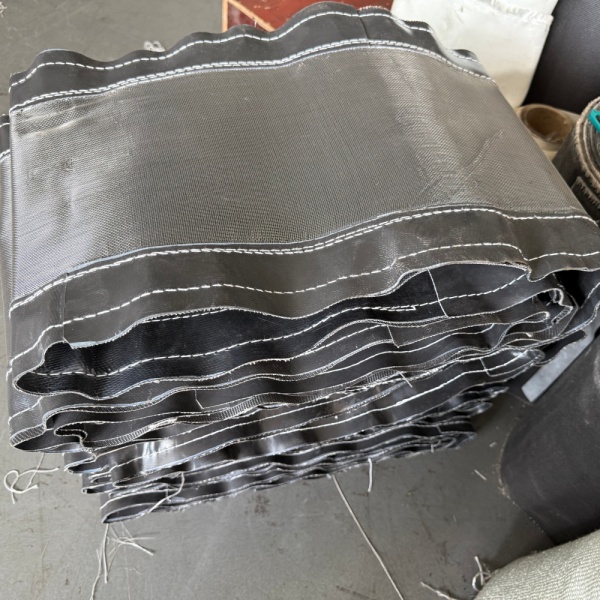
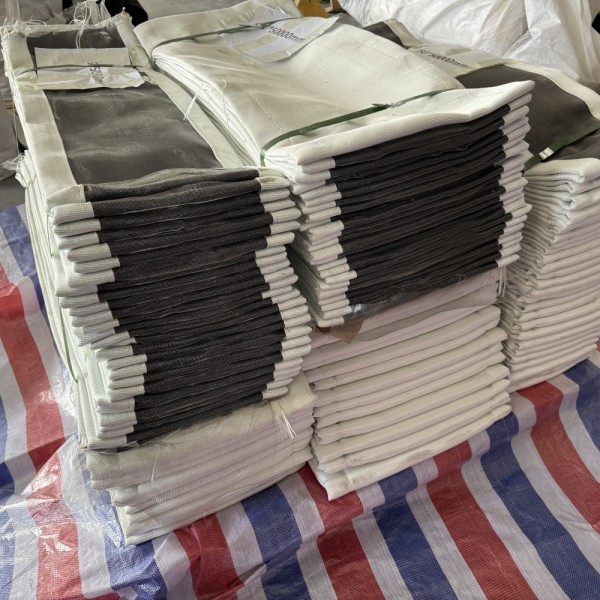
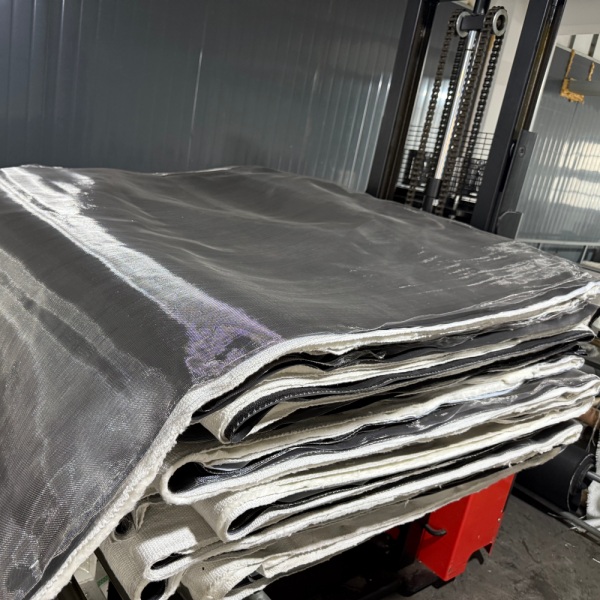
The flexible element can be built from one material or several functional layers.
Typical materials include:
BSTFLEX manufactures a broad range of high temperature fabrics, which can be evaluated as part of a custom non metallic expansion joint construction.
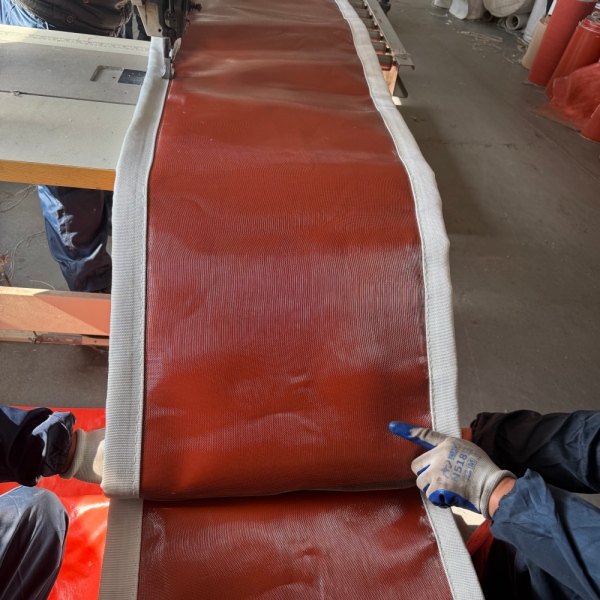
A single material rarely delivers every property required by an industrial expansion joint.
For example:
This is why many non metallic expansion joints are engineered as layered systems rather than as a single sheet of fabric.
| Layer | Main Function |
|---|---|
| Outer Cover | External protection and flexibility |
| Gas Seal | Containment of process gas |
| Reinforcement | Mechanical support and dimensional stability |
| Insulation | Reduction of heat reaching outer layers |
| Hot-Face Protection | Protection from high gas temperature and direct exposure |
| Flow Liner | Protection from velocity, turbulence and particles |
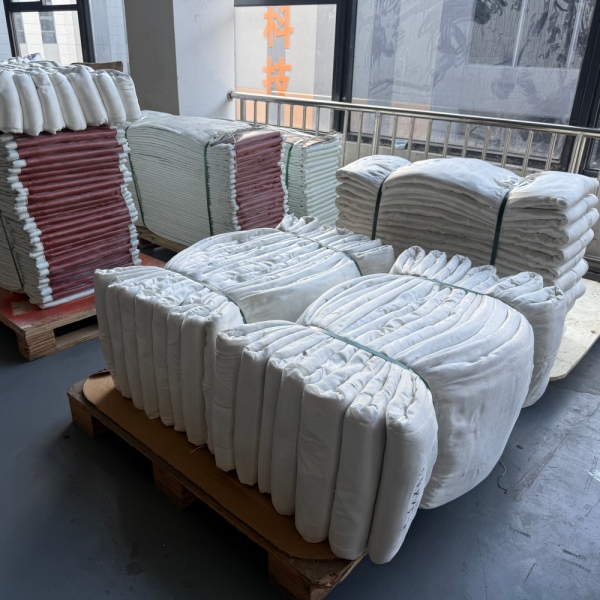
There is no universal movement rating.
Movement capability depends on the joint shape, flexible span, material system, pressure, temperature and attachment arrangement.
The main movement values should be specified separately:
For engineering purposes, a statement such as “40 mm movement” is incomplete unless the direction of that movement is also defined.
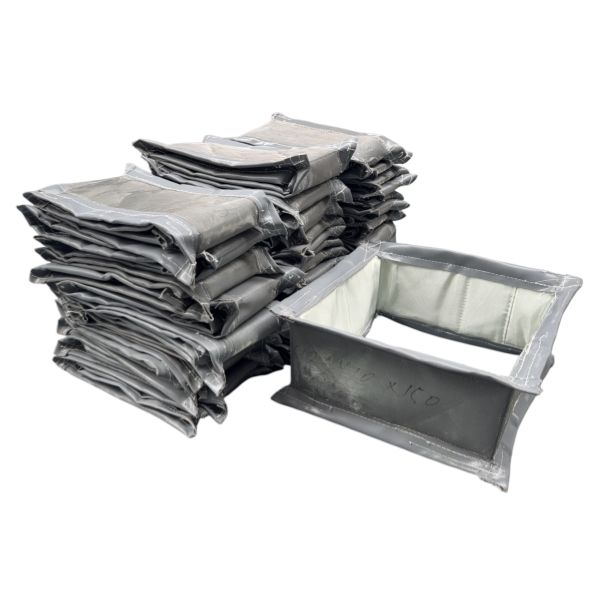
Yes, but high-temperature capability depends on the complete joint construction rather than one material rating.
In severe thermal applications, an inner protective layer and insulation package may be used to reduce the temperature reaching the gas-sealing membrane and outer flexible components.
Important temperature data include:
For this reason, selecting a joint only by asking for a “1000°C fabric” is not a reliable engineering method.
Industrial ducts may operate under either positive pressure or negative pressure.
Both conditions influence joint construction.
Under positive pressure, the flexible element is pushed outward. Under negative pressure, the system may pull flexible layers inward toward the gas stream.
Depending on joint size and operating conditions, internal support, liners or other structural features may be needed to control deformation.
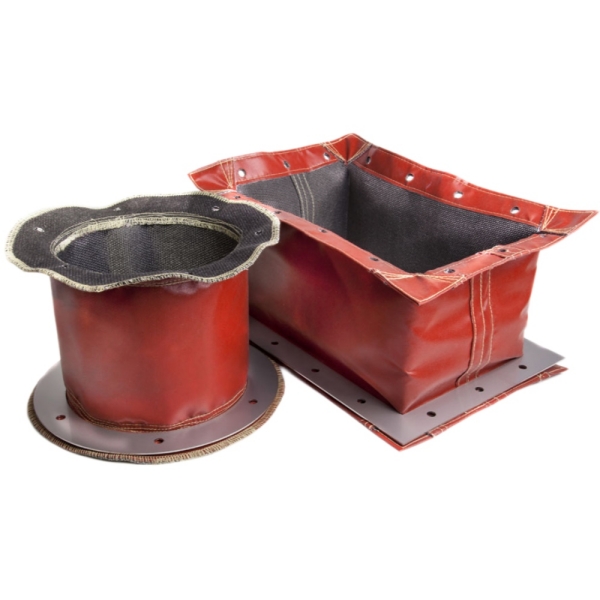
One of the strongest application advantages is scalability.
Industrial ducting can be several meters wide or high. Producing a flexible metallic bellows at those dimensions can become mechanically complex and heavy.
A fabric-based joint can be manufactured around large round, square or rectangular geometries while maintaining relatively low spring forces.
This makes non metallic expansion joints particularly attractive for large gas-handling systems.
Rectangular joints are widely used in power plants, cement plants, steel mills and furnace ducting. The corner construction requires careful attention because corners do not deform in the same way as long straight sections.
Round designs are common around fans, cylindrical ducting and exhaust systems. Their continuous circumference generally creates a more uniform geometry.
Both can be manufactured as custom designs according to equipment dimensions and movement requirements.
A belt-type design uses a flexible fabric belt mounted between existing metal frames or duct sections.
This arrangement can be particularly useful for large systems because the flexible belt may be replaced separately from the surrounding steelwork if the metal structure remains serviceable.
Belt-type designs are therefore common in maintenance and replacement projects.
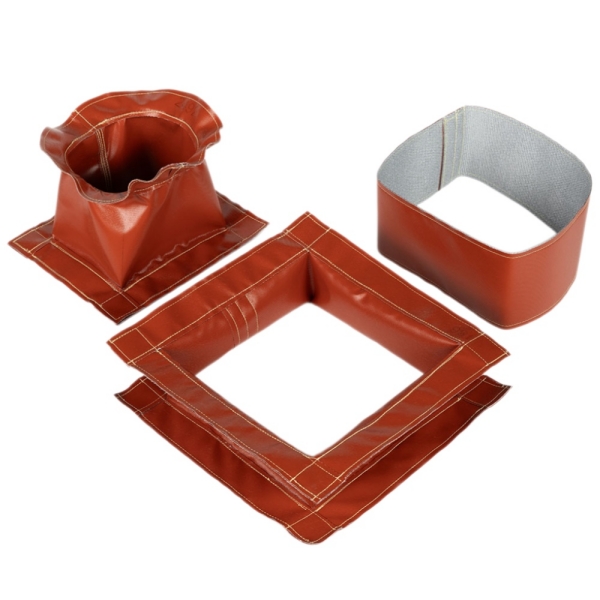
The terms can overlap in some markets, but they are not always interchangeable.
Rubber expansion joints are commonly molded elastomeric products used in piping systems and equipment connections.
Industrial non metallic fabric expansion joints are typically constructed from coated technical textiles and layered materials and are mainly associated with duct systems carrying gaseous media.
The two product families can differ significantly in:
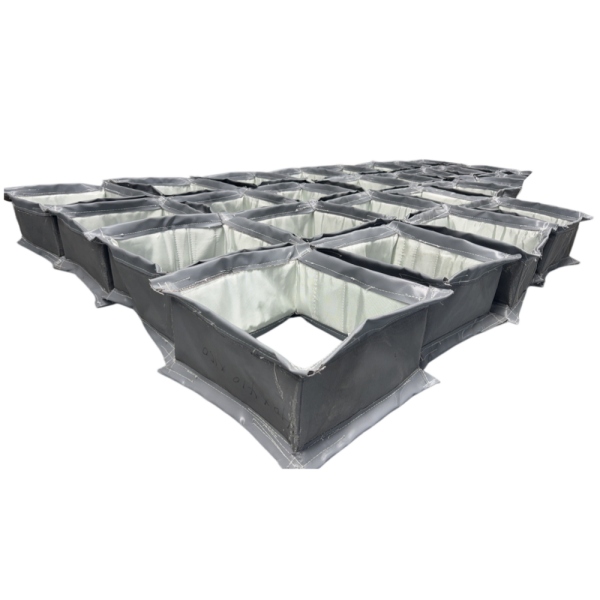
The core difference is the flexible element.
A metallic bellows uses formed metal convolutions. A non metallic joint uses a flexible membrane, fabric belt or composite construction.
This creates different engineering characteristics.
| Feature | Non Metallic Expansion Joint | Metallic Bellows |
|---|---|---|
| Primary Flexible Element | Fabric or composite membrane | Formed metal |
| Typical Application | Large gas ducts | Piping and process systems |
| Pressure | Generally low-pressure service | Can be engineered for higher pressures |
| Large Rectangular Shapes | Highly practical | More complex |
| Spring Forces | Generally low | Higher and design-dependent |
| Material Construction | Can combine multiple functional layers | Based mainly on selected metal alloy |
A non metallic solution is often worth evaluating if your project includes several of the following conditions:
For a custom design, the manufacturer should receive enough data to understand the complete operating environment.
BSTFLEX manufactures custom non metallic fabric expansion joints for industrial ducting, exhaust, hot-air and flue-gas systems.
Available constructions can include round, rectangular, square and non-standard geometries with flexible materials selected according to operating temperature, pressure, process medium, movement and installation conditions.
For product details, material options and custom manufacturing capabilities, visit the BSTFLEX Non Metallic Fabric Expansion Joint page.
For quotation, send duct dimensions, operating temperature, pressure, process gas, movement requirements, face-to-face length, quantity and available drawings.

 français
 Deutsch
 русский
 italiano
 español
 português
 Nederlands
 العربية
 日本語
日本語 한국의
한국의 Türkçe
 Polski
 Tiếng Việt
 slovenský
 Indonesia