français
 Deutsch
 русский
 italiano
 español
 português
 Nederlands
 العربية
 日本語
日本語 한국의
한국의 Türkçe
 Polski
 Tiếng Việt
 slovenský
 Indonesia



What Information Is Needed to Order a Custom Filter Insulation Cover?
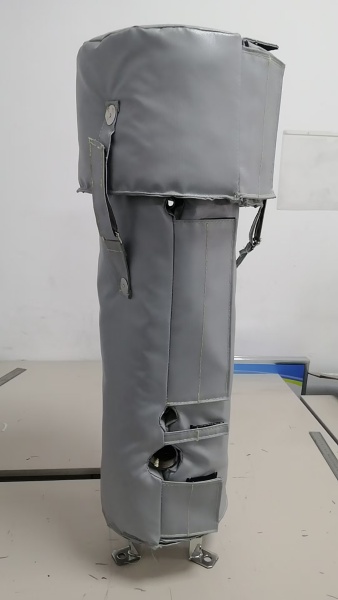
A custom filter insulation cover is designed to fit the real shape of an industrial filter housing, basket strainer, Y-strainer, cartridge filter vessel, or process filtration unit. Because filter bodies often include flanges, pipe connections, gauges, drains, handles, brackets, clamps, and removable covers, accurate information is required before production.
The better the information provided before quotation, the better the final insulation cover will fit the equipment. Correct dimensions also help improve thermal performance, reduce installation problems, and make the cover easier to remove and reinstall during maintenance.
1. Basic Filter Housing Dimensions
The first information needed is the main size of the filter housing. These dimensions allow the manufacturer to estimate material usage, insulation coverage, cover shape, and production cost.
| Required Dimension | Why It Is Needed |
|---|---|
| Filter body diameter | Determines the main wrap size and insulation coverage around the filter housing. |
| Filter body length or height | Defines the overall cover length and whether a one-piece or multi-piece design is better. |
| End cap or cover size | Helps design removable sections for filter opening, cleaning, or element replacement. |
| Overall equipment size | Useful when the filter has handles, brackets, pipe branches, or irregular protrusions. |
2. Pipe Inlet and Outlet Positions
Most industrial filters are connected to process piping through inlet and outlet ports. The insulation cover must include accurate openings or split lines around these pipe connections. If the inlet and outlet positions are not measured correctly, the cover may not fit the equipment during installation.
- Inlet pipe diameter
- Outlet pipe diameter
- Distance between pipe centerline and filter body edge
- Pipe direction: horizontal, vertical, side-mounted, top-mounted, or bottom-mounted
- Whether connected pipe sections also need insulation coverage
3. Flange Size and Bolt Clearance
Flanges are common on filter housings, strainers, and process filtration vessels. A custom removable insulation cover must provide enough clearance for flange thickness, bolt heads, nuts, and future maintenance work.
Please provide flange diameter, flange thickness, bolt circle position, and any area that must remain accessible. For filters that are opened frequently, the cover can be designed with a separate flange section or a split construction to make removal easier.
4. Gauge, Drain, Vent, Handle, and Bracket Locations
Small components often decide whether the insulation cover is practical in real use. Pressure gauges, drain valves, vent ports, handles, lifting lugs, clamps, support brackets, and nameplates may need openings, flaps, reinforced edges, or exposed access areas.
- Pressure gauge position and required visibility
- Drain and vent valve position
- Handle, lifting lug, or clamp band position
- Support bracket or mounting foot position
- Nameplate or inspection label position
- Any part that must remain open for operation or inspection
5. Operating Temperature and Surface Temperature Target
Operating temperature is essential for choosing the correct outer fabric, insulation core, inner liner, sewing thread, and fastening system. Steam filters, hot oil filters, chemical filtration systems, and exhaust-related filters may require different material combinations.
If you have a target outer surface temperature, it should also be provided. For example, some plants require insulation mainly for heat retention, while others focus on personnel protection and lower touch temperature. This information helps determine the insulation thickness and material structure.
6. Installation Environment
The installation environment affects the selection of fabric coating, reinforcement, stitching, and metal hardware. A filter installed indoors in a clean steam room may not need the same outer layer as a filter installed outdoors, near oil mist, chemical splash, salt spray, or heavy mechanical abrasion.
| Environment | Possible Material Consideration |
|---|---|
| Indoor steam system | Fiberglass fabric or silicone coated fiberglass fabric with suitable insulation mat. |
| Outdoor installation | Weather-resistant coated fabric, reinforced stitching, and stainless steel hardware. |
| Oil mist or hydraulic area | Silicone coated or PTFE coated surface for improved resistance and easier cleaning. |
| Chemical processing plant | PTFE coated fiberglass fabric or customized material according to chemical exposure. |
| Heavy-duty plant area | Stainless steel mesh reinforcement or abrasion-resistant outer fabric. |
7. Preferred Fastening Method
The fastening system should match the temperature, maintenance frequency, vibration level, and installation space. For equipment that is opened frequently, quick-release closures can reduce maintenance time. For high-temperature or heavy-duty areas, metal fastening may be preferred.
- Hook-and-loop tape for quick installation and removal
- Stainless steel buckles for stronger mechanical fixing
- Straps and D-rings for adjustable closure
- Snap fasteners for smaller fitted covers
- Wire lacing for high-temperature or vibration-prone applications
8. Maintenance Frequency and Cover Design
Before ordering, it is important to confirm how often the filter will be opened and which parts must be accessed during service. A filter that is cleaned every week may need a different cover design from a filter that is inspected only during scheduled shutdown.
For frequent maintenance, the cover can be designed in multiple sections to expose only the service area. For less frequent maintenance, a simpler full-body cover may be sufficient. The goal is to keep the insulation effective while making routine service practical.
9. Photos, Drawings, Samples, or Measurement Sheets
Clear visual information helps reduce design mistakes. A technical drawing is ideal, but photos with marked dimensions are also useful. For replacement projects, an old insulation cover sample can also be used as a reference.
- Front, side, top, and connection-point photos
- Marked dimensions on photos or sketches
- Equipment drawings or filter housing data sheets
- Old cover samples for replacement production
- Installation space limitations around the filter
10. Quantity, Labeling, and OEM Requirements
For OEM equipment manufacturers, engineering contractors, distributors, and maintenance companies, additional project information may be required. This can include part numbers, tag labels, packaging requirements, color preference, installation instructions, and repeated order identification.
- Required quantity for each size or filter model
- Equipment tag number or project reference number
- Private label or customer part number
- Special packaging requirements
- Installation direction mark or warning label
- Batch production or one-off custom requirement
Recommended Order Checklist
Before requesting a quotation, prepare the following information:
- Filter type: basket strainer, Y-strainer, cartridge filter housing, steam filter, hot oil filter, or other type
- Main body diameter and length
- Inlet and outlet pipe size and position
- Flange size and bolt clearance
- Gauge, drain, vent, handle, bracket, and clamp positions
- Operating temperature and target outer surface temperature
- Indoor or outdoor installation environment
- Required insulation thickness if specified
- Preferred fastening method
- Photos, drawings, samples, or measurement sheet
- Quantity and any OEM labeling or packaging requirement
Order Custom Filter Insulation Covers from BSTFLEX
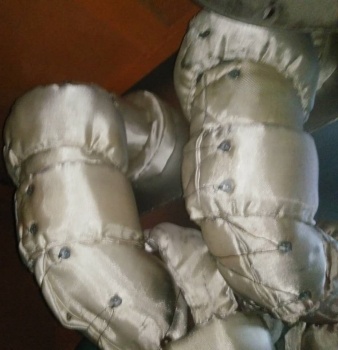
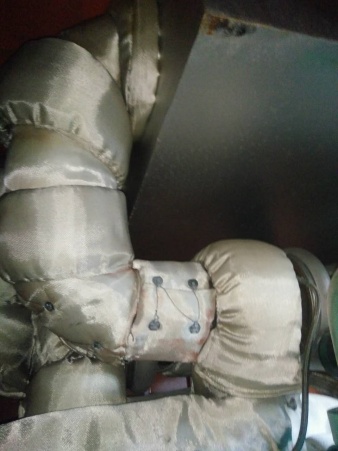
BSTFLEX manufactures custom removable filter insulation covers for industrial filter housings, basket strainers, Y-strainers, cartridge filters, steam systems, hot oil systems, chemical processing equipment, marine piping systems, power plants, and OEM machinery. Each cover can be produced according to drawings, photos, samples, or detailed field measurements.
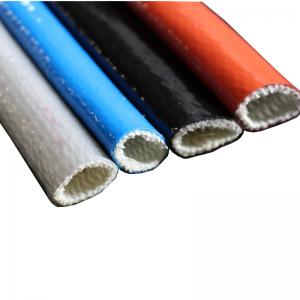
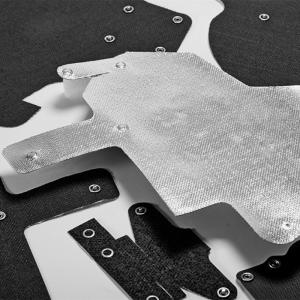
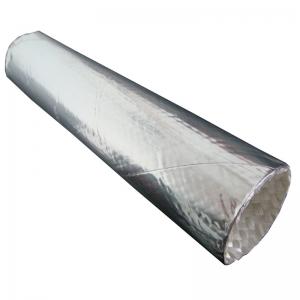
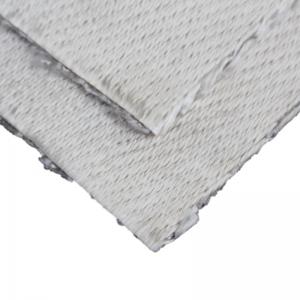
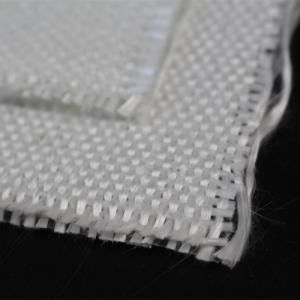
Our Custom Removable Filter Insulation Cover can be customized with fiberglass fabric, silicone coated fiberglass fabric, PTFE coated fiberglass fabric, aluminum foil fiberglass fabric, stainless steel mesh, silica insulation mat, ceramic fiber insulation mat, stainless steel buckles, hook-and-loop closures, straps, or wire lacing.
FAQ
Can a filter insulation cover be made without a drawing?
Yes. A cover can be designed from clear photos, marked dimensions, measurement sheets, samples, or equipment data. A drawing is helpful, but it is not always required.
What dimensions are most important for a custom filter insulation cover?
The most important dimensions include filter body diameter, body length, pipe connection position, flange size, gauge location, drain position, and any handle or bracket clearance.
Do I need to provide the operating temperature?
Yes. Operating temperature is needed to select the correct fabric, insulation core, sewing thread, and fastening method.
Can the cover include openings for gauges and drains?
Yes. Custom cut-outs, flaps, reinforced openings, and exposed service areas can be added for pressure gauges, drains, vents, handles, brackets, and pipe connections.
Can the insulation cover be made for repeated maintenance?
Yes. The cover can be designed with removable sections, quick-release fastening, straps, buckles, or wire lacing to support repeated removal and reinstallation.