
E-bike batteries store high energy density and are commonly charged and stored in homes, apartments, workshops, warehouses, and delivery depots. Because charging, impact, aging, or internal defects can increase battery risk, many users and commercial operators choose an e-bike battery safety bag to add an extra layer of protection during daily storage and charging. For product details, see E-Bike Battery Safety Bag.
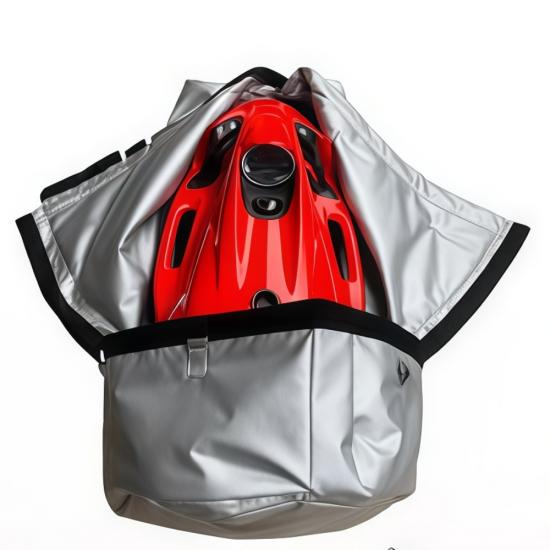
A safety bag does not replace proper charging procedures, battery management systems, or emergency planning. Its purpose is to provide a fire-resistant barrier around the battery, helping contain heat, sparks, and limited flame spread if a battery failure event occurs.
Designed for storage and charging of e-bike batteries.
Helps contain heat, sparks, and limited flame spread.
Useful in apartments, charging rooms, warehouses, depots, and workshops.
E-bike batteries are charged frequently, moved often, and sometimes stored in enclosed or shared environments. Compared with small consumer batteries, they usually have larger capacity and are more likely to be handled as complete battery packs. That means the storage and charging environment matters.
If a battery is damaged, improperly charged, aged, or internally defective, it may overheat and release heat, smoke, sparks, gas, or flame. This is why battery protection products are becoming more important not only for industrial users, but also for e-bike retailers, service centers, property managers, fleet operators, and repair workshops.
An e-bike battery safety bag is a fire-resistant containment product designed to surround the battery during storage or charging. It adds a protective barrier between the battery and nearby materials, helping reduce direct exposure if a battery incident happens.
In normal daily use, the bag supports safer handling practices by keeping the battery in a dedicated containment space. In case of malfunction, it helps reduce the spread of sparks and small flame release and helps limit direct heat exposure to surrounding surfaces.
Charging is one of the most important moments to manage battery safety because it is when the battery is active, connected, and often left in place for a period of time. In homes, shops, and service stations, batteries may be charged close to walls, shelves, cartons, tools, or other equipment.
A safety bag helps create a more controlled space around the battery during charging. It should still be used together with proper chargers, correct battery settings, adequate ventilation, and safe charging procedures.
E-bike battery safety bags are useful wherever batteries are regularly stored or charged. Common application environments include:
These are exactly the kinds of environments where repeated charging and storage make preventive protection more valuable.
Not all e-bike batteries have the same shape, connector position, housing design, or charging layout. Some are compact and removable, while others are large battery packs used in delivery fleets or commercial systems. This is why buyers often need a bag designed around the real battery size and use condition.
A better bag choice depends on:
When choosing an e bike battery charging safety bag, buyers usually focus on practical design as much as material performance.
For broader battery applications beyond e-bikes, you can also review Lithium Battery Safety Bag.
A safety bag should be viewed as one part of a broader battery risk management approach. It works best when used together with correct charging equipment, safe charging supervision, good ventilation, battery inspection routines, and an emergency response plan.
Some users also keep external containment products nearby for incident response. For related products, see Fire Blankets.
In these environments, the goal is not only to protect the battery itself, but also to reduce risk to surrounding property, equipment, and working areas.
| Use Condition | Why a Safety Bag Helps |
| Home Storage | Adds a fire-resistant barrier between the battery and nearby household materials |
| Indoor Charging | Helps create a more controlled charging space around the battery |
| Workshop Use | Supports safer repeated handling and charging routines |
| Warehouse Storage | Helps reduce direct exposure to surrounding cartons, shelves, and materials |
| Fleet Operations | Supports standardized battery storage and charging procedures |
E-bike batteries need a safety bag for storage and charging because they are high-energy battery packs that are frequently charged, stored, and handled in places where surrounding materials and equipment also need protection. A well-designed safety bag helps add a flame-resistant containment layer around the battery, supporting safer day-to-day use.
For product details, visit E-Bike Battery Safety Bag. For general battery containment products, see Lithium Battery Safety Bag. For related containment products, review Fire Blankets.
Because e-bike batteries are frequently stored and charged indoors or in shared environments, a safety bag helps add a fire-resistant barrier around the battery and helps reduce exposure to heat, sparks, and limited flame spread if a failure occurs.
In many cases, yes, if the bag is designed for charging use and the battery is used according to proper charging procedures, charger instructions, and safe ventilation requirements.
They are commonly used in apartments, charging rooms, warehouses, delivery depots, retail bicycle shops, and maintenance workshops.
Buyers usually look for fire-resistant construction, multi-layer material options, reinforced seams, easy closure, and size compatibility with the actual battery pack.
No. A safety bag should be used together with proper charging equipment, safe handling procedures, adequate ventilation, battery inspection routines, and emergency planning.
E-Bike Battery Safety Bag | Lithium Battery Safety Bag | Fire Blankets

 français
 Deutsch
 русский
 italiano
 español
 português
 Nederlands
 العربية
 日本語
日本語 한국의
한국의 Türkçe
 Polski
 Tiếng Việt
 slovenský
 Indonesia