
A battery safety bag and a fire blanket are both used in lithium battery safety planning, but they are not the same product and they are not used in the same way. A battery safety bag is usually selected for day-to-day storage, charging, and handling of lithium-ion batteries or battery packs, while a fire blanket is generally used as an external containment product during an incident or emergency response. For product details, see Lithium Battery Safety Bag and Fire Blankets.
Buyers often compare these two products when building a safer battery storage or charging process. The right choice depends on whether the goal is routine battery control, charging-area safety, workshop handling, or broader emergency containment planning.
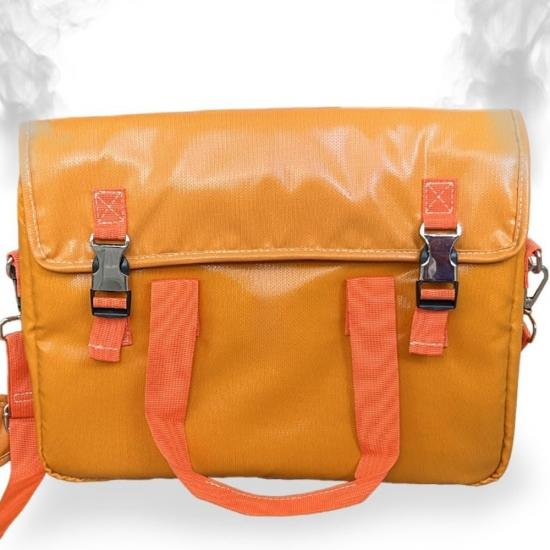
Used for storage, charging, handling, and battery-level containment support.
Used as an external covering or containment aid during an incident.
Many buyers use both products together for different parts of the safety process.
A battery safety bag is a fire-resistant containment product designed for lithium-ion batteries and battery packs during storage, charging, handling, and transport preparation. It surrounds the battery with a flame-resistant barrier and helps reduce exposure to heat, sparks, and limited flame spread during battery failure events.
This type of product is also commonly described as a lithium battery safety bag or battery fire containment bag. It is especially useful when individual batteries or battery packs need their own protective containment layer inside a workshop, charging station, warehouse, or service area.
A fire blanket is generally used as an external containment product placed over equipment, batteries, or surrounding areas during an incident. In lithium battery applications, it is often considered part of a broader emergency response or containment strategy rather than a day-to-day battery storage accessory.
A blanket is usually selected when the goal is to cover, isolate, or shield an area externally, rather than to enclose each battery individually. For related product options, see Fire Blankets.
The main difference is how the product is positioned around the battery and when it is used. A battery safety bag is a close-contact solution that encloses the battery or battery pack. A fire blanket is an external solution used to cover or isolate from the outside.
In practical terms:
Choose a lithium battery safety bag when batteries are handled regularly and need a dedicated containment layer during storage, charging, or routine movement. This is often the better option when each battery pack needs individual protection and a repeatable daily-use process.
For a dedicated product page, visit Lithium Battery Safety Bag.
Choose a fire blanket when the goal is broader external containment rather than individual battery enclosure. This is often the better choice for emergency planning, response readiness, and applications where a larger area, device, or battery system may need to be covered from the outside.
Yes. In many real-world applications, these two products serve different roles and are used together. A battery safety bag can support routine storage and charging control, while a fire blanket can be kept nearby as part of a broader emergency response plan.
This combination is especially useful in battery workshops, e-bike service centers, electronics assembly environments, and warehouses handling lithium batteries.
For day-to-day storage and charging of e-bike batteries, a battery safety bag is usually the more direct solution because it encloses the battery itself. If the project is specifically focused on electric bicycle batteries, see E-Bike Battery Safety Bag.
A fire blanket can still be valuable in the same environment, but it serves a different purpose. It is better viewed as an external containment or response product rather than the primary daily storage container.
| Item | Battery Safety Bag | Fire Blanket |
| Main Use | Battery storage, charging, handling | External containment and incident response |
| Position | Around the battery or battery pack | Over the battery, equipment, or surrounding area |
| Typical Use Time | Before and during routine storage or charging | During an incident or emergency response |
| Coverage Level | Individual battery level | Area or equipment level |
| Best For | Daily battery control | Emergency containment support |
Ask these questions before choosing:
If the answer is mainly about routine storage and charging, a battery safety bag is usually the first choice. If the answer is mainly about external containment during an incident, a fire blanket is generally the better fit.
For many buyers, the most practical solution is not choosing one instead of the other, but using each product where it works best. For product details, visit Lithium Battery Safety Bag, E-Bike Battery Safety Bag, and Fire Blankets.
No. A battery safety bag is used as an enclosed solution for battery storage, charging, and handling, while a fire blanket is typically used as an external containment product during an incident.
For routine charging, a battery safety bag is usually the more direct option because it encloses the battery itself during normal use.
A fire blanket is generally used for external containment, emergency response planning, or covering a battery-related area during an incident.
Yes. Many buyers use a battery safety bag for daily storage and charging control and keep a fire blanket nearby for broader emergency containment support.
For routine storage and charging of e-bike batteries, a dedicated battery safety bag is usually the more suitable daily-use product, while a fire blanket can support emergency response planning in the same environment.
Lithium Battery Safety Bag | E-Bike Battery Safety Bag | Fire Blankets

 français
 Deutsch
 русский
 italiano
 español
 português
 Nederlands
 العربية
 日本語
日本語 한국의
한국의 Türkçe
 Polski
 Tiếng Việt
 slovenský
 Indonesia