
An exhaust insulation blanket is one of the most effective solutions for controlling extreme exhaust temperatures in automotive, industrial, and power generation systems. As exhaust systems operate at increasingly higher temperatures, proper insulation is no longer optional—it is essential for heat retention, safety, efficiency, and equipment longevity.
This comprehensive guide explains what an exhaust insulation blanket is, how it works, where it is used, and how to choose the right one. Whether you are an engineer, OEM, distributor, or procurement manager, this page will help you make an informed decision.
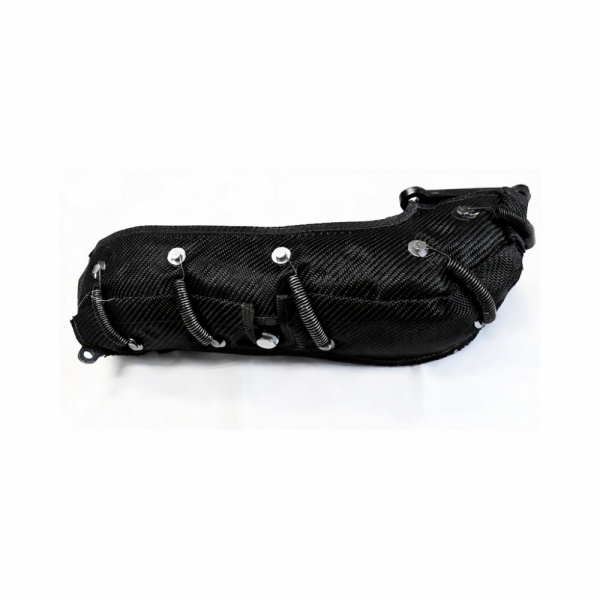
An exhaust insulation blanket is a removable, high-temperature thermal insulation cover designed to wrap around exhaust pipes, manifolds, turbochargers, silencers, and other hot components. Its primary function is to contain radiant heat, reduce surface temperature, and protect nearby components and personnel.
Unlike permanent insulation methods, exhaust insulation blankets are:
Flexible and removable
Easy to install and maintain
Customizable for complex geometries
They are commonly used in environments where exhaust temperatures exceed 500°C (932°F) and can reach 1000°C (1832°F) or more.
Exhaust insulation blankets work through multi-layer thermal resistance:
Made from materials such as fiberglass, ceramic fiber, or silica
Traps heat within the exhaust component
Reduces heat loss and improves system efficiency
Provides structure and thickness
Maintains insulation integrity under vibration
Stainless steel mesh or high-temperature fabric
Protects against abrasion, oil, chemicals, and moisture
Together, these layers reduce radiant heat by up to 90%, significantly lowering external surface temperatures.
By keeping heat inside the exhaust system, insulation blankets help maintain optimal exhaust gas velocity, which is especially critical for turbocharged engines.
Surface temperatures can drop from over 600°C to below 80–120°C, reducing the risk of burns and fire hazards.
Higher exhaust gas temperatures improve turbo efficiency and reduce energy loss in industrial systems.
Sensitive components such as wiring, hoses, sensors, and control units are shielded from radiant heat damage.
Industrial systems benefit from reduced heat loss, leading to improved fuel efficiency and lower operating costs.
| Feature | Exhaust Insulation Blanket | Exhaust Wrap |
|---|---|---|
| Installation | Easy, removable | Permanent, labor-intensive |
| Maintenance | Reusable | Often needs replacement |
| Insulation Efficiency | High | Medium |
| Moisture Resistance | Excellent | Poor |
| Custom Shapes | Yes | Limited |
Conclusion:
An exhaust insulation blanket is the preferred solution for professional, industrial, and high-performance applications, while exhaust wrap is more suitable for low-budget or temporary use.
Turbochargers
Exhaust manifolds
Downpipes
Performance vehicles and race cars
Boilers
Furnaces
Process piping
Heat exchangers
Diesel generators
Gas turbines
CHP systems
Engine rooms
Exhaust risers
Confined high-heat areas
Heavy-duty machinery
Enclosed engine compartments
Temperature resistance up to 550°C (1022°F)
Cost-effective
Suitable for moderate heat environments
Withstands up to 1260°C (2300°F)
Ideal for turbo and industrial exhausts
Excellent thermal stability
Continuous exposure up to 1000°C (1832°F)
Flexible and durable
Used in aerospace and motorsports
Stainless steel wire mesh
Silicone-coated fiberglass
PTFE-treated fabrics
A high-quality exhaust insulation blanket should meet recognized industry standards:
Continuous temperature rating
Peak temperature resistance
Fire resistance certification
Non-toxic and asbestos-free materials
Always verify compliance with ISO, ASTM, or equivalent industrial standards when selecting a supplier.
When selecting an exhaust insulation blanket, consider:
Operating temperature (continuous & peak)
Application environment (oil, water, chemicals, vibration)
Component geometry
Installation & maintenance requirements
Customization needs
Custom exhaust insulation blankets offer:
Precise fit for complex components
Optimized insulation thickness
Reduced installation time
Longer service life
Manufacturers can produce custom solutions based on drawings, samples, or 3D models.
Ensure the exhaust surface is clean and dry
Use proper fastening systems
Avoid over-tightening
Inspect periodically
Typical service life is 2–5 years, depending on temperature, environment, and mechanical stress.
Q1: How much temperature reduction can an exhaust insulation blanket provide?
Up to 50–90% surface temperature reduction.
Q2: Can exhaust insulation blankets be reused?
Yes, most are designed for repeated use.
Q3: Are they waterproof?
Many are water-resistant; full waterproofing depends on materials.
Q4: Are they suitable for turbochargers?
Yes, turbo-specific blankets are designed for extreme heat.
Q5: Do they improve efficiency?
Yes, improved heat retention enhances system efficiency.
Q6: Are custom sizes available?
Yes, most manufacturers support custom designs and low MOQs.

 français
 Deutsch
 русский
 italiano
 español
 português
 Nederlands
 العربية
 日本語
日本語 한국의
한국의 Türkçe
 Polski
 Tiếng Việt
 slovenský
 Indonesia