
In industrial environments where safety and compliance are non-negotiable, hydraulic systems present a complex web of inherent risks. A hydraulic hose failure is never just a maintenance issue; it is a significant safety event waiting to happen. For engineers, plant managers, and safety officers, the question isn't if a hose will degrade, but when—and more importantly, how to proactively manage the consequences. A Nylon Protective Hose Sleeve is not merely an accessory; it is an engineering control specifically designed to systematically de-risk your hydraulic operations.
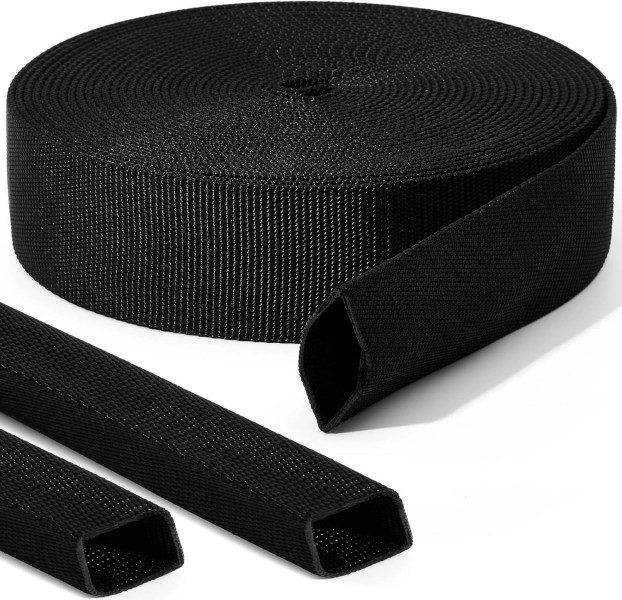
Let's analyze how this solution directly targets and mitigates the most critical categories of risk in your facility.
This is the most severe and immediate human safety risk.
The Hazard: A pinhole leak in a high-pressure hose can release hydraulic fluid at pressures high enough to penetrate human skin, causing a fluid injection injury. This is a medical emergency that can lead to severe tissue damage, amputation, or death. A complete hose rupture can cause the hose to whip violently, striking personnel with brutal force.
The Risk Mitigation: A Nylon Protective Hose Sleeve acts as a primary containment barrier. In the event of a pinhole leak or a small split, the tightly woven, high-tensile nylon fabric contains the high-pressure spray, channeling the fluid safely along the length of the sleeve and away from personnel. While not designed to contain a full-bore rupture indefinitely, the sleeve significantly dampens the violent whip of a failing hose, providing crucial milliseconds for the pressure to drop and for personnel to react, thereby reducing the potential for traumatic impact injuries.
The Hazard: Hydraulic fluid is often flammable or combustible. A high-pressure spray onto a hot surface (e.g., an engine block, exhaust manifold, or electrical component) can create a fine, ignitable mist, leading to a flash fire. Furthermore, fluid pooling on floors creates severe slip-and-fall hazards, one of the most common sources of workplace injury.
The Risk Mitigation: By containing leaks and sprays, the sleeve directly prevents fluid from being atomized into the air near ignition sources. It also drastically reduces the volume of fluid that escapes into the environment, minimizing the area of contamination and the associated slip hazard. This supports compliance with OSHA (or equivalent) standards for maintaining a clean and safe work environment.
The Hazard: The external abrasion of a hose doesn't just weaken it; it grinds away the outer cover, creating particulate debris. This abrasive dust, along with external contaminants like dirt and moisture, can be introduced into the hydraulic system during maintenance or through a final failure, acting as a destructive abrasive against pumps, valves, and cylinders.
The Risk Mitigation: The sleeve acts as a sacrificial shield. It traps abrasive particles and prevents the hose's outer jacket from being worn away. By keeping the hose cover intact, it maintains the system's integrity and prevents external contaminants from entering during handling or failure events. This protects your entire system's health and prevents cascading, expensive component failures, ensuring operational reliability.
The Hazard: Regulatory bodies and insurance inspectors increasingly demand demonstrable proof of proactive risk management. A reactive "replace-when-it-fails" approach to hose maintenance is no longer sufficient and can be viewed as negligence.
The Risk Mitigation: Implementing a Nylon Protective Hose Sleeve program is a visible, tangible action that shows inspectors and auditors you are taking proactive steps beyond the minimum requirement. It documents your commitment to a "Prevention through Design" (PtD) philosophy. By protecting hoses in high-wear zones, you are systematically addressing a known hazard, which strengthens your safety case and can positively impact insurance premiums.
The Hazard: An uncontrolled release of hydraulic fluid is an environmental incident. It leads to soil and water contamination, potential regulatory fines, and significant cleanup and disposal costs, not to mention damage to your corporate reputation.
The Risk Mitigation: The sleeve's primary function of containing leaks directly minimizes the volume of any fluid release. This is a critical control for companies operating under strict environmental regulations or those committed to sustainable practices. It is a direct action to prevent a costly and reputation-damaging spill.
A Nylon Protective Hose Sleeve is more than a product; it is a fundamental component of a modern, safety-first hydraulic system strategy. It transforms an unprotected hose from a latent liability into a controlled and managed asset. It systematically addresses risks across the spectrum—from human life and safety to environmental stewardship and financial liability.
In the calculus of risk management, the modest investment in a Nylon Protective Hose Sleeve yields an unparalleled return in safety, compliance, and operational integrity.
Don't just manage failures—prevent them. Contact our safety and engineering specialists today to conduct a hose risk assessment and integrate nylon protective sleeves into your safety protocol.

 français
 Deutsch
 русский
 italiano
 español
 português
 Nederlands
 العربية
 日本語
日本語 한국의
한국의 Türkçe
 Polski
 Tiếng Việt
 slovenský
 Indonesia