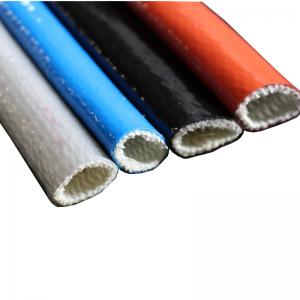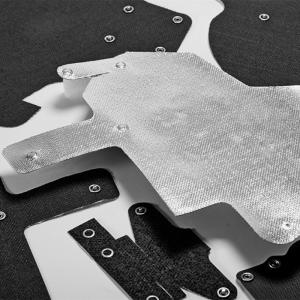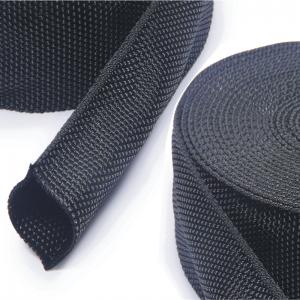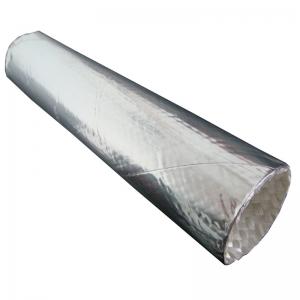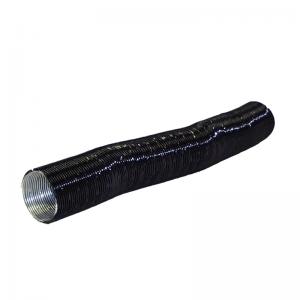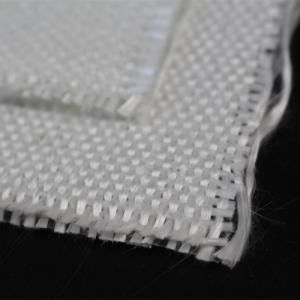
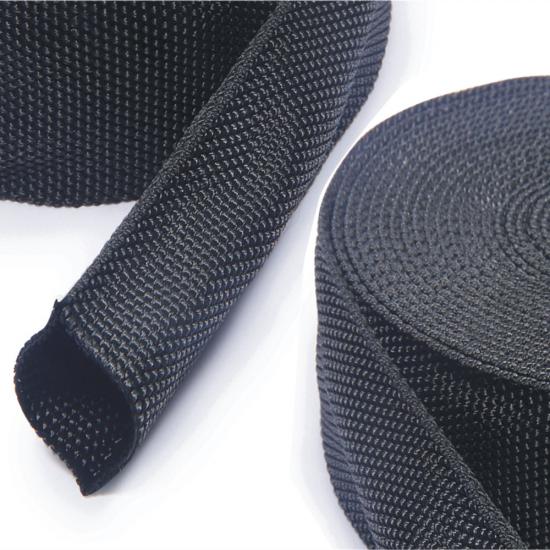
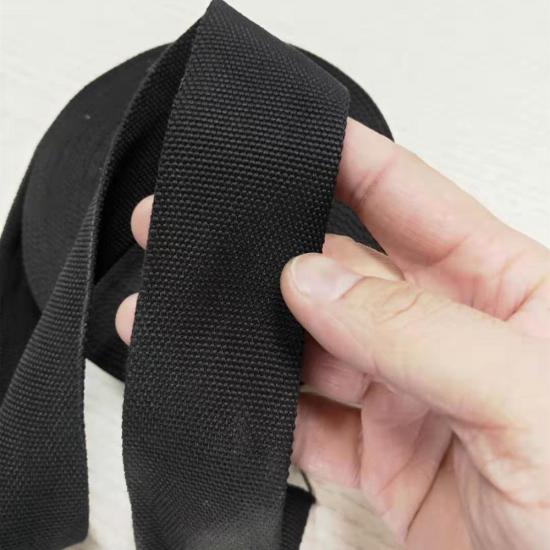
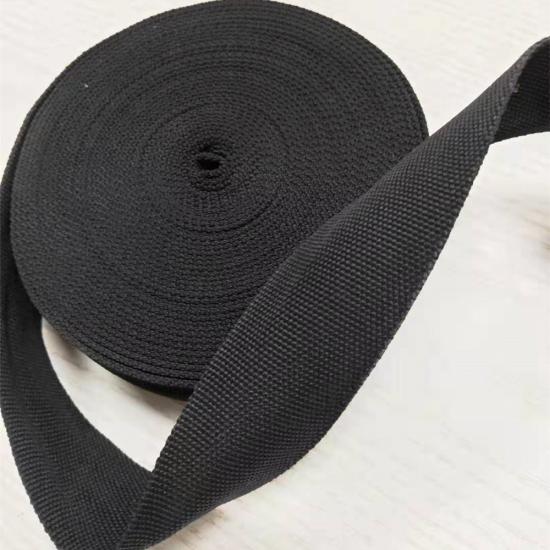
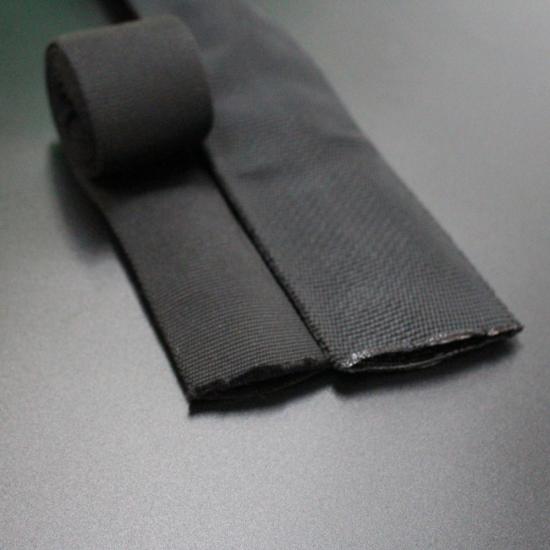
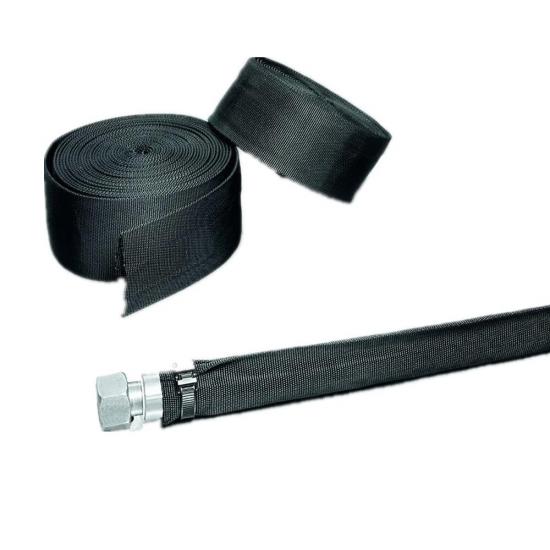
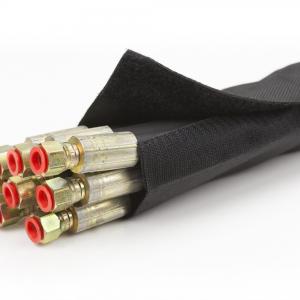
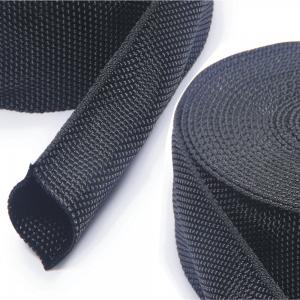
BSTFLEX Nylon Hydraulic Hose Sleeve provides a woven abrasion layer for hydraulic hoses exposed to rubbing and repeated movement. Made from high-tenacity nylon multifilament, it is offered in lay-flat widths from 10 to 500 mm, with black as the standard color and custom colors on request. Its tubular construction slides on through an accessible hose end. Send the hose outside diameter, fitting dimensions and required coverage length for size selection, samples and quotation.
order(moq):
1Payment:
EXW, FOB, FCA, CIF, DDPproduct origin:
Chinashipping port:
Shanghai, NingboBSTFLEX nylon hydraulic hose sleeve places a woven protective layer between the hose cover and surrounding contact surfaces. It is designed for external abrasion protection where hoses rub against adjacent lines, brackets or equipment structures. This tubular nylon sleeve hose guard is part of our hydraulic hose protection range.
Specify it for hose assemblies with suitable end access. For production orders, start with the hose dimensions and installation route rather than choosing a sleeve by its flat width alone.
| Item | Specification |
|---|---|
| Material | High-tenacity nylon multifilament |
| Construction | Flexible, woven tubular textile sleeve |
| Primary function | External hose-cover abrasion protection |
| Lay-flat width | 10–500 mm. This is the width of the flattened sleeve, not its inside diameter. |
| Color | Standard black; custom colors on request |
| Installation | Slip-on installation through an accessible hose end |
| Length | Cut to the required coverage length; specify your preferred supply format when enquiring |
| MSHA project requirements | Specify the required approval and request documentation covering the quoted sleeve construction. |
Request the available inside diameters, wall thickness, operating temperature and applicable test documents for the construction being quoted. Confirm special-size availability before ordering.
Measure the hose outside diameter. Use the outside dimension of the finished hose, not its nominal bore or dash size. For several hoses, provide the overall bundle dimensions in the intended arrangement.
Check the largest section the sleeve must pass over. An assembled coupling or ferrule may be wider than the hose. A sleeve that fits the hose body may still be unsuitable for installation over the fittings.
Confirm the sleeve's actual internal clearance. Match the hose or bundle to the quoted sleeve inside diameter or recommended hose-fit range. Lay-flat width describes a different measurement and must not be compared directly with hose outside diameter.
Include a fitting drawing when clearance is tight. State whether sleeving will be installed before or after hose assembly. Confirm fit on the actual assembly before approving a production order.
Plan the coverage length and end access before fitting the sleeve. Follow the approved cutting, edge-finishing and fastening method for the selected construction. During service work, isolate and depressurize the hydraulic system in accordance with the equipment manufacturer's procedure.
Verify routing and clearance through the intended movement using the equipment manufacturer's safe inspection procedure. The sleeve must not cause binding, interfere with clamps or compromise the hose's minimum bend radius. Maintain inspection access and replace damaged hoses rather than covering existing damage with a sleeve.
Where an installed assembly has no practical end access, assess a wrap-around nylon hose sleeve instead of forcing a tubular sleeve over oversized fittings.
Typical applications include hydraulic lines on construction and agricultural equipment, industrial machinery and hose assemblies exposed to repeated surface contact. For mining projects, identify the required approvals before selecting a sleeve grade.
Review the actual wear point during selection. A sleeve can provide an additional abrasion layer, but it should not replace corrections to sharp-edge contact, poor routing or unsuitable hose support.
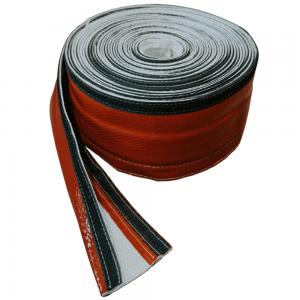
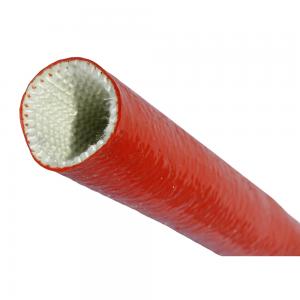
Where heat is the main exposure, review a hydraulic hose fire sleeve. For further material and application guidance, read Nylon Hose Sleeve for Hydraulic Hose Protection.
Technical Overview – Nylon Sleeve Hose Guard
Keep the product technical overview with your drawing and quoted sleeve specification for engineering and purchasing review. For project approval, request the applicable dimensional details, service-temperature limits and compliance documents for the selected construction.
Download Nylon Sleeve Technical Overview (PDF)The PDF opens in a new tab. Use the approved specification for the ordered construction when confirming product suitability.
This product is tubular and slides on from a hose end. A wrap-around construction opens along its length, allowing installation around an accessible section without passing over the fittings.
Request the applicable approval reference and confirm that it covers the quoted sleeve construction. Flame-resistance requirements must be checked separately from heat insulation and burst-protection requirements.
Do not select it for that purpose on the basis of abrasion resistance alone. Burst or pinhole-leak protection requires evidence for the sleeve, hose, fittings and retention arrangement under specified test conditions. A protective sleeve is not a repair for a leaking or damaged hydraulic hose.
Use the documented service-temperature limit for the supplied sleeve grade and exposure conditions. Do not substitute the nylon fiber's melting point for a continuous operating-temperature rating. Provide both normal and peak exposure temperatures when requesting a quotation.
BSTFLEX supports hose assembly manufacturers, equipment builders and distributors with application review, samples and custom production enquiries. Discuss the required dimensions, color, cut lengths, identification and packaging before sample approval. Available options, minimum order quantity and delivery schedule depend on the agreed construction and order.
For sizing: Send the hose outside diameter, bundle dimensions where relevant, maximum fitting profile and coverage length.
For material selection: Include service temperature, rubbing conditions, movement, fluid exposure and any specified nylon grade or approval requirement.
For quotation: State the quantity, preferred roll or cut-length supply, color, marking, packaging and required delivery date. Attach a drawing or installation photo when available.
If you have questions or suggestions, please leave us a message,we will reply you as soon as we can!


 français
 Deutsch
 русский
 italiano
 español
 português
 Nederlands
 العربية
 日本語
日本語 한국의
한국의 Türkçe
 Polski
 Tiếng Việt
 slovenský
 Indonesia