Two carbon and aramid sleeves can contain the same fiber types and still make quite different composite parts. One may place the yarns in a different repeating pattern. Another may open more widely over the tool, changing the braid angle and leaving less even coverage at a taper. For a structural tube, the useful question is what the reinforcement looks like on the actual mandrel, after it has been positioned for resin.
BSTFLEX's aramid carbon hybrid sleeving is a biaxial tubular braid made with carbon and aramid fibers. The product page offers custom diameters, braid angles and carbon-to-aramid ratios. Those options give a buyer room to specify the lay-up, but each one needs a reference condition: the installed diameter, the desired fiber arrangement and the process used to make the part.
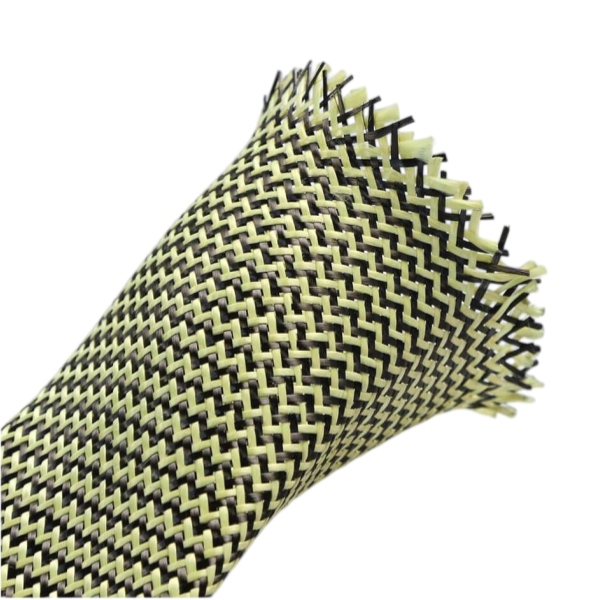
In a composite shaft or tube, carbon is commonly selected for stiffness, while aramid may be included where damage tolerance is a concern. The final behavior does not follow from the fiber names alone. The proportion of each fiber, its position in the braid, the other plies, the resin and the cure all affect the finished part. A proposed hybrid should therefore be compared against the existing laminate or a clearly defined design target.
Tell the supplier whether this sleeve is the main reinforcement, an outer damage-tolerant layer or a visible finish over other plies. An outer cosmetic layer may have an appearance requirement that a buried structural layer does not. If a part must meet an impact or torsion target, set the test method and acceptance value at the part level. A sleeve description cannot certify a cured shaft.
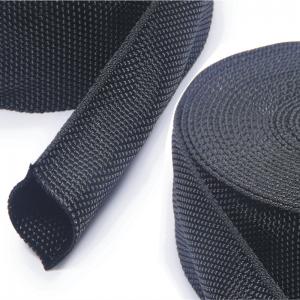
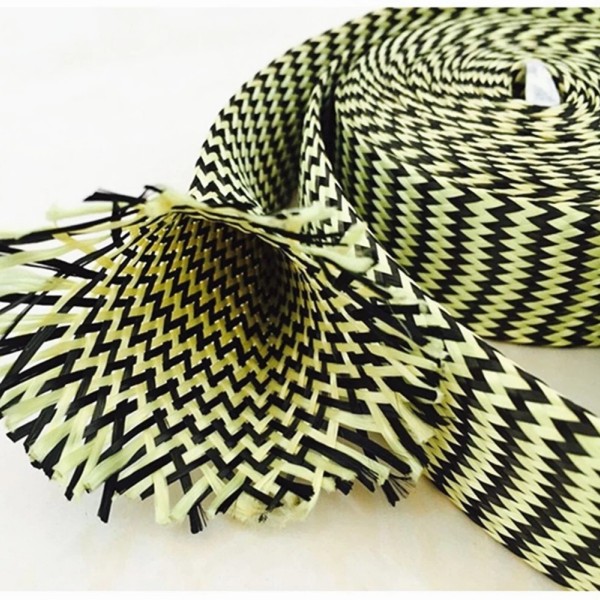
“50/50 hybrid” is incomplete without a basis for the ratio. Ask whether a quoted percentage refers to fiber mass, yarn ends or another measure. Request a braid diagram or close photograph showing how the two yarn types repeat around the circumference. If the visual pattern matters, agree on the appearance at the intended diameter and ask for a sample from the proposed production construction.
For repeat orders, record the agreed yarn types, placement pattern and fiber ratio in the purchasing specification. Otherwise, two sleeves described with the same broad material name may produce different surface patterns and different laminate makeups.
A biaxial sleeve carries yarns in two opposing helical directions. Its angle changes as the tube is expanded or drawn down to fit a mandrel. A braid angle given without the diameter at which it was measured is difficult to use. State the mandrel diameter at each section, including steps and tapers, and ask for the expected angle and coverage on those sections.
Try the dry sleeve on the longest or most difficult tool section before approving the construction. Check whether it can be moved into position without snagging, whether the pattern remains regular at changes of diameter, and whether the planned cut length still covers the part. Do not assume that maximum expansion gives the best fiber orientation for the finished component.
The product page lists resin infusion, vacuum bagging and composite lay-up as potential processes. Specify the actual resin, handling method and cure schedule in the inquiry. On a trial part, inspect wet-out of both yarn types, trapped air at crossovers, movement during bagging and the quality of the cut ends. Discuss any sizing or surface treatment with the supplier when bonding performance is critical.
Make samples with the proposed sleeve and the production process, then compare them with a control made to the same geometry and cure schedule. Record thickness, mass and visual coverage alongside any mechanical results. A change in performance should be interpreted with the entire laminate in view, including the resin content and the orientation of other plies.
The carbon and aramid construction addresses a different material choice from a carbon and glass braid. If the second fiber in the specification is fiberglass, see fiberglass carbon hybrid sleeving and evaluate that construction separately. Do not transfer a carbon-and-glass ratio, yarn arrangement or test result to a carbon-and-aramid part.
Likewise, the service temperature of a cured composite is determined by the complete laminate and its environment, particularly the resin system. Ask for relevant material information, then validate the finished part against its actual temperature and loading requirements.
A useful inquiry identifies the part geometry, the role of the hybrid ply and the construction to be trialed. Include the following information with the drawing:
Send the drawing and process notes with an inquiry for aramid carbon hybrid sleeving. Approve the dry fit and a cured sample before fixing the production braid. That creates a specification tied to the part you actually manufacture, rather than a fiber blend name on its own.

 français
 Deutsch
 русский
 italiano
 español
 português
 Nederlands
 العربية
 日本語
 한국의
 Türkçe
 Polski
 Tiếng Việt
 slovenský
 Indonesia