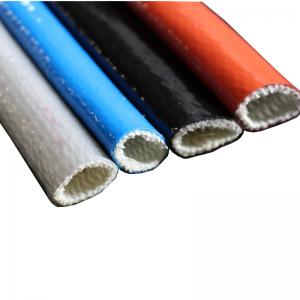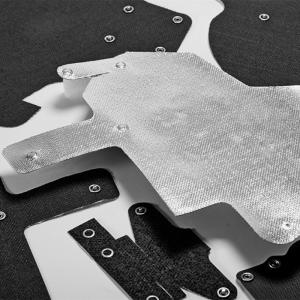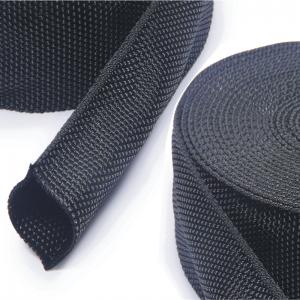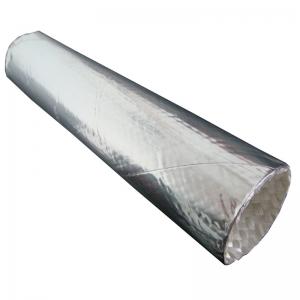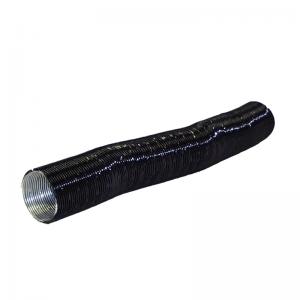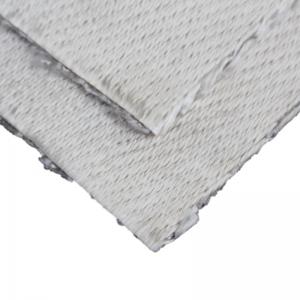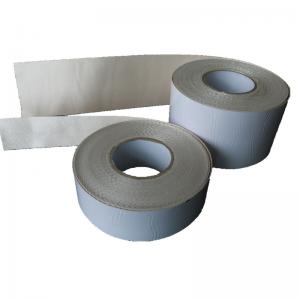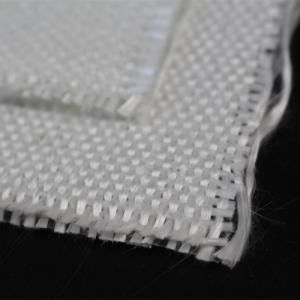
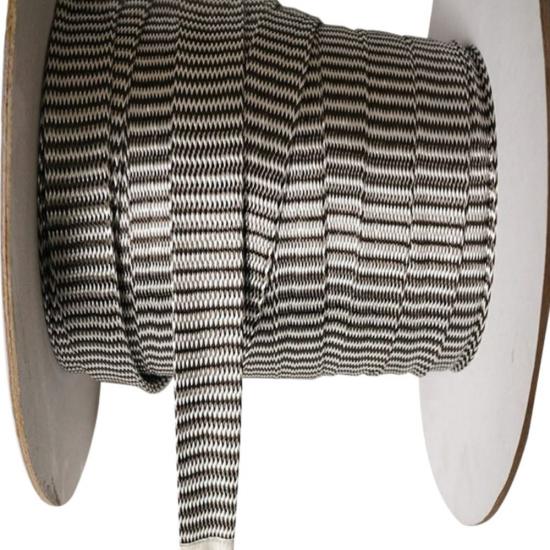
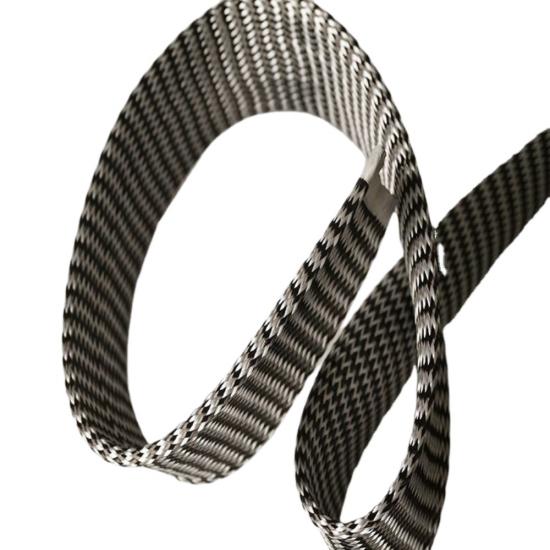
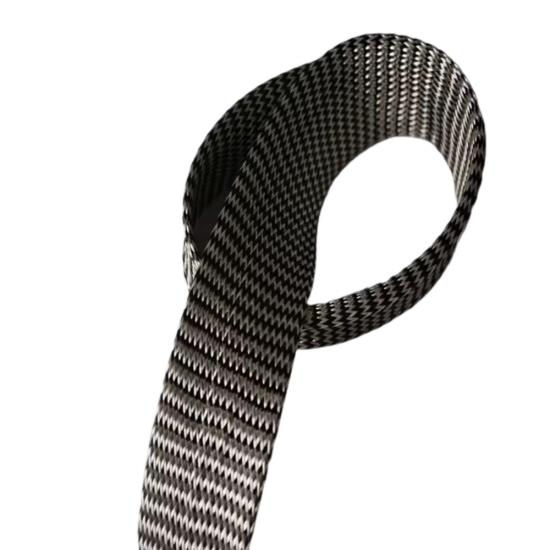
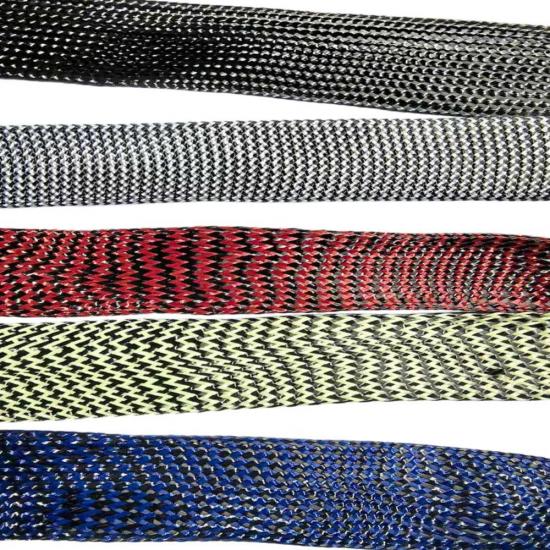
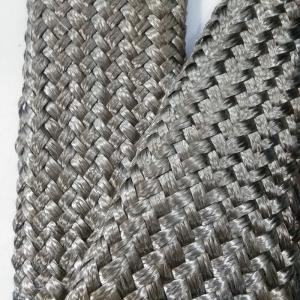
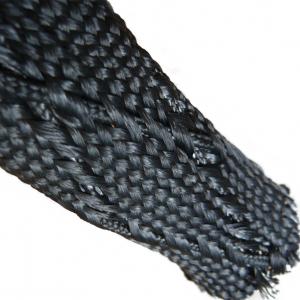
Fiberglass Carbon Hybrid Sleeving is a high-performance braided composite sleeve manufactured from a combination of carbon fiber and fiberglass yarns. This hybrid construction integrates the stiffness and structural strength of carbon fiber with the impact resistance and durability of fiberglass.
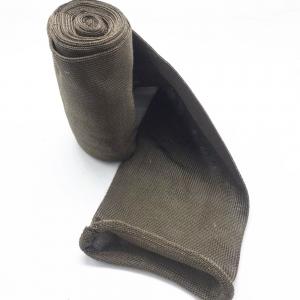
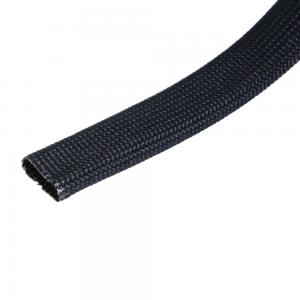
The braided tubular structure allows radial expansion, making it easy to install over tubes, shafts, and structural cores before resin infusion or composite curing. Once combined with compatible resin systems such as epoxy, polyester, or vinyl ester, the sleeve forms a lightweight yet mechanically stable reinforcement layer.
Compared to pure carbon fiber sleeve, fiberglass carbon hybrid sleeving offers improved resistance to cracking and impact damage while maintaining excellent stiffness-to-weight performance. It is widely used in automotive components, industrial rollers, composite drive shafts, marine structures, and sporting equipment manufacturing.
Custom diameters, braid angles, and carbon-to-glass fiber ratios are available to meet specific engineering requirements.
order(moq):
1Fiberglass Carbon Hybrid Sleeving is a high-performance braided composite sleeve engineered from a combination of carbon fiber and fiberglass yarns. This hybrid structure integrates the stiffness and strength of carbon fiber with the impact resistance and cost efficiency of fiberglass.
Designed for structural reinforcement applications, fiberglass carbon hybrid sleeving provides an optimized balance between mechanical strength, durability, and weight reduction. It is widely used in composite manufacturing where improved impact tolerance and cost control are required.
Fiberglass Carbon Hybrid Sleeving is a tubular braided textile used as reinforcement in composite structures. By blending carbon fiber and fiberglass within the same braid, the sleeve enhances mechanical stability while reducing brittleness compared to pure carbon fiber sleeve.
The braided design allows expansion during installation, making it suitable for wrapping tubes, shafts, pipes, and structural cores before resin infusion or composite curing.
| Property | Typical Characteristics |
|---|---|
| Fiber Composition | Carbon Fiber + Fiberglass |
| Structure | Braided Tubular Sleeve |
| Weight | Lightweight reinforcement |
| Mechanical Performance | Balanced stiffness and impact strength |
| Compatibility | Epoxy, Polyester, Vinyl Ester Resins |
| Diameter Range | Customizable sizes available |
Compared to standard carbon fiber sleeve, fiberglass carbon hybrid sleeving offers improved toughness while maintaining strong mechanical reinforcement performance.
Fiberglass carbon hybrid sleeving is widely used in vacuum infusion, resin transfer molding (RTM), and hand lay-up composite processes.
Bulk supply and project-based composite reinforcement solutions are available.
Carbon fiber sleeve provides higher stiffness but may be more brittle under impact. Hybrid sleeving improves impact resistance and reduces cracking while maintaining good rigidity.
Yes. It provides a balance between performance and cost, making it more economical than pure carbon fiber reinforcement in many applications.
Yes. The braided structure allows radial expansion for easy installation over cores or tubes before resin curing.
It is compatible with epoxy, polyester, vinyl ester, and other common composite resins.
Thermal performance depends on the selected resin system used in the composite structure.
Yes. Diameter, braid density, and fiber ratio can be customized according to engineering requirements.
If you have questions or suggestions, please leave us a message,we will reply you as soon as we can!

 français
 Deutsch
 русский
 italiano
 español
 português
 Nederlands
 العربية
 日本語
日本語 한국의
한국의 Türkçe
 Polski
 Tiếng Việt
 slovenský
 Indonesia