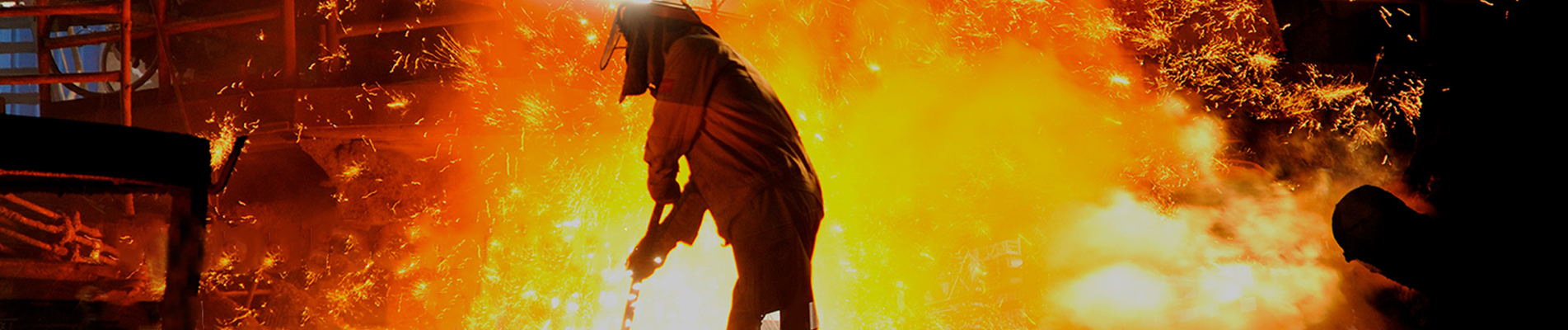
In a working weld cell, a hose or cable rarely has a free end waiting for a tubular sleeve. Its connectors are fitted, the route is clamped, and the section nearest the weld is often the least accessible. A side-opening fiberglass wrap can be placed around that existing assembly, provided its closure fits and the protected section remains covered during movement.
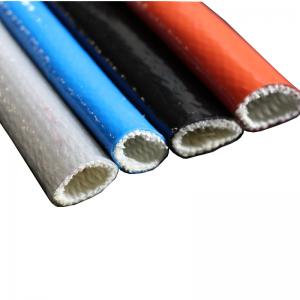
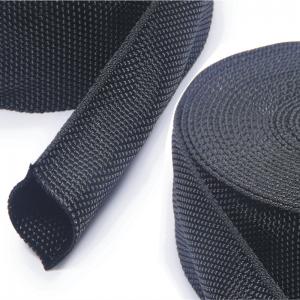
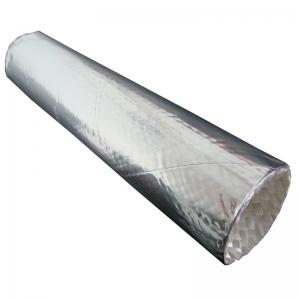
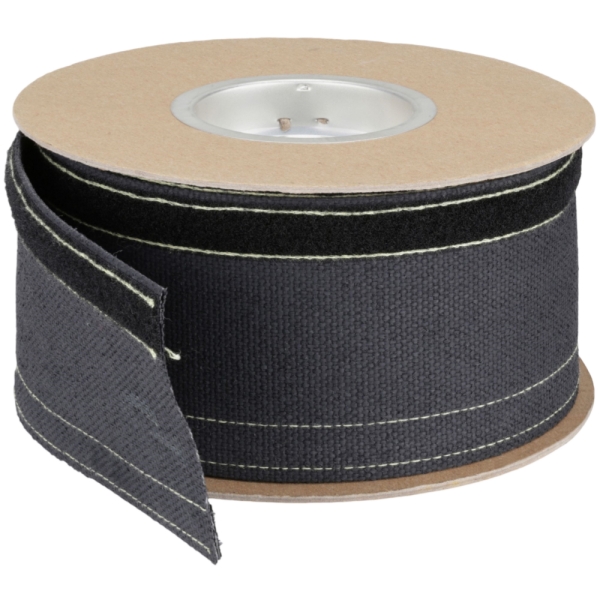
BSTFLEX's black coated fiberglass weld wrap sleeve is described with a fiberglass textile base, a high-temperature coating and a hook-and-loop closure. The product is listed for protecting cables and hoses from welding sparks and spatter as well as contact wear. The checks below are intended for selecting the wrap on the installed route, rather than assuming that a nominal diameter alone establishes a fit.
Take a photograph of the hose or cable in its normal working position and another at the limits of travel. Mark the welding point, likely direction of sparks and spatter, and any place where the line drags across a support. Identify brackets, joints and service points that must stay accessible. The covered length should follow the routed assembly, including bends and movement, not simply the straight-line distance between two marks.
For a robot or moving fixture, check the position of the wrap through the full cycle. A short piece can shift away from the exposed point; a longer piece may bunch against a clamp. State where each end must finish and whether an end must be removable for inspection. Keep the wrap clear of parts that require ventilation or routine access according to the equipment design.
Measure the outside circumference or maximum outside envelope of the finished assembly where the wrap will sit. A bundle of two welding leads and a hose is not necessarily round, so a single diameter can be misleading. Note branch points, splices, protective boots and any local increase in size that will remain underneath the wrap.
The product page lists nominal sleeve sizes from 25 to 102 mm. Ask for the usable closed size or circumference range of the proposed construction, including its closure overlap. A nominal size does not show how much of the hook-and-loop area remains engaged around an irregular bundle. Check that the wrap closes securely without squeezing a hose below its permitted bend radius or pressing on a cable connector.
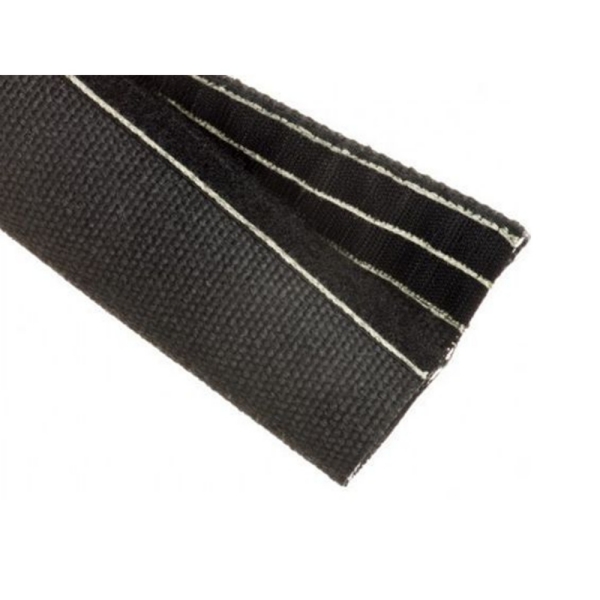
The side opening allows the wrap to be fitted without disconnecting the assembly. Position the closure where it can be reached for installation and service and, where the route permits, away from the direct path of sparks and falling spatter. Check the entire seam after closing; gaps at bends or branch points leave the underlying line exposed.
On moving equipment, inspect whether the closure rubs a bracket or catches a nearby edge. Confirm its position again at the ends of travel. A short trial on the machine is more informative than a flat sample, because the wrap's closed shape and seam position change with the route.
Welding sparks, heavier spatter, hot slag, steady radiant heat and abrasion are different exposures. Give the supplier a description of the process, the distance and orientation of the line, and the expected duration of contact. The product page includes temperature figures, but a specific application should be checked against current test data for the exact material and coating being supplied. Do not use the gas temperature of a weld or a brief spark temperature as the continuous temperature of the complete wrap assembly.
If the line is a hydraulic hose, confirm that the wrap does not conceal damage that must be inspected under the equipment maintenance procedure. It is an external protective cover and does not change the hose pressure rating. If fluid contact or repeated dragging is expected, identify the fluid and mating surface so the proposed sample can be tested under representative conditions.
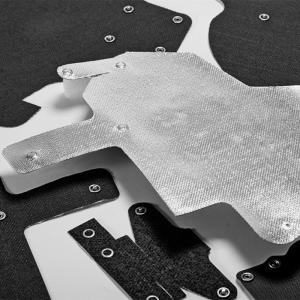
A side-opening sleeve protects a defined hose or cable run. When a larger work area, nearby machine face or temporary opening needs shielding, examine the welding and soldering area protection products separately. The two forms address different coverage geometries and should be specified independently.
Send those details through the fiberglass weld wrap product page. Ask for a sample at the proposed closed size, confirm the textile and coating construction, and check closure engagement and coverage on the actual equipment before approving the order.

 français
 Deutsch
 русский
 italiano
 español
 português
 Nederlands
 العربية
 日本語
 한국의
 Türkçe
 Polski
 Tiếng Việt
 slovenský
 Indonesia