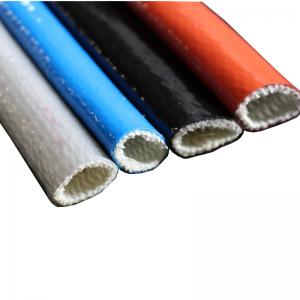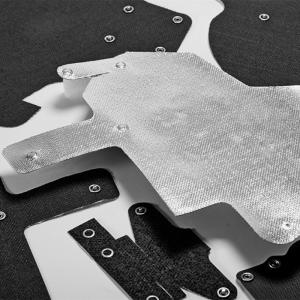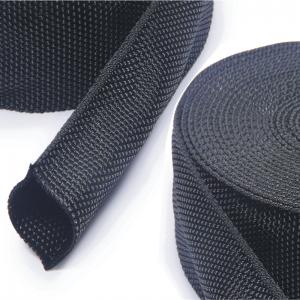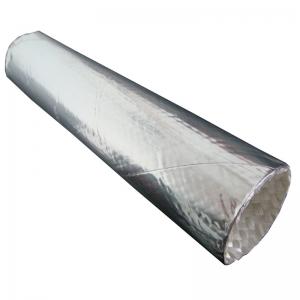
Here’s a clear breakdown of the key differences between a nylon textile sleeve and a polyester textile sleeve, especially in hose and cable protection applications:
| Property | Nylon Textile Sleeve | Polyester Textile Sleeve |
| Abrasion Resistance | Excellent — nylon’s toughness makes it highly resistant to scuffing, dragging, and impact damage. Often preferred in heavy-duty, high-friction environments. | Good, but slightly less abrasion-resistant than nylon. Works well in moderate-duty applications. |
| Water Absorption | Higher — nylon can absorb up to 3–4% of its weight in water, which can slightly affect flexibility and weight when wet. | Very low — polyester absorbs less than 1% water, keeping it dimensionally stable in wet conditions. |
| UV Resistance | Moderate — prolonged sun exposure can degrade nylon faster unless UV-stabilized. | Excellent — polyester naturally resists UV degradation better, making it ideal for outdoor use. |
| Chemical Resistance | Good — resistant to many oils, fuels, and chemicals, but less resistant to acids. | Excellent — better resistance to acids and most solvents, slightly better than nylon in chemical-heavy environments. |
| Operating Temperature Range | Typically -40°C to +125°C (-40°F to +257°F). | Typically -40°C to +150°C (-40°F to +302°F). |
| Elasticity & Flexibility | More elastic — stretches slightly under load, which can be beneficial for absorbing impacts. | Less stretch — maintains shape better under constant load. |
| Cost | Usually a bit more expensive due to higher raw material cost and performance in abrasion-heavy use. | Often more cost-effective while still offering good performance. |
| Best Applications | Hydraulic hose protection, mining, forestry, and construction equipment where abrasion is extreme. | Agricultural, marine, and outdoor applications where UV, moisture, and chemical resistance are more important. |
Nylon is the go-to for abrasion-heavy, impact-prone environments.
Polyester excels in wet, outdoor, or chemically harsh conditions, especially where UV stability is crucial.

 français
 Deutsch
 русский
 italiano
 español
 português
 Nederlands
 العربية
 日本語
日本語 한국의
한국의 Türkçe
 Polski
 Tiếng Việt
 slovenský
 Indonesia