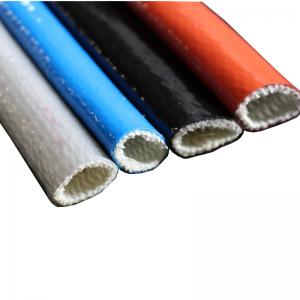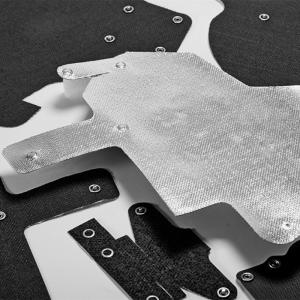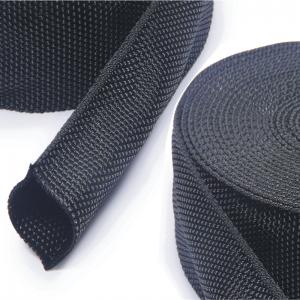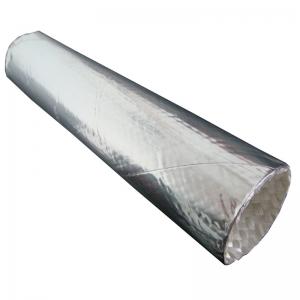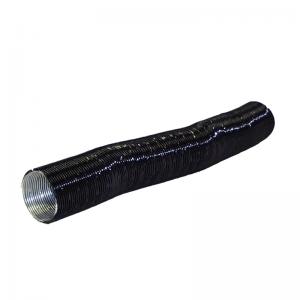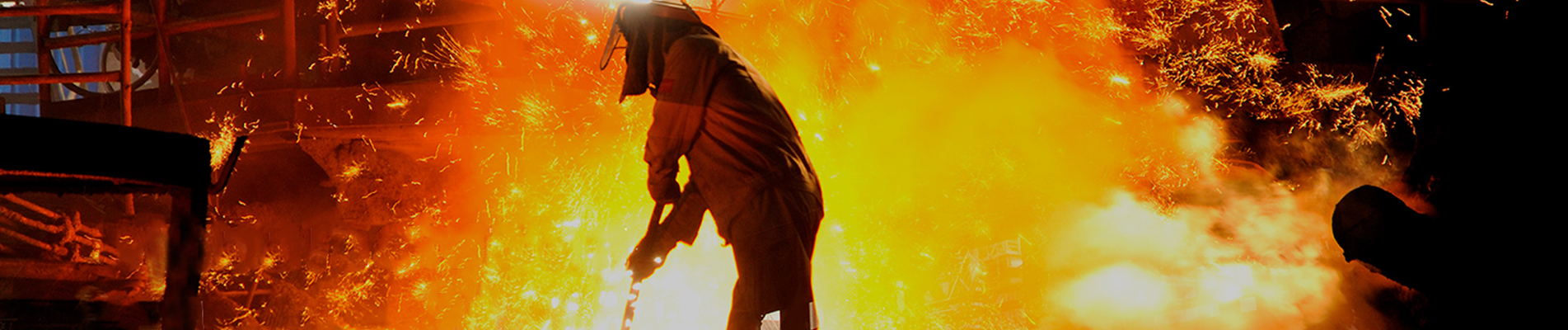
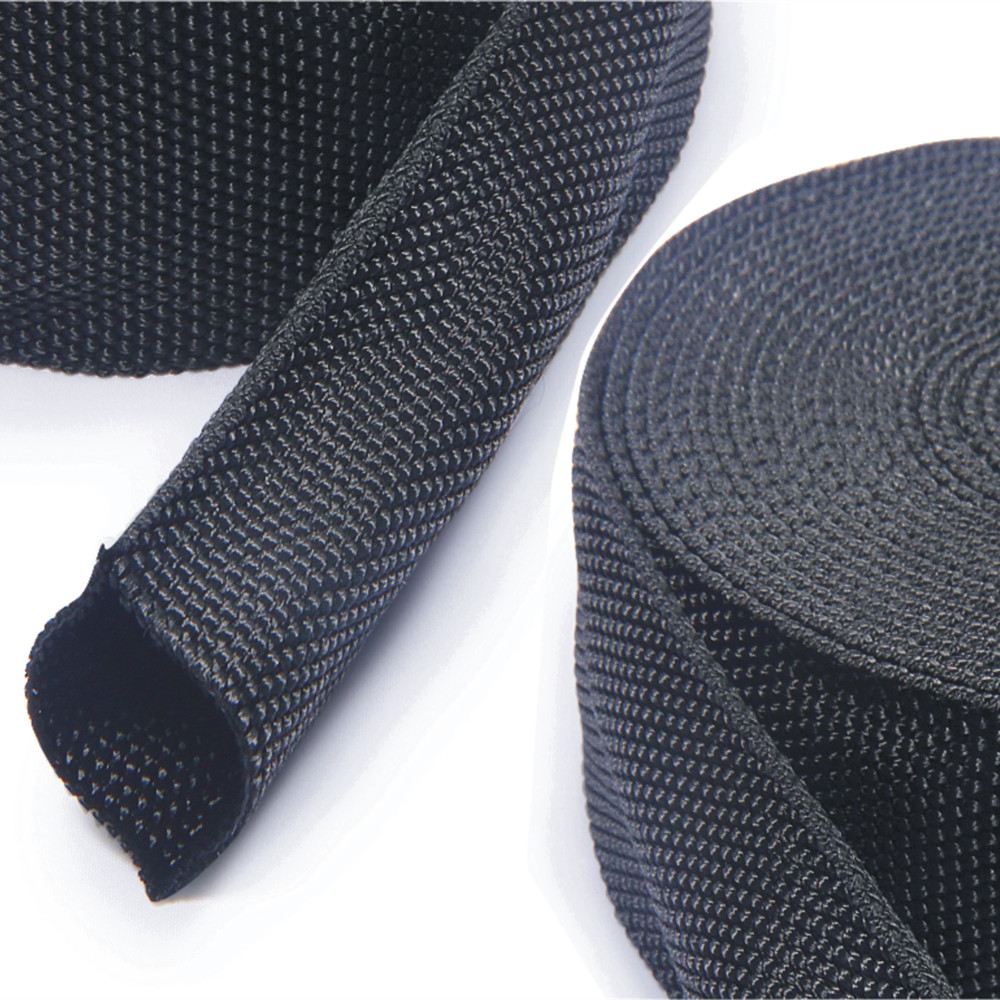
A nylon protective sleeve is a flexible, abrasion-resistant cover designed to protect hoses, cables, and wires from mechanical wear, UV exposure, chemicals, and environmental damage. These sleeves are commonly made from high-tenacity nylon filaments woven or braided into a tight structure, providing a balance between durability, flexibility, and lightweight performance.
Nylon sleeves are widely used in automotive, hydraulic, marine, aerospace, industrial machinery, robotics, and construction applications to extend service life, improve safety, and maintain system reliability.
Nylon (polyamide) is a synthetic polymer known for:
High abrasion resistance – resists surface wear even under constant friction
Good tensile strength – withstands stretching without tearing
Lightweight structure – easy to handle and install
Resistance to fuels, oils, and chemicals – ideal for industrial and automotive environments
Temperature stability – continuous service temperature up to 120°C (248°F), short-term peaks even higher
Moisture absorption balance – enough to maintain flexibility without degrading mechanical properties
Compared to polyester or polyethylene sleeves, nylon offers superior impact resistance and flexibility at low temperatures.
Nylon protective sleeves come in several designs:
Woven Nylon Sleeve – tightly interlaced structure for maximum abrasion resistance.
Braided Nylon Sleeve – expandable, adjusts to fit different diameters.
Spiral Wrap Nylon Sleeve – ideal for easy installation over existing cable bundles.
Velcro-Closure Nylon Sleeve – reusable and easy to apply without disconnecting systems.
Abrasion Protection – shields hoses and cables from rubbing against machinery parts.
Bundling & Organization – keeps multiple hoses or wires neatly grouped.
Safety Compliance – reduces risk of hose failure and fluid leaks.
UV & Weather Resistance – suitable for outdoor or harsh environments.
Noise Reduction – dampens vibrations and cable rattling.
Extended Equipment Life – minimizes downtime and replacement costs.
Hydraulic Systems – protects hoses in excavators, forklifts, and tractors.
Automotive Wiring Harnesses – guards wires from heat and abrasion.
Marine Equipment – resists saltwater corrosion and UV damage.
Industrial Robotics – prevents cable wear in repetitive motion systems.
Aerospace Systems – lightweight protection with strict durability standards.
Oil & Gas Pipelines – resists petrochemical exposure and mechanical impact.
Choose sleeve size 10–20% larger than the hose or cable diameter.
For braided sleeves, compress the sleeve to expand it, then slide over the assembly.
Secure ends with heat shrink tubing, cable ties, or clamps.
For field maintenance, use Velcro or zipper sleeves for quick replacement.
Feature
Nylon Protective Sleeve
Polyester Sleeve
Kevlar Sleeve
Abrasion Resistance
★★★★☆
★★★☆☆
★★★★★
Temperature Range
-40°C to 120°C
-40°C to 150°C
-40°C to 180°C
Chemical Resistance
Good
Good
Excellent
Cost
Moderate
Low
High
Flexibility
Excellent
Good
Fair
High-quality nylon protective sleeves may comply with:
ISO 6945 – Abrasion resistance of rubber and plastic hoses.
MSHA Approval – Flame resistance for mining applications.
RoHS & REACH – Compliance for environmental and safety standards.
To maximize service life:
Inspect sleeves regularly for wear or fraying.
Replace sleeves showing significant surface damage.
Clean with mild detergent and water; avoid harsh solvents.
Store in a cool, dry place away from direct sunlight.
Q1: Can nylon protective sleeves handle hydraulic hose bursts?
A: They are abrasion protectors, not burst containment devices. For burst protection, use specialized hydraulic burst sleeves.
Q2: Will nylon sleeves melt under high heat?
A: Continuous rating is ~120°C; for higher temperatures, use fiberglass or Kevlar sleeves.
Q3: Can I install it without disconnecting cables?
A: Yes, choose split or Velcro sleeves for retrofitting.
Q4: Are nylon sleeves waterproof?
A: While nylon resists moisture, it is not a sealed barrier; for water ingress protection, use coated sleeves.
A nylon protective sleeve is an essential investment for anyone looking to extend the lifespan of hoses, cables, and wires while maintaining a clean, safe, and efficient setup. With its combination of abrasion resistance, flexibility, and chemical durability, it has earned its place as a go-to cable and hose guard in industries worldwide.
Whether for hydraulic lines in heavy machinery, electrical harnesses in vehicles, or control cables in industrial robots, nylon sleeves provide reliable, cost-effective protection. Selecting the right sleeve type, size, and installation method ensures maximum performance and safety.

 français
 Deutsch
 русский
 italiano
 español
 português
 Nederlands
 العربية
 日本語
日本語 한국의
한국의 Türkçe
 Polski
 Tiếng Việt
 slovenský
 Indonesia