A flame-retardant hose sleeve can be supplied with a technical data sheet, a laboratory test report, an agency acceptance document, or a combination of these. Those documents are useful only when they can be matched to the exact sleeve being quoted and shipped.
For a buyer, the key question is not simply whether a report contains the word "pass." The key question is whether the tested product, test method, document scope and current production construction all match the hose sleeve on the purchase order.
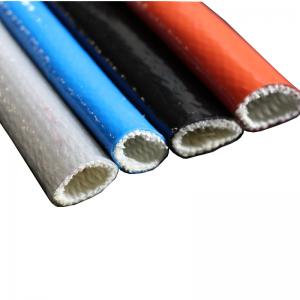
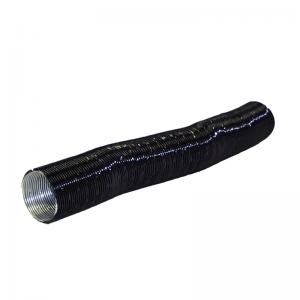
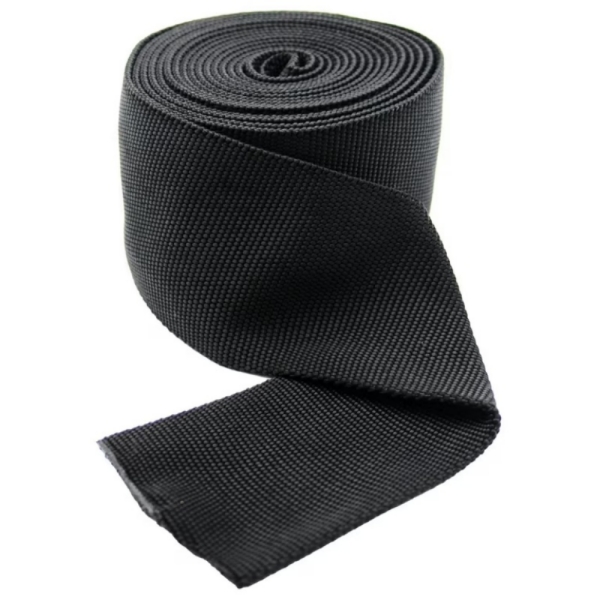
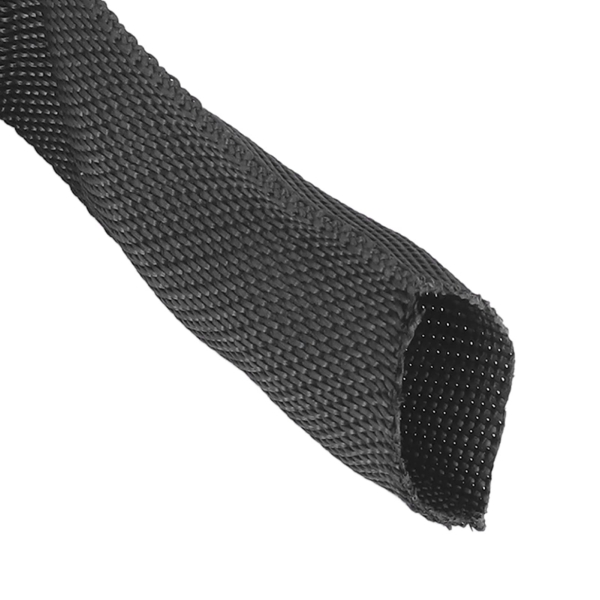
BSTFLEX supplies a flame-retardant polyester hydraulic hose sleeve for mining and heavy-duty hose protection projects. When a project requires flame-resistance documentation or MSHA-related acceptance evidence, the purchasing specification should state exactly what documentation must accompany the quoted sleeve.
Different documents answer different questions. A supplier data sheet describes the product specification. A laboratory report records a particular test. An approval or acceptance document may show that a defined product has been evaluated under a particular program. A certificate of conformance normally links a shipment or production lot to an agreed specification.
| Document | What It Usually Tells the Buyer | What It Does Not Prove by Itself |
|---|---|---|
| Technical Data Sheet | Material, construction, dimensions, supply form and declared performance | That every stated performance has been independently tested |
| Laboratory Test Report | Test method, specimen information, conditions and measured or pass/fail results | That every production variation is covered |
| Agency Acceptance or Approval Document | Product identity, applicant or manufacturer, acceptance reference and defined scope | Performance outside the acceptance program |
| Certificate of Conformance | Statement that supplied goods conform to an agreed specification or order requirement | A substitute for an independent test report where one is required |
Do not treat these documents as interchangeable. If the project specification requires an agency acceptance, a generic laboratory flame test may not be enough. If the customer needs a particular test value, a product brochure saying "flame retardant" may not be enough.
Start with product identity. The report or acceptance document should identify the product, material or construction clearly enough that the buyer can connect it to the quoted sleeve.
If the quotation uses a different product code, a different fiber composition, a different finish or a different supplier name, ask for an explanation showing how the supplied construction is covered by the document.
A statement such as "flame tested" is incomplete without the method. Record the exact standard, procedure or acceptance program used and the revision or date where available.
The test method determines how the specimen is prepared, how the flame or heat source is applied, the exposure time, airflow or orientation, what is measured and what constitutes a pass. Results produced under different methods should not automatically be treated as equivalent.
For projects that specify MSHA acceptance for a hydraulic hose sleeve, ask the supplier for the applicable acceptance documentation and confirm that the quoted product falls within its scope. Do not rely on the letters "MSHA" in a product title alone.
The tested specimen should resemble the product you intend to buy. Check whether the report identifies the specimen as a finished sleeve, a piece of textile material, a hose cover material or another construction.
If the document does not answer one of these questions, mark it for clarification rather than filling the gap with an assumption.
A useful purchasing record separates three levels of information:
The application claim must not be broader than the evidence. A flame-resistance test supports a flame-resistance statement within the test scope. It does not automatically establish hydraulic burst containment, pinhole-leak protection, fluid-injection protection, abrasion life, chemical resistance or service temperature.
This distinction is especially important for hydraulic hose protection.
A flame-retardant polyester sleeve may be selected because a mining or industrial project requires flame-resistant external protection. A hydraulic burst-containment sleeve, however, must manage a different hazard: high-pressure fluid released from a failed hose. The construction, installation and end retention can all affect that performance.
Do not use a flame test report as proof of burst containment or pinhole-leak protection. If the purchase specification includes those functions, request separate product-specific system test evidence showing the hose, fittings, sleeve, retention method, pressure, temperature, duration and acceptance criteria used in the test.
The same rule applies to operator-safety wording. A statement about reducing exposure to hydraulic spray requires evidence appropriate to that hazard. Flame resistance alone does not establish it.
Product approvals and test reports are tied to a defined construction. Production changes should therefore be reviewed against the document scope.
This does not mean that every small production adjustment automatically invalidates a report. It means the buyer should know which changes are controlled and whether the approving body, laboratory or customer specification requires re-evaluation.
OEM buyers often request a logo, part number, size marking or private-label identification. The BSTFLEX flame-retardant polyester hose sleeve is offered with custom printing and packaging options, but the marking requirement should still be reviewed against the applicable product documentation.
Do not place an agency logo or acceptance statement on a private-label product unless its use is authorized for that exact product and marking arrangement.
The strongest document package is useless if the production order cannot be linked back to it. Build traceability into the RFQ and purchase order.
| Purchasing Record | What Should Match |
|---|---|
| Quotation | Product designation, material, size, supply form and required documentation |
| Approved Sample | Same construction and identification as the quoted product |
| Test / Acceptance Document | Product or material designation that covers the approved sample |
| Purchase Order | Part number, revision, required documents and any special marking |
| Shipment | Lot or batch identification, packing label and requested conformance documents |
For repeat OEM supply, keep the approved sample, drawing revision and document revision together. If a report is replaced or an acceptance is revised, record the change rather than silently substituting a different document.
A one-page certificate or screenshot may be enough for a preliminary supplier review, but it may not contain enough information for engineering approval. When the test result is a contractual requirement, request the full report or the sections needed to verify:
If confidential information must be redacted, the remaining document should still contain enough information to connect the tested product to the supplied sleeve.
A practical RFQ for a flame-retardant polyester hose sleeve should include both application information and document requirements.
For applications that need ordinary abrasion protection but do not require the flame-retardant grade, compare the standard polyester hydraulic hose sleeve separately. Keeping the two grades distinct prevents a flame-resistance document from being incorrectly applied to a standard polyester construction.
Not necessarily. A laboratory report records a test performed under a defined method. An MSHA acceptance document shows that a defined product has been accepted under the applicable MSHA process. If an MSHA-accepted product is required, ask for the acceptance documentation that covers the quoted construction.
No. Flame resistance and hydraulic burst containment address different hazards. Burst or pinhole protection requires separate system-level evidence under defined hydraulic test conditions.
Only if the document scope supports those variations. Check the tested or accepted construction and any stated limitations before extending the result to another size, color, yarn, finish or production variant.
Ask whether the change remains within the approved or tested construction. Where the change affects the document scope, a new evaluation, customer approval or updated report may be required.
If flame resistance is a mandatory requirement, review the available document package before or together with sample approval. This prevents an otherwise acceptable sample from reaching production approval with unsupported compliance assumptions.
For the BSTFLEX Flame-Retardant Polyester Hydraulic Hose Sleeve, send the required sleeve dimensions, application conditions, quantity, required compliance document, printing and packaging information with your RFQ.
BSTFLEX can review OEM sample, marking and packaging requirements through its OEM and custom manufacturing services. For projects using several types of abrasion, heat or flame protection, use the hydraulic hose protection selection page to keep each construction and its supporting evidence separate.
Contact BSTFLEX with the required standard, acceptance reference, hose drawing or purchasing specification so the quoted sleeve and supporting documents can be reviewed against the same requirement.

 français
 Deutsch
 русский
 italiano
 español
 português
 Nederlands
 العربية
 日本語
 한국의
 Türkçe
 Polski
 Tiếng Việt
 slovenský
 Indonesia