A sleeve with an outside coating must fit in two directions. Its bore has to accept the hose or cable, while its finished outside diameter has to clear clips, brackets and neighbouring components. If either dimension is missing from a drawing, a nominal sleeve size alone cannot settle the choice.
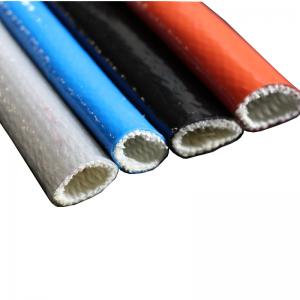
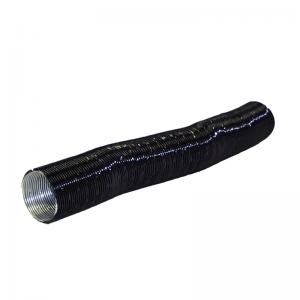
BSTFLEX's silicone coated aramid sleeve has a tubular aramid inner layer and a silicone coated exterior. The product is presented for wiring harnesses, cables and hoses. Its online description does not give a dimensional table, so request measurements and a sample for the construction being quoted instead of assuming the dimensions of another coated sleeve will apply.
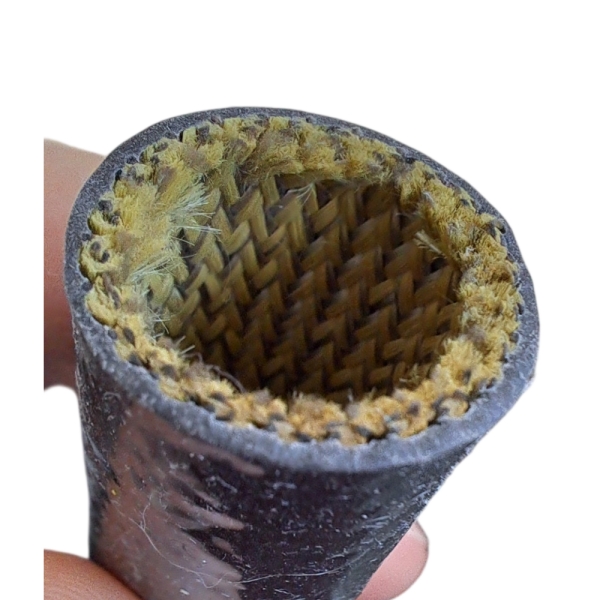
For a cable harness, measure the finished bundle after taping, branching and any outer wrap. For a hose, measure over the cover at several points, including changes near the end fitting. Record the maximum outside diameter of the portion that remains under the sleeve. Give the production tolerance if the assembly is made in batches; a sample at the low end of that tolerance can hide a fit problem.
Mark the covered length, the bend locations and the places where the sleeve must stop. Include any electrical connector, crimp ferrule, nut or boot that the sleeve would have to pass during installation. The largest feature on that path may be much wider than the section that needs protection.
If the sleeve is fitted before a terminal or hose fitting is attached, the fitting does not define the pass-through opening. If it is added to a completed assembly, measure the widest part of the fitting and make a trial with the actual sleeve. Do not force a coated tube over an obstruction because an uncoated braid can expand that far. The coating and inner textile have to be assessed together.
Where neither end is accessible, establish the assembly sequence before choosing the size. A larger tubular sleeve may pass an end fitting yet sit loosely on the much smaller cable or hose. Changing the timing of installation, or choosing a different construction for an existing assembly, may give a better result than increasing the nominal bore.
Ask for the finished sleeve outside diameter and wall thickness at the proposed inside diameter. Then compare that outside envelope with the narrowest bracket, channel or clamp along the installed route. A design that has room for the bare hose may not have room after a coated sleeve is added.
Try the sample at the intended bend radius and through the complete range of normal movement. Look for local flattening, bunching against a clip, a sleeve end pulling back, and visible damage to the silicone surface. Record the position of wear marks after a realistic handling or movement trial. Do not let sleeve selection force a hose below its own specified minimum bend radius.
State whether the sleeve will touch a hot surface, sit near radiant heat or mainly protect against rubbing. Give the normal and peak temperature at the sleeve location, exposure duration and any fluids used in the assembly or cleaning process. Ask for current test data for the aramid and silicone construction being supplied. The temperature limit of the complete cable or hose assembly may be lower than that of an individual sleeve material.
For an electrical application, describe whether the sleeve is an added protective cover over an already insulated cable or part of an approved insulation system. If a voltage or flame test is required, name the method and request results for the finished coated sleeve. The existence of a silicone layer does not establish a particular electrical rating.
A silicone coated fiberglass sleeve uses a different base fiber. If the project specification calls for glass, review silicone rubber coated fiberglass sleeving on its own terms. Its size, thermal and electrical claims should not be copied into an aramid sleeve purchase specification simply because both have a silicone exterior.
Send that drawing and sample request through the silicone coated aramid sleeve product page. Ask the supplier to state finished ID tolerance, outside diameter, coating details and the relevant test data on the quotation. Fit and inspect a sample on the real assembly before approving a production cut length.

 français
 Deutsch
 русский
 italiano
 español
 português
 Nederlands
 العربية
 日本語
 한국의
 Türkçe
 Polski
 Tiếng Việt
 slovenský
 Indonesia