français
 Deutsch
 русский
 italiano
 español
 português
 Nederlands
 العربية
 日本語
 한국의
 Türkçe
 Polski
 Tiếng Việt
 slovenský
 Indonesia



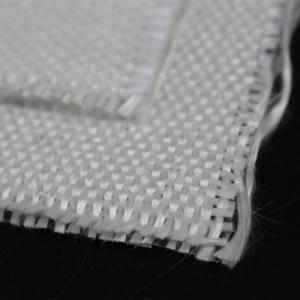
How to Size a Fiberglass Rope Gasket for Industrial Oven, Furnace and Boiler Doors
A fiberglass rope gasket cannot be selected reliably from the old rope diameter alone. Years of compression, heat exposure, contamination and handling can flatten or harden the removed seal. For an industrial replacement or OEM project, measure the groove, the closed-door sealing gap and the full gasket path, then confirm the required compression with the rope manufacturer.
Quick Answer
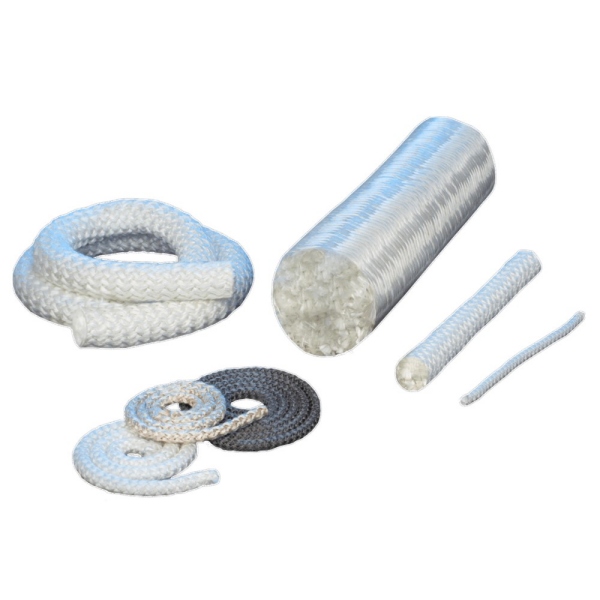
To size a fiberglass rope gasket, record the clean groove width, groove depth, closed-door gap, corner radius and total centerline length. Then select a round or square rope whose finished construction can occupy that space at the manufacturer-approved compression. A rope that is too small may leave a leakage path; a rope that is too large may prevent the door from closing or permanently crush the braid.
There is no single oversize or compression percentage that applies to every braided rope. Density, braid pattern, core, coating, reinforcement and door geometry can change how two ropes with the same nominal diameter behave.
Why Measuring the Removed Rope Is Not Enough
An old seal is useful as a reference, but it is not a dependable master dimension. It may have lost resilience, absorbed process residue, stretched during removal or taken a permanent rectangular shape inside the channel. Measuring only the widest flattened face can lead to an oversized replacement. Measuring only the thinnest crushed section can lead to an undersized one.
For maintenance work, keep the removed gasket and photograph it before disposal. Record its profile, splice position, installation direction and any local failure. Use those observations together with measurements from the cleaned metal groove.
For a new door design, work from the drawing and a representative closure sample. The supplier needs to understand both the retaining groove and the distance available when the door is fully latched.
The Five Measurements Needed for Rope Gasket Sizing
| Measurement | How to Record It | Why It Matters |
|---|---|---|
| Groove width | Measure across the clean channel at several straight sections and near corners. | Controls whether the rope can seat without folding, twisting or dropping loose in the channel. |
| Groove depth | Measure from the groove bottom to the mounting surface with a depth gauge or caliper. | Determines how much of the rope is retained and how much remains available to contact the mating surface. |
| Closed-door gap | Measure the distance between the two sealing surfaces in the fully latched position. | Shows the final space occupied by the compressed gasket and is essential for checking compression. |
| Corner radius | Record the inside radius or provide a scaled drawing and clear photographs. | A rope that fits a straight groove may buckle, bridge or lift at a tight corner. |
| Centerline length | Follow the center of the complete gasket path with a flexible tape or non-stretch cord. | Establishes cut length while accounting for corners and the intended splice location. |
Measure the Groove Before Choosing the Rope Diameter
- Make the equipment safe. Isolate the oven, furnace or boiler, allow it to cool and follow the site's lockout procedure before opening or removing a door.
- Remove the old gasket carefully. Keep a representative section and note whether it was glued, mechanically retained or simply pressed into the groove.
- Clean the channel. Old adhesive, scale and compacted fiber can reduce the usable width and depth. Measure the metal groove rather than the residue.
- Take readings at several positions. Compare straight sides, corners, hinge areas and the latch side. Record the smallest and largest values instead of reporting only one convenient reading.
- Check the mating surface. Look for distortion, erosion, weld repair, loose hinges and uneven latch force. A new rope cannot compensate for every mechanical defect.
- Send a drawing or marked photographs. A section view showing width, depth, gap and closing direction is more useful than a rope diameter written without context.
How to Evaluate Compression Without Using a Universal Percentage
Compression is the reduction in the rope's free height when the joint is closed. It can be expressed as:
Compression (%) = (free seal height − installed seal height) ÷ free seal height × 100
For a rope retained in a groove, the free seal height should describe the actual height presented to the mating surface after the rope is seated. It is not always identical to the catalog diameter. The installed seal height is the available space at the same sealing line when the door is fully latched.
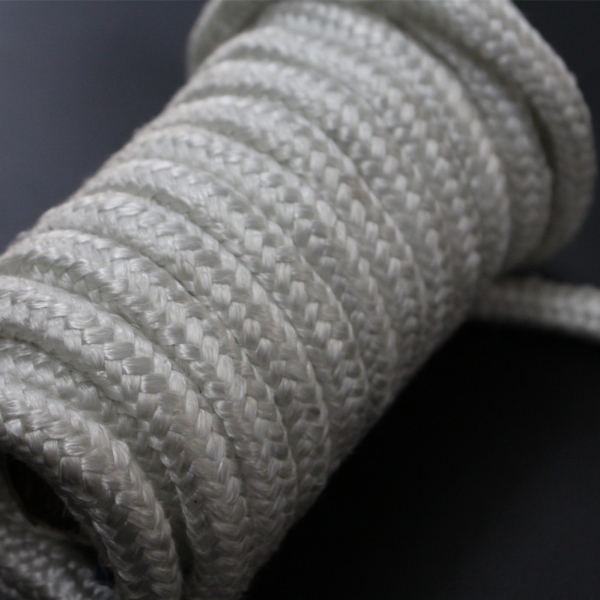
This calculation describes the geometry; it does not establish the acceptable limit. Ask the supplier to confirm the permitted compression range for the exact construction being quoted. A medium-density round braid, a dense square braid, a soft knitted rope and a coated rope can produce very different closing forces at the same nominal percentage.
If the door is already in service, a short sample trial is often more reliable than applying a generic internet formula. The trial should confirm that the rope remains seated, the door closes without excessive force and contact is continuous around the perimeter.
Round Braided Rope or Square Braided Rope?
Round Braided Fiberglass Rope
A round profile is a practical starting point for radiused grooves, curved sealing paths and channels designed to retain a circular rope. It can follow corners and irregular paths, while the braided construction provides a more stable surface than a loose twisted rope.
For this profile, review the fiberglass round braided rope product page. In an RFQ, state the required diameter, construction, length, operating conditions and groove measurements rather than requesting only “standard fiberglass rope.”
Square Braided Fiberglass Rope
A square profile provides flat contact faces and may sit more predictably in a rectangular channel. It can be appropriate where the groove width and depth are controlled separately or where a round rope tends to rotate or leave unused space at the channel corners.
For a flat-sided section, compare the fiberglass square braided rope. Do not substitute equal nominal dimensions without checking the installed volume, density and required closing force.

Braid Density Changes the Fit
Nominal size does not fully describe a rope gasket. Braid density and internal construction affect how easily the rope bends, how much it spreads laterally and how strongly it pushes back against the door.
- Softer construction: easier to conform around irregular surfaces, but it may need more support and can be easier to over-compress.
- Denser braid: more dimensionally stable and resistant to handling damage, but it generally requires a more accurate groove and greater closing force.
- Core construction: a solid fiber core, hollow construction or reinforced core changes recovery and bend radius.
- Surface treatment: coatings can change friction, stiffness, compressibility and media resistance.
For repeat OEM orders, the approved sample should define more than outside dimensions. Record product construction, mass per unit length or agreed density control, dimensional tolerance and the sample approval reference.
When a Coated Rope Should Be Evaluated
An uncoated fiberglass rope is suitable for many dry static thermal-sealing applications. A coated construction may be considered when the buyer needs reduced surface fraying, a smoother installation surface or additional resistance to the specified process media.
Silicone rubber coated fiberglass rope is a separate construction and should not be treated as an interchangeable color variation. The coating changes the complete assembly, so temperature, media, pressure, stiffness and compression must be reviewed again.
Do not assume that a coating makes the joint pressure-tight or suitable for every gas, steam or liquid service. Provide the exact media, concentration, normal pressure, pressure excursions and exposure pattern for evaluation.
Temperature Selection Comes After Geometry
A correctly sized gasket can still fail if the material is used beyond the approved working conditions. Provide the temperature at the seal location, not only the oven set point or furnace chamber temperature. Include normal continuous temperature, peak temperature, peak duration and thermal-cycle frequency.
Use the documented continuous working temperature of the finished rope construction. Fiber classification temperature, melting point and short-duration peak exposure are different values. Adhesive, coating, sewing yarn, reinforcement or a nearby metal retainer may become the limiting component.
If the verified temperature requirement is beyond the selected fiberglass construction, compare the material families in Fiberglass Rope vs Ceramic Fiber Rope: How to Choose a High Temperature Seal. This separates a sizing problem from a material-temperature problem.
How to Determine the Required Gasket Length
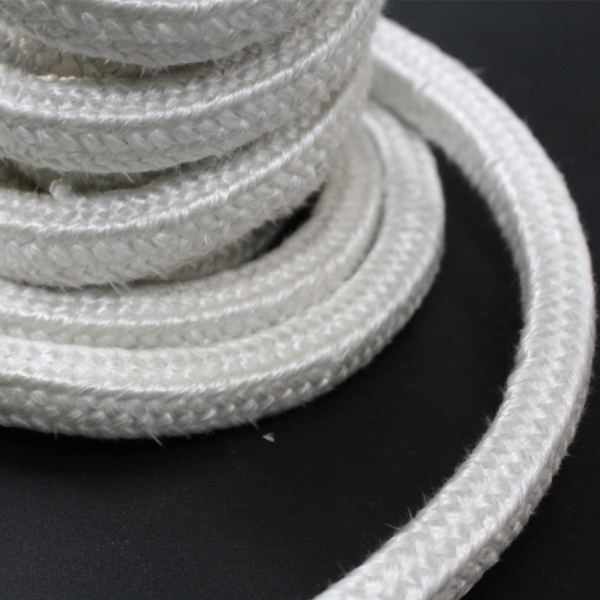
Measure along the centerline of the cleaned groove through every corner. For a rectangular door, do not rely only on outside door width and height because the gasket path may be inset, radiused or interrupted by hardware.
Identify the splice location before ordering. It should be accessible for installation and positioned according to the equipment design. State whether the rope will be supplied as continuous coil, reel length, cut length, closed loop or a fabricated assembly.
Do not stretch the rope while measuring or installing it. Tension can reduce its apparent diameter and cause the ends to pull apart after heating. The cutting allowance and splice method should be agreed with the supplier because they depend on braid stability, end treatment and installation procedure.
Common Sizing Mistakes
- Ordering from the crushed old gasket: permanent deformation hides the original profile and size.
- Using groove width alone: width does not reveal groove depth or the final closed-door gap.
- Choosing a larger rope to stop every leak: excessive size can hold the door open, overload latches or crush the braid.
- Ignoring profile: a round rope and square rope with the same stated dimension do not occupy a channel in the same way.
- Ignoring density: two ropes with equal dimensions may require different closing force and show different recovery.
- Stretching during installation: the rope can become thinner and later retract at the splice.
- Using a generic compression rule: published percentages may refer to a different material, braid, density or equipment design.
- Ignoring door condition: warped panels, worn hinges and uneven latches can create local leakage even with the correct rope.
Prototype and Receiving Inspection
For a new design or a replacement without a reliable original specification, approve a representative sample before releasing the bulk order. Check the following:
- Profile and nominal dimensions before installation
- Dimensional tolerance and consistency along the length
- Ability to seat in straight runs and corners without twisting
- Door closing force and latch engagement
- Contact around the full perimeter
- Splice fit and end stability
- Condition after controlled heat cycling
- Evidence of crushing, fraying, hardening or pullout
Keep the approved rope sample, drawing revision and purchase specification together. This gives purchasing, quality and maintenance teams a common reference for future orders.
Fiberglass Rope Gasket RFQ Checklist
| RFQ Item | Information to Provide |
|---|---|
| Equipment | Industrial oven, furnace, boiler, process tank, access panel or other equipment |
| Seal location | Door, hatch, cover, expansion joint, groove packing or insulation gap |
| Temperature | Continuous temperature, peak temperature, peak duration and cycling frequency |
| Groove | Width, depth, corner radius, material and drawing or photographs |
| Closed condition | Door gap, available installed height, latch arrangement and expected movement |
| Rope construction | Round or square profile, braided or other construction, coated or uncoated |
| Media | Hot air, combustion gas, steam, liquid, oil, chemicals, dust or vacuum |
| Supply format | Coil, reel, cut length, closed loop, end treatment and packaging |
| Commercial data | Trial quantity, annual demand, delivery schedule, OEM packaging and inspection documents |
Frequently Asked Questions
Should the new fiberglass rope be the same diameter as the old gasket?
Not automatically. The old gasket may be permanently flattened or stretched. Measure the cleaned groove and closed-door gap, then use the old rope only as supporting evidence.
Can I choose the rope size from groove width alone?
No. Groove depth, closed-door gap, corner radius, rope density and the approved compression range are also required. Width alone cannot predict how far the seal protrudes or how much closing force it creates.
How much should a fiberglass rope gasket be compressed?
Use the range approved for the exact rope construction. There is no universal percentage for every braided, twisted, knitted, solid-core, hollow-core or coated rope. Confirm the proposed geometry with the manufacturer and perform a sample fit when possible.
Is round or square fiberglass rope better for an oven door?
Neither profile is universally better. Round rope commonly suits curved or radiused grooves, while square rope can provide flat contact and stable seating in a rectangular channel. The existing groove and door design should decide the profile.
How do I calculate the rope length?
Measure the centerline of the complete groove with a flexible tape or non-stretch cord. Include corners and define the splice location. Agree any cutting allowance with the supplier and do not stretch the rope during measurement.
What if the correctly sized gasket still leaks?
Check for uneven latch force, worn hinges, door distortion, damaged groove surfaces, a poor splice, local over-compression or material degradation. Leakage is not always caused by nominal rope diameter.
When should ceramic fiber rope be considered instead?
Consider another material when the documented continuous working temperature or other service requirements exceed the capability of the complete fiberglass rope construction. Confirm the actual seal-line temperature and all assembly components before changing materials.
Request a Rope Gasket Recommendation
For an OEM project, plant shutdown or replacement programme, send the groove width and depth, closed-door gap, full gasket path, operating temperature, media, opening frequency, photographs and required quantity. Anhui Parker New Material Co., Ltd. can evaluate round, square, uncoated and coated fiberglass rope constructions for industrial supply.
See the complete high temperature rope range or begin with round braided fiberglass rope for industrial sealing.