Selecting a fabric expansion joint for an industrial duct system should begin with operating data, not with the fabric name.
Two expansion joints with exactly the same duct dimensions may require completely different constructions if one carries clean hot air at low temperature while the other handles corrosive flue gas containing moisture and abrasive particles.
A reliable selection process therefore needs to consider temperature, pressure, duct geometry, process gas, movement, gas velocity, vibration, chemical exposure and installation arrangement as one complete system.
BSTFLEX manufactures custom non metallic fabric expansion joints for industrial ducting, hot-air, exhaust and flue-gas applications. The following guide explains the information that should be evaluated before a joint is specified.
Before requesting a quotation, define these eight items:
The first question is not “Which fabric should I use?” It is “What is happening inside this duct?”
A fabric duct expansion joint forms part of the complete duct system. Its design is influenced by every condition acting on that system.
Before considering materials, record:
Once these conditions are known, the flexible element can be built around the actual application.
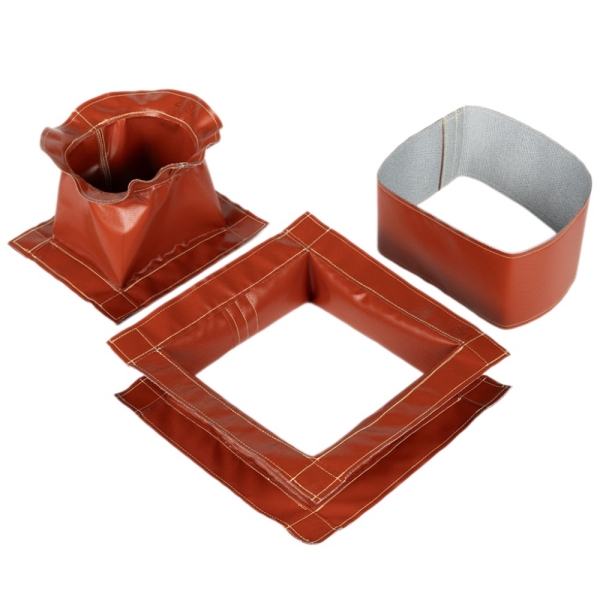
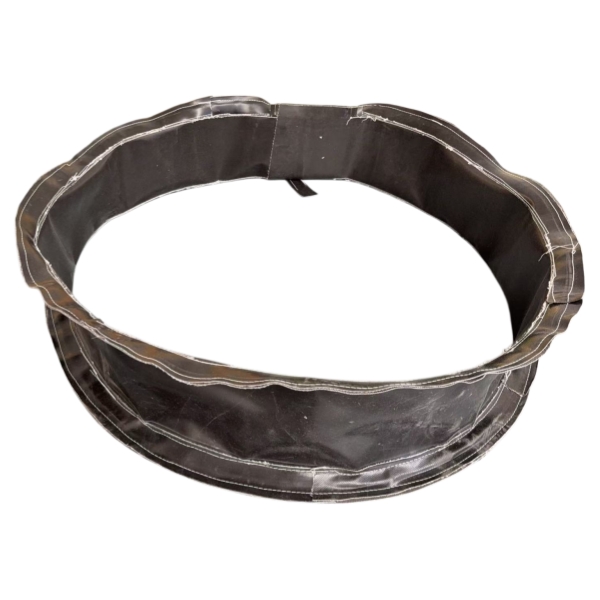
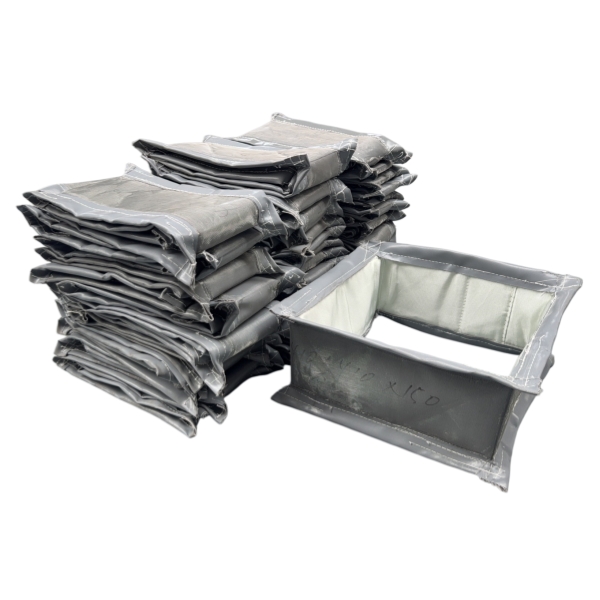
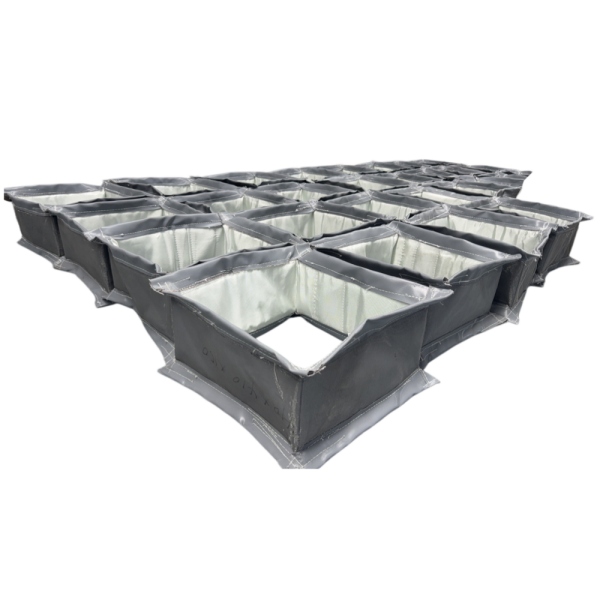
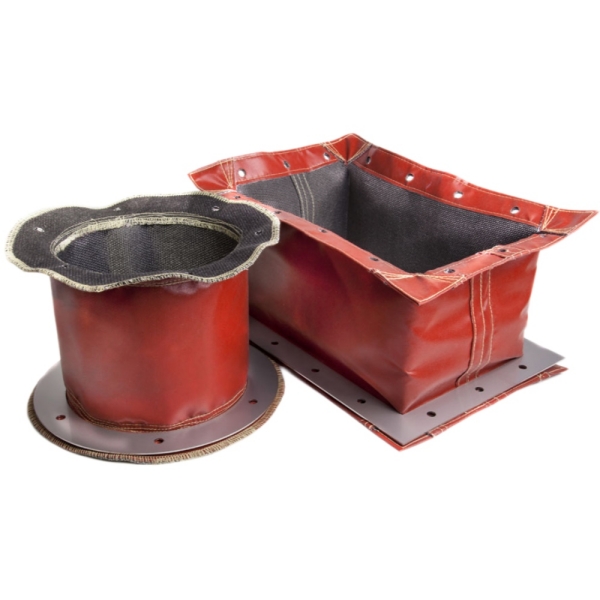
Fabric expansion joints are commonly used because industrial ducts can be extremely large and are not always circular.
The manufacturer should receive the actual duct dimensions rather than a nominal description.
| Duct Type | Information Required |
|---|---|
| Round | Inside or outside diameter |
| Rectangular | Width × height |
| Square | Side dimensions |
| Transition | Both end dimensions and transition geometry |
| Irregular | Drawing or dimensional sketch |
Rectangular joints require particular attention to corners. Straight sections and corners do not deform identically when the duct moves, so corner geometry should be engineered rather than treated as an extension of the straight belt.
For existing installations, photographs should supplement dimensions but should not replace a dimensional drawing.
The available distance between the two attachment points has a direct effect on movement capability.
This dimension is commonly called the:
A wider flexible span generally gives the material more room to deform, while a very short span can increase strain in the belt.
However, simply increasing belt width is not always the answer. Excess material can create folding, flutter or interference with internal components.
The correct face-to-face dimension must therefore be considered together with movement, pressure and liner geometry.
Temperature should always be separated into at least two values:
If an upset temperature occurs, also provide its expected duration.
For example, a duct operating continuously at 350°C but occasionally reaching 600°C for several minutes requires a different material evaluation than a duct continuously operating at 600°C.
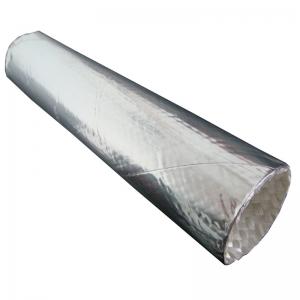
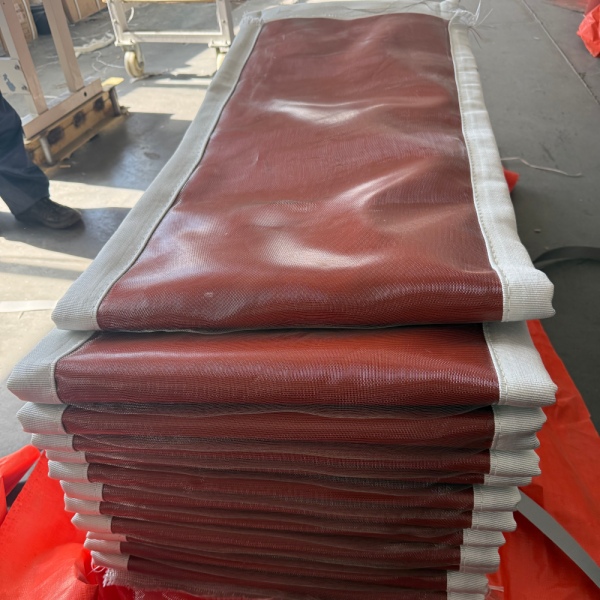
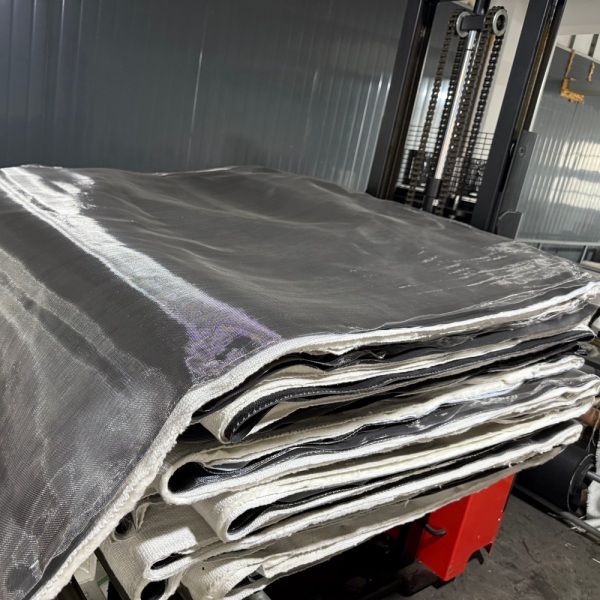
A high temperature fabric expansion joint is normally a layered thermal system. The flexible sealing membrane may not be exposed directly to the full process temperature.
Instead, the construction may include:
This arrangement creates a temperature gradient through the joint.
A common mistake is to specify only:
“We need fabric resistant to 800°C.”
That does not provide enough engineering information.
The manufacturer still needs to know whether 800°C is continuous, intermittent or an upset condition, and whether the joint is directly exposed to gas flow, radiation or insulated ductwork.
Pressure influences both sealing requirements and mechanical behavior.
Industrial duct systems frequently operate at pressures far below those of process piping, which is one reason fabric joints are widely used in these applications. Industry guidance generally characterizes fabric joints as low-pressure components.
However, the direction of pressure matters.
Positive pressure pushes the flexible element outward.
Design considerations may include:
Negative pressure pulls the fabric inward toward the duct.
This can increase the risk of:
Large negative-pressure ducts may therefore require suitable liners or support arrangements.
“Air” and “flue gas” should never be treated as equivalent media.
Material compatibility can change significantly depending on what the duct carries.
Useful information includes:
Non-metallic expansion joints are widely used with gaseous media including hot air, flue gas and chemically aggressive gases, but the flexible material construction must be selected for the specific service.
A gas may not appear highly corrosive at operating temperature but can become much more aggressive when moisture condenses.
For flue-gas applications, provide:
These conditions can affect both sealing membranes and internal protection layers.
Do not specify only “total movement.”
The joint should be designed around the direction of displacement.
Example of useful movement data:
Axial compression: 25 mm
Axial extension: 10 mm
Lateral movement: ±30 mm
Angular movement: 2°
Fabric joints can accommodate axial, lateral and angular movement, and one of their major advantages is the ability to handle combined movement within a relatively compact duct length.
The two duct connections move toward one another.
The two attachment points move farther apart.
One side shifts perpendicular to the duct centerline.
The connecting faces rotate relative to one another.
Several movements occur at the same time.
The last case is common in actual plant installations and should be clearly identified during selection.
Movement magnitude alone is not enough.
The number and frequency of operating cycles can also affect material fatigue and service life.
Consider whether the system:
A joint experiencing one major thermal cycle each month is fundamentally different from one experiencing constant cyclic movement.
Gas velocity is frequently omitted from RFQ data, but it can have a major effect on fabric life.
High-velocity flow can cause:
Industry fabric-joint designs often incorporate liners specifically to control turbulence and protect the fabric belt from flow conditions.
Cement dust, fly ash, furnace particles and other solids can rapidly damage a flexible textile if they strike it continuously.
If particulate matter is present, tell the manufacturer:
Abrasive applications may require an internal liner, abrasion-resistant hot-face material or accumulation barrier.
Material selection should consider chemicals independently from temperature.
Possible concerns include:
A PTFE-coated fabric, silicone-coated fabric and untreated fiberglass fabric have very different chemical behaviors.
The correct choice depends on the combination of temperature and chemical environment rather than chemical resistance alone.
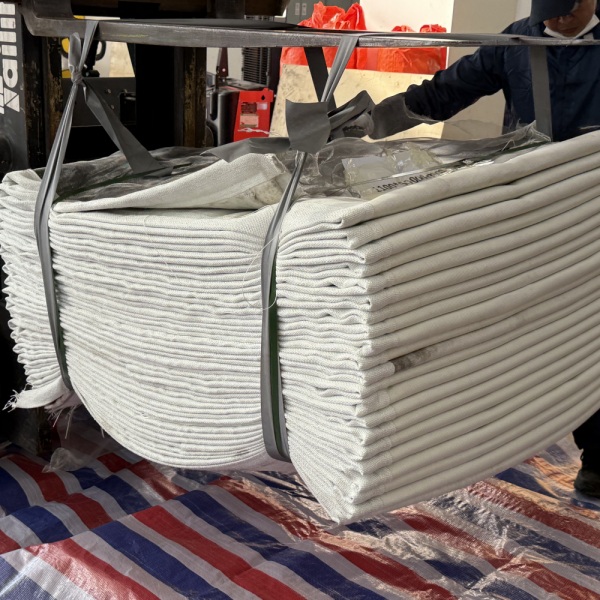
Only after the operating conditions are defined should the material construction be selected.
| Material Family | Possible Function | Main Selection Factors |
|---|---|---|
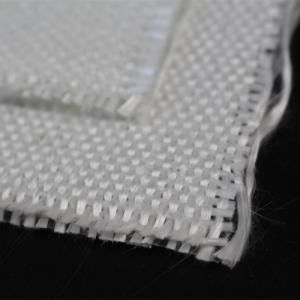
| Fiberglass Fabric | Reinforcement or thermal-resistant textile layer | Temperature, strength and weave |
| Silicone-Coated Fiberglass | Flexible protective or sealing layer | Temperature, flexibility and environment |
| PTFE-Coated Fabric | Chemical-resistant gas barrier | Process chemistry and temperature |
| Silica Fabric | High-temperature protection | Hot-face temperature and thermal exposure |
| Insulation Layer | Thermal gradient control | Process temperature and required cold-face temperature |
| Metal Mesh or Liner | Mechanical and flow protection | Velocity, abrasion and particles |
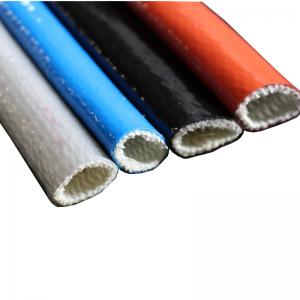
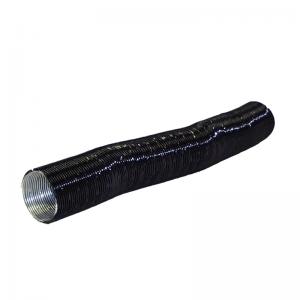
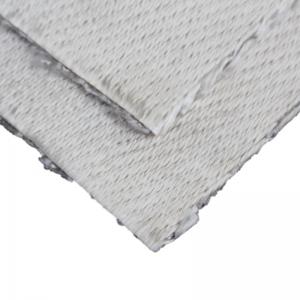
BSTFLEX works with multiple high temperature fabric systems, which allows the joint construction to be matched to different thermal and process conditions.
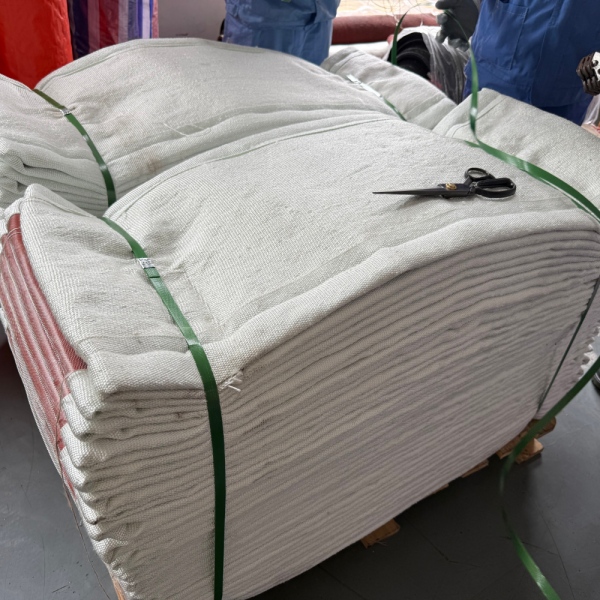
An insulation pillow is not automatically required in every expansion joint.
It is typically considered where process temperature must be reduced before reaching the outer flexible sealing layers.
Its design depends on:
The pillow must remain flexible enough to allow the joint to move while maintaining adequate thermal protection.
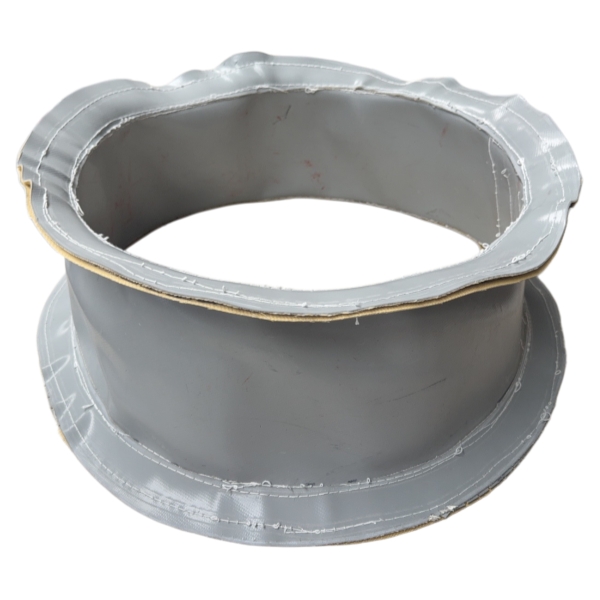
A liner can be one of the most important components in severe duct service.
Its purpose may include:
Industry guidance specifically lists liner selection, stand-off height and face-to-face dimensions as important fabric expansion joint design variables.
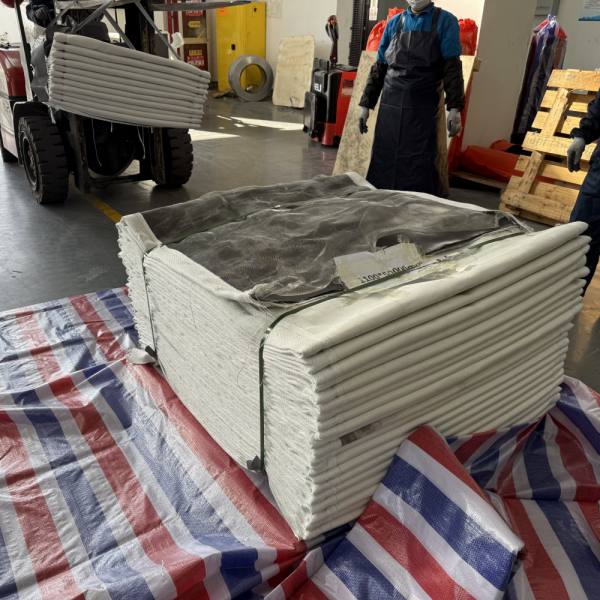
The surrounding duct insulation also matters.
If the duct is externally insulated, that insulation can change the temperature distribution around the expansion joint frame and flexible belt.
The manufacturer should know:
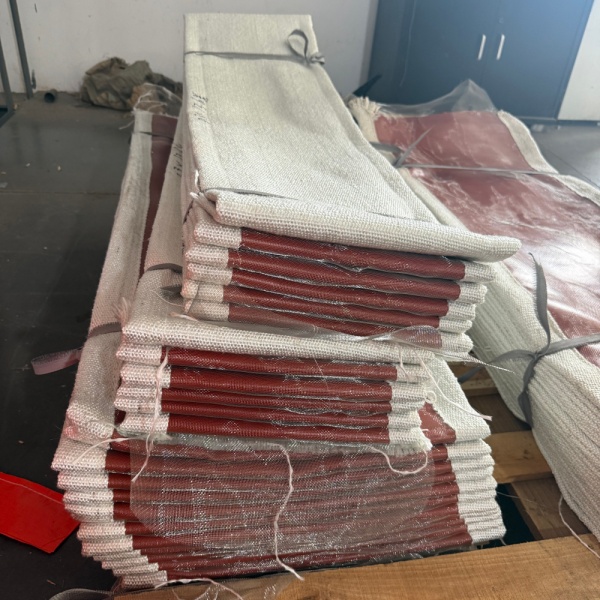
The flexible element must be attached securely without creating local stress that damages the belt.
Common arrangements include:
For replacement projects, provide:
Fabric expansion joint frames may be designed for welded or bolted attachment depending on the application.
Do not assume the expansion joint can automatically correct unlimited installation error.
If known misalignment exists, it should be declared as part of the movement requirement before manufacturing.
Installation guidance from established expansion joint manufacturers specifically warns that misalignment should remain within agreed design limits unless it was intentionally included in the joint design.
Outdoor installation introduces additional requirements that may not exist inside a plant.
These can include:
The external cover should therefore be selected for both process conditions and surrounding environment.
The selection process is different for a new project and a replacement.
The joint can be engineered together with:
Do not simply copy the old joint if it failed prematurely.
Before replacement, investigate:
Replacement guidance from experienced manufacturers also stresses reviewing original specifications and operating history rather than automatically reproducing a failed design.
| Operating Condition | Design Question | Possible Design Response |
|---|---|---|
| High Gas Temperature | Can outer layers tolerate the process temperature? | Add insulation and appropriate hot-face materials |
| Large Lateral Movement | Is sufficient flexible span available? | Optimize belt width and joint geometry |
| High Gas Velocity | Will the fabric be directly exposed to turbulence? | Consider internal liner |
| Abrasive Dust | Will particles strike the flexible element? | Add abrasion protection or liner |
| Corrosive Wet Gas | Is condensation chemically aggressive? | Select compatible sealing membrane |
| Negative Pressure | Can the fabric be pulled inward? | Evaluate liner and support geometry |
| Outdoor Installation | Will the joint see weather and UV? | Select suitable external cover |
| Frequent Cycling | How often does movement repeat? | Evaluate material fatigue and geometry |
Operating conditions:
Selection priorities:
The design should focus on abrasion protection, high-temperature insulation, negative-pressure behavior, corner construction and sufficient movement allowance. An internal liner may be important to protect the flexible belt from dust-laden gas.
Operating conditions:
Selection priorities:
Flexibility and vibration resistance may be more important than a heavy insulation package. Belt flutter and local airflow around the fan connection should still be considered.
Operating conditions:
Selection priorities:
Chemical resistance of the gas-sealing layer may be more important than maximum temperature capability. Condensation and cold-face temperatures should be reviewed carefully.
Many expansion joint problems begin before manufacturing.
Avoid these specification errors:
For the fastest technical evaluation, send the following information with your inquiry:
| Application | Power plant, cement plant, furnace, fan, boiler, exhaust system or other equipment |
| Shape | Round, rectangular, square or special |
| Dimensions | Diameter or width × height |
| Face-to-Face | Installed joint length |
| Operating Temperature | Continuous value |
| Maximum Temperature | Peak value and duration |
| Pressure | Positive or negative, operating and design values |
| Process Medium | Gas composition and moisture |
| Movement | Axial compression, extension, lateral and angular |
| Gas Velocity | Operating flow velocity if known |
| Particles | Dust, ash or abrasive solids |
| Environment | Indoor or outdoor |
| Quantity | Prototype, replacement or production quantity |
| Drawing | PDF, CAD or dimensional sketch |
Industrial fabric expansion joints should be engineered around the duct system rather than selected as generic textile components.
BSTFLEX can evaluate custom constructions for hot-air, exhaust and flue-gas ducting based on the customer's operating temperature, pressure, movement, gas composition, geometry and environmental requirements.
Available solutions include round, rectangular and custom fabric duct expansion joints, with flexible constructions using technical fabrics, coated fabrics, sealing layers, insulation and protective components as required by the application.
Review the BSTFLEX Non Metallic Fabric Expansion Joint product page for custom manufacturing information.
For a custom quotation, provide your duct size, face-to-face length, normal and maximum temperature, operating pressure, process gas, axial movement, lateral movement, gas velocity and available drawings.

 français
 Deutsch
 русский
 italiano
 español
 português
 Nederlands
 العربية
 日本語
日本語 한국의
한국의 Türkçe
 Polski
 Tiếng Việt
 slovenský
 Indonesia