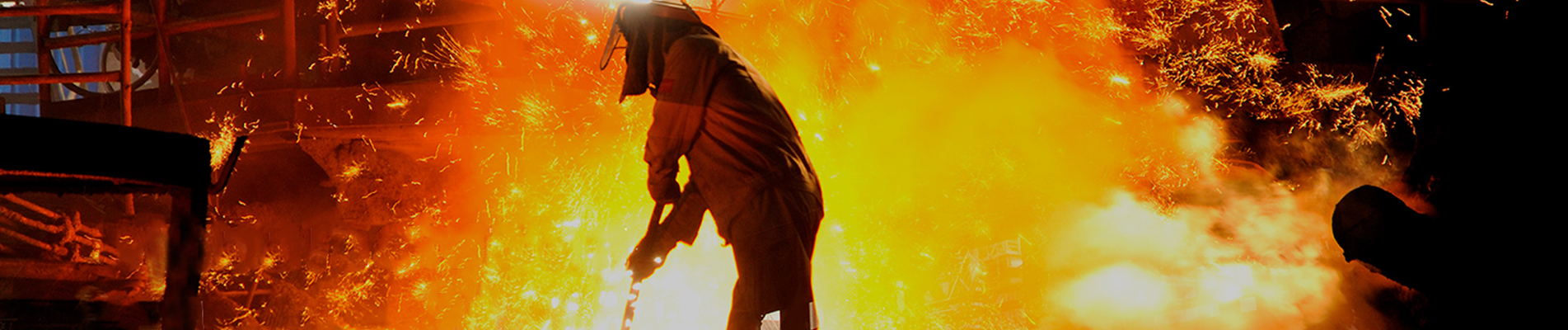
High-temperature flue gas ducting creates one of the most demanding operating environments for a fabric expansion joint. The joint may need to handle several problems at the same time: elevated gas temperature, thermal growth, negative pressure, fly ash or process dust, corrosive gas components, vibration and large multidirectional duct movement.
For this reason, a high temperature fabric expansion joint should not be selected simply by choosing a fabric with the highest published temperature rating. Reliable performance depends on the complete joint architecture, including the flexible belt, gas-sealing layer, thermal insulation, hot-face protection, internal liner and the geometry available for movement.
BSTFLEX manufactures custom non metallic fabric expansion joints for industrial hot-air, exhaust and flue-gas duct systems.
Key design principle: In a hot flue-gas system, the flexible sealing membrane does not necessarily need to operate at the full gas temperature. A properly designed insulation and hot-face system can create a controlled temperature gradient through the expansion joint.
Industrial flue ducts can change dimension significantly between cold shutdown and full operating temperature.
A long steel duct expands as its temperature rises. If that growth is restrained, additional loads can be transferred to duct walls, support structures, fans, boilers, furnaces and pollution-control equipment.
A flue gas expansion joint provides a flexible section where this thermal movement can occur in a controlled manner.
Typical sources of movement include:
Fabric joints are particularly useful in these systems because they can accommodate axial, lateral and angular movement with comparatively low spring forces. Industry manufacturers commonly use them in hot gaseous, low-pressure duct service.
A high-temperature flue-gas application is usually a combination of several operating stresses.
| Operating Condition | Potential Effect on the Expansion Joint |
|---|---|
| High Gas Temperature | Thermal degradation of sealing and reinforcement materials |
| Fly Ash or Dust | Abrasion and accumulation inside the joint cavity |
| Negative Pressure | Flexible material may be drawn toward the gas stream |
| High Gas Velocity | Flutter, turbulence and local mechanical wear |
| Acidic Gas Components | Chemical attack on incompatible materials |
| Condensation | Potentially severe corrosion or chemical exposure |
| Thermal Cycling | Repeated flexing and dimensional change |
| Large Duct Movement | Strain on the flexible belt and attachment system |
This is why two flue ducts operating at the same temperature may require completely different expansion joint constructions.
Many severe-service expansion joints are multi-layer assemblies.
Each layer performs a separate function.
The innermost protective system is located closest to the gas stream.
Depending on the application, its role may include:
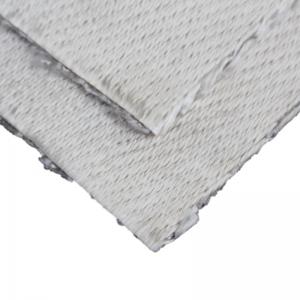
High-temperature textile materials such as silica or other heat-resistant fabrics may be evaluated for this part of the system depending on actual service conditions.
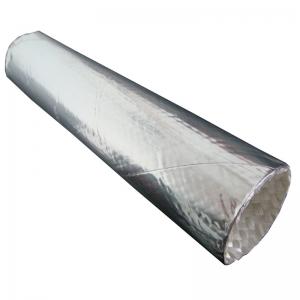
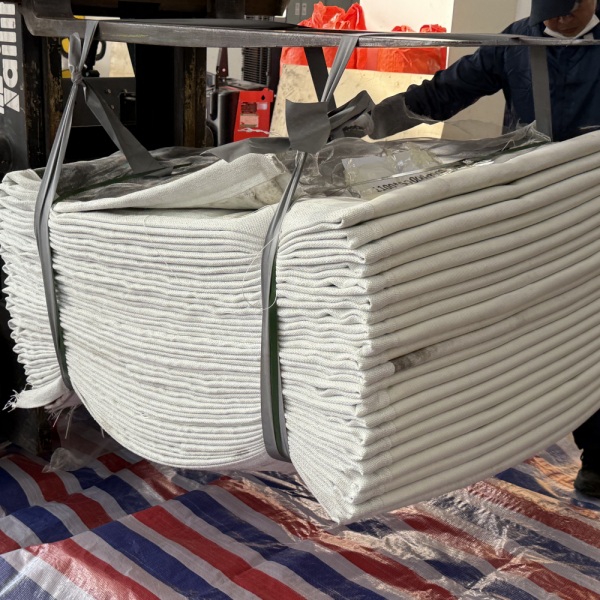
The insulation layer reduces heat transfer from the process gas toward the sealing and external flexible layers.
This creates a temperature gradient across the expansion joint.
The required insulation thickness depends on:
The gas seal must contain the process medium while remaining flexible during repeated movement.
Its selection should consider:
PTFE-based composite fabrics are used in some chemically demanding flue-gas applications because of their chemical resistance, while the actual allowable temperature depends on the specific material system and thermal design.
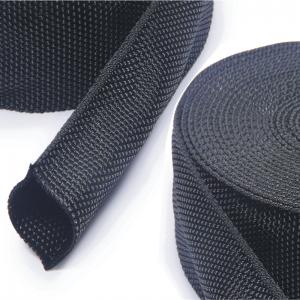
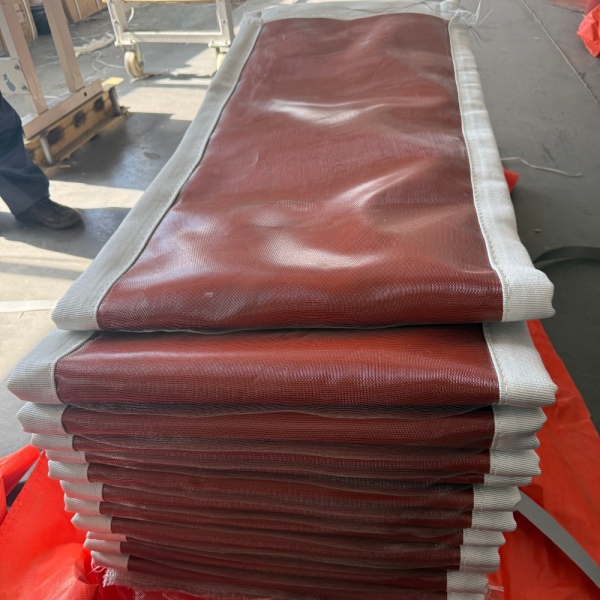
Woven technical fabrics can provide mechanical strength and dimensional stability to the flexible belt.
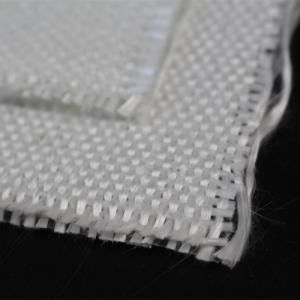
Fiberglass is commonly used because it combines heat resistance with useful tensile properties.
The external layer may need to resist:
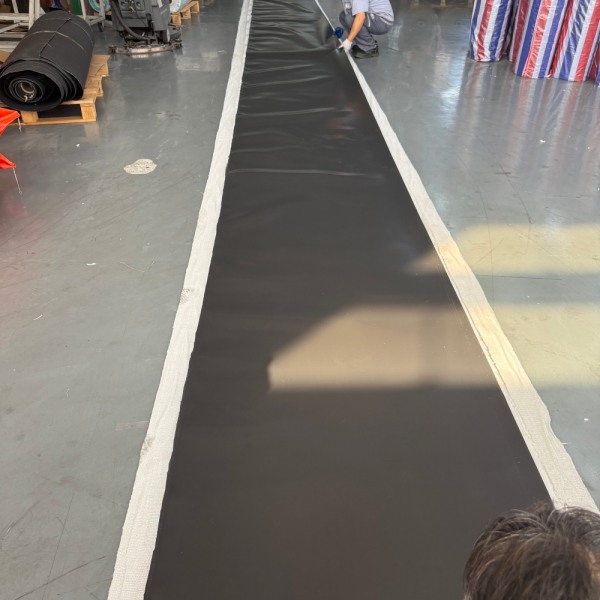
In dirty or high-velocity flue-gas service, protecting the fabric belt from direct gas flow is often essential.
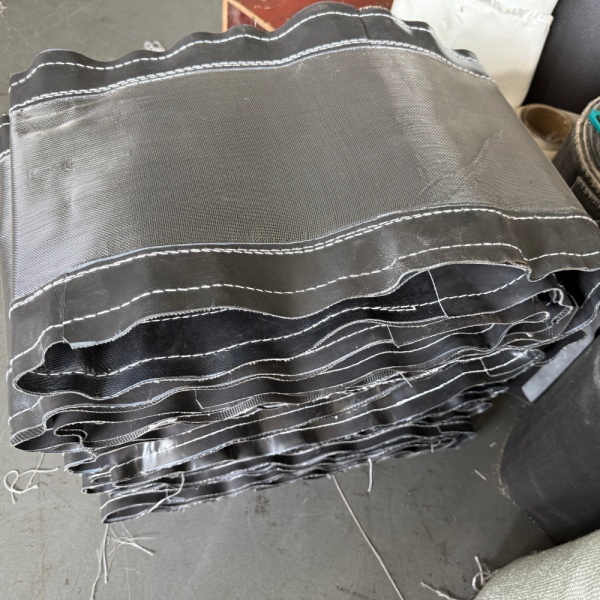
A flow liner creates a smoother internal path and helps shield the flexible element.
Its functions may include:
Industry high-temperature dirty-flue-gas designs commonly use liners specifically to protect the flexible belt from abrasion and to manage particulate-laden flow.
Flue gas can carry fly ash, clinker dust, cement dust or other particulate matter.
If this material accumulates in the expansion joint cavity, it can interfere with movement and increase local wear.
An accumulation barrier is used to reduce the amount of particulate entering and filling that cavity.
It may work together with the flow liner to:
Accumulation barriers are a common design feature in dirty-flue-gas expansion joint systems.
There is no single “best fabric” for every high-temperature expansion joint.
The correct material depends on where that material sits within the joint and what function it performs.
| Material Family | Possible Role | Main Engineering Consideration |
|---|---|---|
| Fiberglass Fabric | Reinforcement and thermal textile layer | Temperature and mechanical strength |
| Silica Fabric | High-temperature hot-face protection | Direct thermal exposure |
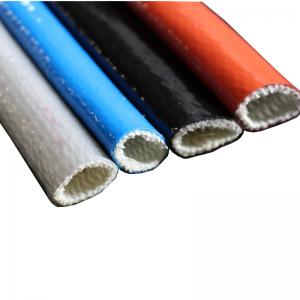
| Silicone-Coated Fiberglass | Outer flexible or sealing layer | Temperature, weather and flexibility |
| PTFE-Coated Fabric | Chemical-resistant gas seal | Chemistry and membrane temperature |
| Insulation Materials | Temperature reduction through the joint | Thermal gradient |
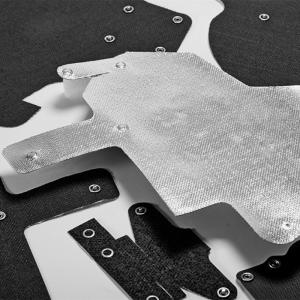
| Metal Mesh or Liner | Flow and abrasion protection | Velocity and particulate loading |
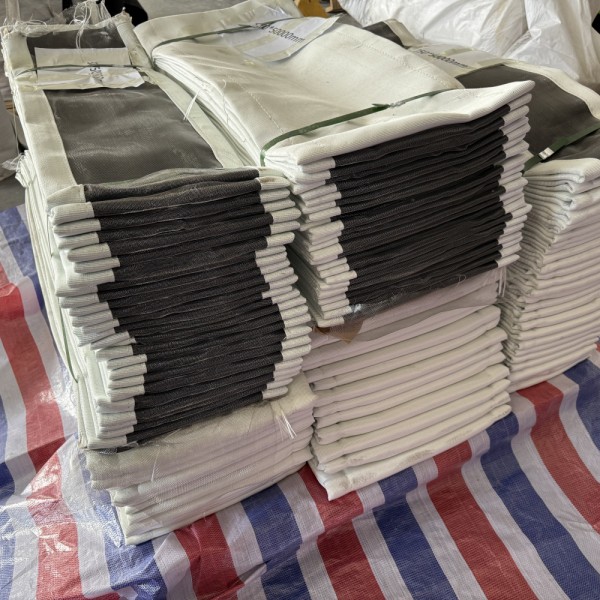
BSTFLEX manufactures various high temperature fabrics, allowing different textile systems to be considered according to their role inside the expansion joint.
Providing only one temperature is rarely enough.
A useful specification should distinguish between:
The temperature experienced during normal steady operation.
The highest expected process temperature during abnormal or temporary conditions.
Whether the maximum temperature lasts seconds, minutes or hours can significantly influence material selection.
Repeated temperature cycling can create both thermal and mechanical fatigue.
Outdoor installations may also experience very low ambient temperatures during shutdown.
In some combustion and flue-gas systems, corrosion risk is not highest at maximum operating temperature.
It may become more severe when the gas cools enough for acidic condensates to form.
This means designers should consider:
A chemically resistant gas membrane may be required even when the maximum process temperature does not appear unusually severe.
Many boiler and exhaust systems operate under negative pressure.
This creates a different mechanical condition from positive-pressure ductwork.
The pressure can pull the flexible element inward toward the gas stream.
Potential consequences include:
The joint should therefore be designed with negative pressure included as a defined operating parameter, not simply described as “low pressure.”
Clean hot air and dirty flue gas are fundamentally different applications.
A joint carrying clean heated air may require flexibility and temperature resistance but little abrasion protection.
A dirty flue-gas joint may additionally need:
For this reason, the type and concentration of solids suspended in the gas should be included in the RFQ. Industry design guidance specifically identifies gas temperature, flow rate and the amount and abrasiveness of suspended solids as major fabric-joint design parameters.
Thermal movement should be calculated from the duct system rather than estimated from the expansion joint dimensions.
The four key values are:
| Axial Compression | Duct sections move toward one another |
| Axial Extension | Duct sections move apart |
| Lateral Movement | One connection moves sideways relative to the other |
| Angular Movement | Connection faces rotate relative to each other |
High-temperature fabric joints can accommodate substantial movement, but the available movement depends on belt span, geometry, installed position and material construction.
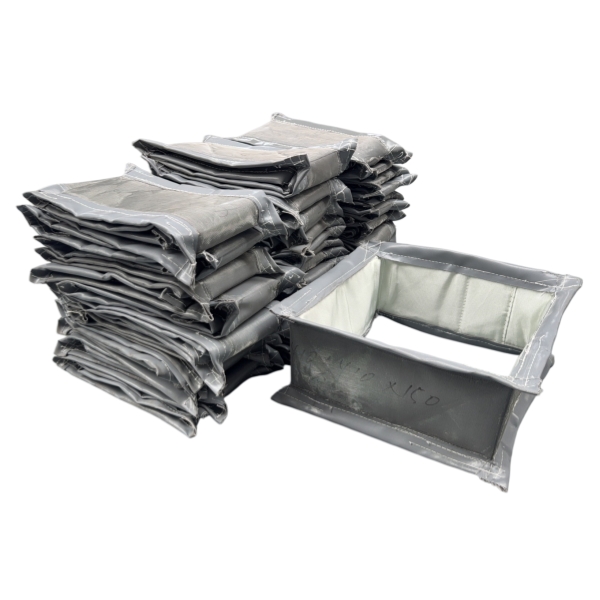
The flexible span between attachment points determines how much material is available to deform.
If the span is too short for the required lateral or axial movement, the fabric may be overstressed.
If excessive loose material is introduced, however, it can create:
Face-to-face dimension and required movement should therefore be evaluated together.
Large boiler systems can create substantial thermal growth between the furnace, air heater, precipitator, scrubber and stack-related ductwork.
Cement production combines hot gas with heavy dust loading, making abrasion and accumulation control especially important.
Furnace and process exhaust systems can expose expansion joints to radiant heat, high-temperature gas and particulate matter.
Waste incineration can create high thermal loads and chemically complex exhaust gas requiring careful material selection.
Expansion joints may be installed between furnace outlets and downstream gas-handling equipment to accommodate thermal growth.
Large exhaust systems can combine high temperature, vibration and significant structural movement.
Consider a large rectangular duct carrying hot flue gas with heavy particulate loading.
The system also operates under negative pressure and experiences both axial and lateral thermal movement.
A suitable design evaluation would focus on:
Simply specifying “high-temperature fiberglass fabric” would not address most of the actual risks in this application.
Now consider a clean hot-air duct with no significant dust or corrosive gases.
Although temperature may be similar, the required construction could be substantially simpler because abrasion protection and chemical resistance are less critical.
The design priorities may shift toward:
This illustrates why process media must be specified together with temperature.
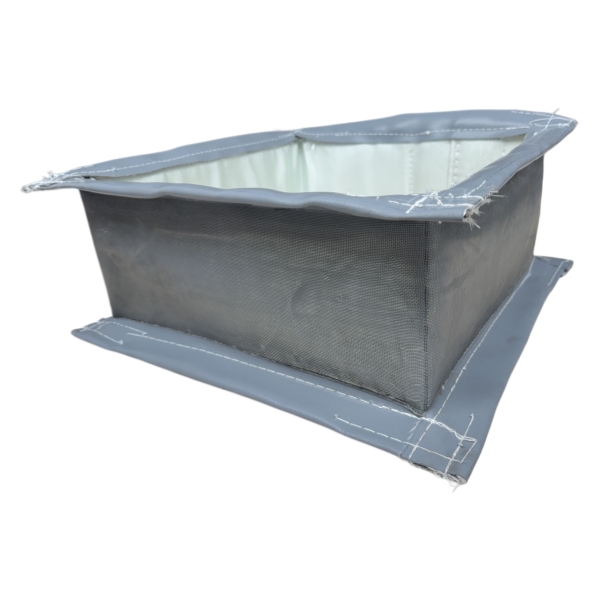
PTFE-based flexible materials may be considered where chemical resistance and gas tightness are important.
They are particularly relevant to some chemical-process and flue-gas-cleaning applications. Frenzelit, for example, specifically positions multilaminated PTFE composite materials for chemical and flue-gas-cleaning plants.
However, PTFE should not simply be placed directly into an extremely hot gas stream without evaluating its actual membrane temperature.
At higher process temperatures, insulation and hot-face protection may be required to keep the sealing membrane within its intended operating range.
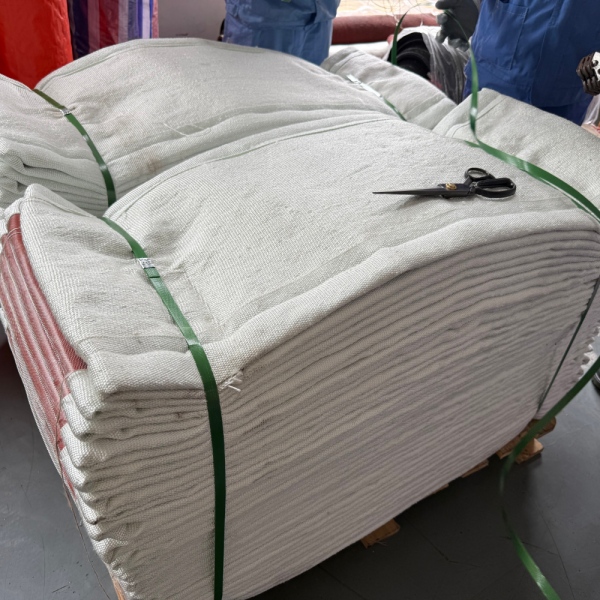
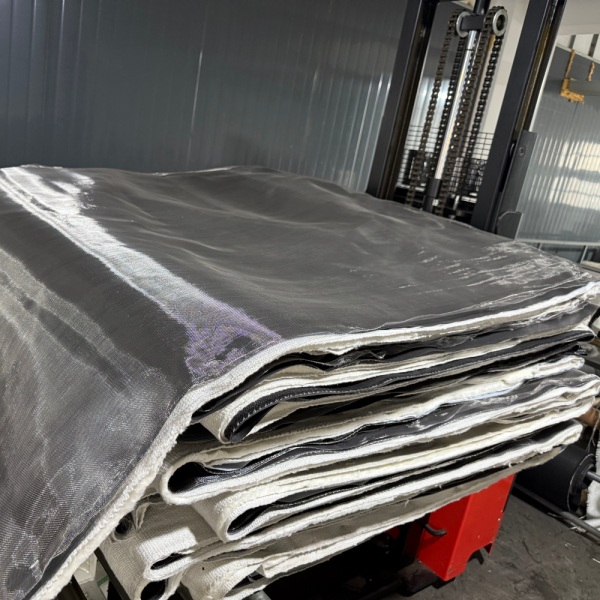
High-silica fabric can be considered where a textile layer requires substantially higher direct heat resistance than conventional fiberglass-based fabrics.
Possible roles include:
The final construction still depends on gas sealing, pressure, movement and chemical requirements; silica should not be treated as a complete expansion joint material by itself.
High-temperature fabric joints often fail because an operating condition was underestimated rather than because the flexible fabric was simply “too weak.”
Common causes include:
Maintenance personnel should investigate conditions such as:
Where a joint has failed prematurely, the operating cause should be identified before an identical replacement is ordered.
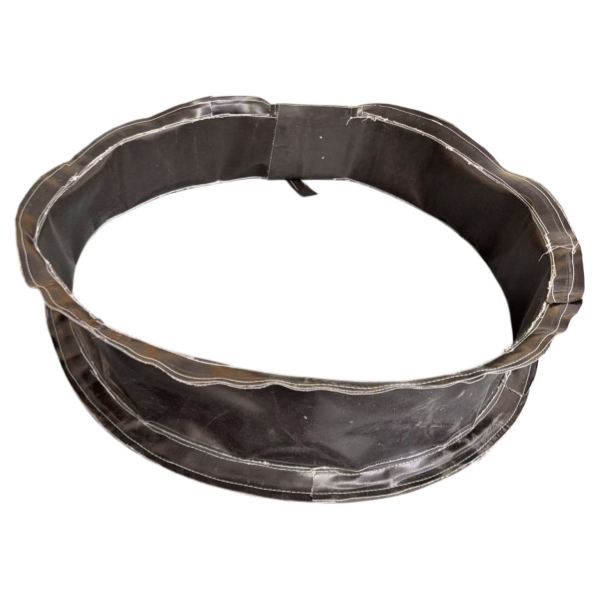
Provide the following information before final material selection:
For an existing installation, do not provide only outside dimensions.
A useful replacement package should include:
If the existing joint experienced short service life, this information can help determine whether the replacement construction should be changed.
BSTFLEX develops high temperature fabric expansion joints for industrial flue-gas, exhaust and hot-air ducting.
Depending on the application, the flexible construction can combine technical fabrics, coated fiberglass, PTFE-based sealing materials, high-silica fabric, thermal insulation and internal protective components.
Round, rectangular, square and application-specific configurations can be manufactured according to customer drawings and operating data.
For available custom manufacturing options, visit the BSTFLEX Non Metallic Fabric Expansion Joint product page.
Send BSTFLEX your duct dimensions, normal and maximum temperature, pressure, process gas, gas velocity, particulate conditions, axial movement, lateral movement, face-to-face length and available drawings.

 français
 Deutsch
 русский
 italiano
 español
 português
 Nederlands
 العربية
 日本語
日本語 한국의
한국의 Türkçe
 Polski
 Tiếng Việt
 slovenský
 Indonesia