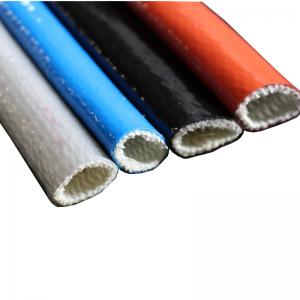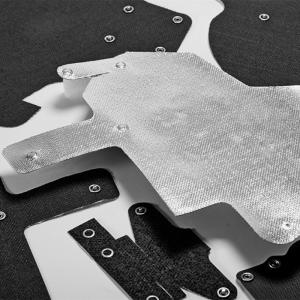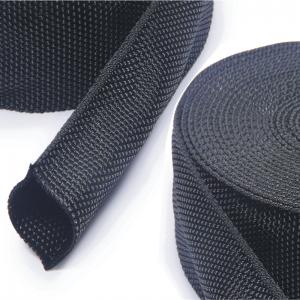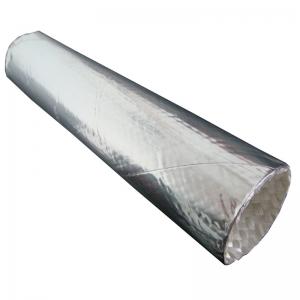
The performance of a fabric expansion joint depends heavily on its material construction. PTFE, silicone-coated fiberglass, woven fiberglass and silica fabric can all be used in non-metallic expansion joint systems, but they do not perform the same job.
PTFE is typically selected where gas sealing and chemical resistance are critical. Silicone-coated fiberglass provides flexibility, weather resistance and useful sealing performance. Fiberglass supplies reinforcement and thermal stability. Silica fabric is generally reserved for the hottest areas of the construction, where direct thermal exposure exceeds the practical range of conventional fiberglass systems.
In many industrial applications, the correct solution is therefore not PTFE versus silicone versus fiberglass versus silica. It is a carefully engineered combination of several materials, with each layer positioned where its properties are most useful.
BSTFLEX manufactures custom Non Metallic Fabric Expansion Joints using application-specific material combinations for hot-air, exhaust, flue-gas and industrial duct systems.

Material Selection in One Minute
| Material | Primary Strength | Typical Role in Expansion Joint |
|---|---|---|
| PTFE-Coated Fiberglass | Chemical resistance and gas sealing | Gas barrier or external flexible belt |
| Silicone-Coated Fiberglass | Flexibility, weatherability and heat resistance | Outer cover or flexible sealing layer |
| Fiberglass Fabric | Mechanical reinforcement and thermal stability | Reinforcement or supporting textile layer |
| Silica Fabric | High-temperature thermal resistance | Hot-face protection or thermal barrier |

A common purchasing question is:
“What is the best material for a fabric expansion joint?”
There is no universal answer because an expansion joint must perform several different functions simultaneously.
The flexible element may need to:
No single textile is ideal at every one of these tasks.
This is why industrial fabric expansion joint materials are usually selected according to function rather than simply according to the highest temperature rating.

A practical way to understand expansion joint construction is to separate the material system into functional zones.
From the process side outward, a multi-layer joint may include:
Process Gas → Flow Protection → Hot-Face Layer → Insulation → Reinforcement → Gas Seal → Outer Protection
The actual order and number of layers varies by application, but this model explains why several different technical fabrics can appear in one joint.
For example, silica may protect the hottest side, fiberglass may provide structural reinforcement, insulation may reduce temperature and PTFE may provide the final gas-tight chemical barrier.

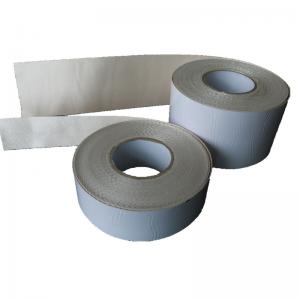
PTFE fabric expansion joint materials are widely used where chemical resistance and gas sealing are more important than direct exposure to extreme process temperature.
In expansion joints, PTFE is commonly combined with a woven fiberglass substrate. The fiberglass provides mechanical strength, while the PTFE coating or laminated membrane creates a low-porosity, chemically resistant surface.
PTFE-based materials are particularly attractive in environments involving:
The chemical resistance of PTFE makes it useful when the flexible gas barrier may be exposed to aggressive process components.
A PTFE layer may function as:
PTFE should not automatically be placed directly against extremely high-temperature gas simply because the overall expansion joint is described as “high temperature.”
In hotter applications, the joint may require insulation and hot-face protection so that the PTFE membrane operates at a substantially lower temperature than the process gas.
This distinction is fundamental to good expansion joint design.

PTFE becomes a strong candidate when:
The final grade, thickness, reinforcement and insulation arrangement should still be chosen from actual process conditions.

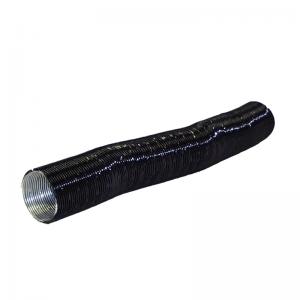
A silicone fabric expansion joint normally uses silicone rubber coated onto a woven fiberglass substrate.
This construction combines the dimensional strength of fiberglass with the flexibility and environmental resistance of silicone rubber.
Silicone-coated fiberglass provides a useful balance of:
This makes it particularly useful for clean-air and moderate-temperature industrial duct systems.
Silicone-coated fabric may be used as:
Silicone-coated fiberglass is often suitable where the application combines:
It is particularly useful where flexibility and environmental durability are important but highly aggressive chemical resistance is not the primary requirement.
A silicone-coated fabric should not automatically be chosen for every hot duct.
Potential limitations may arise when:
Under these conditions, silicone may still appear in the cooler outer region of a multilayer joint rather than on the hot face.

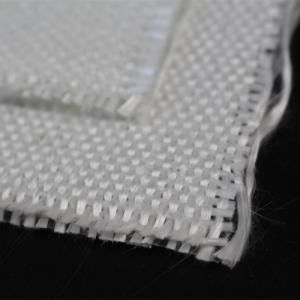
Fiberglass fabric is one of the fundamental reinforcement materials used in non metallic expansion joints.
Its value comes from the combination of:
Fiberglass is also the reinforcement substrate used beneath many PTFE and silicone coatings.
These should not be treated as the same material.
Uncoated fiberglass fabric provides reinforcement and thermal resistance but is relatively porous and does not by itself create a suitable gas-tight barrier for many duct applications.
Coated fiberglass changes the surface properties of the fabric and can provide improved gas sealing, chemical resistance or environmental protection depending on the coating.

| Construction | Function |
|---|---|
| Plain Woven Fiberglass | Mechanical reinforcement and thermal support |
| Silicone-Coated Fiberglass | Flexible and weather-resistant layer |
| PTFE-Coated Fiberglass | Chemical-resistant gas barrier |
| Aluminized Fiberglass | Radiant heat reflection in suitable designs |
| Special Coated Fiberglass | Application-specific thermal or mechanical properties |
BSTFLEX manufactures a broad range of high temperature technical fabrics that can be evaluated for different functions within custom expansion joint systems.

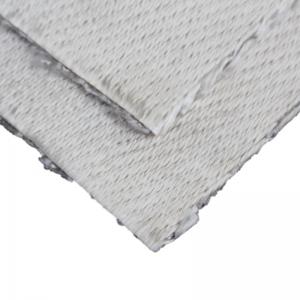
Silica fabric is selected when the thermal requirement moves beyond the practical direct-service range of standard fiberglass-based textile layers.
High-silica cloth contains a significantly higher silica content than conventional E-glass fabric and maintains textile integrity at substantially elevated temperatures.
This makes silica particularly useful near the hot side of a high-temperature expansion joint.
Possible applications include:
Silica is commonly better suited to:
It is not normally selected solely as the gas-sealing membrane.
That is an important distinction: excellent heat resistance does not automatically mean excellent gas sealing or chemical resistance.

For especially severe thermal exposure, higher-purity silica fabrics can offer substantially greater thermal capability than standard fiberglass.
BSTFLEX manufactures 96% High Temperature Silica Fabric for demanding thermal-protection applications.
In an expansion joint system, such material may be evaluated for the hot side where the objective is to protect insulation, reinforcement or gas-sealing layers from excessive heat.
The final use should still be engineered around the complete joint rather than selected only from the textile temperature rating.
This is one of the most common material comparisons.
| Property | PTFE-Based Fabric | Silicone-Coated Fiberglass |
|---|---|---|
| Primary Advantage | Chemical resistance and gas sealing | Flexibility and weather resistance |
| Wet Corrosive Gas | Often preferred | Application dependent |
| Outdoor Exposure | Good depending on construction | Very useful |
| Clean Hot Air | Possible | Common application |
| Direct Extreme Heat | Usually requires insulation | Usually requires protection above coating limits |
| Typical Function | Chemical/gas barrier | Outer flexible cover or sealing layer |
The decision should not be based on price alone.
If the system contains corrosive wet gas, chemical resistance may dominate the selection. If the system handles relatively clean hot air and needs excellent flexibility and weather resistance, silicone may be the more practical option.

Fiberglass and silica are both inorganic glass-based textile materials, but they occupy different positions in the temperature spectrum.
Fiberglass is widely used because it offers an excellent balance between strength, flexibility, availability and thermal resistance.
Silica is selected when direct thermal exposure becomes more severe.
| Selection Factor | Fiberglass | Silica |
|---|---|---|
| Mechanical Reinforcement | Excellent | Good, depending on construction |
| Moderate High Temperature | Highly suitable | Suitable but may be unnecessary |
| Extreme Hot-Face Exposure | Limited compared with silica | Preferred |
| Coating Compatibility | Excellent substrate for silicone and PTFE | Usually used primarily for thermal protection |
| Typical Expansion Joint Role | Reinforcement or coated flexible belt | Hot-face or thermal barrier |

Consider a flue-gas system where the process temperature is too high for the preferred chemical-resistant sealing membrane.
Instead of abandoning that sealing material, the joint can be designed so the hot-side materials reduce the temperature before heat reaches it.
A conceptual multilayer construction could therefore look like this:
Example Multilayer Architecture
Hot Flue Gas
↓
Internal Flow Liner
↓
Silica Hot-Face Protection
↓
High-Temperature Insulation
↓
Fiberglass Reinforcement
↓
PTFE Chemical / Gas Barrier
↓
External Protective Layer
This example is intended to demonstrate material functions, not to prescribe one universal expansion joint construction.
Actual layer sequence, thickness and material grade must be determined from the operating data.
A clean hot-air duct generally creates fewer chemical and abrasion problems than a dirty flue-gas system.
For moderate temperatures, a construction based on reinforced silicone-coated fiberglass may be sufficient depending on pressure and movement.
Selection priorities are usually:
Heavy chemical barriers or high-temperature silica layers may not be necessary.
This environment changes the priorities.
The main design concerns may become:
A PTFE-based chemical barrier may become much more important than selecting the textile with the highest direct heat resistance.
For very hot but relatively dry and non-corrosive gas, thermal management may dominate.
The design may place greater emphasis on:
The outer gas-sealing material can then operate behind the thermal barrier at a lower temperature.
Neither PTFE, silicone, fiberglass nor silica should be expected to survive indefinitely if abrasive particles strike the flexible belt at high velocity.
In dusty systems, material selection must therefore be combined with mechanical protection.
Possible measures include:
This is particularly relevant to cement, power generation, steel and incineration applications.
Seal gas, resist chemicals, carry mechanical load, insulate heat or protect against abrasion?
Process gas temperature and individual layer temperature are not always the same.
Dry hot air and wet acidic flue gas require different material systems.
A material must remain suitable after repeated axial, lateral and angular deformation.

Fabric weight can influence strength, thickness and handling, but GSM is not a complete engineering specification.
Two fabrics with similar weight may have very different:
The same applies to thickness. A thicker material is not automatically a better expansion joint material.
This is another frequent mistake.
A silica fabric may tolerate higher direct heat than a PTFE-coated fabric, but it does not mean silica should replace PTFE when the required function is chemical sealing.
Likewise, PTFE may provide excellent chemical resistance but should not be used at a location where its allowable temperature would be exceeded.
Correct design assigns the right material to the right layer.
| Application Condition | Material Usually Worth Evaluating | Main Reason |
|---|---|---|
| Clean Moderate-Temperature Air | Silicone-Coated Fiberglass | Flexibility and environmental resistance |
| Wet Corrosive Flue Gas | PTFE-Coated Fiberglass | Chemical resistance and gas sealing |
| General Reinforcement | Fiberglass Fabric | Strength and dimensional stability |
| Very High Hot-Face Temperature | Silica Fabric | High-temperature textile protection |
| High Temperature Plus Corrosive Gas | Silica + Insulation + PTFE System | Separate thermal and chemical functions |
| Outdoor Moderate-Temperature Duct | Silicone-Coated Fiberglass | Weatherability and flexibility |
| Abrasive Dust-Laden Flue Gas | Thermal Fabric + Mechanical Liner | Fabric alone should not take direct abrasive flow |
BSTFLEX does not treat a non metallic expansion joint as one generic piece of coated fabric.
Material construction can be evaluated around:
Because BSTFLEX works with fiberglass, silicone-coated fabrics, PTFE-coated fabrics, silica textiles and high-temperature insulation materials, different functional layers can be developed around project-specific requirements.
When requesting a material recommendation, provide more than the required dimensions.
| Process Gas | Hot air, exhaust, flue gas or chemical gas |
| Continuous Temperature | Normal operating temperature |
| Maximum Temperature | Peak temperature and duration |
| Pressure | Positive or negative |
| Chemical Composition | Acidic, alkaline, hydrocarbon or other components |
| Moisture | Dry, humid, condensing or wet service |
| Gas Velocity | Especially important in dusty service |
| Particles | Dust, fly ash, cement powder or other solids |
| Movement | Axial, lateral and angular |
| Duct Geometry | Round, rectangular or custom |

The best fabric expansion joint material is the one that performs the required function at the actual location where it is used.
PTFE provides strong chemical and sealing performance. Silicone-coated fiberglass provides flexibility and environmental durability. Fiberglass supplies structural reinforcement. Silica protects the system where thermal exposure becomes more severe.
In demanding industrial applications, these materials can work together rather than compete with one another.
BSTFLEX manufactures custom Non Metallic Fabric Expansion Joints for industrial ducting, flue gas, hot-air and exhaust applications.
Send BSTFLEX your process temperature, gas composition, pressure, duct dimensions, movement, moisture conditions, particulate loading and available drawing. We can evaluate a suitable PTFE, silicone, fiberglass, silica or multilayer construction for your application.

 français
 Deutsch
 русский
 italiano
 español
 português
 Nederlands
 العربية
 日本語
日本語 한국의
한국의 Türkçe
 Polski
 Tiếng Việt
 slovenský
 Indonesia