The visible straight pipe is usually the easiest part to measure. The sleeve may have to travel over a clamp bead, flange, sensor boss or weld before it reaches that straight section. If the exhaust has already been assembled, the available installation direction may matter more than the nominal pipe size. Capture both the pipe dimensions and the route the sleeve will take.
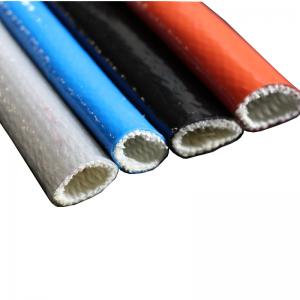
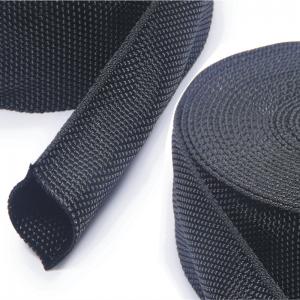
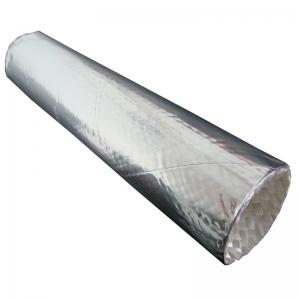
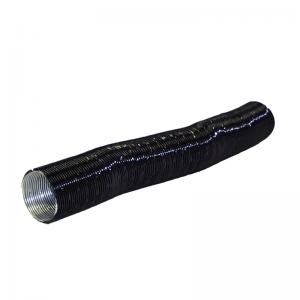
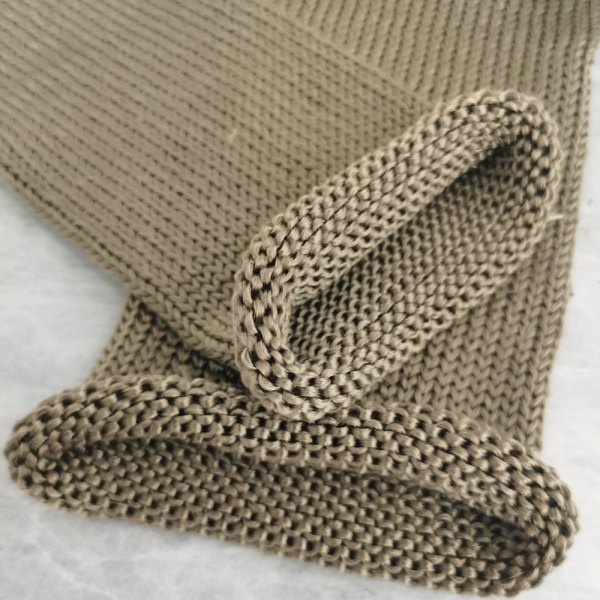
BSTFLEX supplies a knitted basalt exhaust insulation sleeve for engine and generator exhaust piping. Its published size table lists nominal inside diameters of 25, 38, 50, 63, 76, 90, 102 and 127 mm, with other sizes on request. These are starting sizes for a fit trial, not a promise that a particular sleeve will pass over every fitting on a pipe of that diameter.
Start with a photo or drawing of the complete exhaust route. Mark the hot section to cover, its start and end points, and the nearest sensor, bracket, hanger, clamp and service joint. Record any section that must remain accessible for inspection or maintenance. A sleeve that covers a sensor connection on the drawing can create a service problem even when its diameter is correct.
Measure along the pipe centerline, including bends, rather than measuring a straight line between the sleeve endpoints. If the sleeve is to be cut before installation, record the desired coverage length on the installed part and request a cutting allowance to be agreed after a sample fit. Bends and changes in diameter can alter how a textile sleeve sits on the pipe; a flat-bench cut length should be checked on the real assembly.
Measure the outside diameter of the pipe where the sleeve will remain, including paint, coating or another permanent layer if present. Take readings near both ends and through the hottest section. On a fabricated pipe, note ovality, welds and steps that could catch the sleeve during fitting. State whether the supplied figure is a measured sample dimension or the maximum production tolerance on an OEM drawing.
Keep the dimensions in a simple sequence, for example: straight pipe OD; enlarged section OD; maximum fitting envelope; covered centerline length. Label each position on the photo. This makes it possible to distinguish a sleeve that should sit closely around the pipe from the clearance needed only for installation.
Decide whether the sleeve will be fitted before or after the exhaust system is welded and assembled. For a slip-on sleeve installed afterward, measure the largest feature it must pass over from the open end to the final position. Depending on the layout, that may be a flared end, flange, coupling, weld collar, clamp bead or sensor boss. An irregular fitting also needs a physical trial: one caliper reading cannot show how it catches the knit while being pulled around a bend.
Do not assume a published nominal ID is the sleeve's maximum installation opening. The amount of expansion and the resulting fit depend on the particular construction and size. Ask for a sample or an approved expansion range for the proposed sleeve, then check whether it can pass the obstruction without damage and still cover the pipe as intended.
For each bend, give the pipe OD, bend radius if known, and the angle or a clear photo. Note any tight clearance against a frame member or enclosure that may prevent the sleeve from being pulled into place. If both ends of the pipe are blocked by larger components, specify the assembly stage at which a tubular sleeve can be installed.
Show where the sleeve will end relative to the flange, clamp or hanger. The finished ends must be positioned so that the exhaust joint can still be assembled and inspected. If end retention is required, state the proposed method and confirm that the selected hardware suits the local temperature and clearance. Do not place a clamp or tie where it obstructs a sensor or a service joint.
Pipe size alone cannot establish thermal suitability. Give the measured or expected pipe surface temperature, normal operating duration, peak event and exposure environment. The KBS product page quotes operating and peak figures in its features and also has a technical table; request the current specification and test basis for the exact construction being offered. Exhaust gas temperature and pipe surface temperature are different measurements, and neither by itself demonstrates the outside surface temperature of an installed sleeve.
Where nearby wiring, hoses or a vehicle floor are the reason for adding insulation, identify their positions and allowable temperatures. Test the proposed assembly under representative running conditions if a target surface temperature or clearance is critical. The actual result depends on the pipe, flow, ambient conditions and installation.
Send these measurements through the KBS knitted basalt sleeve product page. Ask for the proposed nominal ID, size tolerance, construction confirmation and a sample for the actual installation route. That sample is the quickest way to settle the two questions the drawing cannot answer: how the sleeve passes the largest obstacle and how it sits on the finished pipe.

 français
 Deutsch
 русский
 italiano
 español
 português
 Nederlands
 العربية
 日本語
 한국의
 Türkçe
 Polski
 Tiếng Việt
 slovenský
 Indonesia