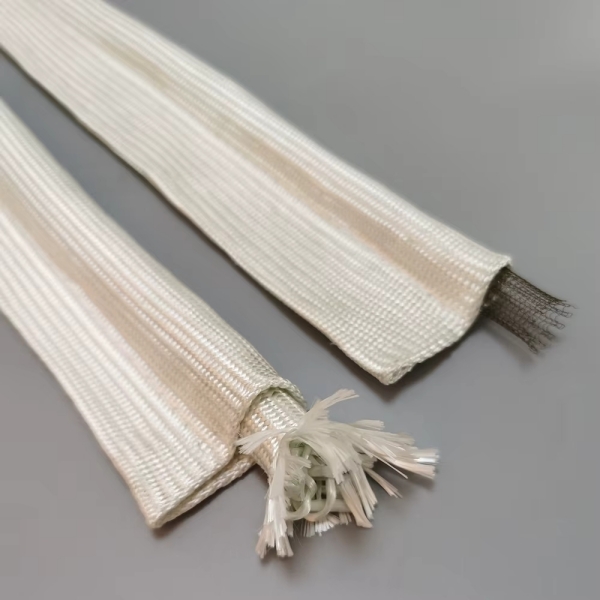
A tadpole gasket is a flexible sealing profile built with two distinctive sections: a compressible round or oval bulb and a flat mounting tail. This construction gives the gasket its characteristic tadpole-like shape and allows it to solve sealing problems that conventional flat gasket tape or rope gasket cannot always handle effectively.
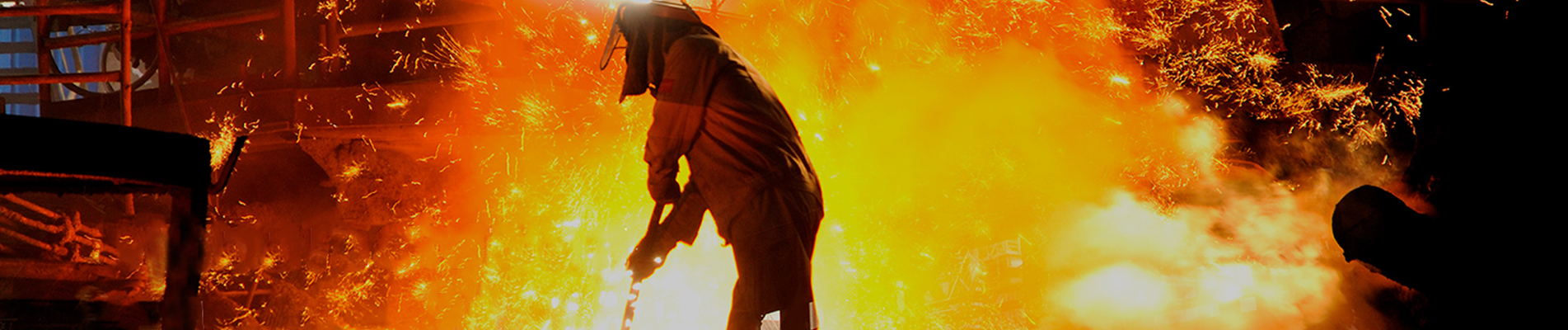
Tadpole gaskets are commonly used around furnace doors, industrial ovens, boilers, kilns, access panels, thermal enclosures and other equipment where the sealing surface must accommodate heat, repeated opening and closing, dimensional movement or an uneven mating surface.
The terms tadpole gasket, tadpole seal, tadpole tape and tadpole gasket tape are frequently used for products belonging to the same general sealing family. The exact construction, however, can vary considerably according to the cover material, core, bulb size, tail design and operating environment.
BSTFLEX manufactures a broad range of high temperature tadpole gaskets and tadpole seals for industrial sealing applications, including custom constructions produced according to operating conditions, drawings or samples.
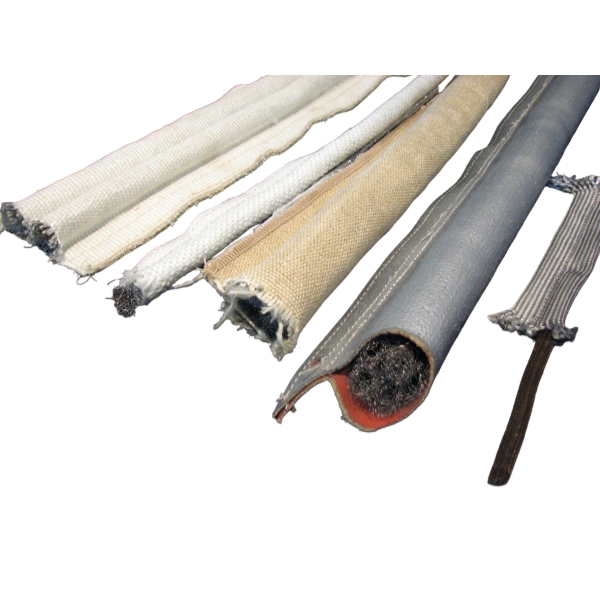
The name comes from the cross-sectional shape of the seal.
The enlarged portion resembles the body or head of a tadpole, while the narrow flat section extending from it resembles a tail.
Although the geometry appears simple, the two sections perform completely different functions.
Separating the compression function from the mounting function is one of the main reasons this gasket design is so useful on industrial doors and removable panels.
The sealing action occurs primarily in the bulb.
When an oven door, furnace door or access panel closes, the mating surface presses against the bulb. The internal core compresses and allows the outer cover to conform to the contact area.
This controlled compression helps fill small surface irregularities and gaps between the door and frame.
The flat tail remains attached to the equipment and keeps the gasket correctly positioned during operation.
As the equipment door closes, pressure is applied to the bulb. The amount of compression depends on the gasket diameter, core construction, installation gap and closing force.
A correctly selected bulb should compress sufficiently to create continuous contact without being crushed beyond its intended working range.
Inside the bulb is a core that determines much of the gasket's compression behavior.
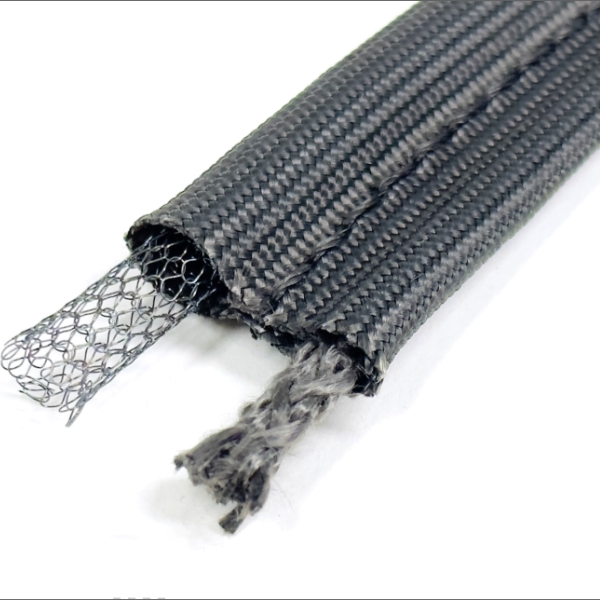
Depending on the required performance, the core may be manufactured from fiberglass rope, silica fiber, ceramic fiber, stainless steel wire mesh, Inconel wire mesh or another engineered material.
A soft fiber core may be selected when flexibility and conformity are important. A metal mesh core may be preferred when the application requires greater mechanical support, resilience or repeated compression resistance.
The cover forms the external surface of the tadpole seal.
Its material is selected according to temperature, abrasion, chemical exposure, radiant heat, contamination and other operating conditions.
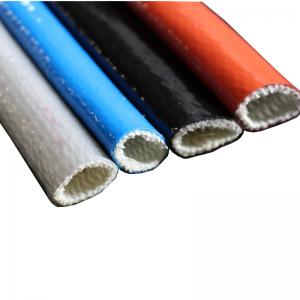
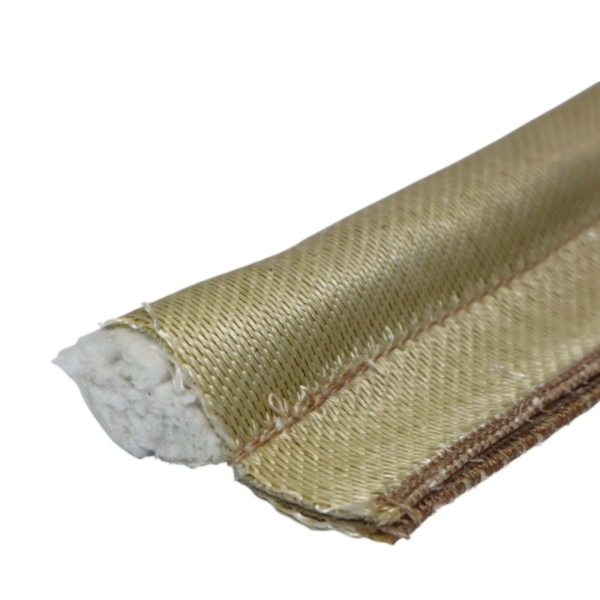
Common cover constructions can include fiberglass fabric, silica cloth, ceramic fabric, aramid fabric, basalt fabric and coated technical fabrics.
The tail does not normally create the primary compression seal. Its main purpose is installation.
Depending on the equipment design, the tail can be mechanically retained using plates, screws, rivets, clips, bolts, channels or other fastening systems.
This allows the compressible bulb to remain positioned along the sealing edge while still making gasket replacement possible during equipment maintenance.
| Component | Function | Typical Options |
|---|---|---|
| Outer Cover | Protects the seal and provides the required thermal or environmental surface | Fiberglass, silica, ceramic, basalt, aramid, coated fiberglass |
| Bulb Core | Controls compression, resilience and structural support | Fiberglass rope, silica, ceramic fiber, stainless steel mesh, Inconel mesh |
| Bulb | Creates the primary compression seal | Round, oval, hollow, solid or reinforced construction |
| Tail | Provides the mounting surface | Custom width, single tail, double tail or application-specific design |
There is no single material that defines a tadpole gasket. The term describes the profile rather than one particular fabric or core.
This is important because the ideal gasket for a moderate-temperature oven may be completely different from the gasket required on a high-temperature furnace or kiln.
Fiberglass is one of the most widely used materials for industrial thermal seals because it combines flexibility, stable textile construction and good thermal performance.
A fiberglass tadpole gasket can be produced with a fiberglass cover and fiber core, or combined with wire mesh cores and surface coatings for different service conditions.
Silica fabrics are used when higher thermal capability is required than conventional fiberglass constructions can provide.
A silica tadpole gasket may use silica cloth over a fiber core or a metal mesh core, depending on the required compression characteristics and mechanical durability.
Ceramic textile constructions are intended for demanding high-temperature environments such as furnaces, kilns and thermal processing equipment.
A ceramic fabric cover can be combined with ceramic fiber, stainless steel mesh, Inconel mesh or other suitable core structures.
Vermiculite treatment is commonly used to improve the surface performance of fiberglass fabrics in elevated-temperature applications.
BSTFLEX also manufactures vermiculite coated fiberglass tadpole gasket tape with stainless steel or Inconel mesh core options for demanding furnace, boiler, oven and kiln sealing applications.
A silicone coated fiberglass cover provides a different surface characteristic from an untreated fiberglass fabric.
This construction is useful for applications where flexibility, surface durability and a cleaner coated exterior are more important than selecting an ultra-high-temperature textile.
BSTFLEX supplies silicone coated fiberglass tadpole gaskets for oven doors, dampers, access panels and industrial enclosure sealing.
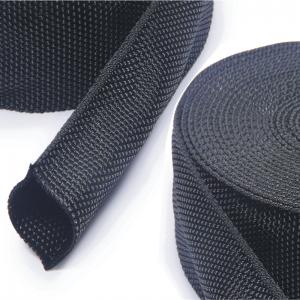
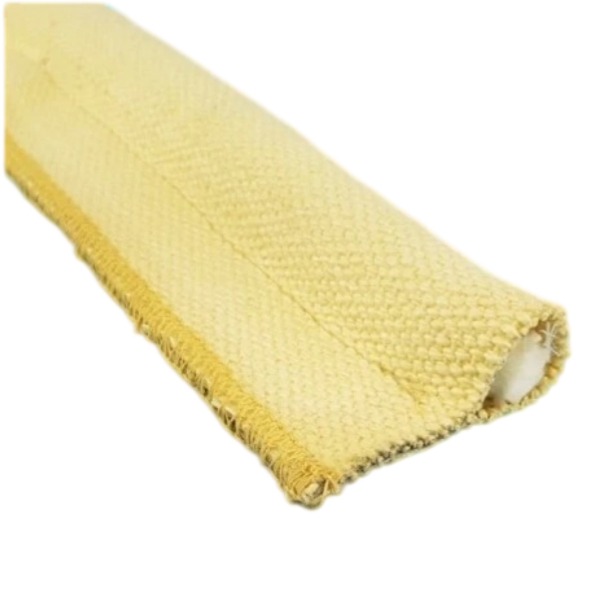
Aramid textile covers can be selected where abrasion resistance and mechanical durability are important considerations in addition to thermal performance.
For example, an aramid cover can be combined with a fiberglass core to create a flexible industrial gasket profile for equipment doors and access openings.
PTFE coated fiberglass constructions can be useful where the gasket is exposed to chemicals, contamination or process conditions that require a low-friction coated textile surface.
The suitability of any PTFE construction must be evaluated against actual temperature and chemical exposure conditions.
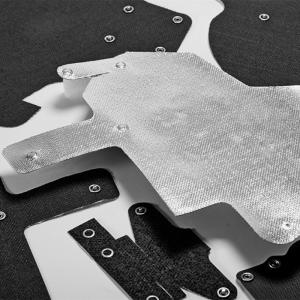
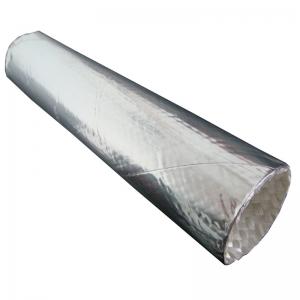
Aluminized fiberglass is used when radiant heat exposure is an important part of the application.
The reflective surface can help reduce radiant heat absorption while the bulb provides the required compression seal.
Basalt woven fabric provides another option for thermal sealing systems requiring a durable mineral-fiber textile construction.
It can also be combined with wire mesh cores where greater structural support is needed.
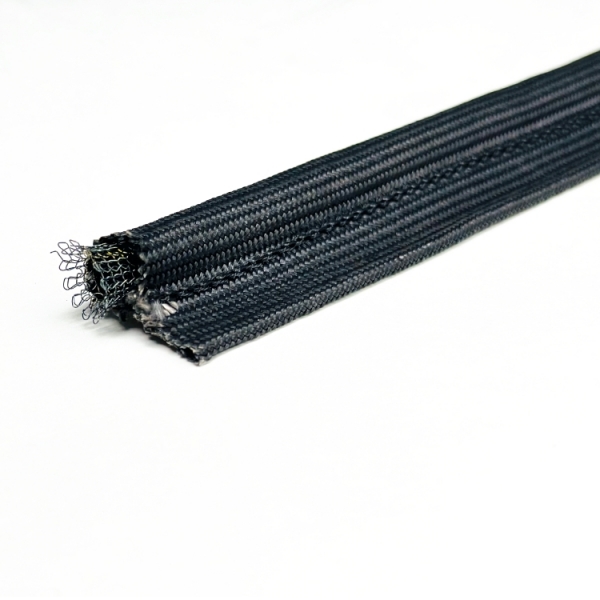
The core is one of the most important specification variables because it directly affects how the gasket compresses and recovers.
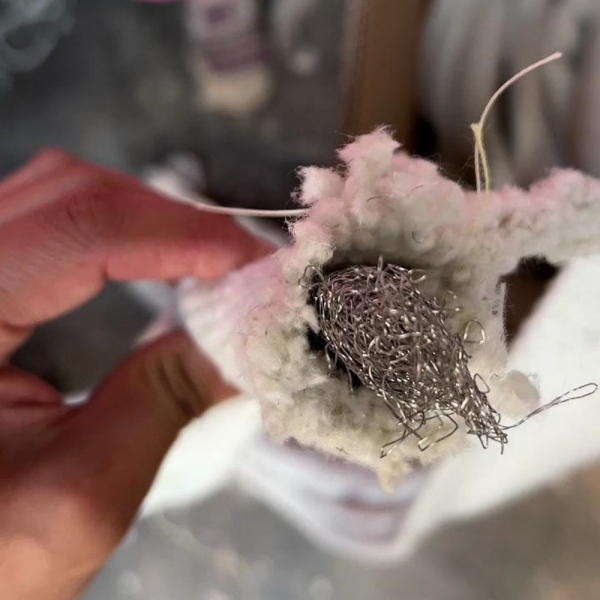
Fiberglass rope provides a flexible and relatively soft internal structure. It is commonly used where the gasket must conform to the sealing surface without requiring strong metallic reinforcement.
High-temperature fiber cores are used when the entire gasket construction must be adapted to more demanding thermal conditions.
A stainless steel mesh core provides mechanical reinforcement while retaining useful compression behavior.
It may be selected for industrial doors and panels exposed to repeated cycling, vibration or mechanical handling.
An Inconel core tadpole gasket is generally considered for demanding environments where the core requires elevated-temperature capability and strong mechanical stability.
The final alloy and gasket construction should always be selected according to the specific operating environment.
A hollow bulb construction can provide greater compressibility when the application has limited closing force or requires the gasket to accommodate a relatively large sealing gap.
Tadpole seals are especially useful on equipment where a door, hatch, removable panel or flange repeatedly opens and closes.
Typical applications include:
Industry sources also document the use of tadpole-style seals in industrial ovens, furnaces, power generation exhaust and plenum systems, heat treating equipment and powder coating systems.
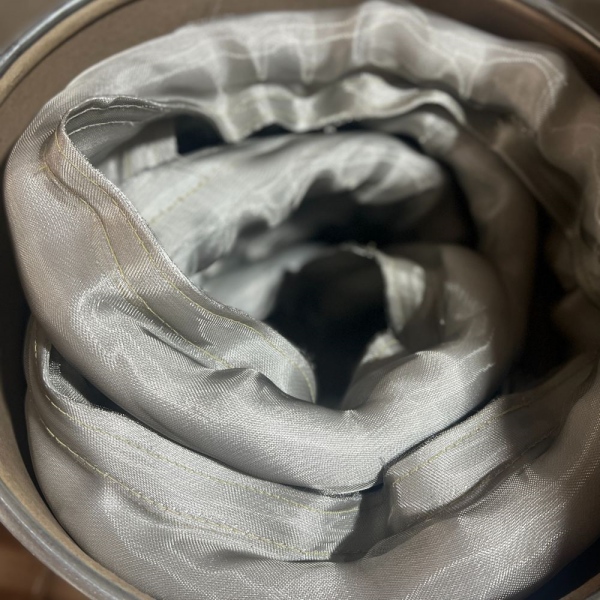
A furnace door must maintain sealing contact even when the door frame and surrounding metal components experience repeated heating and cooling.
Flat gasket tape can perform well in suitable applications, but it has limited ability to accommodate a large or changing gap.
The bulb of a furnace door tadpole gasket provides additional compressible volume. This allows the gasket to follow minor variations in the mating surface while maintaining contact along the door perimeter.
For severe service, silica, ceramic, vermiculite treated fiberglass or wire-mesh reinforced constructions may be evaluated according to actual furnace temperature and mechanical conditions.
Industrial oven doors may be opened hundreds or thousands of times during their service life.
The gasket therefore has to do more than resist heat. It must also tolerate repeated compression, mechanical handling and movement of the door structure.
A correctly engineered oven door tadpole gasket provides a defined compression zone around the oven opening while keeping the mounting section mechanically separate from the primary sealing surface.
| Feature | Tadpole Gasket | Flat Gasket Tape |
|---|---|---|
| Profile | Compressible bulb plus mounting tail | Flat textile strip |
| Gap Compensation | Good when correctly sized | Limited by tape thickness |
| Compression Control | Primarily determined by bulb and core | Determined by total tape thickness |
| Mounting | Tail provides dedicated attachment area | Tape itself is mounted directly |
| Typical Use | Doors, hatches, panels and larger sealing gaps | Flanges, joints and relatively flat interfaces |
A rope gasket and a tadpole gasket can use similar high-temperature fibers, but their geometry and installation methods are different.
A rope gasket is usually round, square or rectangular and does not have an integrated mounting flange.
A tadpole gasket includes a tail specifically intended to position and secure the bulb.
For doors and removable panels, this tail can make installation more controlled and replacement more predictable.
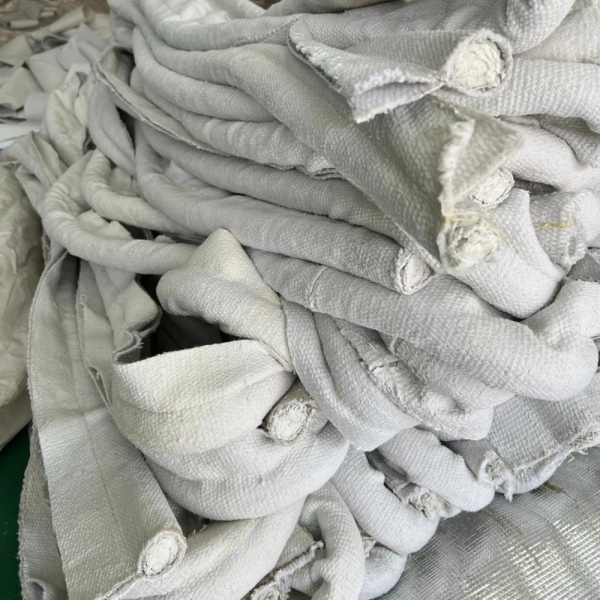
Selecting a gasket only by maximum temperature is not sufficient.
The complete operating environment should be evaluated.
Determine the normal continuous temperature as well as possible temperature spikes.
The cover, stitching, core and any coating must all be suitable for the actual service conditions.
The bulb must correspond to the available sealing gap and required compression.
A bulb that is too small may not develop continuous contact. A bulb that is too large may be excessively compressed or require too much closing force.
Determine how much the bulb will be compressed after the door or panel closes.
This is particularly important when choosing between fiber rope, hollow mesh and more heavily reinforced cores.
Select the cover according to heat exposure, abrasion, radiant heat, chemical contact and surrounding environment.
Core selection affects resilience, firmness, recoverability and thermal capability.
The mounting tail must provide sufficient area for the chosen fastening method without interfering with the equipment geometry.
Confirm whether the gasket will be retained by a metal plate, screws, rivets, clips, bolts or a formed mounting channel.
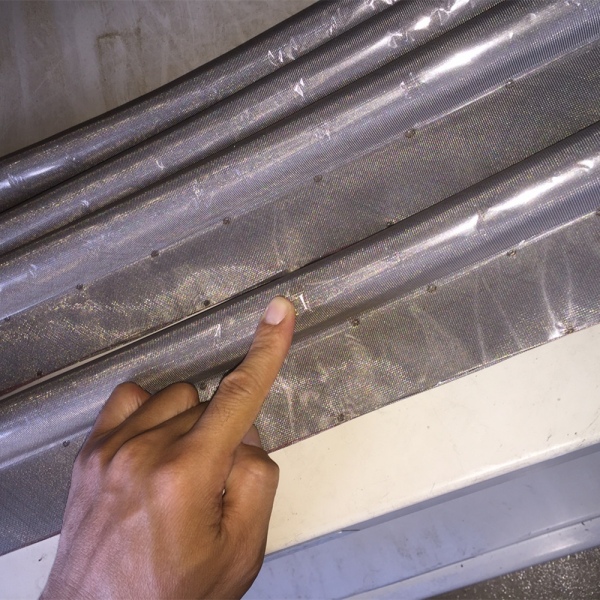
For replacement gaskets, several dimensions should be recorded before removing or discarding the original seal.
Photographs and a cross-sectional drawing are particularly useful when replacing an existing OEM gasket.
Yes. Tadpole seals are particularly suitable for customization because both their textile construction and internal core can be modified.
BSTFLEX can develop custom constructions according to:
This flexibility allows engineers to specify the gasket around the equipment rather than modifying the equipment around a standard seal.
Although the single-bulb profile is the most recognizable configuration, tadpole gasket construction is not limited to one shape.
A single compressible bulb attached to a flat mounting tail. This is the standard configuration for many oven and furnace doors.
Two bulb sections can be incorporated where the equipment design requires two sealing lines or a wider compressible sealing region.
A two-tail construction may be used when the gasket needs a different retention arrangement or when the mounting design requires material on both sides of the bulb.
For some door and panel applications, the gasket can be fabricated as an endless frame or other continuous shape to reduce the number of joints around the sealing perimeter.
One of the major advantages of the tadpole profile is that the cover and core do not have to be made from the same material.
For example, an application might require:
This creates a large engineering matrix of cover material + core material + profile + application.
Instead of treating every tadpole gasket as the same product, engineers should select each layer according to the thermal, mechanical and environmental demands of the installation.
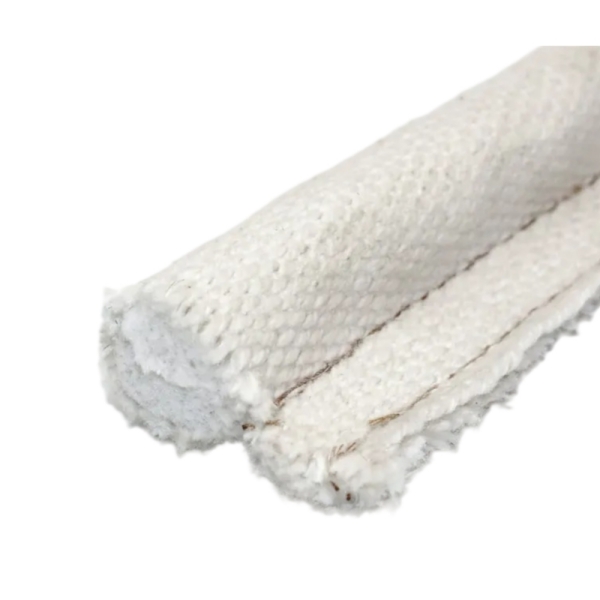
Providing complete operating information makes it easier to recommend a suitable gasket construction and prepare an accurate quotation.
For a custom RFQ, provide as much of the following information as possible:
If the original material is unknown, the application temperature, equipment design and sample profile can often provide enough information to begin material selection.
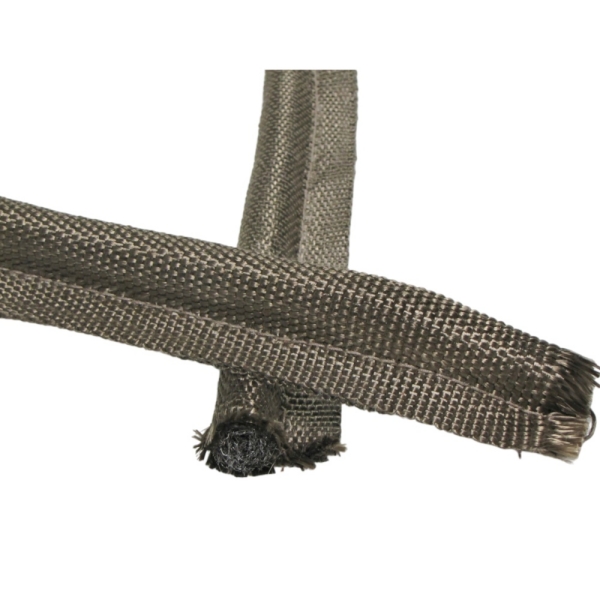
A tadpole gasket is a flexible sealing profile consisting of a compressible bulb attached to a flat mounting tail. The bulb creates the seal while the tail secures the gasket to the equipment.
In industrial sealing terminology, tadpole gasket and tadpole seal are commonly used interchangeably. Tadpole tape and tadpole gasket tape are also used for similar constructions.
The bulb provides a compressible sealing zone. When the door or panel closes, it conforms to the mating surface and helps compensate for gaps or minor surface irregularities.
The tail provides the attachment area. It can be retained with plates, screws, rivets, clips, bolts or mounting channels depending on the equipment design.
There is no universal best material. Fiberglass, silica, ceramic, basalt, aramid, PTFE coated fiberglass, silicone coated fiberglass and aluminized fiberglass each address different combinations of temperature, abrasion, chemical exposure and mechanical requirements.
Yes. Inconel wire mesh can be used as a bulb core where the application requires a reinforced metallic internal structure suitable for demanding thermal environments.
Yes. Bulb diameter, tail width, overall profile, cover material, core material and fabrication details can be customized according to engineering drawings or physical samples.
Common applications include furnace doors, industrial ovens, boilers, kilns, heat treatment equipment, access panels, exhaust systems, thermal enclosures and other industrial equipment requiring flexible compression sealing.
BSTFLEX manufactures tadpole gasket constructions for OEM production, equipment maintenance and replacement sealing projects.
Our manufacturing capability covers different textile covers, coatings, fiber cores, stainless steel mesh, Inconel mesh and customized bulb-and-tail profiles.
For additional constructions, visit our Tadpole Seal and Tadpole Gasket product range .
For a quotation, send the gasket cross-section, dimensions, required length, operating temperature, application and preferred materials. Existing gasket samples or equipment drawings can also be used for custom development.
Need a custom tadpole gasket for a furnace, oven, boiler, kiln or thermal enclosure?
Contact BSTFLEX with your drawing or application requirements for material selection, sample development and quotation.

 français
 Deutsch
 русский
 italiano
 español
 português
 Nederlands
 العربية
 日本語
日本語 한국의
한국의 Türkçe
 Polski
 Tiếng Việt
 slovenský
 Indonesia