A composite panel manufacturer specializing in fiber-reinforced plastic (FRP) products was seeking to improve the consistency and surface quality of its panels used in construction and industrial applications. The existing reinforcement materials resulted in uneven thickness distribution and unstable resin impregnation during production.
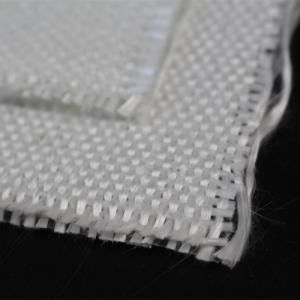
To address these challenges, the manufacturer evaluated alternative reinforcement solutions and selected e-glass needle mat for a production upgrade project.
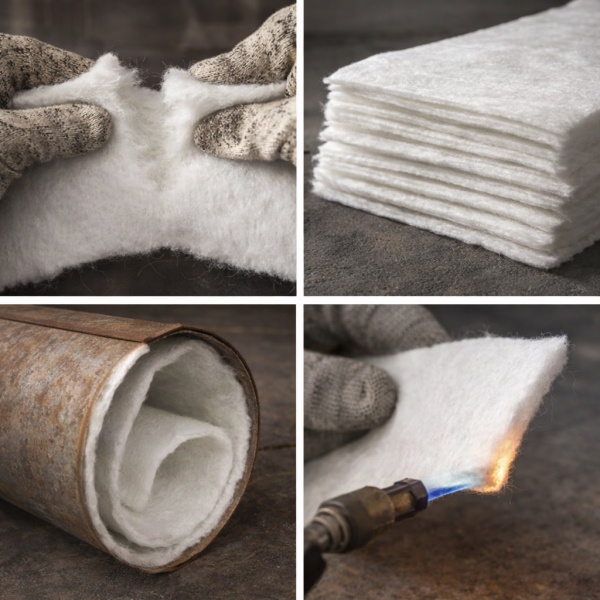
The application required a reinforcement material that could meet the following criteria:
Uniform thickness across large panel surfaces
Good resin compatibility for stable impregnation
Mechanical strength to support panel rigidity
Efficient processing in continuous production lines
In addition, the client emphasized the importance of stable long-term supply to support increasing order volumes.
After testing several materials, e-glass needle mat was chosen due to its balanced structural and processing advantages.
Key selection factors included:
Even fiber distribution for consistent panel thickness
High compatibility with polyester and epoxy resin systems
Stable mechanical performance after curing
Ease of cutting and handling during production
The needle mat was integrated into the FRP panel lay-up process as a core reinforcement layer. During production, the material demonstrated excellent adaptability to automated resin infusion and molding systems.
Observed processing benefits included:
Improved resin flow and impregnation consistency
Reduced surface defects after curing
Better dimensional stability of finished panels
These improvements helped optimize production efficiency without requiring major equipment changes.
Following implementation, the manufacturer reported several measurable improvements:
More consistent panel thickness and weight
Improved surface quality, reducing post-processing work
Enhanced mechanical stability of finished products
Reduced material waste during production
The use of e-glass needle mat also supported more predictable production outcomes, which was critical for large-volume orders.
According to the client’s production team, the upgraded reinforcement structure helped stabilize the manufacturing process and improved overall product quality. The consistency of the material across different batches was highlighted as a key advantage.
The client has since expanded the use of the needle mat to additional FRP product lines.
This case demonstrates how material selection directly affects composite manufacturing efficiency and product performance. For FRP applications, reinforcement materials must balance mechanical strength, processing compatibility, and supply reliability.
The successful application of e-glass needle mat in this project highlights its value beyond insulation, extending into advanced composite manufacturing.
As composite applications continue to grow, application-proven reinforcement materials will remain a key factor in manufacturing success.

 français
 Deutsch
 русский
 italiano
 español
 português
 Nederlands
 العربية
 日本語
日本語 한국의
한국의 Türkçe
 Polski
 Tiếng Việt
 slovenský
 Indonesia