Sustainability has become a defining factor in industrial material selection. Across insulation, construction, and composite manufacturing, companies are under increasing pressure to reduce environmental impact while maintaining performance and safety standards.
As a result, materials that offer durability, efficiency, and long service life are gaining attention. In this context, e-glass needle mat is increasingly recognized as a practical solution that aligns with modern sustainability and environmental goals.
Governments and industry organizations worldwide are introducing stricter environmental regulations related to energy efficiency, emissions reduction, and material lifecycle management.
Key sustainability drivers include:
Reduced energy consumption in industrial systems
Lower emissions over product lifecycle
Longer service life to minimize replacement frequency
Improved fire and safety performance
These requirements are pushing manufacturers and end users to reconsider traditional insulation and reinforcement materials.
One of the core sustainability advantages of glass fiber needle mats is durability. Materials that maintain performance over long periods reduce the need for frequent replacement, which directly lowers resource consumption and waste generation.
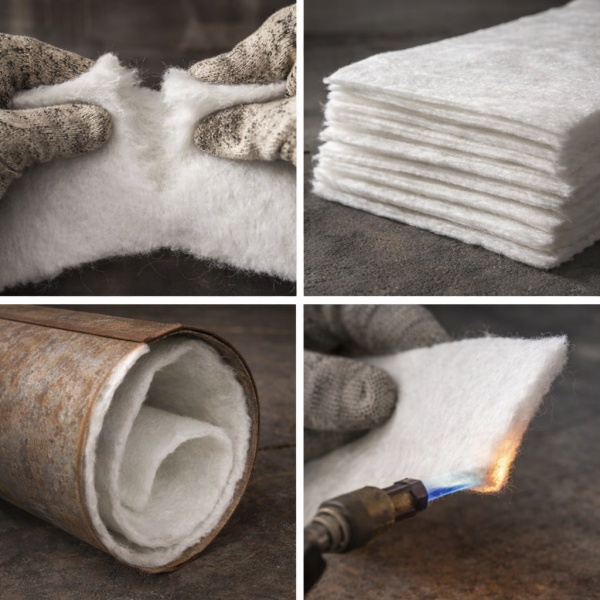
E-glass–based needle mats offer:
Stable thermal performance over time
Resistance to moisture and chemical degradation
Mechanical strength under continuous operation
These characteristics support long-term use in industrial environments, contributing to more sustainable system design.
Effective insulation plays a direct role in reducing energy consumption. By minimizing heat loss, high-performance insulation materials help industrial facilities lower fuel usage and operating emissions.
Glass fiber needle mats are widely used in:
Industrial furnaces
Heat-processing equipment
Pipelines and thermal systems
Their consistent structure and thermal stability help maintain insulation efficiency, supporting energy-saving initiatives across industries.
Sustainability is not limited to product performance—it also involves how materials are manufactured. Modern production of glass fiber needle mats increasingly focuses on process optimization and waste reduction.
Common improvements include:
More efficient fiber utilization
Reduced production waste
Improved quality consistency to minimize rejects
Better process control to lower energy consumption
These manufacturing practices help reduce the environmental footprint of material production while maintaining reliable supply.
Glass fiber materials are increasingly evaluated based on their compatibility with recycling systems and compliance with environmental standards.
While recycling methods vary by region, E-glass fibers are generally recognized for:
Inorganic composition
Stability under high temperatures
Compatibility with controlled waste handling systems
This makes them suitable for use in industries with strict environmental and safety requirements.
International buyers now evaluate suppliers based on environmental responsibility as well as product quality. Transparency in material composition, production practices, and compliance has become an important factor in supplier selection.
Manufacturers that align product performance with sustainability goals are better positioned to build long-term global partnerships.
Sustainability considerations are expected to play an even larger role in industrial material markets. Demand will continue to favor materials that combine performance, durability, and responsible manufacturing practices.
Glass fiber needle mats based on E-glass are well positioned to support this transition, particularly in insulation and composite applications where long-term efficiency is critical.

 français
 Deutsch
 русский
 italiano
 español
 português
 Nederlands
 العربية
 日本語
日本語 한국의
한국의 Türkçe
 Polski
 Tiếng Việt
 slovenský
 Indonesia