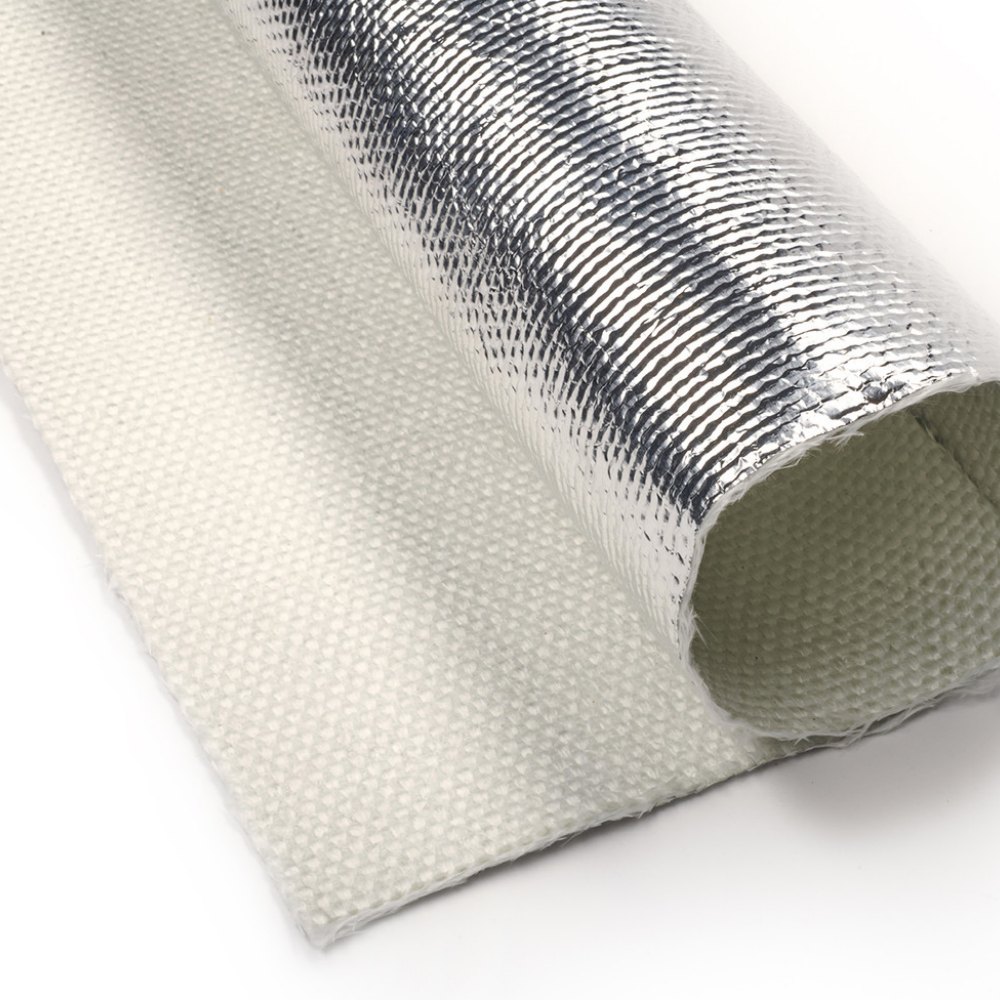
Aluminized fiberglass fabric is a high temperature insulation material made by laminating an aluminum foil or metallized film onto a fiberglass cloth base. This combination creates a durable fabric capable of resisting extreme heat while reflecting radiant thermal energy.
It is widely used in automotive exhaust heat shields, industrial insulation systems, welding protection, engine components, and aerospace applications. The aluminum layer provides heat reflection, while the fiberglass base delivers structural strength and high temperature stability.
The base layer is woven from E-glass fiberglass yarns, typically in satin, twill, or plain weave structures depending on strength and flexibility requirements.
A layer of aluminum foil or reflective metallized film is bonded to the fabric using:
Heat-resistant adhesives
Thermal bonding
Lamination films
This creates a reflective and protective surface.
High performance laminates are reinforced with scrim, flame-resistant adhesives, or high temperature coatings to enhance strength and durability.
Provides tensile strength, fire resistance, and thermal stability.
Reflects radiant heat, improves temperature control, and adds moisture resistance.
Some fabrics include additional support layers for vibration resistance and mechanical durability.
Continuous heat resistance typically ranges from 260 to 550 degrees Celsius depending on fiberglass thickness.
The aluminum surface reflects up to 95 percent of radiant heat, significantly lowering surface temperatures.
Heat performance is evaluated based on:
Thermal conductivity
Reflectivity percentage
Surface temperature reduction
Structural stability under constant heat
High thermal insulation capability
Strong radiant heat reflection
Fire resistance and flame retardancy
Mechanical strength and abrasion resistance
Chemical and oil resistance
Lightweight and flexible
Moisture and UV resistance
Exhaust heat shields
Turbo blankets
Firewall insulation
Engine bay thermal barriers
Used in protective blankets, curtains, and shields to block sparks and radiant heat.
Applied to pipelines, boilers, exhaust ducts, and high temperature machinery.
Used to protect sensitive components from heat exposure and reflective heat buildup.
| Feature | Aluminized Fiberglass Fabric | Standard Fiberglass Fabric |
|---|---|---|
| Reflective Surface | Yes | No |
| Radiant Heat Protection | High | Low |
| Continuous Temperature | Moderate to high | High |
| Surface Strength | Higher | Standard |
| Water and Oil Resistance | Improved | Limited |
Aluminized fiberglass fabric is ideal for radiant heat control, while standard fiberglass is better for basic insulation or internal layers.
Highly effective radiant heat protection
Improved thermal efficiency
Protection of nearby components
Reduced heat transfer into cabins or engine bays
Lightweight and easy to install
Durable in industrial environments
Choose between aluminum foil, metallized film, or reinforced foil depending on reflectivity and strength needs.
Higher weight fabrics offer increased durability and insulation.
Turbo shields, welding blankets, and exhaust wraps require different thickness and lamination choices.
Cut with industrial scissors or blades. Handle gently to avoid damaging foil layers.
Use stainless steel wire, rivets, adhesives, clips, or mechanical fixtures.
Choosing a foil layer that is too thin
Incorrect measurement
Over-bending that causes foil cracking
Thermal reflectivity testing
Flame resistance standards
Mechanical strength tests
Oil and chemical resistance testing
Thermal conductivity performance evaluation
Clean with mild water
Avoid sharp folding that may damage foil
Store in dry, cool environments
Inspect before installation to ensure foil integrity
Check the following when selecting suppliers:
Fiberglass fabric weight
Aluminum thickness
Bonding method
Temperature rating
Industrial test reports
Most fabrics handle 260 to 550 degrees Celsius depending on thickness and type.
Yes. It reflects up to 95 percent of radiant heat.
Yes. It is widely used for exhaust shields, turbo covers, and downpipe insulation.
The aluminum layer provides some moisture resistance, but full waterproofing requires laminated coatings.
Yes. The fabric remains flexible while providing strong heat protection.

 français
 Deutsch
 русский
 italiano
 español
 português
 Nederlands
 العربية
 日本語
日本語 한국의
한국의 Türkçe
 Polski
 Tiếng Việt
 slovenský
 Indonesia