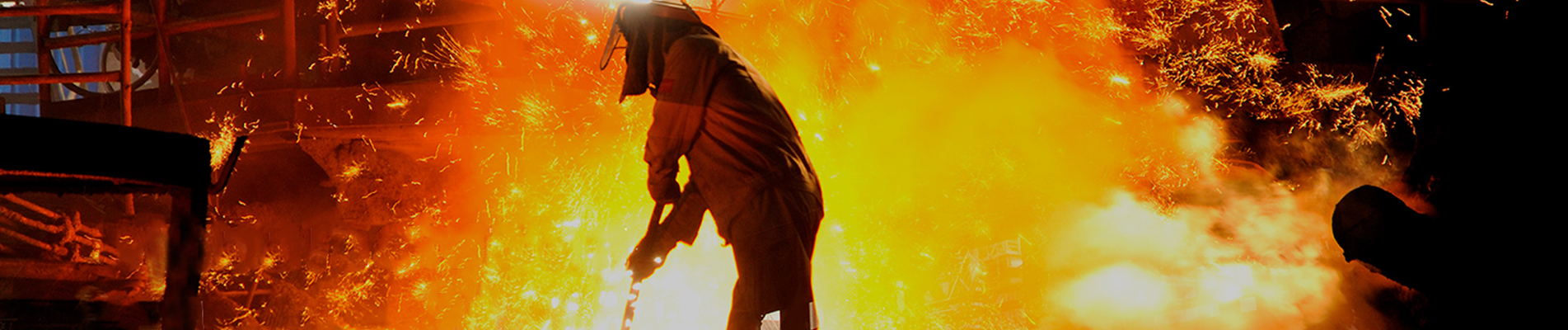
Fire sleeve is a specialized protective sleeve designed to shield hoses, cables, pipes, and wiring from extreme heat, direct flame exposure, and molten metal splash. It is commonly used in industrial environments where high temperatures and fire hazards pose serious risks to equipment safety and operational reliability.
In simple terms, fire sleeve acts as a fire-resistant barrier. Its purpose is not just insulation, but fire survival—helping critical hoses and lines maintain integrity long enough during a fire incident to prevent leaks, explosions, or system failure.
Fire sleeve is widely applied in hydraulic systems, automotive engines, oil and gas facilities, aerospace equipment, marine systems, and heavy industrial machinery.
Many industrial systems rely on hoses and lines that carry flammable fluids such as hydraulic oil, fuel, or lubricants. When these hoses are exposed to extreme heat or open flames, failure can occur rapidly.
Without fire sleeve protection:
Hose materials soften or crack
Pressurized fluids can spray into flames
Secondary fires or explosions may occur
Equipment damage and safety incidents increase
Fire sleeve significantly reduces these risks by delaying heat transfer and protecting the hose surface during fire exposure. This delay can be the difference between controlled shutdown and catastrophic failure.
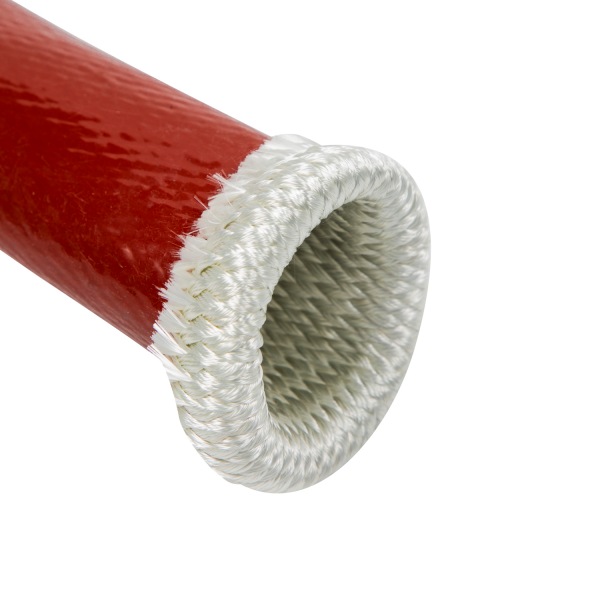
Fire sleeve is engineered using a multi-layer construction, each layer serving a specific function.
The inner layer is made of tightly braided fiberglass yarns. Fiberglass is naturally non-combustible and offers excellent thermal insulation. This layer:
Maintains structural strength at high temperatures
Prevents collapse or deformation
Provides a stable protective base
The outer surface is coated with silicone rubber. This coating enhances performance by providing:
Flame resistance
Protection against oils, fuels, and chemicals
Resistance to moisture, UV exposure, and abrasion
When exposed to direct flame, the silicone coating vulcanizes and forms a char layer, which slows down heat penetration and shields the inner hose.
Fire sleeve is designed for fire exposure scenarios, not just continuous heat.
During a fire incident:
Flames contact the silicone-coated outer layer
The silicone forms a protective char instead of burning
Heat transfer to the fiberglass core is slowed
The inner hose remains protected for a critical time window
This process helps prevent immediate hose rupture, fluid leakage, and ignition, giving operators time to shut down systems safely.
Fire sleeve is capable of withstanding both continuous high temperatures and short-term flame exposure.
| Condition | Rating |
|---|---|
| Continuous operating temperature | Up to 260°C |
| Short-term flame exposure | Up to 1090°C |
| Combustion behavior | Self-extinguishing |
| Melting | Non-melting |
These properties make fire sleeve suitable for applications where sudden fire exposure is a real risk rather than a theoretical one.
Fire sleeve is widely used to protect hydraulic hoses near engines, furnaces, and exhaust systems. It helps prevent hose failure and reduces fire hazards caused by leaking pressurized fluid.
In automotive environments, fire sleeve protects fuel lines, brake hoses, and wiring harnesses located near high-temperature components such as turbochargers and exhaust manifolds.
Fire sleeve is essential in refineries, offshore platforms, and drilling rigs, where flammable fluids and extreme heat coexist. It enhances safety compliance and reduces operational risk.
Fire sleeve provides lightweight, flexible fire protection while meeting strict safety and performance requirements in aerospace and marine systems.
Although many products offer thermal insulation, fire sleeve is unique in its fire-resistant design.
| Feature | Fire Sleeve | Standard Insulation Sleeve |
|---|---|---|
| Flame resistance | ✅ Excellent | ❌ Limited |
| Chemical resistance | ✅ High | ❌ Low |
| Fire safety use | ✅ Yes | ❌ No |
| Emergency protection | ✅ Designed for fire | ❌ Not suitable |
For applications involving flame exposure, standard insulation sleeves are not an adequate substitute.
When choosing fire sleeve, consider:
Hose or cable outer diameter
Continuous operating temperature
Fire exposure risk level
Chemical and environmental exposure
Selecting the correct size and material ensures maximum protection and long service life.
Q1: Is fire sleeve only for hydraulic hoses?
No, it is also used on fuel lines, cables, pipes, and wiring.
Q2: Can fire sleeve stop a fire completely?
Fire sleeve does not stop fire, but it delays damage and reduces risk.
Q3: Is fire sleeve flexible?
Yes, it is designed to maintain flexibility when properly sized.
Q4: Can fire sleeve be used outdoors?
Yes, it resists UV, moisture, and weather exposure.
Q5: Does fire sleeve require maintenance?
Periodic inspection is recommended, especially in harsh environments.
Q6: Can fire sleeve be customized?
Yes, different diameters, colors, and coatings are available.
By selecting and installing the correct fire sleeve, companies can significantly enhance system reliability and workplace safety.

 français
 Deutsch
 русский
 italiano
 español
 português
 Nederlands
 العربية
 日本語
日本語 한국의
한국의 Türkçe
 Polski
 Tiếng Việt
 slovenský
 Indonesia