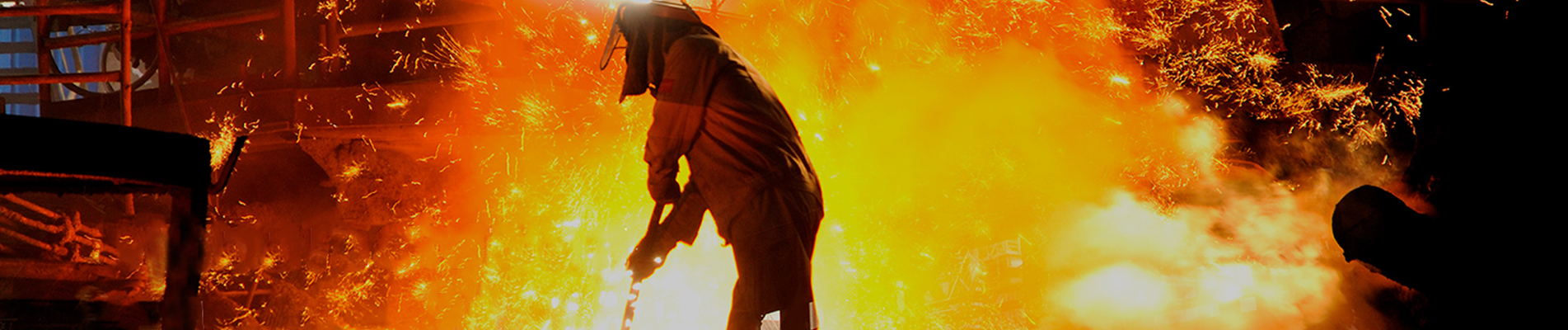
Fire sleeves are installed where hoses face oil, fuel, vibration, moisture, and unpredictable fire scenarios. In these conditions, uncoated fiberglass degrades, absorbs contaminants, and loses protective reliability. This is where silicone coating fundamentally changed fire sleeve performance.
Silicone is not used because it looks better or lasts longer by default. It is used because it behaves predictably under fire, and predictability is what safety systems depend on.
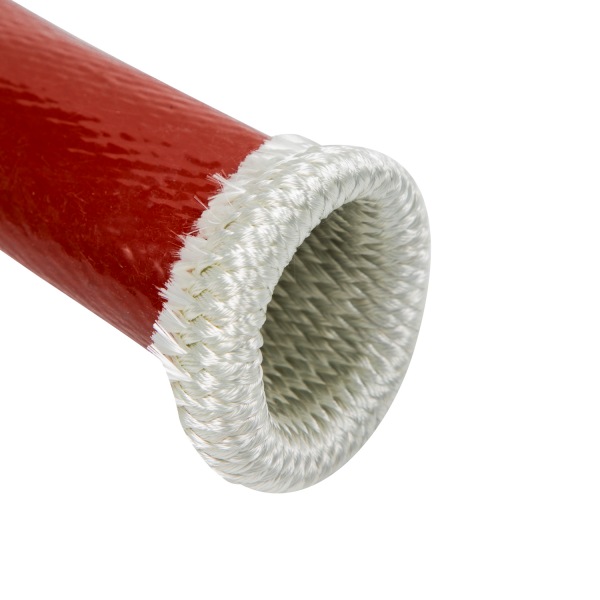
Silicone coating does not act like a hard shield. Its value lies in how it reacts when things go wrong.
When exposed to flame:
Silicone does not drip or melt
The surface chars and stabilizes
Heat transfer slows rather than spikes
This behavior matters more than peak temperature ratings. A coating that melts away in seconds leaves the hose exposed. Silicone, by contrast, sacrifices its surface gradually, maintaining a barrier long enough to reduce escalation.
In short, silicone does not fight fire—it controls damage progression.
Fire events are rare. Daily exposure is constant.
Silicone coating protects fire sleeves from:
Hydraulic oil and fuel contact
Chemical splashes
Moisture and humidity
UV exposure in outdoor systems
Without silicone, fiberglass sleeves absorb contaminants, stiffen, and wear prematurely. Over time, this reduces flexibility and increases failure risk—even before a fire ever occurs.
Silicone fire sleeve therefore improves both emergency performance and normal service life, which is why it became the industry default rather than a niche upgrade.
Choosing silicone is often about eliminating compromises rather than chasing perfection.
Acrylic coatings offer basic environmental protection but break down rapidly under flame exposure. They are suitable for heat shielding, not fire survival.
Rubber handles abrasion well but performs poorly in direct fire. It softens, degrades, and can contribute to flame spread.
Uncoated fiberglass resists heat but fails in real fire environments where fluids, vibration, and contamination are present.
Silicone sits at the balance point: stable in fire, resistant in daily use, and predictable under stress.
Silicone fire sleeve is strongly recommended when:
Hoses carry flammable or pressurized fluids
Fire exposure is possible, even briefly
Systems operate near engines or exhausts
Environmental contamination is unavoidable
It is especially valuable in systems where failure escalation is a bigger risk than heat alone.
No material is universal, and silicone has limitations.
Silicone fire sleeve may not be the best option when:
Extreme mechanical abrasion is constant
Cost sensitivity outweighs safety margin
Fire risk is nonexistent and only insulation is required
Being clear about these limits improves credibility and helps avoid misapplication.
Many purchasing issues stem from oversimplification.
Typical mistakes include:
Choosing based only on color or appearance
Assuming thicker always means safer
Ignoring chemical exposure in the environment
Treating silicone fire sleeve as a decorative cover
Silicone fire sleeve is a functional safety component, not a cosmetic upgrade.
Instead of asking:
“Is silicone fire sleeve better?”
The better question is:
“What happens if this hose fails during a fire?”
If the answer involves:
Fire escalation
Equipment damage
Personnel risk
Then silicone fire sleeve is not a premium feature—it is a rational safety choice.
Q1: Does silicone fire sleeve increase hose lifespan?
Yes, especially in environments with oil, moisture, or UV exposure.
Q2: Can silicone fire sleeve be used indoors and outdoors?
Yes, silicone is stable across a wide range of environments.
Q3: Is silicone fire sleeve flexible?
Yes, when properly sized, flexibility impact is minimal.
Q4: Does silicone coating burn?
No. It chars and stabilizes instead of dripping or igniting.
Q5: Is silicone fire sleeve reusable after fire exposure?
Replacement is recommended after severe fire incidents.
Q6: Is silicone always necessary for fire sleeves?
Not always, but it is strongly preferred where fire risk exists.
When fire risk, fluid exposure, and system safety intersect, silicone fire sleeve is not an upgrade. It is the material choice that aligns protection with reality.

 français
 Deutsch
 русский
 italiano
 español
 português
 Nederlands
 العربية
 日本語
日本語 한국의
한국의 Türkçe
 Polski
 Tiếng Việt
 slovenský
 Indonesia