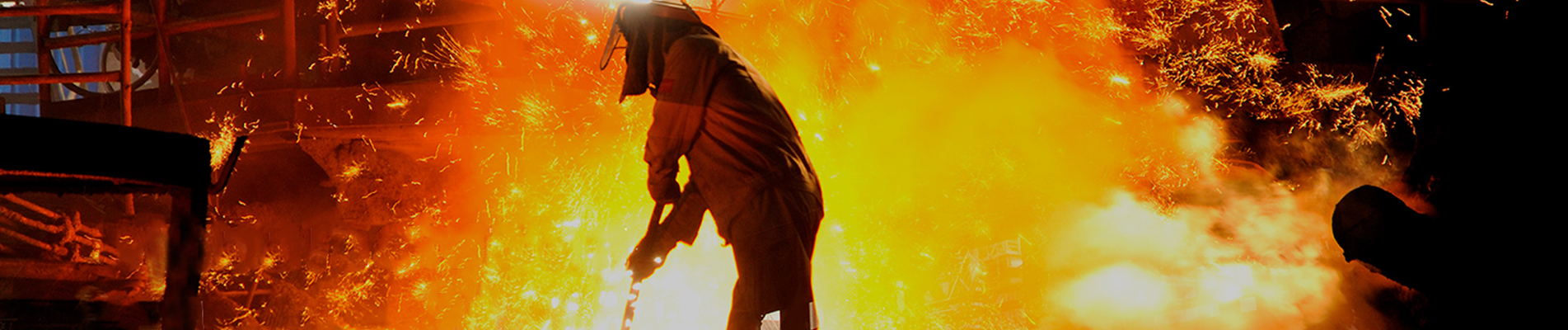
Our silica fabric has recently been tested under a high-temperature condition of 900°C for 4 hours. After the test, the fabric remained intact, showing reliable structure retention for severe heat insulation environments. This makes it a practical material choice for welding blankets, heat shields, furnace curtains, exhaust insulation systems, expansion joints and custom fabricated insulation parts.
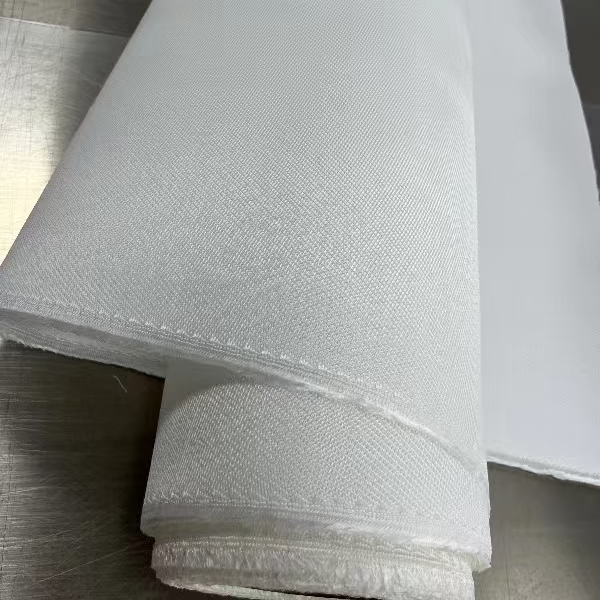
Many insulation fabrics are promoted with maximum temperature figures, but large buyers normally need more than a simple number. They want to know whether the fabric can keep its structure after continuous heat exposure. The 900°C / 4-hour test gives purchasing teams, distributors and project engineers a stronger technical reference when selecting silica cloth for real working conditions.
The fabric was exposed to 900°C for 4 hours, helping buyers evaluate performance under sustained high-temperature conditions instead of short contact only.
After the test, the silica fabric remained intact, which is important for insulation blankets, curtains, covers and thermal barriers that must keep their shape during use.
Silica fabric can be cut, stitched, layered, laminated or coated according to the final application, making it suitable for OEM thermal protection products.
Silica fabric is used where high heat, sparks, radiant temperature or hot surface contact may damage workers, cables, hoses, equipment or surrounding components. Below are the most common industrial applications for BSTFLEX high-temperature silica fabric.
Welding blankets require fabric that can resist sparks, spatter and high radiant heat. For fabrication shops, shipyards, maintenance teams and welding protection suppliers, silica fabric is a strong material option for heavy-duty welding blankets and welding curtains.
Compared with ordinary fiberglass fabric, silica fabric offers a higher temperature safety margin. It can be used as a base fabric for welding blankets, welding screens, welding pads and protective covers around hot work areas.
Heat shields are used to protect nearby parts from radiant heat and surface temperature. Silica fabric can be used as a flexible heat barrier in industrial equipment, vehicle systems, machinery compartments and custom insulation assemblies.
For OEM buyers, silica fabric can be supplied as roll material or fabricated into sewn pads, layered shields, foil-laminated barriers and shaped insulation covers. This gives manufacturers more flexibility when protecting irregular surfaces, pipes, housings and components exposed to heat.
Furnace doors, kiln openings and high-temperature processing areas often require flexible curtains or barriers to reduce heat escape and protect workers from radiant temperature. Silica fabric can be converted into furnace curtains, kiln curtains and thermal separation screens.
The fabric’s ability to remain intact after 900°C exposure for 4 hours makes it suitable for many demanding furnace-adjacent applications. Depending on the working environment, the fabric can also be combined with coatings, sewing reinforcement, metal eyelets, hooks or edge binding.
Exhaust systems generate high surface temperature, especially near manifolds, downpipes, silencers, turbocharger zones and industrial engine exhaust lines. Silica fabric can be used as an insulation layer for exhaust blankets, exhaust wraps, removable covers and heat containment systems.
In exhaust insulation projects, the fabric may be used alone or combined with insulation mat, stainless steel mesh, sewing thread, wire reinforcement or outer protective layers. BSTFLEX can support buyers who need silica fabric for exhaust insulation manufacturing or customized exhaust heat protection components.
Expansion joints in ducting, flue gas systems, industrial ventilation and high-temperature process lines need flexible materials that can tolerate heat while allowing movement. Silica fabric is commonly selected as a thermal layer or outer layer in non-metallic expansion joint structures.
Because expansion joints may face vibration, movement, hot gas, radiant heat and mechanical stress, material selection should consider both temperature resistance and fabric stability. BSTFLEX silica fabric can be supplied in different thicknesses and surface treatments for expansion joint manufacturers and industrial insulation fabricators.
For distributors, OEM manufacturers and industrial project buyers, silica fabric selection should be based on the real application instead of temperature rating alone. A welding blanket, a furnace curtain and an exhaust insulation cover may all use silica fabric, but the correct thickness, coating, finish and fabrication method can be different.
| Application | Main Requirement | Recommended Supply Form |
|---|---|---|
| Welding Blanket | Spark resistance, flexible handling, cut-to-size conversion | Roll fabric, cut panels, stitched blankets |
| Heat Shield | Radiant heat barrier, component protection, custom shape | Fabric sheet, laminated fabric, sewn insulation pad |
| Furnace Curtain | Long heat exposure, hanging strength, edge reinforcement | Custom curtain panel with eyelets or reinforced edges |
| Exhaust Insulation | High surface temperature protection, removable installation | Layered insulation blanket, sewn cover, roll fabric |
| Expansion Joint | Flexibility, heat resistance, movement tolerance | Roll fabric, coated fabric, sewn flexible connector |
The main buyers of silica fabric are not limited to fabric distributors. Many industrial companies purchase silica cloth as a base material for finished thermal protection products. BSTFLEX supports buyers from welding safety, insulation fabrication, exhaust systems, metal processing and equipment manufacturing industries.
BSTFLEX focuses on thermal protection materials and fabricated heat insulation products. For large buyers, stable quality, test evidence, application knowledge and custom production ability are more important than simply buying standard fabric rolls.
Our silica fabric remained intact after 900°C exposure for 4 hours, giving buyers a stronger reference for high-temperature applications.
We support welding blankets, heat shields, furnace curtains, exhaust insulation, expansion joints and custom fabricated insulation parts.
Custom size, coating, cutting, stitching, packaging and sample-based production are available for distributors and industrial buyers.
BSTFLEX supports international buyers with product information, technical communication, sample supply and batch production.
If you are sourcing silica fabric for welding blankets, heat shields, furnace curtains, exhaust insulation, expansion joints or other industrial heat protection products, BSTFLEX can provide material recommendations based on your working temperature, product structure and application environment.
For faster quotation, please send your required thickness, roll width, coating requirement, working temperature, application, annual quantity and whether you need roll fabric or finished fabricated parts.
Yes. Silica fabric is widely used for welding blankets, welding curtains, welding pads and hot work protection because it offers high heat resistance and good flexibility for cutting and sewing.
Yes. Silica fabric can be used as a flexible heat shield layer for industrial equipment, exhaust systems, machinery compartments and custom thermal barrier products.
Yes. Silica fabric can be converted into furnace curtains, kiln curtains and high-temperature separation screens. Edge reinforcement, eyelets and custom sewing can be added according to the installation method.
Yes. Silica fabric can be used for exhaust insulation blankets, removable exhaust covers, manifold protection and generator exhaust insulation, depending on the final structure and working condition.
BSTFLEX can supply roll fabric, cut pieces, coated fabric, stitched blankets, heat shield pads, furnace curtains and custom fabricated insulation parts based on buyer requirements.

 français
 Deutsch
 русский
 italiano
 español
 português
 Nederlands
 العربية
 日本語
日本語 한국의
한국의 Türkçe
 Polski
 Tiếng Việt
 slovenský
 Indonesia