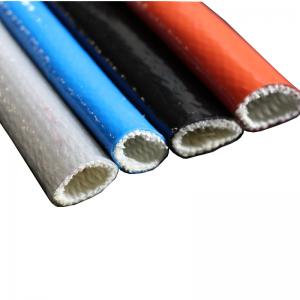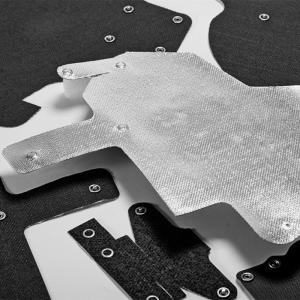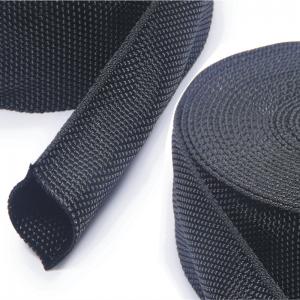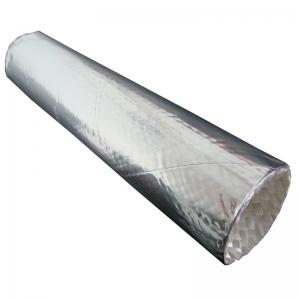
BSTFLEX supplies oven door gaskets and other high temperature gasket and seal solutions for thermal equipment. Custom development can be based on a drawing, dimensional data or an existing gasket sample.
Before requesting a quotation, define the actual temperature at the gasket location, door or frame geometry, free gasket cross-section, closed sealing gap, required compression behavior, available closing force, outer textile material, internal core construction, mounting method, corner design and end termination.
When these variables are defined together, a custom oven door seal can be developed around the equipment instead of forcing the equipment to accept an unsuitable standard profile.
The oven chamber temperature is not automatically the same as the temperature seen by the door gasket.
A gasket may sit behind a metal flange, close to insulation, outside the hottest air path or directly beside a hot internal surface. Radiation, escaping hot gas, door opening frequency and the thermal mass of the frame can all change the actual exposure.
A useful oven door gasket specification should therefore identify the normal process temperature, maximum process temperature, estimated or measured seal-line temperature, duration of peak exposure, direct hot-gas exposure, radiant heat exposure, contact with heated metal and the frequency with which the door opens while hot.
This avoids a common specification error: choosing a textile from its raw-material temperature capability and assuming the complete gasket assembly will have the same rating.
“Oven door gasket” describes an application. It does not describe one single gasket construction.
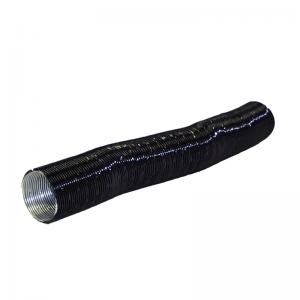
A tubular textile gasket can be designed around a soft fiber core, resilient wire structure or another internal support.
This type of gasket is useful where the seal has to follow the perimeter of a door while maintaining a controlled cross-section.
The outer braid or knitted textile, internal core and finished density all influence how the gasket behaves under compression.
A clip oven door gasket uses discrete attachment points that engage holes or features in the oven frame.
For a custom clip gasket, the attachment system is part of the gasket specification. Hole spacing, clip pitch, clip orientation, corner positions and assembly force have to correspond with the equipment.
Simply matching the outside gasket diameter is not enough.
Some oven and furnace doors use a compressible rope installed in a groove, channel or retained edge.
For this construction, rope diameter, density, groove geometry and installed compression become the main selection variables.
BSTFLEX maintains high temperature ropes as a separate product group because rope gasket sizing represents a different search and engineering intent from a general custom oven door gasket.
A tadpole gasket combines a compressible bulb with a flat mounting tail.
The bulb forms the sealing section, while the tail creates a separate mechanical attachment area. This makes the profile useful for many furnace, oven, kiln and thermal-enclosure doors where a conventional rope or tubular gasket is not the preferred installation method.
BSTFLEX maintains a dedicated tadpole gasket and tadpole seal product family for this construction.
High temperature door gaskets can use different textile families.
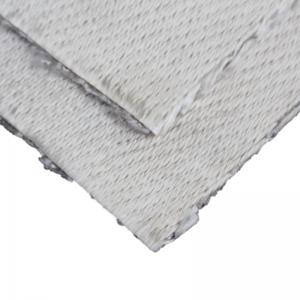
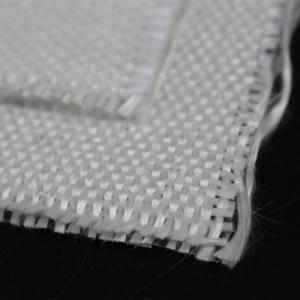
Fiberglass is one of the most common starting materials for industrial and commercial oven sealing applications. Depending on the construction, it can be braided, knitted or woven around the selected core.
Silicone coated fiberglass can be considered when a coated and flexible outer surface is required.
Vermiculite treated fiberglass provides another construction route where an elevated-temperature treated fiberglass surface is needed.
Silica textile becomes relevant when the thermal requirement moves beyond the practical range of a standard fiberglass construction.
Ceramic fiber or ceramic textile constructions can be considered for demanding furnace, kiln and other thermal-processing environments.
The material name alone is not enough to determine the usable temperature of a finished gasket. Core material, sewing thread, attachment hardware, coating and reinforcement must also be considered.
Two oven door gaskets can use the same fiberglass outer surface and still behave very differently when compressed.
The internal core influences compressibility, recovery, profile stability and the force required to close the door.
A fiber core can provide a softer and more conformable sealing body.
A stainless steel wire or knitted mesh core can provide greater mechanical support and resilience.
A hollow wire mesh core can allow greater deflection when the application requires a more compressible bulb.
Higher-temperature metallic reinforcement may be selected where the complete operating environment requires it.
Composite constructions can also combine a textile cover with a different core material so that thermal and mechanical requirements are addressed separately.
For this reason, “wire core gasket” is not a complete specification. The buyer should also define the core geometry, wire material when known, gasket cross-section and required compression behavior.
There is no universal compression percentage that is correct for every oven door gasket.
A dense braided fiberglass gasket, a soft fiber-core seal and a hollow knitted wire-core gasket can respond very differently even when their outside dimensions appear similar.
For a new design, the RFQ should include the free gasket height or diameter, nominal closed gap, minimum and maximum gap around the door, available latch force, expected opening cycles and any areas where the door or frame may distort at operating temperature.
The installed gasket must compress enough to create useful contact around the sealing perimeter without creating unnecessary closing resistance.
A larger or denser gasket is therefore not automatically a better gasket.
For replacement applications, the dimensions of an old compressed gasket should not automatically be treated as the original free dimensions. Equipment geometry and closed gap should also be measured.
Attachment details often determine whether a replacement gasket fits correctly.
For clip-, hook- or pin-mounted oven door seals, define the number of attachment points, center-to-center spacing, receiving-hole dimensions, attachment orientation, corner offsets, corner radius and insertion direction.
Any areas where clip spacing changes should also be shown.
Photographs are useful for identifying the construction, but a dimensioned drawing or sketch is substantially more useful for repeat OEM production.
Attachment positions should ultimately be controlled as part of the finished gasket drawing.
An oven door gasket is not simply a length of high temperature textile.
The corners, joints and ends affect whether the gasket follows the frame correctly and whether repeated installation is consistent.
Depending on construction, a finished gasket may be supplied as straight cut lengths, a continuous piece, a closed perimeter or another fabricated configuration.
When requesting a custom oven gasket, define the total sealing route, number of corners, corner radii, required joint position, end treatment and whether attachment features continue through the corner areas.
If one area of the door experiences greater mechanical wear or leakage risk, the joint location should also be considered during development.
When no original drawing is available, an existing gasket sample can be used together with equipment measurements.
For an effective RFQ, provide the application, continuous and peak temperatures, gasket profile, free cross-section, installed gap, core construction if known, mounting method, attachment spacing, corner geometry, termination style and required quantity.
A cut-section photograph is especially valuable when the internal core is unknown.
The equipment itself should also be measured. A used gasket may be compressed, stretched, hardened or distorted after long-term service and therefore may no longer represent its original dimensions.
One frequent mistake is specifying only “fiberglass gasket.” Fiberglass describes a material family but does not define profile, density, core, attachment or compression behavior.
Another mistake is using only the oven chamber temperature when selecting the seal material. The real gasket temperature can differ because of insulation, radiation, frame geometry and hot-gas leakage.
Copying the dimensions of a worn gasket without measuring the equipment can also produce an incorrect replacement.
Closing force is another important variable. Excessive gasket resistance can prevent proper door closure or increase loads on hinges and latches.
Finally, attachment hardware should not be treated as an afterthought. A gasket with the correct material and diameter can still fail the fitment check when clip spacing, hook orientation or corner positions do not match the equipment.
Custom high temperature door gaskets can be developed for industrial ovens, commercial baking equipment, powder coating ovens, curing ovens, drying ovens, industrial dryers, heat treatment equipment, furnace doors, kiln doors, boiler access doors, thermal chambers, heated enclosures and OEM machinery requiring a custom thermal door seal.
The correct gasket construction depends on the actual equipment rather than the application name alone.
Provide the application, operating temperature, gasket cross-section, closed sealing gap, material preference if known, internal core, mounting details, total length, corner layout, termination requirement and quantity. A drawing or physical sample is highly useful.
There is no single best material for every oven. Fiberglass is widely used, while silica, ceramic and treated textile constructions may be considered for different thermal environments. Selection should be based on the complete gasket assembly and actual seal-line conditions.
Not automatically. A wire or mesh core can provide stronger resilience and profile support, while a fiber core can provide softer compression and surface conformity. The correct construction depends on the sealing gap, required closing force and cycling requirement.
A universal compression percentage should not be applied without considering the gasket construction. Required compression depends on profile, density, core geometry, sealing gap, door stiffness and available latch force.
Yes. A sample can be reviewed together with cross-section measurements, equipment dimensions and operating conditions. A worn sample should be treated as reference evidence rather than the only dimensional source.
For a custom clip-mounted gasket, the attachment pattern can be developed around the equipment drawing or sample. Hole spacing, corner positions and clip orientation should be specified as controlled dimensions.
Oven door gasket is an application term. Tadpole gasket describes a specific profile with a compressible bulb and flat mounting tail. An oven door may use a tadpole gasket, rope seal, clip-mounted gasket or another custom profile depending on its design.
Send the door or seal drawing, required cross-section, temperature data, installed gap, attachment pattern, corner geometry, material or performance requirements, expected production quantity and any existing gasket sample.
If you are specifying an OEM oven door seal or replacing an existing high temperature gasket, send BSTFLEX your drawing, sample photographs, cross-section dimensions, installed gap, temperature conditions, mounting details and required quantity.
BSTFLEX can review the information and develop the appropriate material, core, profile and attachment construction for the application.

 français
 Deutsch
 русский
 italiano
 español
 português
 Nederlands
 العربية
 日本語
 한국의
 Türkçe
 Polski
 Tiếng Việt
 slovenský
 Indonesia