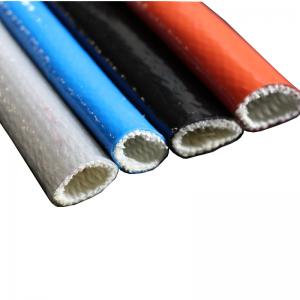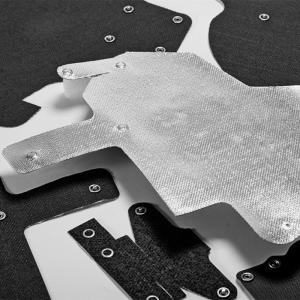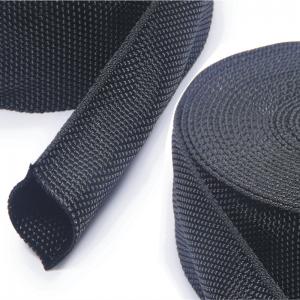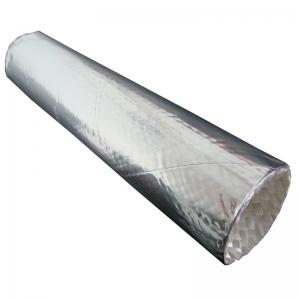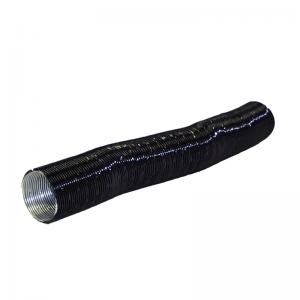
A knitted aramid sleeve is a tubular textile cover used as an additional mechanical protection layer around cables, wire bundles and other components. For wire harness protection, the selection question is whether the finished sleeve provides suitable coverage, fits the assembly sequence and remains in the intended position—not simply whether the yarn is described as strong.
BSTFLEX offers a Knitted Kevlar Aramid Sleeve for industrial component protection. The following specification approach focuses on cable chafing protection, bundle geometry and repeatable OEM assembly. It does not describe a PPE arm sleeve or a substitute for the cable's electrical insulation.
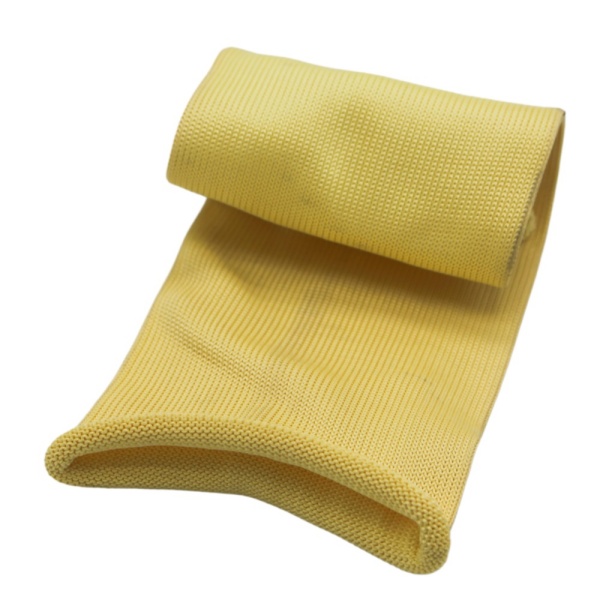
Start a wire harness abrasion protection review with the route drawing and the installed assembly. Identify what touches the harness, where movement occurs and which areas must remain accessible for servicing.
Do not treat every visible wear mark as the same problem. A mark beside a retaining clip calls for a different investigation from one at a panel opening or along a moving service loop. Correct avoidable routing and edge-contact problems before relying on a textile sleeve.
| Harness location | What to record | What to verify with the sleeve sample |
|---|---|---|
| Straight bundle section | Finished bundle profile, binding tape and available space | Fit without excessive loose folds or excessive tension |
| Clip or bracket contact | Support geometry and the actual contact surface | Coverage and retention without creating a new concentrated contact point |
| Connector transition | Largest connector envelope, latch features and assembly sequence | Whether the sleeve can be installed without damaging the textile or connector |
| Moving bend or service loop | Required positions, clearance and cable bend limits | Coverage at each position and absence of snagging, migration or bunching |
For wire harness chafing protection, the sleeve, routing supports and edge protection should be evaluated together. Adding a sleeve is not a reason to retain an unsuitable routing path.
Knitted aramid sleeving is formed from interconnected yarn loops rather than the crossing yarn arrangement of a braid. Loop geometry can allow the textile to conform around a bundle, but the useful fit range must be established for the specific construction.
A tubular knitted sleeve should not be specified as though it were elastic rubber. Do not assume a universal stretch ratio, connector pass-through size or recovery percentage. Ask for a sample at the intended bundle size and examine the coverage after installation.
Similarly, a soft sample does not establish abrasion life or cut resistance. Yarn selection, textile construction, installed tension and contact conditions all belong in the evaluation. A knitted Kevlar sleeve should be selected against the requirements of the assembly, not a blanket claim that knitted construction is always better than braided construction.
An aramid wire harness sleeve needs to accommodate the assembled harness. Record the bundle after its specified tapes, splice coverings and other components are in place. Include changes in cross-section along the protected length.
For a non-circular cable bundle, provide the width, depth and a drawing or representative sample. A single maximum dimension does not fully describe the fit. A sleeve that passes over the largest feature can still be too loose along the smaller section.
When evaluating an aramid sleeve for cable bundles, inspect both extremes: the largest installation feature and the smallest working section. Confirm where the sleeve begins and ends, how it is retained and which labels or service points need to remain visible.
A flexible aramid sleeve may be worth sampling where the route changes shape, but flexibility does not remove the need to control those dimensions.
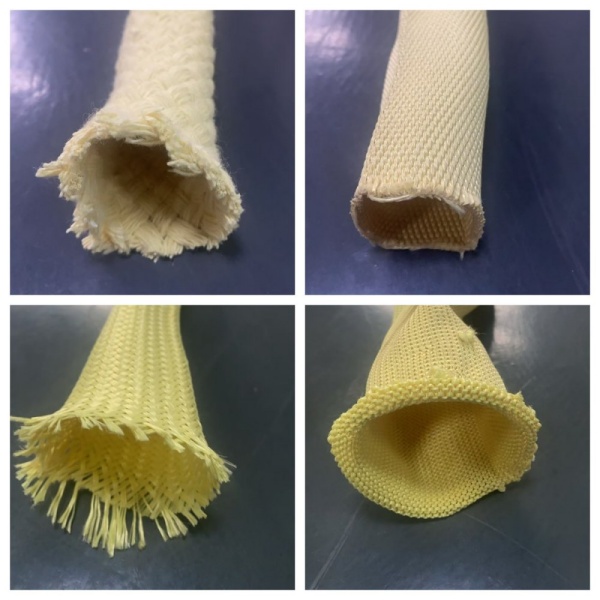
A closed tubular cover normally needs access from an end. Establish whether it will be fitted before terminals or connectors are assembled, or whether it must pass over a completed connector.
For knitted cable sleeving installed over a completed harness, give the supplier the connector's full envelope—not only its nominal housing width. Include latches, backshells and other projections that affect passage through the textile.
Where a closed sleeve cannot be installed without disconnecting the assembly, assess a separately specified side-entry solution. Do not cut a longitudinal opening into the standard tubular product and assume that its coverage and edge stability remain equivalent.
This assembly-sequence review also applies to a Kevlar wire harness sleeve ordered as pre-cut pieces. The correct length is of little use when the part cannot reach its intended position on the harness.
Cut to length aramid sleeving can simplify material handling, but the purchase specification must define how length is measured. Record the condition of the sample during measurement and the required coverage after fitting.
Avoid applying one unverified allowance to every harness. Instead, use an approved sample to establish the relationship between supplied length, installed shape and the end-retention arrangement. Include tolerances that the supplier has agreed to manufacture and inspect.
For an OEM aramid sleeve, identify the cut-edge condition and retention method in the sample approval. Check for loose yarns, exposed contact zones and interference near connectors. The textile cover must not take over the role of a connector's designed strain relief or be tightened in a way that damages the cable jacket.
For a knitted aramid sleeve for moving cables, a stationary fit check is only the starting point. Define the operating positions and movement relevant to the machine, then establish an appropriate qualification procedure with the equipment or harness engineer.
During that evaluation, inspect the sleeve at the areas most likely to change: the outside of a bend, a transition between bundle sizes and the end nearest a moving bracket. Look for movement away from the protected zone, concentrated wear and changes in coverage.
A product description such as “flexible aramid sleeving” does not establish a number of bending cycles or a torsional life. Those claims require evidence for the specified sleeve and assembly conditions. Initial fit inspection should be performed on isolated equipment; operating tests belong within the equipment's approved safety procedures.
An aramid cable sleeve used for mechanical covering does not, by that description alone, provide a verified voltage rating, environmental seal, flame rating or thermal barrier.
For a cut resistant cable sleeve, request evidence relevant to the finished textile and the expected contact condition. Cut resistance is not cut-proof performance, and it does not justify routing a harness against an unprotected sharp edge.
Where elevated temperature is involved, specify the temperature at the sleeve, exposure duration and the limits of the cable assembly. Do not infer a safe cable temperature or current-carrying capacity from the fiber name. Likewise, sleeve retention must be assessed separately from electrical insulation, sealing and connector strain relief.
The role of industrial cable protection sleeving should be explicit on the drawing: an external mechanical cover, with any additional performance requirement listed and qualified separately.
A request for custom knitted aramid sleeve is easier to assess when the quotation package describes the assembly rather than only the material. The following information supports an initial sampling discussion.
| Specification field | Information to provide |
|---|---|
| Protected assembly | Wire harness, cable bundle or other component, with a drawing or sample |
| Bundle geometry | Finished dimensions, profile changes and maximum installation envelope |
| Protection requirement | Contact surface, wear location and relevant movement |
| Installation sequence | Before connector assembly or over completed end features |
| Supplied length | Roll supply or proposed cut pieces, with measurement method |
| End arrangement | Proposed retention and the required cut-edge condition |
| Operating environment | Temperature, fluids, contaminants and other exposure requiring evaluation |
| Production release | Approved sample reference, agreed tolerances, quantity and packaging requirements |
For a knitted para aramid sleeve specified by material grade or branded fiber, agree the composition and traceability requirement before ordering. A generic material description is not a substitute for the evidence required by the purchase specification.
Keep the selection tied to the assembly. For a cable route being assessed with a braided structure, review Kevlar braided sleeving and compare samples under the same contact conditions. For a hydraulic line rather than a wiring harness, the braided Kevlar hose protective sleeve is a relevant product reference.
Where a hollow woven construction is required, review the flat woven aramid sleeve. Its lay-flat width is a different measurement from a circular internal diameter. None of these construction names, by itself, establishes a superior protection rating for the harness under review.
Only when the specific sleeve can pass over the complete connector envelope without damage and still provide an acceptable fit on the bundle. Confirm that sequence with a sample. A closed tubular sleeve is not a side-entry wrap.
Plan coverage for each leg and the branch transition. Do not assume that one straight tube will protect every branch, or create a new opening without assessing the resulting edge and coverage. Use the harness drawing to define the arrangement before ordering.
No. Treat mechanical covering, electrical insulation, environmental sealing and strain relief as separate requirements. The finished assembly must meet each applicable requirement independently.
Approve the installed sample, the measurement method, the cut-edge condition and the retention arrangement. Then agree the manufacturing tolerances and inspection criteria with the supplier.
Send BSTFLEX the finished bundle dimensions, largest connector profile, proposed sleeve length, contact-point photographs and required quantity. Include the assembly sequence and any environmental or test requirements.
This information allows the sampling discussion to focus on the actual fit and protection requirement. For the Knitted Kevlar Aramid Sleeve, use the approved harness sample as the reference for quotation and production specification rather than relying on the product name alone.

 français
 Deutsch
 русский
 italiano
 español
 português
 Nederlands
 العربية
 日本語
 한국의
 Türkçe
 Polski
 Tiếng Việt
 slovenský
 Indonesia