Anhui Parker New Material Co.,Ltd
ISO9001      IATF16949

insulation blanket manufacturer
News
  • Combustion Air Intake Hose – Corrugated Air Supply Hose for Air Heaters
    Combustion Air Intake Hose – Corrugated Air Supply Hose for Air Heaters Dec 23, 2025
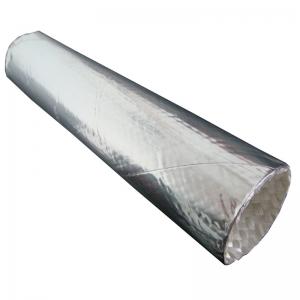
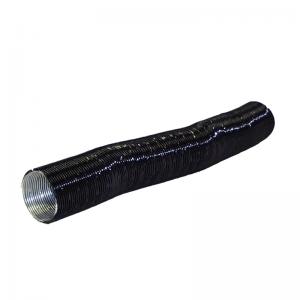
    The combustion air intake hose is specially designed for air heaters, providing a reliable and flexible solution for fresh air supply to combustion systems. This hose delivers stable airflow to support efficient combustion while protecting air heater equipment from heat, vibration, and installation stress. The hose is manufactured using a multi-layer composite structure, typically composed of glass fiber, aluminum foil, kraft paper, and PVC, forming a corrugated tube design. This structure offers excellent flexibility, heat resistance, and mechanical strength, making it ideal for air heater combustion air intake applications. Key Features of Combustion Air Intake Hose Designed specifically for air heater combustion air intake Corrugated tube structure for superior flexibility Lightweight yet durable composite construction Good heat resistance and insulation performance Easy installation in compact or irregular spaces Cost-effective solution for combustion air systems Material & Structure The combustion air intake hose is constructed using carefully selected composite materials: Composite Material Layers Glass fiber – provides heat resistance and structural strength Aluminum foil – reflects heat and improves thermal insulation Kraft paper – enhances shape stability and cost efficiency PVC layer – improves abrasion resistance and durability Corrugated Tube Design The corrugated tube structure allows the hose to bend easily without collapsing, ensuring consistent airflow even in tight installation environments. Technical Specifications Parameter Description Inner Diameter Customized (common air heater sizes available) Structure Corrugated composite tube Material Glass fiber + aluminum foil + kraft paper + PVC Temperature Resistance Suitable for air heater combustion air Pressure Type Low-pressure air intake Length Customized Color Standard or customized Specifications can be adjusted according to different air heater models and system requirements. Applications The combustion air intake hose is widely used in: Air heaters Diesel air heaters Gas air heaters Portable and stationary heater systems Combustion air intake systems for heating equipment This hose is designed for fresh air intake, not for exhaust gas applications. Advantages for Air Heater Systems Improved Combustion Efficiency Stable fresh air supply helps air heaters achieve more complete and efficient combustion. Flexible Installation The corrugated composite structure allows easy routing around equipment and installation obstacles. Reliable Performance The multi-layer composite design ensures long service life under continuous heating operation. Installation Benefits Compatible with standard air heater connectors Reduces vibration transfer to heater units Lightweight for fast and simple installation Minimizes installation stress on heater air intake ports Frequently Asked Questions (FAQ) What is the combustion air intake hose used for? It supplies fresh air to air heaters for proper ...
    read more
  • Woven Silica Fabric: Ultimate Guide to High-Temperature Performance, Applications, and Specifications
    Woven Silica Fabric: Ultimate Guide to High-Temperature Performance, Applications, and Specifications Dec 22, 2025
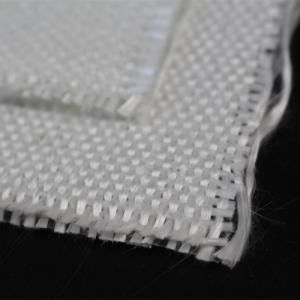
    What Is Woven Silica Fabric? Woven silica fabric is a high-temperature textile produced from silica fibers containing typically more than 96% SiO₂ (silicon dioxide). The fibers are woven into fabrics using plain weave, twill weave, or satin weave structures, creating a flexible yet extremely heat-resistant material. Unlike standard fiberglass fabric, woven silica fabric is designed for continuous exposure to very high temperatures while maintaining dimensional stability and mechanical strength. Key Characteristics Extremely high silica content (≥96%) Excellent thermal stability Low thermal conductivity Non-combustible and flame resistant Resistant to most chemicals and molten metal splash Because of these properties, woven silica fabric is widely used in thermal insulation systems, fire protection equipment, welding protection, aerospace, and metallurgy. How Woven Silica Fabric Is Manufactured The performance of woven silica fabric starts with its unique manufacturing process, which distinguishes it from ordinary fiberglass textiles. 1. Raw Material Preparation Silica fabric production begins with high-purity glass fibers, which are chemically treated through an acid leaching process. This removes impurities and increases the silica (SiO₂) content from around 50–60% to 96–99%. 2. Fiber Treatment After leaching, fibers are washed, neutralized, and heat-treated to stabilize their structure. This step is critical for achieving long-term high-temperature resistance. 3. Weaving Process The treated silica yarns are woven using conventional textile looms into different fabric structures: Plain weave (most common) Twill weave (better flexibility) Satin weave (higher surface smoothness) 4. Optional Finishing Depending on the application, woven silica fabric may be: Heat cleaned Coated with vermiculite, silicone, or graphite Treated for water or chemical resistance Technical Properties of Woven Silica Fabric The following properties explain why woven silica fabric outperforms many alternative high-temperature textiles. Typical Physical Properties Property Value Range Silica Content ≥96% Thickness 0.4 – 1.5 mm Weight 430 – 1250 g/m² Tensile Strength (Warp) 1500 – 3000 N/5cm Thermal Conductivity Low Combustibility Non-combustible These values may vary depending on weave style, yarn size, and surface treatment. Woven Silica Fabric Temperature Resistance One of the most searched aspects of woven silica fabric is its temperature capability, and this is where it truly excels. Temperature Performance Continuous working temperature: up to 1000°C Short-term exposure: up to 1200°C Melting point: approximately 1650°C At elevated temperatures, woven silica fabric maintains structural integrity far better than standard fiberglass fabrics, which typically begin to degrade above 550–600°C. Thermal Shock Resistance Woven silica fabric performs well under rapid temperature changes, making it suitable for applications involving sudden heat exposure, such as molten metal spl...
    read more
  • Fire Sleeve Working Temperature: What the Numbers Really Mean in Real Conditions
    Fire Sleeve Working Temperature: What the Numbers Really Mean in Real Conditions Dec 21, 2025
    Fire Sleeve Working Temperature Fire sleeve working temperature is often presented as a simple number on a datasheet. In reality, it is not a single value—it is a range of thermal behaviors under different conditions. Understanding fire sleeve working temperature is not about memorizing limits. It is about knowing what happens before, during, and after extreme heat or flame exposure, and how long the fire sleeve can continue to protect the system when failure becomes likely. This page focuses entirely on thermal performance boundaries, not product descriptions or applications. Why “Working Temperature” Is Commonly Misunderstood Many buyers assume working temperature means: “The maximum temperature fire sleeve can survive.” In engineering terms, this is incorrect. Fire sleeve working temperature actually depends on: Exposure duration Type of heat (radiant vs flame) Distance from heat source Hose material underneath Environmental airflow A fire sleeve exposed to 260°C continuously behaves very differently from one exposed to direct flame at much higher temperatures for a short period. Two Different Thermal Scenarios You Must Separate 1. Continuous Heat Exposure This refers to long-term operating conditions, such as hoses routed near: Engines Exhaust pipes Furnaces In this scenario, the fire sleeve must: Retain flexibility Avoid hardening or cracking Maintain insulation performance For most silicone-coated fire sleeves, continuous working temperature is up to 260°C under normal industrial conditions. 2. Short-Term Flame Exposure This refers to emergency fire events, such as: Hydraulic fluid ignition Fuel line fires Equipment fires Here, the goal is not comfort or longevity. The goal is survival time. During flame exposure, fire sleeve is designed to: Resist ignition Form a protective char Delay heat transfer to the hose In controlled tests, fire sleeve can withstand short-term flame exposure up to approximately 1090°C, depending on construction and test method. What Actually Happens to Fire Sleeve Under Extreme Heat Stage 1: Initial Heat Contact Silicone outer layer absorbs heat Surface temperature rises rapidly No structural damage yet Stage 2: Silicone Transformation Silicone begins to vulcanize A charred outer layer forms Heat penetration slows Stage 3: Thermal Barrier Effect Fiberglass inner layer remains stable Hose temperature rises slowly System integrity is temporarily preserved This staged behavior is why fire sleeve is effective during fire incidents—it fails gradually, not instantly. Why Fire Sleeve Does Not “Melt” Like Other Materials Unlike thermoplastics, fire sleeve materials are chosen specifically to avoid melting or dripping. Fiberglass does not burn or melt under fire exposure Silicone rubber chars instead of flowing This prevents: Dripping material feeding the fire Sudden collapse of the sleeve Immediate exposure of the hose surface From a safety perspective, this behavior is more important than the absolute temperature number. T...
    read more
  • Fire Sleeve: Complete Guide to High-Temperature Hose Protection
    Fire Sleeve: Complete Guide to High-Temperature Hose Protection Dec 20, 2025
    What Is Fire Sleeve? Fire sleeve is a specialized high-temperature protective sleeve designed to shield hoses, cables, and pipes from extreme heat, open flames, and molten metal splash. It is widely used in industries where equipment operates near engines, furnaces, exhaust systems, or other fire hazards. Unlike standard insulation materials, fire sleeve is engineered specifically for fire exposure scenarios. Its primary function is to delay hose failure during fire incidents, giving operators critical time to shut down systems and reduce safety risks. A typical fire sleeve consists of two main layers: Inner Layer – Braided Fiberglass This layer provides mechanical strength and excellent thermal insulation. Fiberglass is non-combustible and maintains structural integrity under high temperatures. Outer Layer – Silicone Rubber Coating The silicone coating resists flames, oils, fuels, chemicals, moisture, and abrasion. When exposed to fire, it forms a protective char that slows heat penetration. Because of this construction, fire sleeve has become a standard safety component in hydraulic systems, automotive fuel lines, aerospace equipment, and oil & gas installations. Fire Sleeve Temperature Rating and Performance Fire sleeve is designed for both continuous heat exposure and short-term flame contact. Typical Temperature Performance Condition Temperature Continuous operating temperature up to 260°C Short-term flame exposure up to 1090°C Melting behavior Non-melting, self-extinguishing During flame exposure, the silicone coating vulcanizes and insulates the inner hose. This performance is critical in preventing hydraulic fluid ignition or fuel leakage. Fire Sleeve Applications by Industry 1. Hydraulic Systems Fire sleeve is commonly installed over hydraulic hoses operating near hot machinery. In case of fire, it helps prevent hose rupture and fluid spray, reducing secondary fire risks. 2. Automotive and Heavy Vehicles Used to protect fuel lines, brake hoses, and wiring harnesses near engines and exhaust manifolds. Fire sleeve improves durability and reduces maintenance frequency. 3. Oil and Gas Industry In refineries, offshore platforms, and drilling rigs, fire sleeve is essential for protecting hoses carrying flammable fluids under high pressure. 4. Aerospace and Marine Fire sleeve provides lightweight, flexible fire protection where strict safety and performance standards apply. Fire Sleeve vs Other Heat Protection Solutions Feature Fire Sleeve Fiberglass Sleeve Heat Shrink Tubing Flame resistance ✅ Excellent ❌ Limited ❌ Poor Chemical resistance ✅ High ❌ Low ⚠️ Moderate Flexibility ✅ High ⚠️ Medium ⚠️ Medium Fire safety use ✅ Yes ❌ No ❌ No How to Choose the Right Fire Sleeve When selecting a fire sleeve, consider the following factors: Hose outer diameter Continuous and peak temperature Exposure to oil, fuel, or chemicals Abrasion and vibration conditions Proper sizing and material selection ensure long service life and maximum protection. Insta...
    read more
  • Silicone Coated Fiberglass Welding Blanket – Reliable Heat and Spark Protection for Industrial Safety
    Silicone Coated Fiberglass Welding Blanket – Reliable Heat and Spark Protection for Industrial Safety Dec 18, 2025
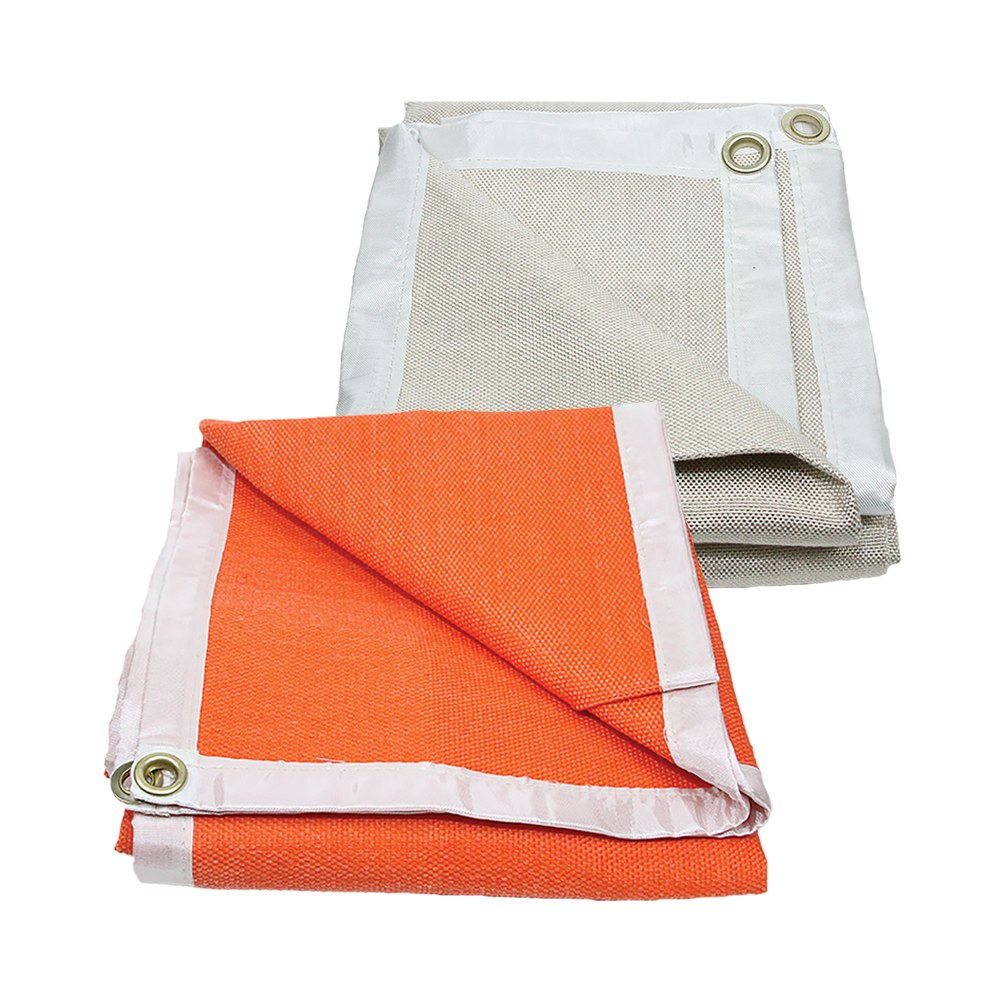
    The Silicone Coated Fiberglass Welding Blanket is a high-performance protective barrier designed to shield people, equipment, and surrounding areas from heat, sparks, molten metal, and welding splatter. Engineered for demanding industrial environments, this blanket combines the strength of fiberglass fabric with the added durability and resistance of a silicone coating. It is an essential safety solution for welding, cutting, grinding, and other high-temperature operations. How It Works The fiberglass base fabric provides excellent heat resistance and structural strength, while the silicone coating enhances flexibility, abrasion resistance, and surface durability. This combination allows the Silicone Coated Fiberglass Welding Blanket to perform reliably in harsh working conditions where conventional fire blankets may degrade quickly. The silicone surface also helps prevent molten metal from sticking, improving safety and extending service life. Key Performance Advantages High Temperature Resistance Designed to withstand intense heat exposure, the blanket effectively protects surrounding surfaces from welding sparks and hot metal fragments. Improved Durability The silicone coating strengthens the fiberglass fabric, making it more resistant to tearing, abrasion, and repeated handling. Non-Stick Surface Molten metal and welding spatter are less likely to adhere to the surface, allowing for easier cleaning and longer-lasting performance. Flexible and Easy to Handle Unlike rigid heat shields, this welding blanket remains flexible, making it easy to drape, fold, or wrap around equipment and work areas. Chemical and Moisture Resistance The silicone coating provides added protection against moisture, oils, and many industrial chemicals, making the blanket suitable for diverse environments. Typical Uses and Industries The Silicone Coated Fiberglass Welding Blanket is widely used across multiple sectors where heat and fire protection are critical: Welding and Fabrication Workshops Protects floors, walls, machinery, and nearby personnel during welding operations. Shipbuilding and Marine Maintenance Ideal for confined spaces and heavy-duty welding tasks. Construction and Steel Erection Acts as a reliable fire barrier during cutting and welding on-site. Manufacturing and Repair Facilities Supports safe maintenance and repair work involving high temperatures. Automotive and Heavy Equipment Service Shields sensitive components from sparks and heat during repairs. Design and Material Composition The Silicone Coated Fiberglass Welding Blanket is constructed to balance protection and usability: Base material: high-strength fiberglass fabric Surface finish: industrial-grade silicone coating Coating benefits: enhanced heat resistance, flexibility, and abrasion protection This design ensures consistent performance even under repeated thermal exposure. Handling and Installation The blanket can be used in multiple configurations depending on the application: Draped ove...
    read more
first page 1 ... 5 6 7 8 9 ... 76 last page
[  a total of  76  pages]
leave a message

leave a message

    If you have questions or suggestions, please leave us a message,we will reply you as soon as we can!

Home

Products

About

Contact

top