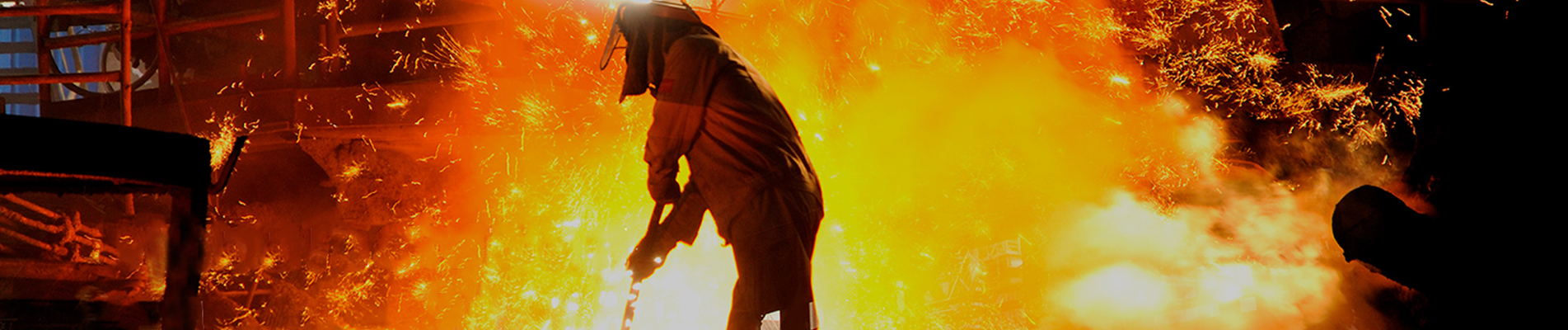
When selecting a high-performance reinforcement material, engineers often compare Kevlar Mesh vs Fiberglass Mesh. Both materials are widely used for reinforcement and protection applications, but they offer different advantages depending on strength requirements, weight limitations, temperature conditions and project budgets.
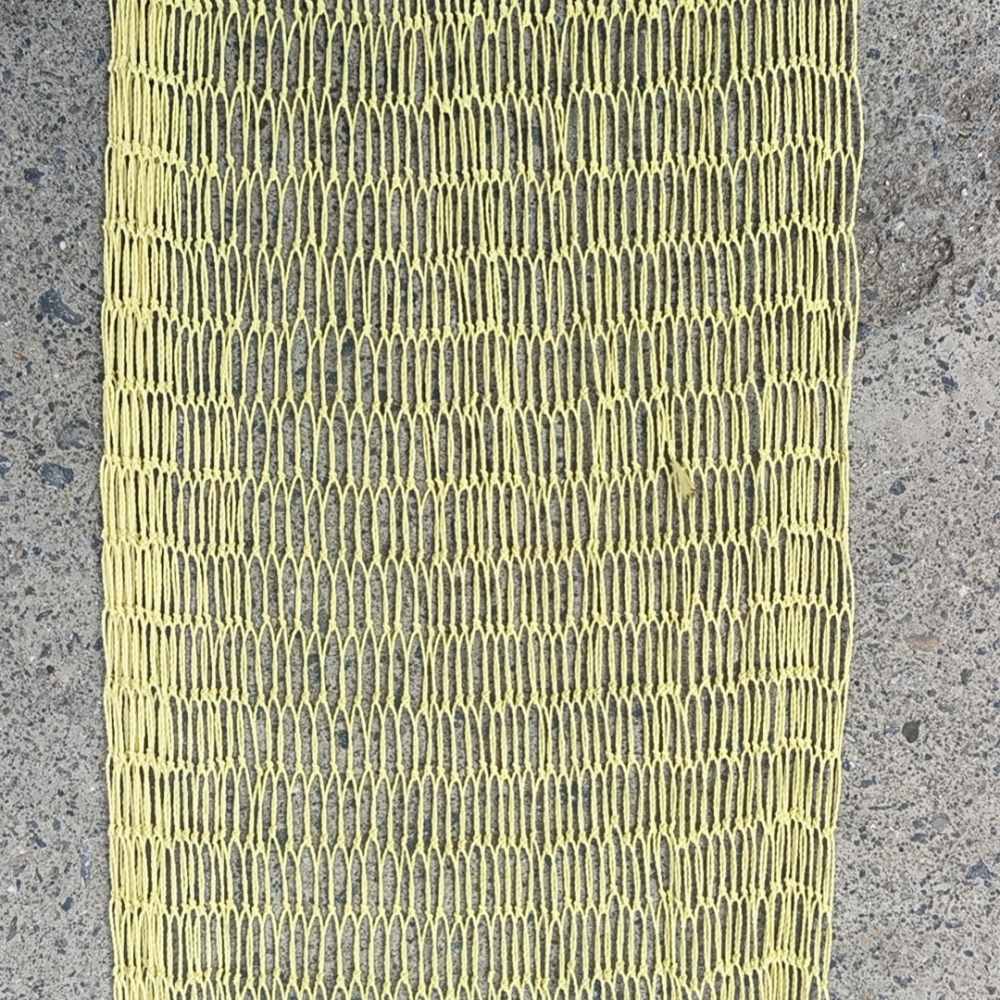
Kevlar Netting is manufactured from para aramid fiber and is designed for applications requiring high strength, lightweight performance and excellent mechanical durability. Fiberglass Mesh, on the other hand, is a commonly used reinforcement material known for its cost efficiency and good thermal resistance.
Understanding the differences between Kevlar Netting and Fiberglass Mesh helps engineers choose the right material for composite reinforcement, industrial protection, automotive components and specialized engineering applications.
| Property | Kevlar Netting | Fiberglass Mesh |
|---|---|---|
| Strength | Excellent tensile strength with a superior strength-to-weight ratio. Suitable for applications requiring high mechanical performance. | Good tensile strength and widely used for general reinforcement applications. |
| Weight | Lightweight structure with high reinforcement efficiency, helping reduce overall component weight. | Higher density compared with aramid fiber for similar reinforcement performance. |
| Impact Resistance | Excellent impact resistance and energy absorption capability due to the unique aramid fiber structure. | Good rigidity but lower impact resistance compared with Kevlar fiber. |
| Temperature Performance | Maintains reliable mechanical performance under elevated temperatures and demanding environments. | Excellent thermal stability and widely used in high-temperature reinforcement applications. |
| Cost | Higher material cost due to advanced fiber performance and lightweight advantages. | More economical and suitable for cost-sensitive applications. |
Strength is one of the biggest differences between Kevlar Netting and Fiberglass Mesh.
Kevlar aramid fiber provides exceptional tensile strength while maintaining a lightweight structure. This makes Kevlar Netting ideal for applications where reducing weight while maintaining mechanical performance is important.
Fiberglass Mesh provides reliable reinforcement strength and is commonly selected for construction, insulation and general composite applications where extreme mechanical performance is not required.
For industries such as automotive, aerospace and advanced composites, weight reduction is an important design consideration.
Kevlar Netting offers a higher strength-to-weight ratio compared with fiberglass mesh. Manufacturers can achieve similar or improved reinforcement performance with less material weight.
This advantage makes Kevlar Mesh Fabric suitable for lightweight engineering solutions where every gram matters.
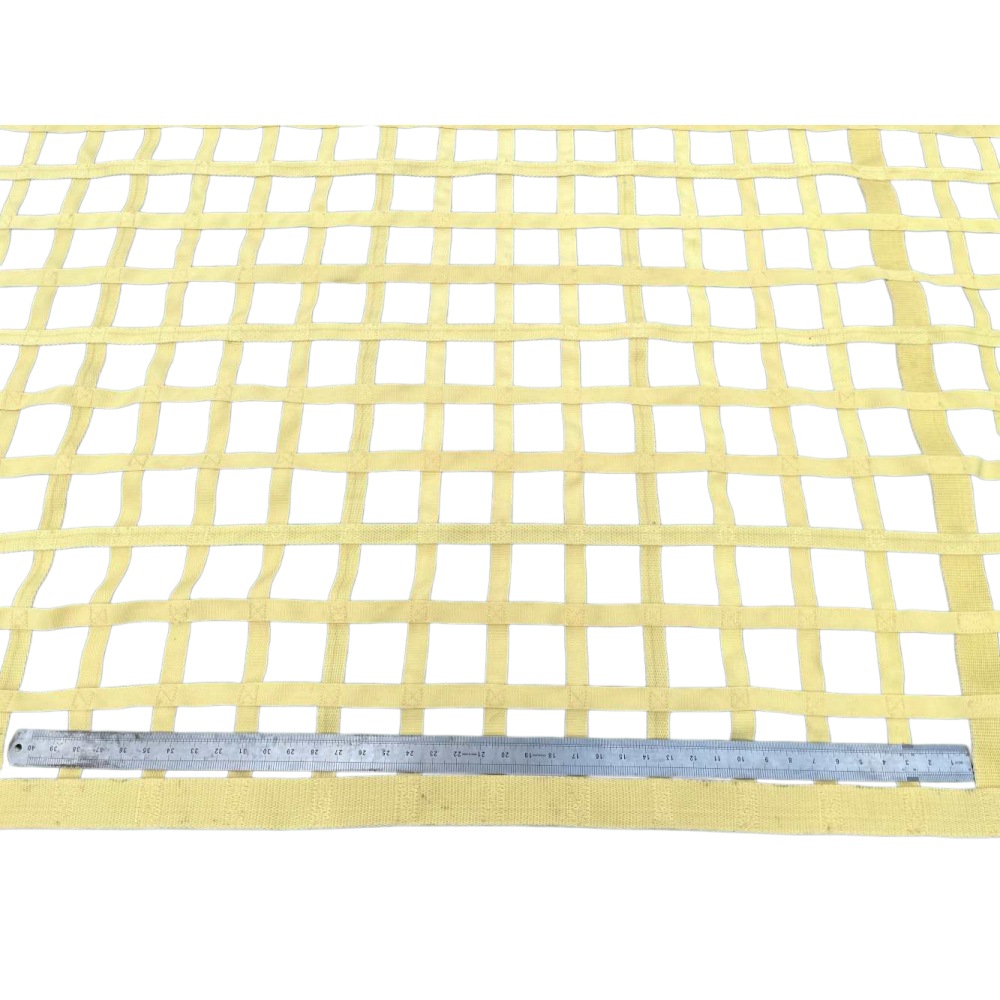
Kevlar Netting has excellent impact resistance because para aramid fibers can absorb and distribute impact energy effectively.
Fiberglass Mesh provides good structural reinforcement but is more rigid and can be more susceptible to cracking under severe impact conditions.
For applications exposed to vibration, mechanical shock or impact loads, Kevlar Reinforcement Mesh is often the preferred choice.
Both Kevlar Netting and Fiberglass Mesh can be used in demanding environments, but their performance characteristics are different.
Fiberglass Mesh has excellent heat resistance and is widely used in insulation systems and thermal applications.
Kevlar Netting provides a balance of heat resistance, strength retention and mechanical durability, making it suitable for applications where both temperature exposure and mechanical stress exist.
Fiberglass Mesh is generally more economical and remains the preferred choice for many standard reinforcement applications.
However, Kevlar Netting provides additional value when performance requirements include lightweight design, high impact resistance, improved durability and reduced maintenance.
For advanced industrial applications, the higher initial material cost of Kevlar can be justified by longer service life and improved performance.
Kevlar Netting is recommended when your application requires:
Typical applications include:
Fiberglass Mesh remains an excellent choice for applications where cost efficiency and thermal performance are the main priorities.
Common applications include:
BSTFLEX manufactures high-performance aramid fiber products designed for industrial and OEM applications. Our Kevlar Netting solutions can be customized according to mesh size, width, yarn construction and application requirements.
We support customers with:
Yes. Kevlar Mesh generally provides higher tensile strength, better impact resistance and a superior strength-to-weight ratio compared with fiberglass mesh.
Fiberglass mesh is usually more economical. Kevlar Netting has a higher cost because of its advanced aramid fiber performance.
In many high-performance applications, Kevlar Netting can replace fiberglass mesh when improved strength, lightweight construction or impact resistance is required.
Kevlar Netting is used in automotive, aerospace, composite manufacturing, industrial protection and engineering applications.
The correct choice depends on application requirements including strength, weight, temperature, impact resistance and cost expectations.
For customized Kevlar Netting solutions, visit: BSTFLEX Kevlar Netting

 français
 Deutsch
 русский
 italiano
 español
 português
 Nederlands
 العربية
 日本語
日本語 한국의
한국의 Türkçe
 Polski
 Tiếng Việt
 slovenský
 Indonesia