A custom turbo safety blanket project should begin with the compressor housing, not with a generic blanket size. The external housing geometry, inlet and outlet positions, surrounding pipework, available clearance, fastening arrangement and technical requirements all influence the finished containment blanket.
For race teams, turbo system suppliers, performance parts brands and distributors, this means the purchasing process should move through controlled stages: application review, dimensional definition, pattern development, sample approval, specification control and repeat production.
BSTFLEX supplies a Turbo Safety Blanket for compressor-housing containment applications and supports project-based requirements for size, structure, fastening configuration, reinforcement and branding. The following guide explains what buyers should define when developing a custom or OEM program.
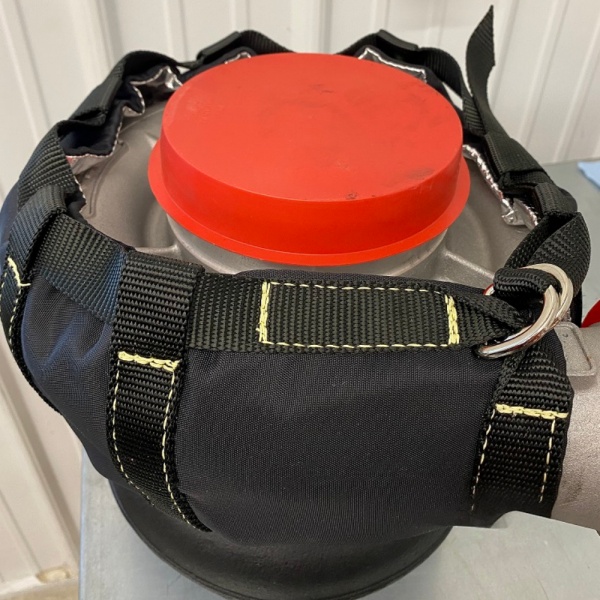
Two turbochargers may appear similar but have different compressor cover profiles, outlet orientations, clamps, brackets or surrounding installation space. A blanket developed from a generic diameter alone may not account for those differences.
A better starting point is the actual compressor housing configuration.
Useful development references include:
The more accurately the geometry is defined, the easier it is to review blanket coverage, fastening positions and installation clearance before production.
Before a manufacturer begins pattern development, the buyer should define how the blanket will be used.
Important information includes:
The intended use matters because a prototype for a single vehicle and an OEM product intended for repeat supply require different levels of drawing control, identification and production documentation.
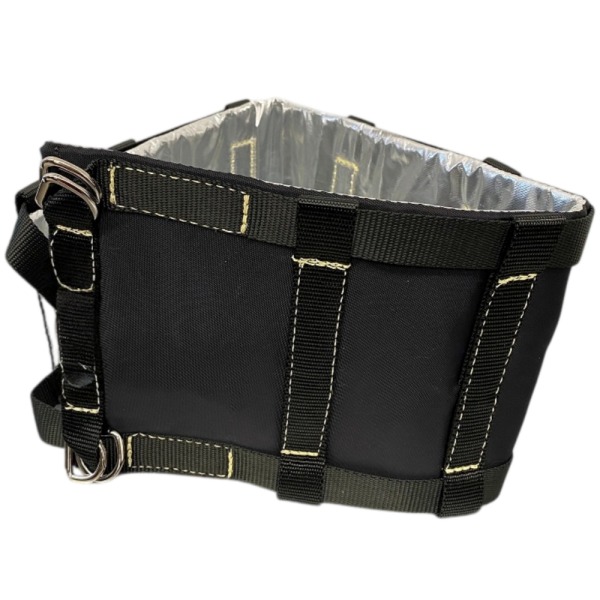
For custom development, avoid relying only on the dimensions of an old blanket. A used blanket may have stretched, distorted or been modified during service.
Where possible, take measurements from the compressor housing itself or from an approved engineering drawing.
Typical information may include:
The purpose of these measurements is not to create a universal size chart. They provide the geometric information needed to develop a pattern for the specific housing.
For general fitment and RFQ information, see Turbo Safety Blanket for Racing: Compressor Containment, Fitment and Custom Supply.
Pattern development should account for more than the outer silhouette of the housing. The design also needs to consider where the blanket opens, how it is retained and which areas must remain accessible.
A custom pattern review should consider:
A blanket should not require excessive stretching or improvised fastening simply to reach its closure points. If the first pattern does not sit correctly on the housing, revise the pattern rather than treating force as an installation solution.
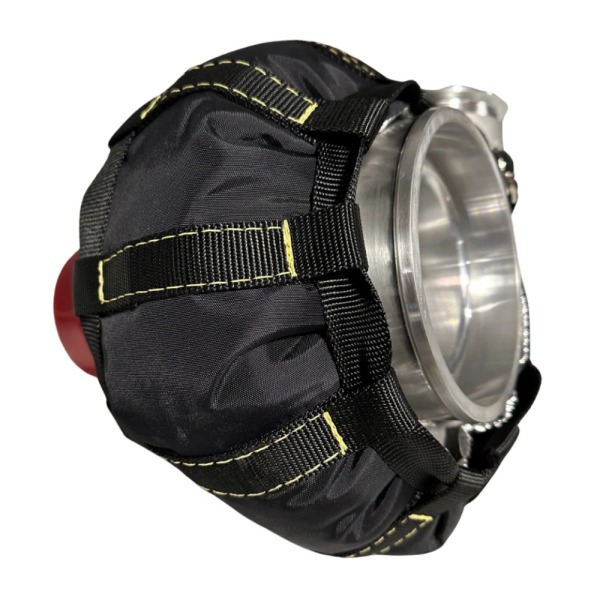
Fitment is only one part of a custom containment blanket. The construction also needs to be defined.
For an OEM project, the specification may identify:
These characteristics should be reviewed as one assembly. A material change or relocation of an attachment point can create a different product configuration even when the overall blanket dimensions remain unchanged.
For a deeper discussion of construction, see Turbo Safety Blanket Materials and Construction: What Buyers Should Ask Before Ordering.
A development sample can answer important practical questions:
However, a successful fitment trial does not by itself prove containment performance. Fitment approval and technical performance verification should remain separate stages.
If the project requires specific testing, certification or racing acceptance, confirm which finished configuration the documentation applies to before mass production.
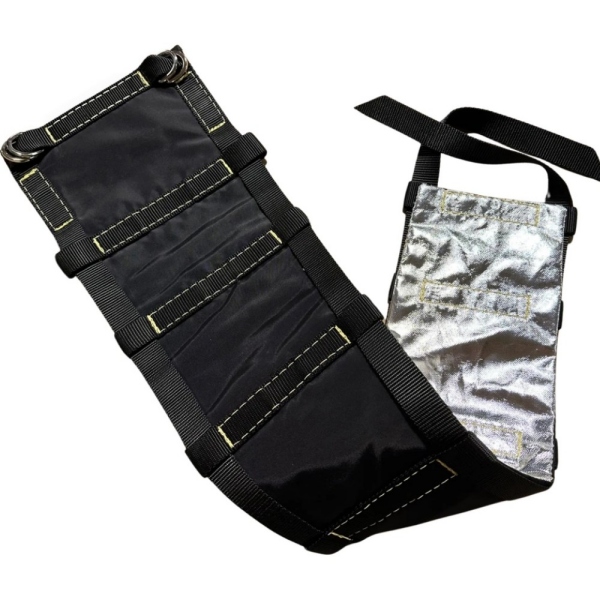
Once the sample has been approved, establish a controlled reference for production.
A useful production reference may include:
This creates a clearer repeat-order standard than instructions such as “same as last sample.”
When a customer later requests a change, the revised feature can then be identified and reviewed against the previous configuration.
For repeat OEM supply, buyers should decide which characteristics need to be checked during production.
Typical inspection points can include:
The inspection criteria should reflect the approved product specification rather than relying solely on cosmetic appearance.
Where dimensions are critical to fitment, identify the measurement method and tolerance requirement during project approval.
Repeat production becomes easier when both buyer and manufacturer know which changes require approval.
Examples may include:
Not every change has the same technical significance. The important point is to identify the change before it becomes part of normal production.
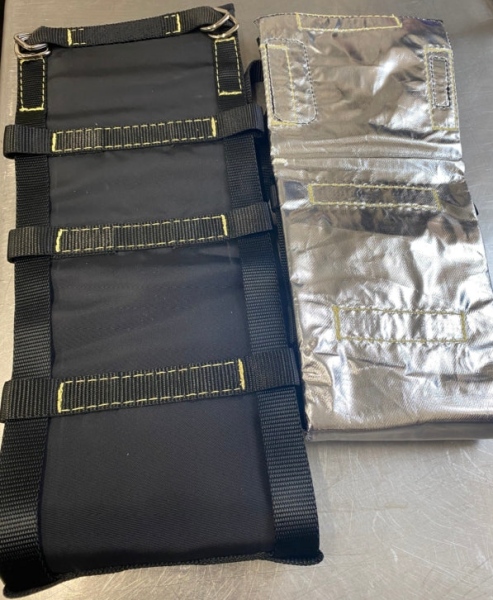
A performance parts brand or distributor may require more than a custom physical product. The commercial program can also include identification and packaging requirements.
Possible project requirements include:
Branding should be reviewed together with the product construction. A label or decorative feature should not be positioned where it interferes with a critical seam, reinforcement area or fastening point.
Tell the manufacturer which stage the project has reached. A prototype requirement is different from a confirmed repeat-production program.
| Project Stage | Primary Objective | Typical Buyer Information |
|---|---|---|
| Prototype | Review geometry, installation and proposed construction | Housing drawing, photographs, application and sample quantity |
| Small Batch | Confirm repeatability and commercial requirements | Approved sample, revision, quantity, labeling and packaging |
| Production | Maintain the approved configuration across repeat orders | Controlled drawing, specification, inspection criteria and forecast |
A complete inquiry reduces back-and-forth communication and gives the manufacturer a better basis for reviewing feasibility.
| Information | Recommended Detail |
|---|---|
| Compressor housing | Model reference, drawing, dimensions or physical sample |
| Installation | Photographs showing pipework, clamps, brackets and available clearance |
| Application | Racing, motorsport, development, distribution or another defined use |
| Construction requirements | Required structure, fastening arrangement and technical expectations |
| Documentation | Drawings, material information, inspection criteria or testing requirements |
| Quantity | Prototype quantity, first production order and estimated repeat demand |
| Branding | Logo, label, customer part number and packaging requirements |
Price is only one part of an OEM sourcing decision. Buyers should also evaluate whether a supplier can understand and control the project.
Useful questions include:
The strongest supplier discussion is one where both sides can identify exactly what is being manufactured and what evidence supports the proposed product.
Do not combine compressor containment blanket specifications with turbine-housing insulation blanket specifications.
A turbo safety blanket is intended for compressor-side containment. A Turbo Heat Shield Blanket is a separate thermal-management product for the turbine side.
The materials, construction objectives, validation requirements and purchasing criteria should therefore be defined separately.
BSTFLEX can review project-specific requirements for compressor-housing containment blankets, including custom dimensions, structure, fastening arrangements, reinforcement configurations and branding.
For a new project, send the compressor housing drawing or dimensions, clear installation photographs, intended application, required quantity and any technical or commercial requirements.
View the BSTFLEX Turbo Safety Blanket
Send Your Drawing or Custom Turbo Safety Blanket RFQ to BSTFLEX
A drawing with sufficient external dimensions can provide a useful basis for pattern development. Photographs, installation details or a physical reference may also be required to review surrounding clearance and fastening requirements.
Custom projects can be reviewed for sample development based on the compressor housing information, construction requirements and project scope. The purpose and approval criteria for the sample should be agreed before production.
Buyers should define the approved dimensions, pattern, materials, reinforcement, seam positions, fastening arrangement, identification, packaging and drawing or specification revision.
Branding and labeling can be reviewed for OEM and private-label projects. The location and attachment method should not interfere with functional seams, reinforcement or retention points.
No. Correct fitment and competition acceptance are separate matters. Buyers should verify the applicable racing requirements and the documentation required for the exact product configuration.

 français
 Deutsch
 русский
 italiano
 español
 português
 Nederlands
 العربية
 日本語
 한국의
 Türkçe
 Polski
 Tiếng Việt
 slovenský
 Indonesia