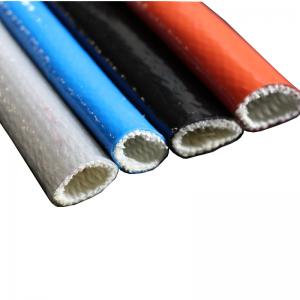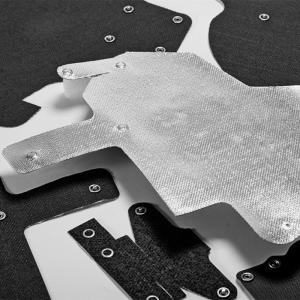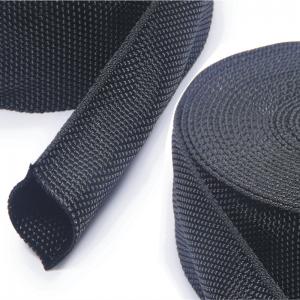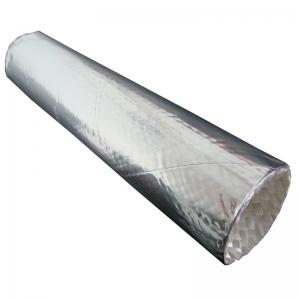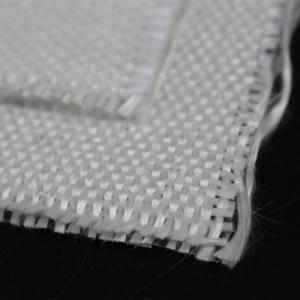
Industrial fiberglass fabric should not be selected only by a general description such as “high temperature cloth” or “heavy fiberglass fabric.” Yarn construction, warp and weft density, fabric weight and weave can all change how a material behaves during coating, cutting, sewing, insulation fabrication and high-temperature service.
BSTFLEX maintains a structured fiberglass textile range covering coating base fabrics, texturized fiberglass fabrics, fiberglass filter fabrics and wire reinforced fiberglass fabrics. The current specification program includes 50 constructions ranging from approximately 210 g/m² to 2200 g/m².
As a thermal protection manufacturer and converter, BSTFLEX uses base-fabric specifications to select suitable materials for silicone coating, vermiculite treatment, PTFE coating, aluminum lamination, welding protection, removable insulation, expansion joints and other industrial thermal-protection products.
This guide publishes the current available fabric constructions by style, yarn specification, warp and weft density, nominal weight and weave so engineers and purchasing teams can compare materials before requesting samples or quotations.
For the complete product family, visit the BSTFLEX High Temperature Fabric category.
| Product Family | Number of Styles | Nominal Weight Range | Main Use |
|---|---|---|---|
| Fiberglass Coating Base Fabric | 16 | 210–2100 g/m² | Base cloth for coating, lamination and thermal fabrication |
| Texturized Fiberglass Fabric | 11 | 600–2200 g/m² | Insulation, blankets, curtains and heavy thermal barriers |
| Fiberglass Filter Fabric | 12 | 330–850 g/m² | Industrial filtration and specialized woven applications |
| Wire Reinforced Fiberglass Fabric | 11 | 450–1700 g/m² | Reinforced insulation, expansion joints and demanding thermal assemblies |
| Total | 50 | 210–2200 g/m² | Industrial fiberglass textile supply and conversion |
Style / Model identifies the fabric construction. Some numbers such as 3732, 3784, 3786 and 3788 are widely recognized commercial fiberglass cloth styles, while other suffixes and model variants identify specific yarn or weave constructions.
Warp Yarn is the yarn running in the machine or length direction of the fabric.
Weft Yarn is the cross-direction yarn woven through the warp.
Warp Density and Weft Density describe how densely the yarns are arranged. Density affects fabric structure, surface openness, mechanical behavior and suitability for coating or further processing.
Nominal Weight is stated in grams per square meter. Weight should not be used alone to identify a fabric because two constructions can have similar GSM while using different yarns or weave patterns.
Weave describes how the yarns interlace. Plain, twill, broken twill, satin, basket and double-weft structures provide different combinations of flexibility, surface character, thickness and mechanical stability.
This group covers lightweight through extra-heavy woven fiberglass base fabrics for coating, treatment, lamination and industrial thermal fabrication. The range includes widely recognized commercial styles such as 3732, 3784, 3786 and 3788.
| Style | Warp Yarn | Weft Yarn | Warp Density | Weft Density | Weight g/m² | Weave |
|---|---|---|---|---|---|---|
| EW210 | EC7-45×1×3 | EC7-45×1×3 | 7.5 | 7.5 | 210 | Plain |
| EW3732 | EC9-68×1×2 | EC9-68×1×2 | 18 | 13 | 430 | Broken Twill |
| EW3732B | EC9-68×1×2 | EC9-136×1 | 18 | 13 | 430 | Broken Twill |
| EW666A | EC9-68×1×2 | EC9-136×1×2 | 20 | 13 | 660 | Satin |
| EW3784 | EC9-136×1×2 | EC9-136×1×2 | 18 | 13 | 860 | Satin |
| EW3784B | EC13-270×1 | EC14-330 | 18 | 10.5 | 840 | Satin |
| EW3784C | EC13-136×1×2 | EC13-136×1×2 | 18 | 13 | 840 | Satin |
| 3786C | EC11-136×1×2 | EDR14-330×1×2 | 19 | 10 | 1200 | Satin |
| 3786D | EDR13-200×1×2 | EDR13-270×1×2 | 17.2 | 9 | 1200 | Satin |
| 3788A | EDR13-270×1 | EDR14-330×1×2 | 18 | 11 | 1700 | Satin |
| 3788B | EDR13-270×1 | EDR13-270×1 | 18 | 11 | 1550 | Satin |
| EW930A | EC13-270×1×2 | EC13-270×1×2 | 12.4 | 4.6 | 930 | Plain |
| EW1050C | EC13-270×1 | EC15-550 | 18.8 | 9.8 | 1050 | Satin |
| EW1200 | EC13-270×1×2 | EC14-400×1×2 | 14.5 | 4.3 | 1200 | Plain |
| EW1400 | EC13-270×1×2 | EC13-270×1×2 | 16 | 9 | 1400 | Satin |
| EW2100 | EC14-330×1×2 | EC13-270×1×3 | 19.6 | 8 | 2100 | Satin |
Styles such as 3732, 3784, 3786 and 3788 are widely recognized in the fiberglass textile industry. They are useful reference points when buyers need to compare base fabrics between coating, insulation or fabrication programs.
However, a commercial style number should not be treated as a complete universal specification. Yarn construction, nominal GSM, thickness, width and other details can vary between different producers and variants.
For this reason, BSTFLEX quotations identify the actual yarn structure, density, weight and weave of the proposed construction rather than relying only on the style number.
Suitable fiberglass coating base fabrics can be selected for further processing according to the finished application.
Common BSTFLEX thermal-protection product families include silicone coated fiberglass, vermiculite treated fiberglass, PTFE coated fiberglass, graphite coated fiberglass, aluminum foil laminated fabric and other application-specific constructions.
For example, a customer ordering a silicone coated fiberglass fabric should distinguish the weight of the fiberglass substrate from the final coated fabric weight. The finished weight includes the base textile plus the silicone applied to one or both surfaces.
See Silicone Coated Fiberglass Fabric for High Temperature Insulation for a finished coated construction.
Texturized fiberglass uses bulked yarn to create a thicker and fuller woven textile. These fabrics are commonly selected where thermal bulk, flexibility and insulation-oriented construction are more important than a thin, smooth surface.
| Style | Warp Yarn | Weft Yarn | Warp Density | Weft Density | Weight g/m² | Weave |
|---|---|---|---|---|---|---|
| 2025 | ET9-F-430 | ET9-F-430 | 8 | 6 | 600 | Plain |
| 2626 | ET9-F-430 | ET9-F-430 | 12 | 9 | 950 | Broken Twill |
| 2125 | ET9-F-430 | ET9-F-580 | 8 | 5 | 650 | Plain |
| M24 | ET9-F-860 | ET9-F-860 | 6 | 3.8 | 816 | Plain |
| M30 | ET9-F-860 | ET9-F-1290 | 6 | 3.8 | 1020 | Plain |
| M30B | ET9-F-1290 | ET9-F-1290 | 5 | 3 | 1000 | Plain |
| M30C | ET9-F-860 | ET9-F-1000 | 6 | 4.3 | 950 | Plain |
| M35A | ET9-F-1290 | ET9-F-1290 | 6 | 3.8 | 1190 | Plain |
| M44 | ET9-F-860 | ET9-F-860 | 12 | 5 | 1500 | Basket |
| M52 | ET9-F-860 | ET9-F-1290 | 12 | 5 | 1780 | Basket |
| M64 | ET9-F-1290 | ET9-F-1290 | 12 | 5 | 2200 | Basket |
This range provides multiple options from 600 to 2200 g/m², allowing buyers to select different levels of textile bulk and mechanical construction.
Typical applications include removable insulation blankets, equipment covers, welding curtains, thermal barriers, expansion-joint insulation and further coating or treatment.
See BSTFLEX Texturized Fiberglass Fabric for the dedicated product range.
Fiberglass filter fabrics use distinct yarn and weave structures designed for industrial filtration and specialized textile applications. These constructions should be evaluated separately from general thermal insulation cloth because filtration performance depends on fabric structure as well as material type.
| Style | Warp Yarn | Weft Yarn | Warp Density | Weft Density | Weight g/m² | Weave |
|---|---|---|---|---|---|---|
| EW430B | EC9-68×1×2 | EC9-68×1×2 | 18 | 13 | 430 | 1/3 Twill |
| EW500B | EC9-75×1×2 | EC9-75×1×2 | 20 | 12 | 500 | 1/3 Twill |
| EW600 | EC9-75×1×2 | EC9-75×1×2 | 20 | 20 | 600 | Double Weft |
| EWT350 | EC7-45×1×2 | EC7-140 | 18 | 12 | 330 | 1/3 Twill |
| EWT450 | EC6-68×1×2 | EC6-TW4-210 | 18 | 10 | 450 | 1/3 Twill |
| EWT500A | EC6-68×1×2 | EC6-TW4-210 | 18 | 11 | 500 | 1/3 Twill |
| EWT500B | EC9-68×1×2 | EC9-TW4-210 | 18 | 11 | 500 | 1/3 Twill |
| EWT700B1 | EC9-68×1×2 | ET9-TW4-280 | 18 | 15 | 700 | Double Weft |
| EWT750A | EC6-68×1×2 | ET6-TW4-280 | 18 | 16 | 730 | Double Weft |
| EWT750B1 | EC9-68×1×2 | EC9-TW4-280 | 18 | 17 | 750 | Double Weft |
| EWT800B1 | EC9-68×1×2 | EC9-TW4-280 | 20 | 18 | 800 | Double Weft |
| EWT850B1 | EC9-68×1×2 | EC9-TW4-350 | 20 | 16 | 850 | Double Weft |
The current range covers nominal weights from 330 to 850 g/m² and includes 1/3 twill and double-weft constructions.
For filtration projects, buyers should additionally specify the required filtration performance, gas conditions, temperature, dust characteristics and any finishing treatment. These parameters are separate from the basic woven-fabric specification shown above.
Wire reinforced fiberglass fabric incorporates metallic reinforcement into the woven textile construction. It is selected where a high-temperature fabric also requires additional dimensional stability or mechanical support.
| Style | Warp Yarn | Weft Yarn | Warp Density | Weft Density | Weight g/m² | Weave |
|---|---|---|---|---|---|---|
| M24G | ET9-F-625G | ET9-F-625G | 8 | 5 | 816 | Plain |
| M30G | ET9-F-625G | ET9-F-625G | 9 | 7 | 1020 | Weft Rib |
| M35G | ET9-F-625G | ET9-F-625G | 12 | 7 | 1190 | Basket |
| EW450G | EC9-68×2+G | EC9-68×2+G | 12 | 11 | 450 | Twill |
| EW480G | EC9-68×3+G | EC9-68×3+G | 12 | 8 | 480 | Twill |
| EW666G | EC6-68×2+G | EC6-68×2+G | 18 | 13 | 630 | Satin |
| EW750G | EC6-68×2+G | EC6-68×2+G | 18 | 13 | 750 | Satin |
| EW1200G | EC13-272×2 | EC14-330×2 | 14 | 4.5 | 1200 | Plain |
| CW1150G | CC13-136×4+G | CC13-136×4+G | 14 | 4.5 | 1150 | Plain |
| EW1200DG | EC13-272×2 | EC14-330×2 | 15 | 4.5 | 1200 | Plain |
| 3788DG | CC13-136×1×4 | CC13-136×4+G | 19 | 10 | 1700 | Satin |
The current wire reinforced range covers approximately 450 to 1700 g/m² and includes filament and texturized constructions with plain, twill, satin, basket and weft-rib structures.
These fabrics can be evaluated for removable insulation, industrial curtains, expansion joints, high-temperature seals and other applications requiring additional textile reinforcement.
See High Temperature Fiberglass Woven Fabric with Wire Insert for the dedicated product range.
For industrial buyers, two fabrics with the same nominal GSM are not necessarily equivalent.
A supplier can reach a similar finished weight through different yarn sizes, warp counts, weft counts and weave structures. Those differences can affect flexibility, thickness, coating pickup, mechanical properties, cutting behavior and performance in the finished thermal-protection component.
BSTFLEX therefore evaluates the complete fabric construction rather than treating GSM as the only purchasing parameter.
The woven fiberglass cloth is often only the first stage of the finished product.
Depending on the application, BSTFLEX can select suitable base fabrics for further conversion into products such as:
This allows the base textile to be selected according to the final product instead of choosing a finished coating first and attempting to force one fabric construction into every application.
| Application Requirement | Fabric Family to Evaluate First |
|---|---|
| Base cloth for silicone, PTFE or other coating | Fiberglass Coating Base Fabric |
| Heavy thermal insulation and blanket construction | Texturized Fiberglass Fabric |
| Industrial filtration | Fiberglass Filter Fabric |
| High-temperature fabric requiring additional reinforcement | Wire Reinforced Fiberglass Fabric |
| Removable insulation jacket inner layer | Texturized, heat-treated or wire reinforced fiberglass depending on duty |
| Welding blanket | Texturized, heat-treated or specially treated fiberglass according to exposure |
| Fabric expansion joint | Base, coated and reinforced fabrics selected according to individual layer function |
| Heat-reflective barrier | Suitable fiberglass base with aluminum foil or aluminized facing |
GSM is one of the most useful purchasing parameters, but it is only one part of the fabric specification.
For example, two fabrics around 1200 g/m² in the current range can use very different yarn systems and weave structures. Those fabrics should not be considered interchangeable without reviewing the complete construction.
For OEM or repeat supply, BSTFLEX recommends controlling the approved material by style, yarn specification, warp and weft density, weight and weave, together with any agreed thickness, width, strength and surface-treatment requirements.
Commercial style numbers such as 3732, 3784, 3786 and 3788 are useful industry references, but buyers should still confirm the exact proposed construction.
Different producers can supply variants with different nominal weights, yarns, thicknesses or widths under related commercial style references.
For this reason, BSTFLEX uses the style number as one part of the specification rather than the entire specification.
When requesting an equivalent material, provide the existing technical data sheet or a physical sample whenever possible.
The tables above publish the specification fields currently used to identify the woven fabric constructions. For OEM and controlled repeat production, additional requirements can be confirmed for the selected style where applicable.
These may include thickness, usable width, roll length, dimensional tolerance, weight tolerance, tensile properties, surface treatment, coating weight, finished coated weight, packaging and customer-specific inspection requirements.
These values should be confirmed against the selected construction rather than copied from another manufacturer's product using a similar style number.
| RFQ Item | Recommended Information |
|---|---|
| Fabric type | Coating base, texturized, filtration or wire reinforced |
| Industry style | 3732, 3784, 3788 or other known reference if applicable |
| Nominal weight | Required g/m² or acceptable range |
| Thickness | Required value where controlled |
| Width | Required usable roll width |
| Weave | Plain, twill, satin, basket or other required structure |
| Surface treatment | Loomstate, heat treated, silicone, PTFE, vermiculite, graphite, aluminum or other finish |
| Temperature | Normal and maximum temperature at the fabric |
| Application | Coating, insulation, welding, filtration, expansion joint, gasket or other use |
| Fabrication | Roll material, cut panel, sewing, lamination or finished component |
| Quantity | Sample, trial order, project demand or repeat OEM volume |
The current specification program contains 50 documented constructions across coating base fabrics, texturized fiberglass fabrics, filter fabrics and wire reinforced fiberglass fabrics, covering nominal weights from approximately 210 to 2200 g/m².
Yes. The current range includes 3732-style constructions with nominal weight around 430 g/m². The exact yarn and weave specification should be confirmed for the required variant.
Yes. The current range includes several 3784-related constructions with nominal weights around 840–860 g/m². Buyers should specify the required yarn construction and other technical requirements rather than ordering by style number alone.
The current texturized fiberglass range includes a 2200 g/m² construction. Other product families include coating base fabrics up to 2100 g/m² and wire reinforced fabrics up to 1700 g/m².
Suitable base fabrics can be evaluated for silicone coating according to the required finished weight, thickness, flexibility and operating conditions. The finished coated product requires a separate specification covering both the fiberglass substrate and silicone coating.
Yes. BSTFLEX offers multiple wire reinforced constructions from approximately 450 to 1700 g/m². The reinforcement structure should be selected according to mechanical duty, fabrication requirements and application conditions.
Existing samples and technical specifications can be used as references for material comparison. Yarn structure, weight, weave, density and other measurable properties should be evaluated before confirming an equivalent construction.
No. Industry style numbers are useful references, but exact yarn, nominal weight, thickness, width and other parameters can vary between suppliers or variants. The complete technical specification should be compared.
BSTFLEX supports industrial distributors, insulation fabricators, coating companies and OEM customers requiring fiberglass fabrics for thermal protection and further processing.
Send the required style, GSM, yarn or weave information, width, temperature, finished application and quantity. If you are replacing an existing material, include the technical data sheet or a physical sample whenever available.
BSTFLEX can then evaluate the closest available construction and determine whether additional heat treatment, coating, lamination, reinforcement, cutting or sewing is required.
View the full High Temperature Fabric range or contact BSTFLEX for technical selection, samples and quotation support.

 français
 Deutsch
 русский
 italiano
 español
 português
 Nederlands
 العربية
 日本語
 한국의
 Türkçe
 Polski
 Tiếng Việt
 slovenský
 Indonesia