français
 Deutsch
 русский
 italiano
 español
 português
 Nederlands
 العربية
 日本語
日本語 한국의
한국의 Türkçe
 Polski
 Tiếng Việt
 slovenský
 Indonesia




Biaxial vs Unidirectional Carbon Fiber Sleeve: Which Fiber Direction Does Your Layup Need?
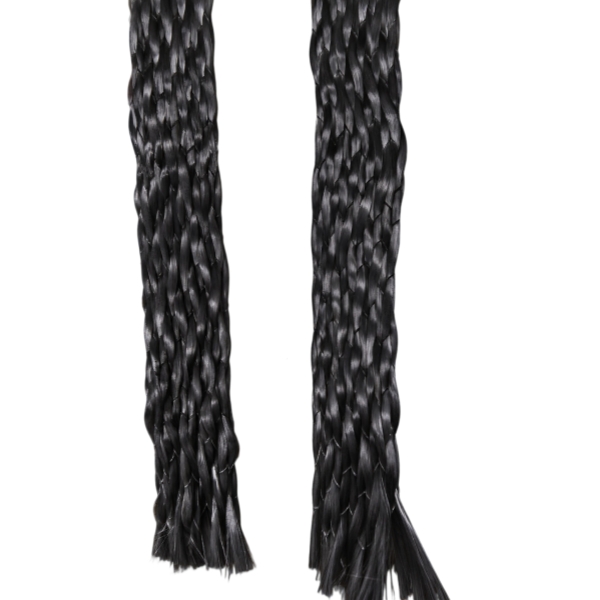
Two sleeves can look similar before resin is applied and behave very differently after curing. The question is where the main carbon fibers run. In a biaxial braid, they cross around the tube in two diagonal directions. In a unidirectional sleeve, the principal carbon fibers run along the part. A few small holding yarns may keep a unidirectional sleeve together, but they should not be confused with its load-bearing axial fibers.
| Selection point | Biaxial carbon sleeve | Unidirectional carbon sleeve |
|---|---|---|
| Principal carbon fiber path | Two crossing diagonal directions around the tube | Primarily along the tube axis |
| Why a designer may specify it | Diagonal reinforcement within a tubular laminate | Longitudinal reinforcement within a tubular laminate |
| Fit question | How do installed diameter, angle and coverage change together? | How are axial yarns held in position as the diameter changes? |
| BSTFLEX page | Carbon Fiber Braided Sleeves | Request the separate Unidirectional Carbon Fiber Sleeve specification |
Begin with the load case
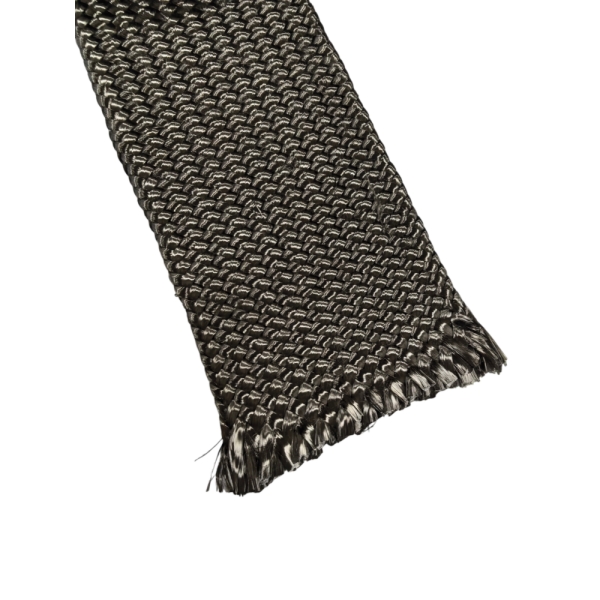
If the laminate schedule calls for diagonal fibers, a biaxial sleeve may place that reinforcement around the circumference without the lengthwise seam of a flat cut piece. If the schedule calls primarily for fibers along the part, an axial sleeve is a different starting material. Neither construction automatically supplies every fiber direction a finished shaft or tube requires. Designers may combine plies, orientations and materials to meet the part specification.
The words 'stronger' and 'weaker' are not a useful shortcut here. Stiffness, torsional behavior and other properties belong to a defined laminate and test setup. Resin, fiber content, geometry, process and fiber orientation all matter. Ask for the architecture first, then validate the proposed stack on the finished part.
Check what happens on a taper
A biaxial braid opens as it is pushed together lengthwise. Changing its installed diameter also changes its length and local fiber angle. For a tapered mandrel, examine the coverage at both the large and small ends rather than assuming that the angle printed for an unfitted sleeve remains constant throughout.
A unidirectional sleeve has a different job: keeping its main fibers aligned approximately along the axis while it conforms to the shape. The construction and holding yarns vary by supplier. Ask how the specific product accommodates diameter changes, how the axial fibers are distributed, and whether its handling yarns are compatible with the planned process.
Questions for the drawing review
- Which load cases and fiber orientations does the laminate schedule specify?
- What are the smallest and largest outside diameters where the sleeve will sit?
- Are there bends, shoulders or fittings the sleeve must pass during installation?
- What resin, impregnation method and target cured dimensions will be used?
- Are several plies or a combination of axial and diagonal reinforcement required?
BSTFLEX's biaxial product page lists current catalogue models. For axial reinforcement, request the dedicated unidirectional product details and compare both constructions on a sample mandrel before approving a production layup.