
A fire sleeve can fit the hose and still fail to pass over its end fitting. It can also pass over the fitting but sit too loosely along the hose. These are separate checks, and a useful fire sleeve size chart needs to address both.
Select the sleeve inside diameter from the actual outside diameter of the hose, tube or finished cable bundle. Then check the largest fitting or connector the sleeve must pass over, the installation sequence and the required protected length. Do not select firesleeve by hose bore or hose dash number alone.
The nominal sizes below provide a starting point for selection from the BSTFLEX fire sleeve range. Final fit should be confirmed against the selected product's dimensions and the actual assembly.
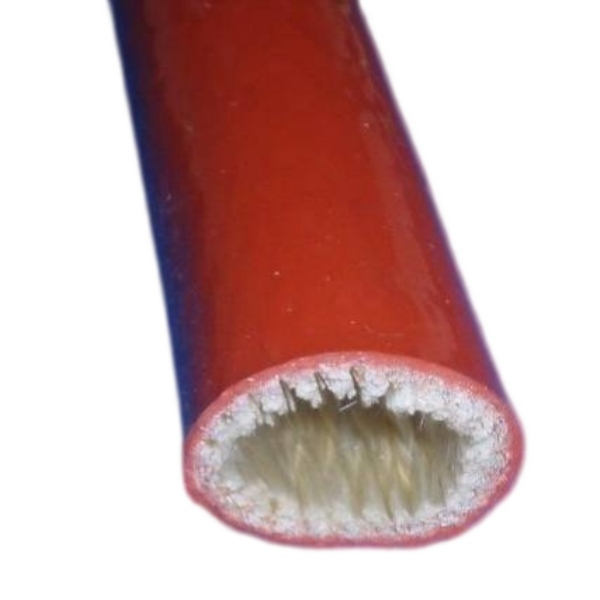
This table lists selected catalog sizes for the EFRS braided silicone fiberglass fire sleeve. The dimensions describe the sleeve, not the hose it will fit.
| Part number | Nominal sleeve ID, mm | Nominal sleeve ID, inch | Sleeve dash reference |
|---|---|---|---|
| EFRS-6 | 6 | 1/4 | -4 |
| EFRS-8 | 8 | 5/16 | -5 |
| EFRS-10 | 10 | 3/8 | -6 |
| EFRS-11 | 11 | 7/16 | -7 |
| EFRS-13 | 13 | 1/2 | -8 |
| EFRS-16 | 16 | 5/8 | -10 |
| EFRS-19 | 19 | 3/4 | -12 |
| EFRS-22 | 22 | 7/8 | -14 |
| EFRS-25 | 25 | 1 | -16 |
| EFRS-29 | 29 | 1 1/8 | -18 |
| EFRS-32 | 32 | 1 1/4 | -20 |
| EFRS-35 | 35 | 1 3/8 | -22 |
| EFRS-38 | 38 | 1 1/2 | -24 |
| EFRS-41 | 41 | 1 5/8 | -26 |
| EFRS-44 | 44 | 1 3/4 | -28 |
| EFRS-48 | 48 | 1 7/8 | -30 |
| EFRS-51 | 51 | 2 | -32 |
| EFRS-64 | 64 | 2 1/2 | -40 |
| EFRS-76 | 76 | 3 | -48 |
| EFRS-89 | 89 | 3 1/2 | -56 |
| EFRS-102 | 102 | 4 | -64 |
| EFRS-127 | 127 | 5 | -80 |
| EFRS-152 | 152 | 6 | -96 |
The millimeter and inch entries are catalog size designations, not exact conversions or manufacturing tolerances. For example, 1 inch is exactly 25.4 mm, while the corresponding catalog metric designation is 25 mm. Specify the controlling unit and dimensional tolerance on the purchase order.
This is a nominal sleeve size chart, not an approved hose-to-sleeve fitment chart. A 25 mm sleeve designation does not establish that the sleeve will fit a 25 mm hose. Additional sizes, dimensional tolerances and fit recommendations should be confirmed for the chosen construction.
In many hydraulic hose series, the hose dash number identifies nominal bore in sixteenths of an inch. A -8 hose commonly refers to a 1/2-inch bore. That does not describe its outside diameter, which also depends on the reinforcement and cover construction.
In the sleeve table above, -8 identifies the sleeve's nominal 1/2-inch inside diameter. Matching a -8 hose to a -8 sleeve simply because the numbers agree ignores the hose wall.
The same caution applies when searching for fire sleeve by AN size: the fitting designation is not a measurement of the hose cover, crimp ferrule or complete connector envelope. Use the hose and fitting drawings, or measured assembly dimensions, to establish those values.
Measure the hose outside diameter over the cover without squeezing it. Check more than one location and direction, particularly where the hose is not perfectly round. Include any permanent outer layer or local feature that will remain under the fire sleeve.
For an OEM drawing, use the maximum permitted outside diameter rather than relying on one convenient sample. A fit that works on a smaller production sample may not work at the upper dimensional limit.
If the sleeve will be fitted after crimping or connector assembly, measure the largest feature it must pass over. This may be the ferrule, swivel nut, connector body, locking feature or protective cap rather than the hose itself.
For a hexagonal fitting, check the dimension across the corners, not only the wrench size across the flats. Elbows and irregular connectors also need an installation trial: one diameter measurement does not fully describe the path a sleeve must follow.
Take measurements under the equipment's safe service procedures. Never loosen a pressurized connection to check sleeve fit.
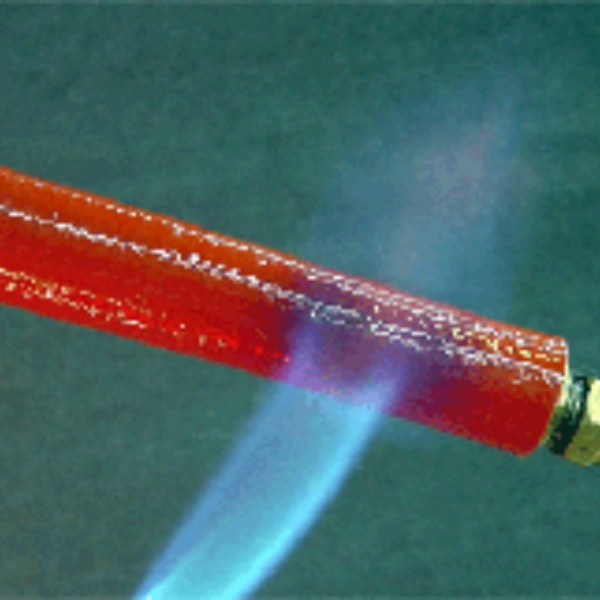
Separate nominal size from usable clearance. For a circular assembly, the basic dimensional check is:
Available diametral clearance = usable sleeve inside diameter minus component outside diameter.
For production selection, compare the minimum usable sleeve ID with the maximum component OD. The clearance required for assembly must then be agreed for the particular sleeve, protected length and installation method. A single fixed allowance is not a substitute for that check.
The following calculation illustrates the difference between diametral and radial clearance. It assumes a circular 21.0 mm hose and the stated actual usable sleeve IDs; it does not assign tolerances or approve a catalog size.
| Assumed usable sleeve ID | Hose OD | Total diametral clearance | Radial clearance if centered |
|---|---|---|---|
| 22.0 mm | 21.0 mm | 1.0 mm | 0.5 mm per side |
| 25.0 mm | 21.0 mm | 4.0 mm | 2.0 mm per side |
The calculation alone does not select the better sleeve. Check whether the sample can be installed without damaging the coating, whether it follows the intended bends and whether it remains secure without excessive folds. On a flexible textile assembly, any gap will not necessarily remain uniform.
Consider a hypothetical assembly with a measured hose OD of 25 mm and a maximum ferrule OD of 38 mm.
A nominal 29 mm sleeve appears to provide room around the hose body, but its nominal ID is smaller than the ferrule. It should not be ordered on the assumption that it will stretch over the fitting.
A nominal 38 mm sleeve does not establish positive clearance over a 38 mm ferrule. A nominal 41 mm sleeve appears larger than the fitting, but would also leave substantially more space around the 25 mm hose. Neither comparison is an installation approval because actual sleeve dimensions, tolerances and fitting shape still matter.
There are three practical routes to evaluate: fit an appropriately sized tubular sleeve during new hose production before the obstructing end is assembled; validate a tubular construction that can pass over the finished fitting and remain suitable along the hose; or use an openable sleeve sized around the protected section.
Do not remove a permanently crimped fitting merely to fit the sleeve. Installation changes must remain within the hose assembly manufacturer's approved process.
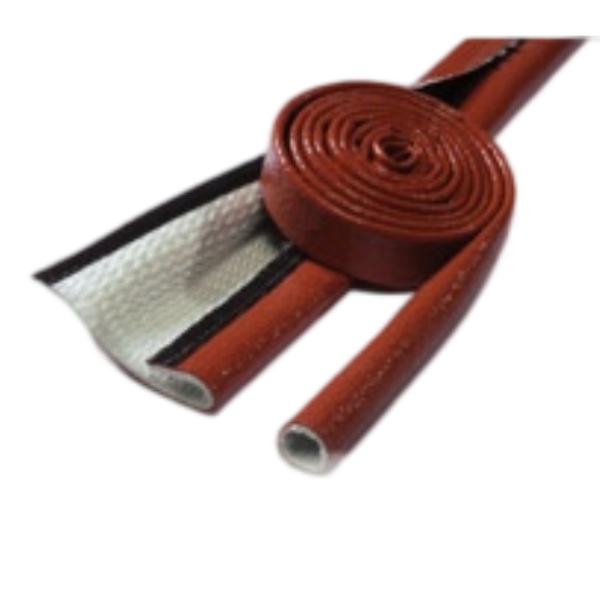
A knitted fire sleeve offers a different textile structure from a braided tube and can be useful where conformity and installation flexibility matter. That does not provide a universal expansion percentage.
Request the permissible installation expansion for the actual coated sleeve. Evaluate the fitting shape, coating condition and finished coverage after installation. Do not apply an expansion claim for an uncoated braid or another sleeve family to a silicone-coated firesleeve.
If the fitting cannot be passed without excessive force, reconsider the size or installation method rather than forcing an undersized sleeve into place.
For an installed assembly without usable end access, a snap wrap firesleeve provides an alternative to sliding a tube over the fittings. An openable construction removes the fitting pass-through requirement, but not the need to check the final fit.
Specify the outside dimensions of the protected hose or bundle, the required coverage length and the closure arrangement. Ask for the usable closed diameter and required overlap. Flat material width is not the same specification as closed sleeve ID.
Approve the closure on a sample assembly. The seam should close as designed without being pulled apart at a bend or leaving the protected section exposed. Confirm thermal suitability separately for the selected closure construction.
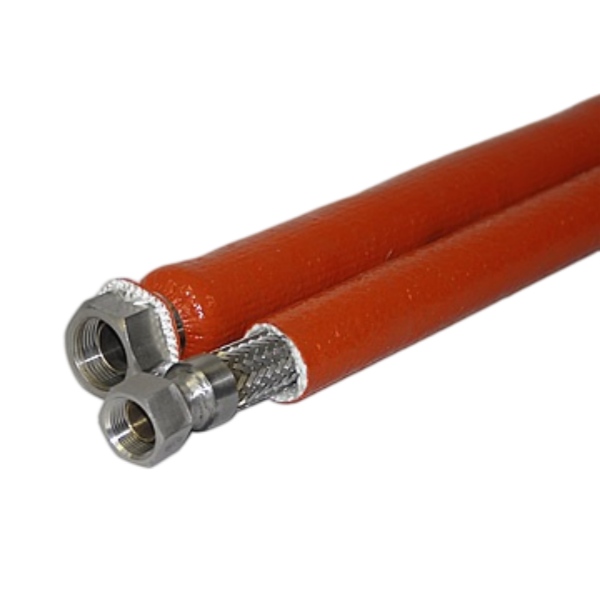
Measure a cable bundle in the arrangement it will have inside the sleeve. Adding individual cable diameters is not a reliable substitute for measuring the finished bundle, especially where cables are different sizes or change position along the route.
Record the largest cross-section, local breakouts and connector dimensions. For a non-round bundle, provide both width and height, together with a cross-section sketch or photograph. Confirm fit on the actual shape rather than treating it as a perfectly round hose.
A tubular sleeve also needs a viable path over the connectors. Where branches or fixed terminations prevent that path, review an openable or separately sectioned protection design. Do not assume one oversized tube will provide an acceptable fit everywhere.
Inside diameter is only one dimension in the installed assembly. As a simple circular estimate, sleeve outside diameter is its ID plus twice its wall thickness. Seams, closures and local compression can change the actual envelope, so check clearance at brackets and nearby components using a sample.
Measure the required coverage along the routed assembly rather than as a straight line between endpoints. Identify where the sleeve must start and finish, then account for the approved end treatment and any movement allowance in the drawing.
Check the sleeved assembly at its intended bend radius and throughout its permitted movement. The sleeve must not force a hose into a tighter bend than allowed by the hose specification or pull back from an area that requires coverage.
Do not treat a successful dimensional fit as proof of thermal suitability. For the broader application review, use the fire sleeve selection and heat-protection guide.
A request such as "fire sleeve for 1/2-inch hose" leaves several dimensions unresolved. An RFQ with the following information gives the supplier a usable basis for selection.
| RFQ item | Information to provide |
|---|---|
| Protected component | Hose, rigid tube, cable or finished wire bundle. |
| Outside dimensions | Measured OD and maximum permitted OD, or bundle width and height. |
| Fittings and connectors | Largest pass-through dimensions, shape and assembly photographs. |
| Installation stage | Before end assembly, after crimping or around an installed line. |
| Coverage and movement | Protected length, end locations, minimum bend radius and movement range. |
| Sleeve construction | Tubular braided, tubular knitted or openable, if already specified. |
| Operating requirements | Heat source, exposure conditions, fluids and required test documentation. |
| Production requirements | Quantity, controlling units, tolerances, cut lengths, identification and packaging. |
Before releasing a production order, approve a sample against installation effort, fitting passage, finished coverage, closure engagement where applicable and freedom of movement. Record the accepted sleeve part number and construction so subsequent orders do not rely on nominal diameter alone.
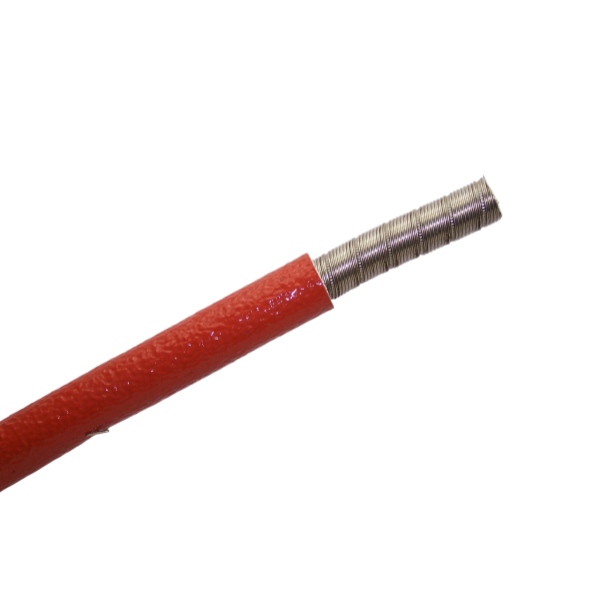
Not simply because the labels match. The hose designation commonly describes its bore, while the sleeve designation describes its inside diameter. Measure the hose OD and check the installation path before selecting the sleeve.
Do not treat lay-flat width as inside diameter. Textile wall thickness, folds and the measurement method affect the relationship. Order against the supplier's stated sleeve ID or usable fit range and clarify the measurement method when tolerances matter.
No. Catalog increments are not uniform, and one size up does not account for fitting dimensions, sleeve tolerances or a long installation path. Use the dimensions to shortlist sizes, then confirm the required clearance and sample fit.
Not as a guarantee of interchangeability. The chart on this page identifies selected EFRS tubular sleeve sizes. Confirm the dimensions, installation behavior and closed fit of another construction separately.
For a hydraulic hose fire sleeve project, send the actual hose OD, largest fitting dimensions, required coverage length and installation stage. For cable assemblies, include the finished bundle dimensions and connector layout.
Contact BSTFLEX for a size recommendation, sample or OEM quotation. Include a drawing or assembly photograph so the sleeve can be evaluated against both its installation path and its final position.

 français
 Deutsch
 русский
 italiano
 español
 português
 Nederlands
 العربية
 日本語
日本語 한국의
한국의 Türkçe
 Polski
 Tiếng Việt
 slovenský
 Indonesia