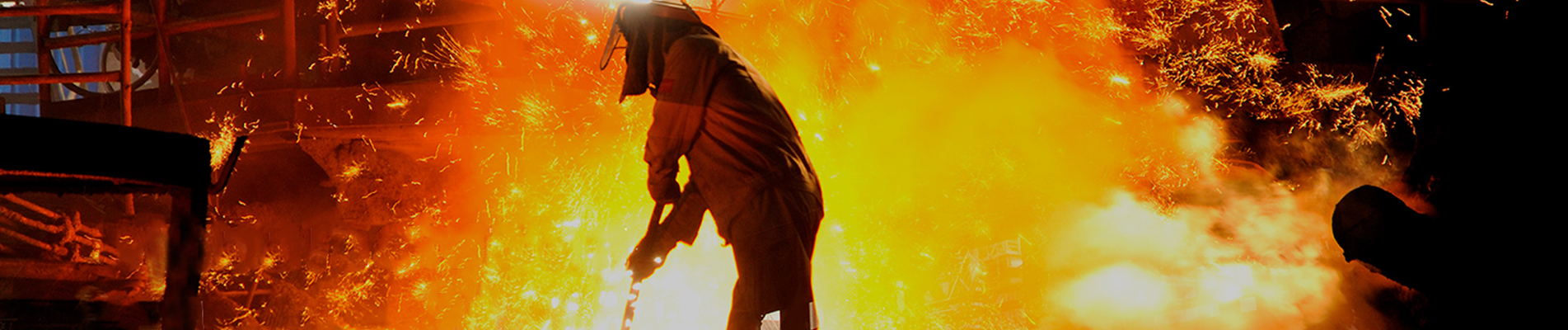
Hydraulic hoses installed close to engines, exhaust components, furnaces, casting equipment or other hot machinery face a different type of risk from hoses exposed only to mechanical abrasion. High radiant heat can accelerate rubber aging, direct flame can damage the hose cover, and molten metal splash can create sudden localized thermal damage.
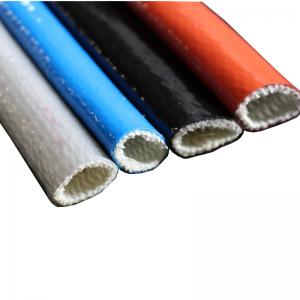
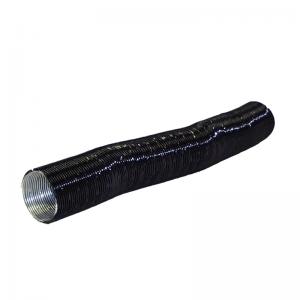
For these environments, a fire sleeve for hydraulic hose provides an additional thermal barrier around the hose. The most common construction combines a fiberglass insulation sleeve with a silicone rubber outer coating, creating a flexible protective layer for demanding hydraulic systems.
This guide explains how to select the correct hydraulic hose fire sleeve, how to determine the appropriate sleeve size, and which operating conditions should be considered before specifying a fire-resistant sleeve.
For product specifications, testing information and OEM options, see the BSTFLEX Hydraulic Hose Protection Fire Sleeve. For other constructions and fire protection sleeve options, visit the BSTFLEX Fire Sleeves range.
A hydraulic hose may be designed for a demanding pressure and fluid environment while still being vulnerable to external heat. The actual service condition depends heavily on hose routing.
A line positioned away from a heat source may operate normally for years. The same hose routed close to an exhaust manifold, furnace wall, hot process line or molten-metal area can experience continuous radiant heating that raises the temperature of the hose cover and reinforcement system.
Common external hazards include:
A hydraulic hose fire sleeve is therefore used as an external protection layer. It does not replace correct hose selection, routing or system design. Instead, it adds thermal and mechanical protection where environmental exposure cannot be eliminated completely.
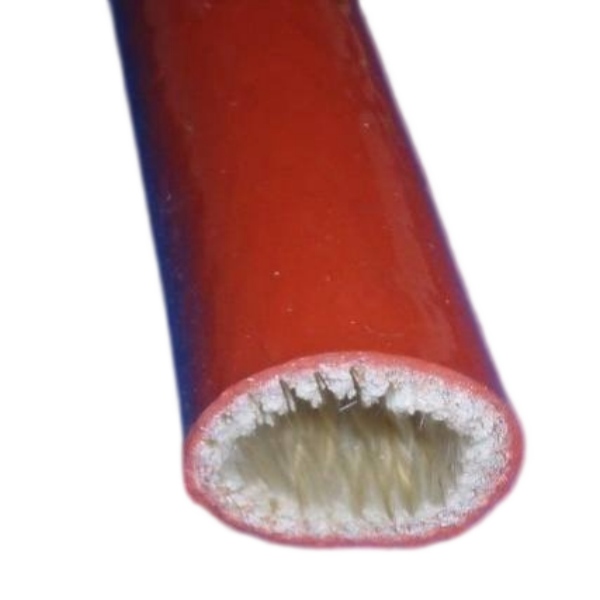
A typical fire sleeve consists of a high-temperature fiberglass textile substrate covered with silicone rubber. Each layer performs a different function.
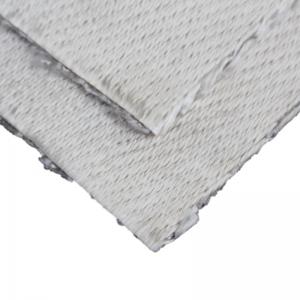
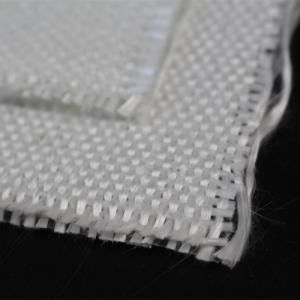
The fiberglass structure creates the primary insulating body of the sleeve. Its thickness and textile construction help reduce heat transfer between the external environment and the hydraulic hose underneath.
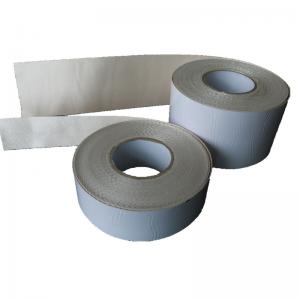
The silicone coating provides a flexible exterior that helps the sleeve withstand harsh industrial conditions. Depending on the specific fire sleeve construction and qualification, it can contribute resistance to flame exposure, oil contamination, abrasion and molten splash.
This combination explains why silicone-coated fiberglass firesleeve is widely used around hydraulic hoses, fuel lines, oil lines, cables and other components located in high-temperature zones.
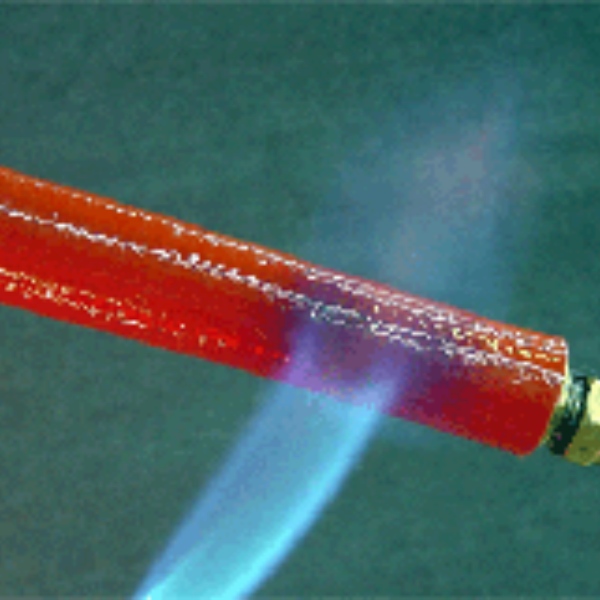
Not every hydraulic hose sleeve is intended for the same hazard.
| Protection Requirement | Typical Sleeve Approach |
|---|---|
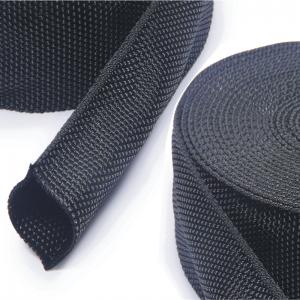
| General rubbing and abrasion | Abrasion-resistant textile hose sleeve |
| Sharp or severe mechanical contact | Heavy-duty mechanical protection |
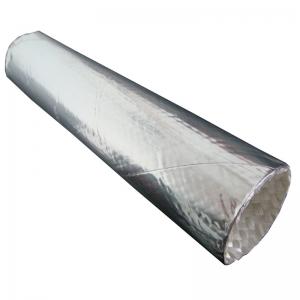
| Radiant heat | Thermal or fire sleeve |
| Flame exposure | Qualified fire-resistant sleeve |
| Molten metal splash | Silicone-coated high-temperature fire sleeve designed for the environment |
| Heat plus abrasion | Fire sleeve selected with adequate wall construction and mechanical durability |
The important point is that hydraulic hose heat protection should be selected according to the dominant failure risk. A lightweight abrasion sleeve should not automatically be treated as a fire sleeve, and a fire sleeve should not be selected only by appearance or color.
For industrial buyers and engineers, sleeve selection should begin with the application rather than the catalog diameter.
Determine where the thermal load originates.
Examples include:
Radiant heat, direct surface contact, flame exposure and molten splash are different hazards. They should not be treated as the same specification.
There are normally at least two temperatures to consider:
Do not select a sleeve using only the highest temperature printed in a catalogue. The duration, heat source, distance from the source, airflow, hose construction and installation geometry all influence actual performance.
Mining equipment, steel mills, foundries and other heavy industrial systems may require more than simple radiant-heat shielding.
Where flame resistance or molten splash protection is important, request the relevant test reports and confirm that the selected fire resistant hydraulic hose sleeve has been evaluated for the required service condition.
BSTFLEX offers hydraulic hose fire sleeve products supported by different third-party test and compliance documentation. Specific reports should be matched to the customer's project rather than assuming every sleeve construction has identical certification.
Fire sleeves installed on hydraulic systems frequently operate in environments where oil mist, hydraulic fluid or fuel may be present.
The sleeve should therefore be evaluated as a complete protective system rather than only as a high-temperature textile. For industrial applications, resistance to the expected fluids can be an important part of long-term performance.
Heat is often not the only problem.
Hydraulic hoses on excavators, loaders, mining equipment, agricultural machinery and industrial equipment move continuously during operation. A sleeve may rub against:
If both heat and abrasion are severe, specify this when requesting a quotation. Sleeve construction, thickness and installation arrangement may need to be adjusted accordingly.
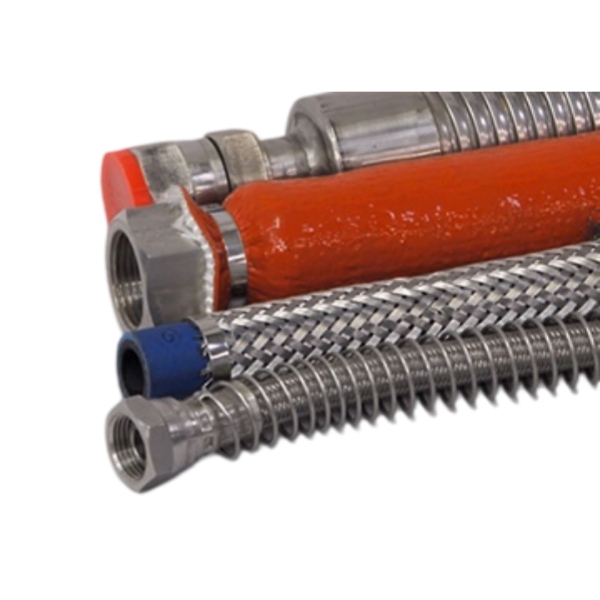
Correct sizing is one of the most important parts of fire sleeve selection.
The sleeve is selected according to the outside diameter of the hose assembly section that needs to be protected, not simply according to the hydraulic hose nominal bore.
Measure the OD of the finished hose, including any cover construction that remains inside the firesleeve.
Do not assume that two hoses with the same nominal ID will have identical outside diameters. Hose wall construction varies among manufacturers and pressure classes.
A tubular fire sleeve must be capable of sliding over the component during assembly.
If the hose already has large end fittings installed, the fitting OD may be considerably larger than the hose OD. This can affect installation.
There are two common approaches:
BSTFLEX also manufactures removable fire sleeve constructions for retrofit applications where conventional tubular sleeving is difficult to install.
The sleeve should fit over the hose without excessive compression. At the same time, unnecessarily oversizing the sleeve can create loose material, interfere with routing and make the finished assembly harder to secure.
The correct clearance depends on:
For OEM projects, providing the actual hose OD and fitting dimensions is more reliable than specifying only a hose dash number.
| Project Information | Example of What to Provide |
|---|---|
| Hydraulic hose OD | Actual measured outside diameter |
| Hose length requiring protection | Protected section or finished cut length |
| Fitting OD | Required if sleeve must pass over installed fittings |
| Continuous temperature | Normal operating environment |
| Heat source | Exhaust, furnace, molten metal, engine, process line, etc. |
| Exposure type | Radiant heat, flame, splash or hot-surface proximity |
| Installation condition | New hose assembly or retrofit |
| Quantity | Prototype, batch production or annual OEM demand |
Providing this information allows the fire sleeve manufacturer to recommend a more appropriate construction and diameter instead of relying on a generic size assumption.
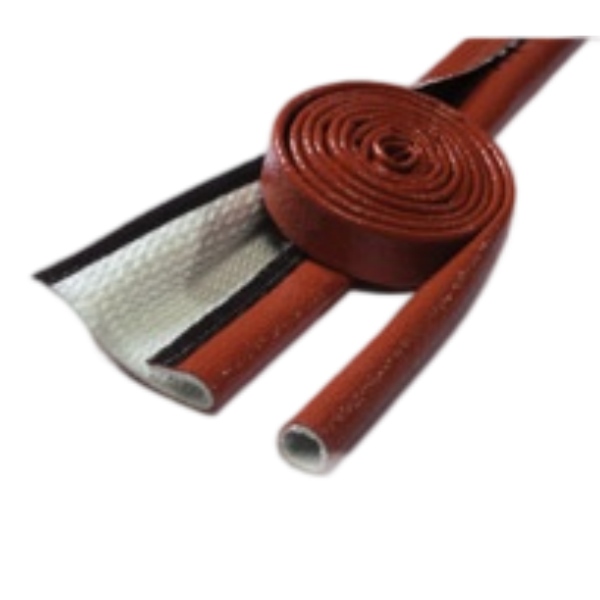
Hydraulic lines may operate around engines, hot components and demanding mechanical environments. Fire-resistant hose protection can be specified where heat and flame hazards are present.
Excavators, loaders, cranes and other mobile equipment combine high hydraulic pressures with vibration, movement, engine heat and restricted routing space.
These applications may involve radiant heat, flame and molten-metal splash. Sleeve selection should consider both thermal exposure and the relevant test requirements.
Hydraulic lines routed near furnaces, ovens, hot process equipment and heated pipelines may require localized thermal protection even when the remainder of the hydraulic system operates at moderate ambient temperature.
Hydraulic, oil and fluid lines routed near exhaust components can benefit from additional thermal separation where rerouting or physical heat shields alone do not provide sufficient protection.
Mobile hydraulic systems frequently operate close to engines and under continuous mechanical movement, making correct hose routing and external protection important for service reliability.
A conventional tubular firesleeve works well during new hose production because it can be installed before the assembly is completed.
A wrap-around or removable construction becomes useful when:
In these cases, hook-and-loop or other openable fire sleeve constructions can simplify retrofit installation.
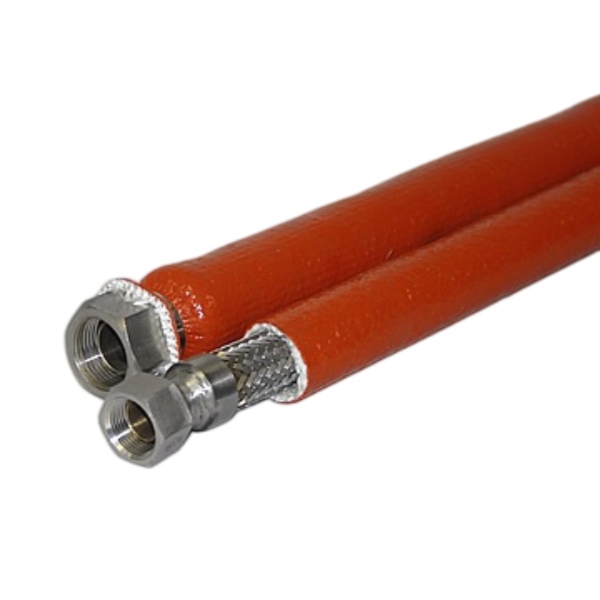
Protective sleeving should be part of the overall hydraulic system design, not a substitute for it.
Where possible, first reduce the hazard through:
The fire sleeve for hydraulic hose then becomes an additional protection layer against unavoidable external exposure.
For a new OEM or custom hydraulic hose protection project, send as much of the following information as possible:
This information is especially useful for OEM hose assemblers, heavy-equipment manufacturers and industrial maintenance projects where the sleeve needs to be matched to a specific installation.
BSTFLEX manufactures silicone-coated fiberglass fire sleeves for hydraulic hose, cable, tube and fluid-line protection. Standard and custom constructions are available for industrial and OEM applications.
The Hydraulic Hose Protection Fire Sleeve is designed for hydraulic systems exposed to high temperature, flame, molten splash, abrasion and demanding industrial operating conditions.
For projects that require other sleeve constructions, installation methods or application-specific solutions, browse the complete Fire Sleeve product range.
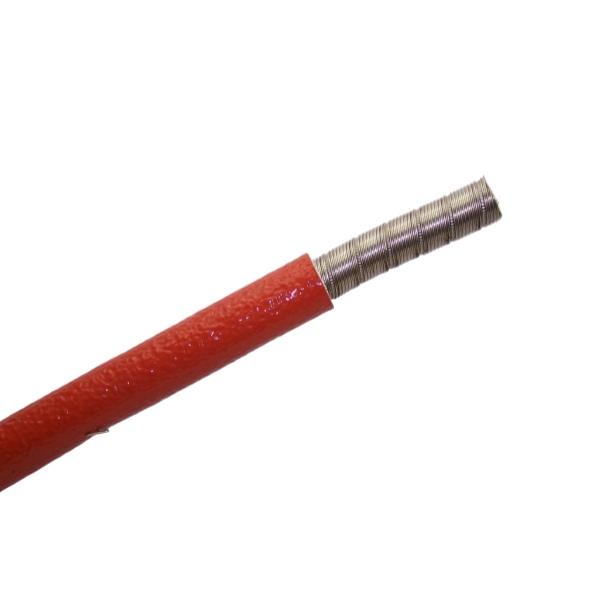
The correct sleeve depends on the heat source, continuous operating temperature, flame or splash exposure, hose movement, fluid exposure, installation method and required certification. A silicone-coated fiberglass firesleeve is commonly used when thermal and flame protection are required.
Start with the actual outside diameter of the hydraulic hose rather than only the nominal hose ID or dash size. Also consider fitting OD, bend geometry and whether the sleeve will be installed before or after the hose assembly is completed.
Yes, but installation method matters. A tubular sleeve normally must be slid over the hose. Where fittings prevent this or disconnecting the hose is undesirable, a wrap-around or removable fire sleeve may be more practical.
Fire sleeve can provide additional mechanical protection, but the required construction should be selected according to the actual abrasion severity. Applications dominated by severe mechanical wear may require a different or additional hose protection system.
Fire sleeve should not be specified simply as a waterproof cover. Its primary function is thermal, flame and environmental protection. If water sealing is a project requirement, the complete installation and end-treatment method should be reviewed separately.
Yes. BSTFLEX supports different diameters, lengths, constructions, colors and OEM requirements. Customers can provide drawings, hose dimensions, operating conditions or samples for evaluation.
If you are selecting hydraulic hose heat protection for mining equipment, construction machinery, steel processing, automotive systems or industrial hydraulic equipment, send BSTFLEX the hose OD, operating temperature, heat source, required length and installation condition.
Our team can evaluate the application and recommend a suitable fire resistant hydraulic hose sleeve, standard size or custom construction.
Request a datasheet, test report, sample or OEM quotation from BSTFLEX.

 français
 Deutsch
 русский
 italiano
 español
 português
 Nederlands
 العربية
 日本語
日本語 한국의
한국의 Türkçe
 Polski
 Tiếng Việt
 slovenský
 Indonesia