
A lithium battery safety bag is a fire-resistant containment solution used to improve safety during the storage, charging, handling, and transport of lithium-ion batteries and battery packs. It is often also called a battery fire containment bag or li-ion fire containment bag. For buyers looking for ready-to-order products, see Lithium Battery Safety Bag.
As lithium batteries are used more widely in e-bikes, portable energy systems, drones, tools, and industrial equipment, battery safety has become a more important purchasing factor. A properly designed safety bag does not replace a full fire protection system, but it adds a practical protective layer that can help reduce exposure to heat, sparks, and limited flame spread during battery failure events.
Safer battery storage, charging, handling, and transport.
Helps contain heat, sparks, and limited flame spread.
Battery packs, e-bike batteries, drone batteries, and tool batteries.
A lithium battery safety bag is a specially constructed bag made from high-temperature, flame-resistant technical materials. It is designed to provide an added layer of protection when lithium-ion batteries are stored, charged, moved, or prepared for transport. In practical use, the bag surrounds the battery or battery pack and creates a barrier between the battery and nearby surfaces, components, or materials.
In many markets, this product is also described as a battery fire containment bag because its job is to help limit the external impact of a battery failure event. For industrial buyers, it is a useful solution for standardizing battery handling procedures across workshops, service teams, warehouses, and distribution channels.
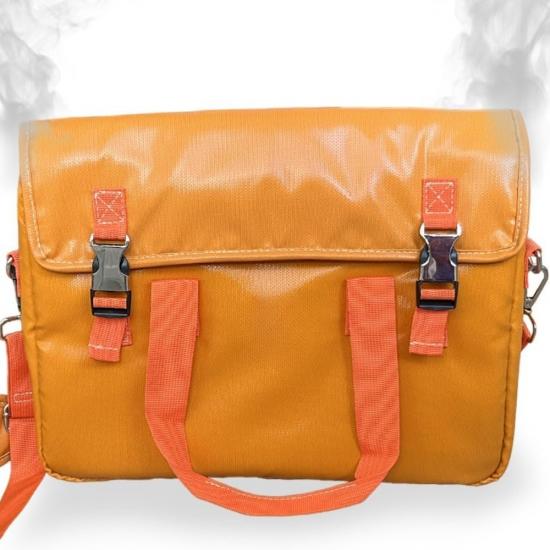
Lithium-ion batteries are compact, efficient, and widely used, but they can become hazardous if damaged, improperly charged, crushed, punctured, overheated, or manufactured with internal defects. Under these conditions, a battery may experience thermal runaway. When that happens, the cell can release intense heat, sparks, smoke, gas, and flame in a very short period of time.
This is why battery storage and charging safety products are becoming more common in battery pack manufacturing, electric mobility service, electronics assembly, warehouse operations, and technical maintenance environments. A safety bag is used as an added containment measure, especially where batteries are stored indoors or charged near other equipment.
A battery fire containment bag works by placing a flame-resistant, heat-resistant barrier around the battery. If a lithium-ion battery begins to fail, the bag helps reduce the spread of heat, sparks, and small flame release to surrounding areas. It also helps isolate the battery from nearby materials during storage or charging.
The exact performance depends on the material structure, size, closure design, and the type of battery involved, but the general function is straightforward: the bag provides a more controlled layer around the battery so the event is less likely to affect nearby surfaces or products immediately.
This is one reason why many buyers combine a safety bag with other battery safety products. For example, enclosed battery storage may use a bag for individual packs, while emergency response planning may also include a Fire Blanket for external containment support.
A professional li-ion fire containment bag is usually made from multi-layer technical textiles chosen for heat resistance, flame resistance, and structural stability. The goal is not to create an ordinary carry bag, but to build a functional safety product that can perform in demanding handling and storage conditions.
For OEM and industrial customers, bag construction can often be customized according to battery size, closure preference, internal reinforcement, branding, or packaging requirements. This is especially useful when the battery dimensions do not match standard retail formats.
The most common applications include battery charging stations, spare battery storage, workshop handling, maintenance departments, warehouse preparation areas, and transport staging points. Buyers may also use these bags in product packaging systems where battery protection needs to be integrated into a broader safety process.
If your project focuses on electric bicycle battery safety, you can also see E-Bike Battery Safety Bag for a more targeted application page.
This product is suitable for battery pack manufacturers, electronics assemblers, e-bike brands, drone equipment companies, repair workshops, industrial safety distributors, and warehouses handling lithium batteries. It is also relevant for OEM customers who want private label safety products with custom sizes and custom warning information.
For many buyers, the product is not only about protection. It also improves consistency in battery storage and charging procedures, which is important in commercial environments where batteries are handled every day.
A battery safety bag is generally used as a close-contact containment solution for individual batteries or battery packs during storage, charging, or handling. A fire blanket is usually used as an external covering or rapid response containment product during an incident.
These two products are not the same, but they can work well together. A safety bag helps create day-to-day handling control, while a fire blanket supports emergency containment strategy. Buyers looking for both options can review the main Fire Blankets section alongside the Lithium Battery Safety Bag product page.
When selecting a battery fire containment bag, buyers should first confirm the battery dimensions, battery type, handling method, and whether the bag will be used mainly for storage, charging, internal movement, or shipping preparation. The right closure style, internal space, and structural reinforcement all depend on how the battery will actually be used.
For industrial and branded projects, it is also important to check whether the supplier can offer custom size production, OEM printing, warning labels, and export packaging. That is why many buyers prefer a supplier that can manufacture according to customer samples or drawings.
A lithium battery safety bag is a practical protective product for businesses and users who handle lithium-ion batteries on a regular basis. It works by adding a flame-resistant barrier around the battery to help reduce exposure to heat, sparks, and limited flame spread during a failure event. For storage, charging, and transport workflows, it is a useful part of a broader battery safety plan.
If you need custom sizing, OEM branding, or a solution for specific battery formats, visit the Lithium Battery Safety Bag product page for more details.
It is used to improve safety during the storage, charging, handling, and transport of lithium-ion batteries and battery packs by adding a flame-resistant protective layer around the battery.
It works by surrounding the battery with heat-resistant, flame-resistant materials that help reduce the spread of heat, sparks, and limited flame release during a battery failure event.
No. A safety bag is typically used for individual battery storage, charging, or handling, while a fire blanket is usually used as an external containment product during an active incident.
Yes. Many industrial buyers require custom sizes, closure styles, internal structures, branding, warning labels, and export packaging based on their battery type and application.
Common buyers include battery pack manufacturers, electronics assemblers, e-bike brands, drone companies, repair workshops, warehouses, and industrial safety distributors.
Lithium Battery Safety Bag | E-Bike Battery Safety Bag | Fire Blankets

 français
 Deutsch
 русский
 italiano
 español
 português
 Nederlands
 العربية
 日本語
日本語 한국의
한국의 Türkçe
 Polski
 Tiếng Việt
 slovenský
 Indonesia