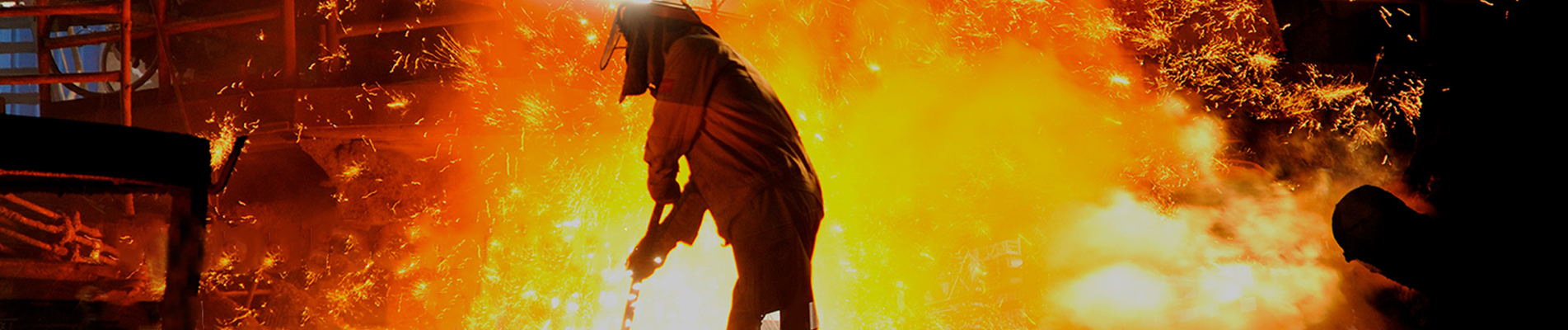
For buyers searching for a high temperature exhaust gasket, muffler gasket or fiberglass exhaust gasket, the first step is to identify exactly where the seal sits. Some exhaust joints require a flat, die-cut fiber gasket. Others use a compressible rope seal, a reinforced textile gasket or a metallic mesh sealing ring. These products are related, but they are not interchangeable.
BSTFLEX supplies high-temperature textile sealing materials and custom gasket constructions for industrial applications. Explore our high temperature gaskets and seals range or review our high temperature rope products for applications that use a flexible rope-style seal.
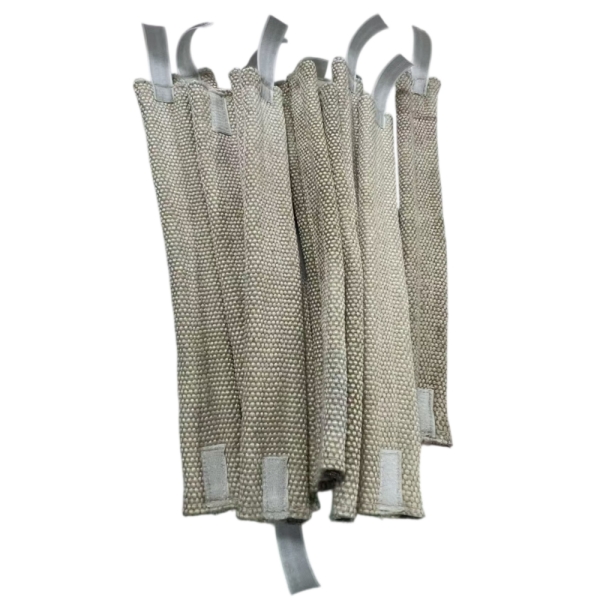
The phrase "exhaust gasket" covers several different sealing locations. Before choosing a material, identify the two components being joined and how the gasket is loaded.
| Exhaust Location | Common Sealing Format | Important Design Factors |
|---|---|---|
| Exhaust manifold or header flange | Flat fiber-composite gasket, metal-reinforced sheet or formed metal gasket | Flange flatness, bolt load, gas temperature, vibration and thermal cycling |
| Turbocharger, downpipe or collector joint | Flat flange gasket, ring seal or application-specific flexible seal | Movement, flange geometry, exhaust pulses and installation load |
| Muffler inlet or outlet flange | Flat muffler gasket, ring gasket or reinforced exhaust seal | Joint design, vibration, temperature and service access |
| Silencer casing, access cover or exhaust shroud | Textile rope seal, compressible gasket or wire-reinforced rope seal | Perimeter gap, compression, abrasion and cover movement |
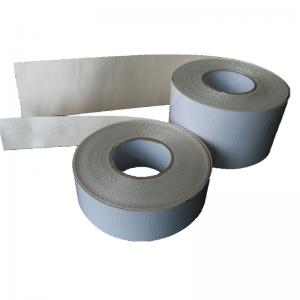
| Industrial exhaust duct or grease-exhaust access panel | Fiberglass gasket strip, coated textile gasket or custom-shaped seal | Panel pressure, access frequency, surface condition and cleaning requirements |
This distinction matters for SEO as well as engineering. A buyer searching for an exhaust manifold gasket may need a thin, die-cut flange gasket. A buyer searching for an exhaust rope seal may need a compressible textile profile around a casing or access opening. One generic product description should not pretend to satisfy both requirements.
The terms muffler gasket and muffler packing are sometimes used loosely in online searches, but they describe different components.
A muffler gasket seals a connection or joint. It may sit between a muffler and an exhaust pipe, between two flange faces or around a service cover. Its job is to limit exhaust-gas leakage at that interface.
Muffler packing is an acoustic filling material installed inside a silencer or muffler assembly. It surrounds or fills designated internal areas to absorb sound energy. It is not a flange gasket and does not replace the seal between two joined components.
When requesting a quotation, specify whether you need a muffler flange gasket, an exhaust joint seal, a muffler access-cover gasket or internal muffler packing material. This prevents the wrong product format from being quoted.
Many exhaust manifold, header, downpipe and muffler flange joints use a flat gasket cut to match the bolt pattern and port geometry. The gasket is compressed between two mating surfaces when the joint is fastened.
Depending on the service conditions, flat exhaust gaskets may use compressed fiber materials, inorganic fiber facings, graphite-containing compounds, metal reinforcement or other engineered composite constructions. The exact formulation must be selected for the temperature, pressure, exhaust chemistry and required bolt load.
A flat flange gasket should not automatically be replaced with a length of fiberglass rope. A rope seal has a different cross-section and load distribution. If the original part is a die-cut exhaust manifold gasket, provide the drawing, material specification or a sample so the replacement can be matched to the original joint design.
For custom gasket enquiries, start with the BSTFLEX Gaskets & Seals category and provide the flange drawing, thickness, port openings, bolt-hole locations and service conditions.
Not every exhaust seal is a flat flange gasket. Some exhaust systems use flexible rope seals around shrouds, casings, plenums, access covers, expansion gaps or other joints where the sealing profile must conform to a channel or irregular surface.
In these applications, a braided fiberglass rope can provide a compressible textile seal. The required rope construction depends on the gap, available compression, surface movement and thermal exposure.
BSTFLEX offers fiberglass round braided rope for high-temperature gasket and sealing applications. A round profile is generally considered when the receiving channel or joint geometry is designed around a circular section.
Where the equipment uses a square groove or requires a square packing profile, review the fiberglass square braided rope. The cross-section should match the channel and compression arrangement; round and square ropes should not be substituted solely because their nominal width appears similar.
Some exhaust equipment exposes the seal to repeated movement, vibration or contact with metal edges. In these cases, the internal core and the external surface reinforcement need to be considered separately.
An internal knitted metal mesh core can influence the gasket's resilience and compression recovery. An external knitted wire mesh jacket protects the textile surface from direct rubbing and abrasion. A construction may use one of these features or, where the design requires it, both.
For gas-turbine exhaust shrouds, diffusers, cowls, plenums and stack components, specialized fiberglass rope seals with a knitted stainless steel wire jacket are used in the market. The required alloy, core and jacket must be confirmed against the actual exhaust temperature, oxidation conditions and mechanical contact.
Do not specify "stainless steel reinforced" without clarifying whether the reinforcement is inside the rope, outside the rope or both. Those are different constructions and produce different sealing behavior.
The fiber should be selected from the temperature measured at the gasket location, not simply from the engine rating or the exhaust system's nominal gas temperature. Local hot spots, radiation, insulation, gas velocity and contact with heated metal can change the conditions at the seal.
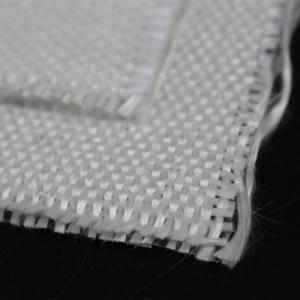
Fiberglass is used in braided rope seals, knitted gasket profiles and coated textile gaskets. It is a practical starting point for many industrial exhaust enclosures, duct access covers and flexible sealing locations where the complete assembly remains within the material's qualified service range.
Silica textile constructions may be considered where the thermal exposure is beyond the range of the selected fiberglass construction. The buyer still needs to specify compression, abrasion, core reinforcement and the physical form required for the joint.
Ceramic fiber rope and textile seals are used in more severe thermal environments, including furnace and selected high-temperature exhaust equipment. The final selection must account for the complete construction, including reinforcement, stitching, jacket and termination.
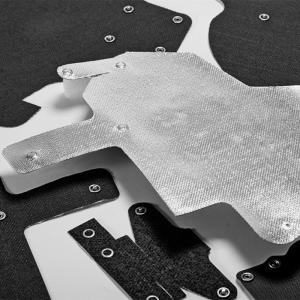
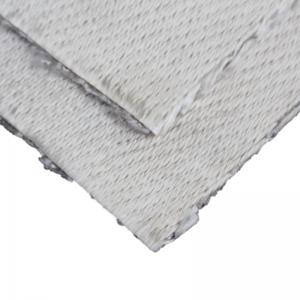
For flat exhaust flange gaskets, a fiber facing combined with a metal reinforcement layer may be appropriate where the joint requires a sheet-like gasket with defined compression and mechanical support. This is a different product format from braided fiberglass rope. Confirm the exact sheet construction, thickness, cut profile and service limits before ordering.
An exhaust manifold gasket seals the joint between the manifold or header and the engine-side mating surface. The gasket normally follows the port layout and bolt pattern, and it must accommodate the joint's temperature and mechanical loading.
An exhaust flange gasket is a broader term for a gasket fitted between two flanged exhaust components. It may be used at a downpipe, collector, turbocharger connection, muffler inlet or another exhaust joint.
The terms overlap, but the dimensions and operating conditions do not. A manifold gasket may have several individual exhaust ports and bolt holes, while a pipe flange gasket may be a ring or a simple flat profile. Always use the actual joint drawing rather than selecting a gasket from the product name alone.
A muffler or industrial silencer can contain several different sealing points. The inlet and outlet connections may use flange gaskets or ring seals. A removable access cover may use a compressible perimeter gasket. A larger silencer casing or exhaust shroud may require a flexible rope seal to accommodate the joint geometry.
For this reason, a search for muffler gasket can lead to several product types. The correct quotation depends on the component being sealed, not just the word "muffler".
When the requirement is an internal acoustic fill rather than a joint seal, specify muffler packing separately. The material, density, retention method and internal silencer design will determine the packing construction.
Industrial exhaust applications extend beyond vehicle exhaust manifolds. High-temperature textile gaskets may also be used around access doors, inspection covers, cleanout panels and duct connections where the equipment requires a flexible heat-resistant seal.
Commercial grease-exhaust systems can use formed or cut fiberglass gasket constructions at selected access or connection points. The gasket must be compatible with the system's temperature, grease exposure, cleaning method and fire-safety requirements. Do not assume that a gasket suitable for a dry hot-air duct is automatically suitable for a grease duct.
For these applications, provide the equipment type, access-panel drawing, surface material, cleaning chemicals, expected temperature and maintenance frequency before choosing the gasket.
Exhaust gasket failure is not always caused by the fiber reaching its temperature limit. The joint design and installation conditions can be equally important.
When investigating a failed exhaust gasket, record where the leak began, whether the gasket was crushed or displaced, the condition of the mating surfaces and whether the failure is concentrated near a bolt, port or joint edge.
A useful RFQ identifies the joint and the complete operating conditions. Send the following information whenever possible:
If the original gasket is available, send a sample together with the equipment drawing. A used gasket may have permanent compression, erosion or heat damage, so its current dimensions should not be treated as the only reference for a replacement.
A high temperature exhaust gasket seals a joint in an exhaust system exposed to hot gas and thermal cycling. Depending on the joint, it may be a flat fiber-composite gasket, a metal-reinforced sheet, a ring seal or a flexible textile rope seal.
A muffler gasket seals a connection such as the joint between a muffler and an exhaust pipe, or between two muffler components. Its construction depends on the flange or access-cover design.
No. A muffler gasket seals a joint to prevent exhaust leakage. Muffler packing is an acoustic filling material installed inside a muffler or silencer to absorb sound energy.
Fiberglass rope can be used for selected flexible exhaust seals, shrouds, access covers and other joints designed for a compressible rope profile. It is not a direct replacement for every flat exhaust manifold or flange gasket.
An exhaust flange gasket is usually a flat or ring-shaped component compressed between mating flanges. An exhaust rope seal is a flexible length of compressible material installed in a groove, channel or perimeter joint.
Ceramic fiber may be considered when the actual seal location has a more severe thermal exposure than the selected fiberglass construction can handle. The complete gasket assembly and mechanical conditions must still be checked.
No. An internal wire core primarily affects support, resilience and compression behavior. An external wire jacket primarily protects the textile surface from abrasion. The required construction should be stated clearly in the drawing or RFQ.
BSTFLEX supplies custom high-temperature rope constructions, including round braided fiberglass rope and square braided fiberglass rope. Suitability for a particular exhaust joint should be confirmed from the joint dimensions and operating conditions.
For a high-temperature exhaust gasket or rope seal, send BSTFLEX the joint drawing, gasket dimensions, operating temperature, exposure conditions and required quantity. If you are replacing an existing seal, include photographs and a physical sample where possible.
Our team can review whether the application calls for a flat fiber gasket, a braided rope seal or another textile sealing construction. For related products, visit Gaskets & Seals and High Temperature Ropes.

 français
 Deutsch
 русский
 italiano
 español
 português
 Nederlands
 العربية
 日本語
 한국의
 Türkçe
 Polski
 Tiếng Việt
 slovenský
 Indonesia