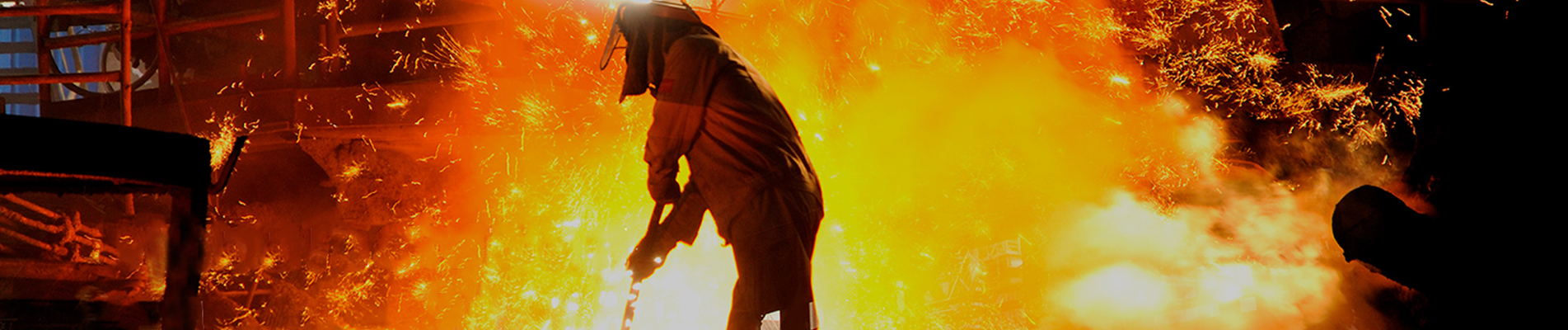
A high temperature welding blanket should not be selected from a single maximum-temperature number.
Two blankets may both be described as suitable for high-temperature service while behaving very differently under welding sparks, molten spatter, radiant heat or prolonged contact with a hot component. The base fiber, coating, fabric weight, thickness, blanket orientation and duration of exposure all affect actual performance.
For industrial buyers, the more useful question is not simply “What temperature can this welding blanket withstand?” It is:
What temperature rating applies to this complete blanket construction under my actual operating conditions?
BSTFLEX manufactures industrial welding blankets and welding fire blankets using fiberglass, silica, silicone coated fabrics, aluminized fabrics and carbon felt for different welding, cutting, grinding and hot-work environments.
Temperature specifications for welding blankets can describe several different conditions. These values should not be treated as interchangeable.
Continuous working temperature refers to the temperature range in which a material is intended to operate for an extended period under specified conditions.
This is usually the most useful starting point when a blanket remains near a heat source for long periods.
Short-term temperature refers to temporary exposure to a higher temperature for a limited period.
Welding sparks and momentary contact with hot particles can create short, localized thermal peaks that are very different from continuous heat exposure.
A fiber melting point should not be interpreted as the normal working temperature of a finished welding blanket.
A material can lose strength, coatings can degrade and surface finishes can deteriorate well before the base fiber reaches its melting point.
For purchasing and engineering decisions, the specified service temperature of the finished blanket is more relevant than the theoretical melting point of the fiber.
Consider two applications that both involve a heat source near 800°C.
In the first application, a blanket hangs vertically several feet from the operation and receives occasional sparks.
In the second application, the blanket lies horizontally beneath a cutting process and hot slag remains on the surface.
The peak temperature may appear similar, but the thermal load on the blanket is completely different.
Important variables include:
This is why a reliable welding blanket specification should describe the operating condition rather than relying only on the largest temperature number shown in a catalog.
Different welding blanket materials occupy different positions in a thermal protection system.
| Material Type | Typical Selection Reason | Important Temperature Consideration |
|---|---|---|
| Fiberglass | General welding, sparks and routine hot work | Suitable for many moderate-temperature applications, but construction and coating affect the usable range |
| High Silica | Heavy welding, cutting and higher thermal exposure | Selected where greater thermal stability than standard fiberglass is required |
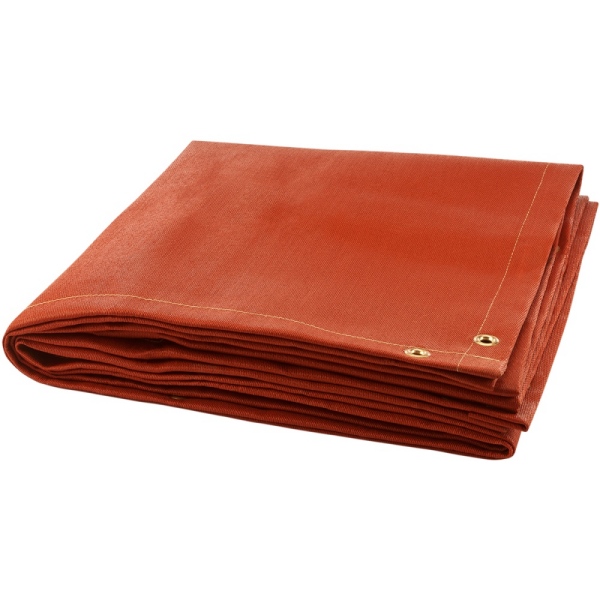
| Silicone Coated Fiberglass | Repeated handling, abrasion and workshop use | The silicone surface can have a lower service limit than the fiberglass substrate |
| Silicone Coated Silica | Higher-temperature base fabric combined with a durable coating | Evaluate both the silica substrate and silicone coating limits |
| Aluminized Fiberglass | Radiant heat protection | Reflective performance is often more important than simply selecting the highest contact temperature |
| Carbon Felt | Thermal insulation and protection around irregular shapes | Performance depends strongly on atmosphere, thickness and exposure method |
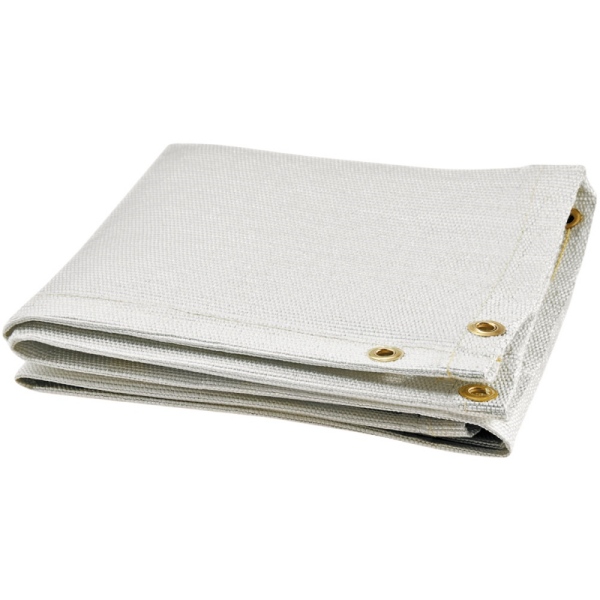
Fiberglass is widely used for general-purpose welding protection because it provides a practical balance of heat resistance, flexibility and cost.
It is commonly selected for:
However, not all fiberglass welding blankets have the same working temperature.
Fabric weight, yarn construction, surface treatment and coating all influence performance.
When a fiberglass blanket will be used close to heavy cutting, severe molten slag or prolonged high heat, the buyer should evaluate whether a high-silica construction would provide a more appropriate thermal margin.
High-silica fabric is commonly selected when the application exceeds the practical range of standard fiberglass or when a greater margin against severe thermal exposure is required.
BSTFLEX Silica Fabric Welding Blankets are manufactured from silica textile and are available in different fabric weights and finished constructions.
Typical applications include:
For these applications, silica is often selected because the fabric can maintain useful textile characteristics at temperatures where conventional fiberglass becomes less suitable.
One of the most important specification errors is using a short-term temperature value as if it were a continuous working temperature.
A welding blanket may survive brief exposure to a high-temperature spark or particle without being suitable for continuous direct contact at that same temperature.
For example, a few seconds of localized exposure during cutting is different from wrapping a blanket directly around a component that remains hot for several hours.
When requesting a quotation, buyers should distinguish between:
This issue is particularly important with coated welding blankets.
A silicone coated fiberglass blanket contains two different material systems:
The fiberglass substrate can retain thermal stability at temperatures above the normal service range of the silicone coating.
BSTFLEX's Silicone Coated Fiberglass Welding Blanket, for example, uses a fiberglass base with a silicone surface. The coating is intended to improve flexibility, abrasion resistance, puncture resistance and handling durability.
This means the buyer should never assume that the temperature capability of the base fiberglass automatically applies to the coated surface.
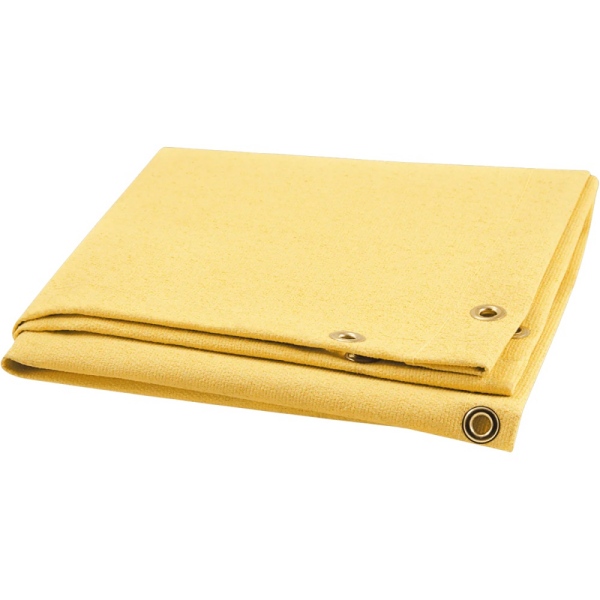
For higher-temperature applications requiring a coated fabric, Silicone Coated Silica Welding Blankets may also be considered, but the coating limitation still needs to be evaluated independently from the silica substrate.
Two welding blankets made from the same fiber can perform differently because their mass and construction are different.
A heavier fabric generally provides more material between the heat source and the protected surface. A thicker structure can also slow heat transfer.
However, heavier is not automatically better.
Increasing fabric weight may also increase:
Therefore, fabric weight should be selected together with temperature, exposure duration and installation requirements.
Blanket orientation can dramatically change service conditions.
A vertically suspended welding blanket usually intercepts sparks and spatter that contact the fabric briefly before falling away.
This can reduce the duration of concentrated heat exposure.
A blanket positioned beneath welding or cutting can experience a more severe condition because hot particles, slag or molten metal may land on the surface and remain there.
Heat becomes concentrated in one location for a longer period.
For this reason, a material that performs satisfactorily as a vertical welding curtain should not automatically be assumed suitable for horizontal heavy-spatter service.
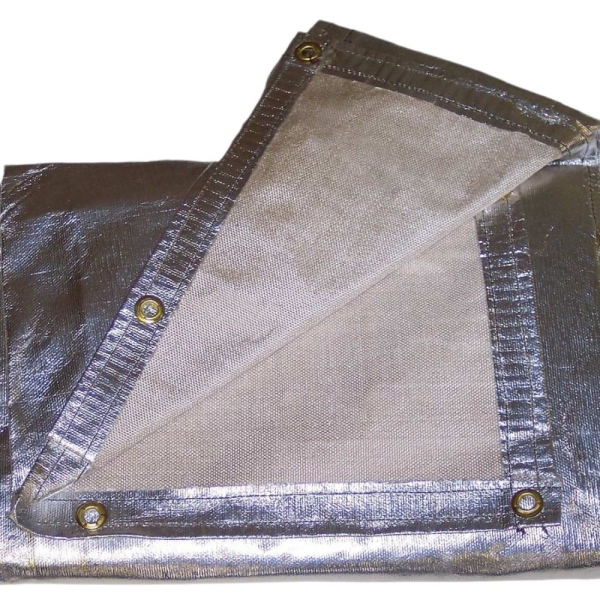
Not every high-temperature welding application involves direct contact.
In foundries, furnace areas and metal-processing plants, radiant heat can be the dominant thermal hazard.
In this situation, an aluminized surface may be useful because it reflects a portion of incoming radiant energy rather than relying only on fabric mass to absorb heat.
BSTFLEX Aluminum Foil Coated Fiberglass Welding Blanket is designed for applications where radiant heat reflection is important.
The reflective side should normally face the radiant heat source.
However, an aluminized surface should not automatically be chosen for severe direct molten-spatter exposure. Radiant heat protection and direct-contact protection are different engineering requirements.
Carbon felt occupies a different position from woven fiberglass or silica fabric.
Its soft, porous structure can provide effective thermal insulation while conforming around machinery, pipes and irregular components.
BSTFLEX's carbon felt welding blanket is specified for temperatures up to 1800°F (980°C), but that number should still be interpreted according to the finished blanket construction and actual working atmosphere.
Carbon materials behave differently in air than they do in vacuum or inert furnace conditions. Therefore, furnace-grade carbon felt temperature figures should not automatically be transferred to welding blankets used in open air.
For a detailed explanation, see What Temperature Can Carbon Fiber Felt Withstand?
“High temperature” and “heavy-duty welding” are related but not identical terms.
A blanket can be exposed to strong radiant heat without receiving molten metal. Another blanket may operate at a lower average temperature while experiencing repeated heavy slag and sharp grinding debris.
A complete selection should therefore evaluate both thermal and mechanical hazards.
| Hazard | Selection Consideration |
|---|---|
| Continuous heat | Use the specified continuous service temperature |
| Brief temperature peaks | Evaluate short-term exposure capability |
| Heavy welding spatter | Consider fabric mass, surface behavior and blanket orientation |
| Molten slag | Evaluate dwell time and horizontal exposure risk |
| Radiant heat | Consider reflective aluminized constructions |
| Abrasion | Consider coated fabrics and heavier constructions |
| Irregular components | Consider flexible silica or conformable carbon felt |
For routine welding, fabrication and spark protection, fiberglass constructions are often the first material evaluated because they offer economical protection and easy handling.
High-silica fabric may be more appropriate where stronger thermal loads, heavy cutting and repeated exposure are expected.
Silicone coated fiberglass can be useful where the blanket is repeatedly installed, removed, dragged or folded and surface durability is important.
Aluminized fiberglass should be considered where reflection of radiant energy is a primary requirement.
Carbon felt can be considered where a lightweight, conformable insulation layer is required around irregular components.
Terms such as MIG, TIG, arc welding and plasma cutting help describe an application, but they do not provide enough information to select a blanket.
Two MIG welding stations can create very different thermal environments depending on:
The thermal hazard should therefore be evaluated independently from the process name.
To select the correct construction, provide as much of the following information as possible:
This information allows the supplier to evaluate the complete thermal condition rather than selecting a material from temperature alone.
If the main question is which fiber construction to choose, see our detailed guide:
Welding Blanket Materials: Fiberglass, Silica, Silicone, Aluminized and Carbon Felt.
That article compares the material families, while this guide focuses specifically on how temperature ratings and service conditions should be interpreted.
There is no single temperature rating for all welding blankets. The usable temperature depends on the base fiber, coating, thickness, construction, exposure duration and working environment. Product-specific continuous and short-term ratings should be used instead of a generic welding blanket temperature.
The correct material depends on how the heat reaches the blanket. High-silica fabric is commonly considered for severe thermal exposure, aluminized fabrics for radiant heat, and carbon felt for conformable thermal insulation. Mechanical exposure and blanket position must also be considered.
High-silica textile is generally selected for higher-temperature service than conventional fiberglass. However, the final usable temperature depends on the actual fabric grade, weight, coating and finished blanket construction.
Not necessarily. The silicone coating can have a lower working temperature than the fiberglass substrate. The coating and base fabric should therefore be evaluated separately when specifying a silicone coated welding blanket.
Not automatically. Additional thickness can improve thermal separation and heat-transfer resistance, but the fiber chemistry and coating still determine the fundamental thermal limits of the material.
It can be. Hot particles and molten spatter can remain on a horizontal surface instead of falling away, creating longer localized exposure. This is why blanket orientation should be included in the material-selection process.
A continuous rating refers to prolonged service within a specified temperature range. An intermittent or short-term rating applies to temporary higher-temperature exposure. A short-term value should not be treated as a continuous service rating.
BSTFLEX manufactures high temperature welding blankets for industrial welding, cutting, grinding, maintenance and hot-work protection.
Available constructions include fiberglass, silica, silicone coated fiberglass, silicone coated silica, aluminized fiberglass and carbon felt, with custom sizes, fabric weights, reinforced edges, high-temperature stitching and grommet configurations available for OEM and industrial projects.
Send us your operating temperature, maximum temperature, type of heat exposure, blanket position, required dimensions and quantity. BSTFLEX can evaluate the application and recommend an appropriate welding blanket construction.
View the complete BSTFLEX Welding Blanket and Welding Fire Blanket range or contact us for a custom quotation.

 français
 Deutsch
 русский
 italiano
 español
 português
 Nederlands
 العربية
 日本語
日本語 한국의
한국의 Türkçe
 Polski
 Tiếng Việt
 slovenský
 Indonesia