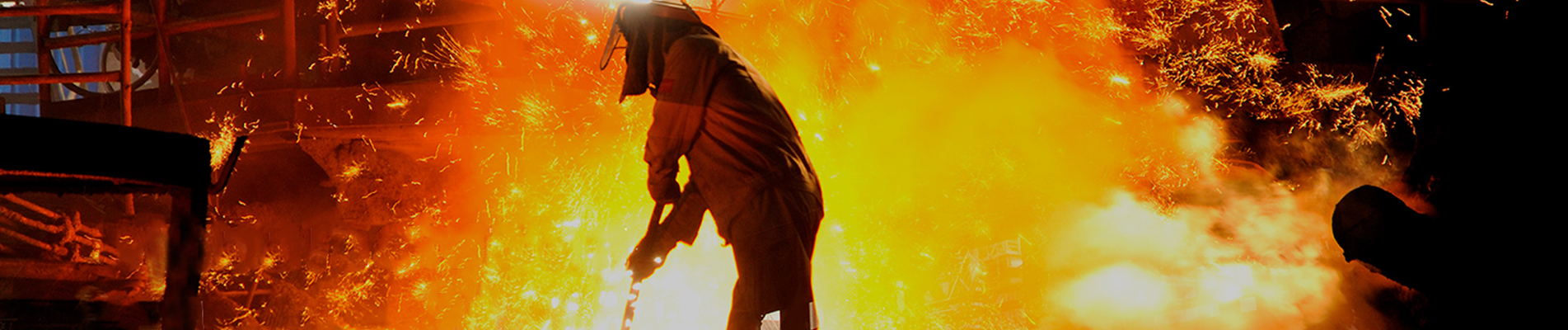
Selecting a welding blanket by temperature rating alone is one of the most common mistakes in industrial hot work protection.
A blanket hanging vertically beside a welding station does not experience the same thermal load as a blanket placed horizontally beneath cutting operations. Radiant heat from a furnace requires a different protective mechanism from molten welding spatter, while a blanket that is repeatedly folded, dragged and repositioned needs different surface properties from a temporary spark barrier.
This is why welding blanket material matters.
Industrial welding blankets can be manufactured from several high-temperature textile systems, including fiberglass, silica, silicone coated fabrics, aluminized fabrics and carbon felt. Each construction manages heat in a different way and has its own advantages in welding, cutting, grinding, brazing, maintenance and industrial hot work.
BSTFLEX supplies a complete range of industrial welding blankets and welding fire blankets for different thermal conditions, blanket positions and OEM requirements.
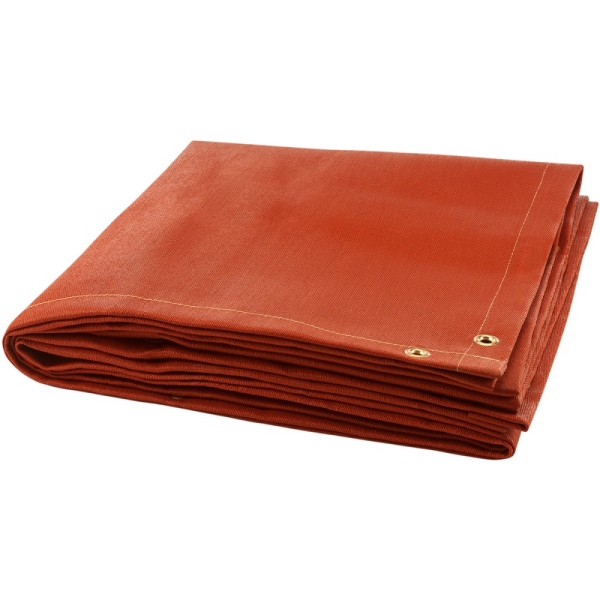
Most industrial welding blankets are manufactured from heat-resistant fibers that are woven, coated, laminated or formed into felt structures.
The five major material families commonly considered for industrial welding protection are:
These materials should not be treated as interchangeable.
The correct choice depends on how heat reaches the blanket, whether sparks or molten metal are present, how often the blanket is handled, whether radiant heat reflection is required and whether the blanket must conform closely around machinery, pipes or other irregular components.
| Material | Main Strength | Typical Application | Material Character |
|---|---|---|---|
| Fiberglass | Economical spark and heat protection | General welding, maintenance, fabrication | Woven, flexible, widely available |
| Silica | Higher temperature stability | Heavy welding, cutting, furnace maintenance | Woven high-temperature textile |
| Silicone Coated Fabric | Improved surface durability and handling | Repeated workshop use, grinding, industrial maintenance | Coated, abrasion resistant, flexible |
| Aluminized Fabric | Radiant heat reflection | Furnaces, foundries, radiant heat zones | Reflective composite surface |
| Carbon Felt | Thermal insulation and conformability | Localized heat shielding, pipe welding, complex shapes | Soft nonwoven felt |
This comparison is only a starting point. Fabric weight, thickness, coating, orientation and exposure duration also influence real service performance.
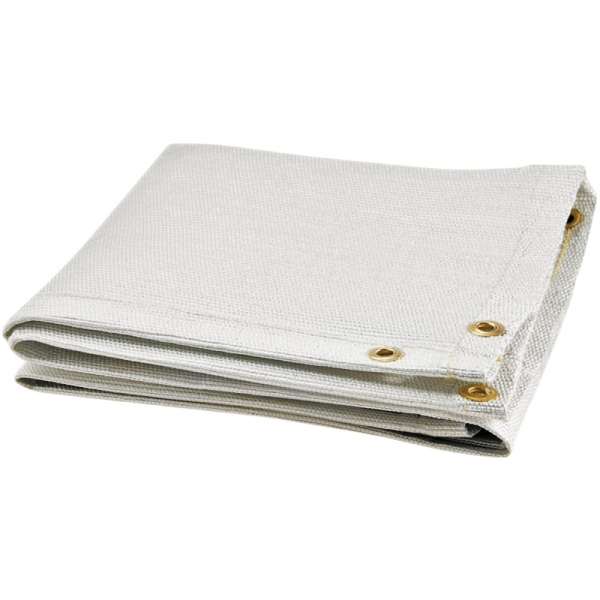
Fiberglass remains one of the most widely used materials for industrial welding blankets because it combines heat resistance, flexibility, availability and relatively economical cost.
The material is produced by weaving glass fiber yarn into a textile structure. Different yarn types and fabric weights can be selected according to the required strength, thickness and flexibility.
For routine fabrication and maintenance work, fiberglass can provide practical protection against welding sparks, grinding particles and moderate hot work exposure.
Fiberglass welding blankets may be supplied untreated or with coatings such as acrylic or silicone. These surface treatments change handling characteristics, abrasion resistance and service durability.
For applications where daily handling is expected, an Acrylic Coated Fiberglass Welding Blanket provides a more durable surface than an untreated glass textile while maintaining an economical construction.
Standard fiberglass should not automatically be selected simply because welding is involved.
Heavy cutting, prolonged close-distance heat, severe molten spatter or applications approaching the practical thermal limits of the material may require silica or another higher-performance textile.
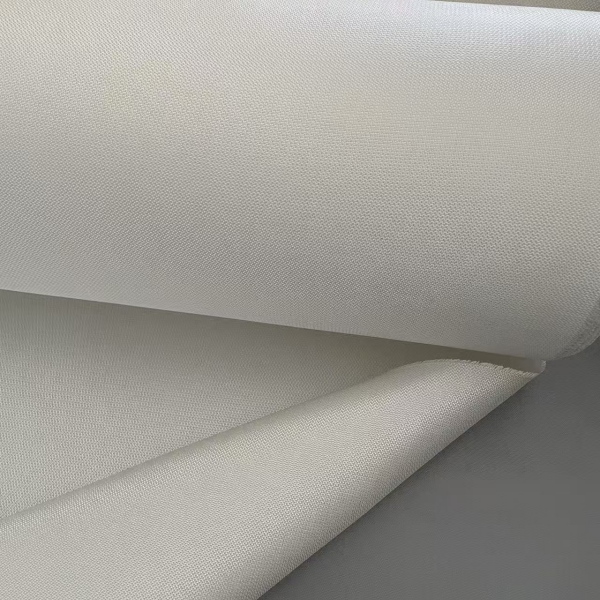
Silica welding blankets are used when higher thermal stability is required than conventional fiberglass can provide.
High silica textile typically contains a high percentage of silicon dioxide and maintains useful textile properties under severe heat exposure. Unlike ceramic insulation materials, silica fabric remains a flexible woven textile that can be cut, sewn, reinforced and fabricated into finished blankets.
BSTFLEX Silica Fabric Welding Blankets are available in different fabric weights and constructions for industrial welding and high-temperature protection.
Silica becomes especially useful when the blanket is expected to experience repeated high-temperature exposure while still functioning as a flexible protective textile.
For ordinary welding and general spark containment, fiberglass may provide the more economical solution.
For stronger heat exposure, heavy cutting and demanding hot work, silica can provide a wider thermal margin.
The detailed differences between these two constructions are explained in our Fiberglass vs Silica Welding Blanket comparison.
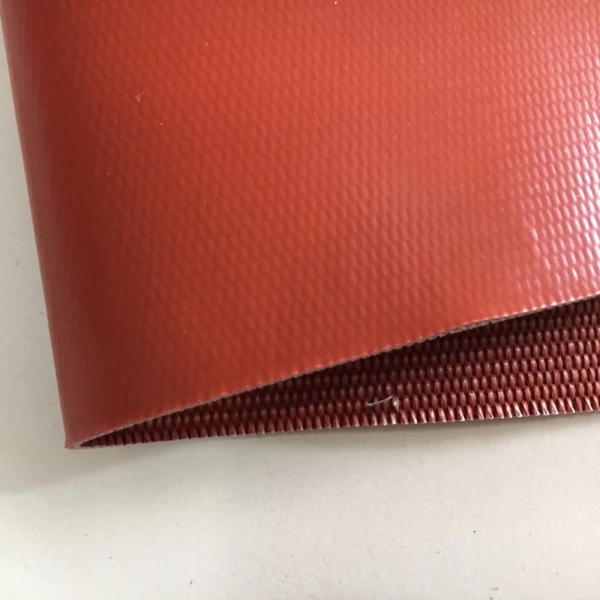
Silicone is not normally the primary structural fiber of a welding blanket.
Instead, silicone rubber is applied as a coating over a high-temperature base textile, most commonly fiberglass or silica.
This distinction is important because the base fabric determines much of the thermal capability, while the coating changes the surface behavior.
A silicone surface can improve:
For daily industrial use, these properties can be just as important as nominal temperature resistance.
The Silicone Coated Fiberglass Welding Blanket combines a woven fiberglass substrate with a durable silicone surface and is suitable for welding, grinding, equipment protection and repeated workshop handling.
Where the application requires the thermal capability of silica together with a coated, more durable surface, a silicone coated silica construction can be used.
The Silicone Coated Silica Welding Blanket combines a high-silica textile substrate with silicone rubber for severe industrial hot work environments.
This construction is especially relevant where heat exposure and repeated mechanical handling occur together.
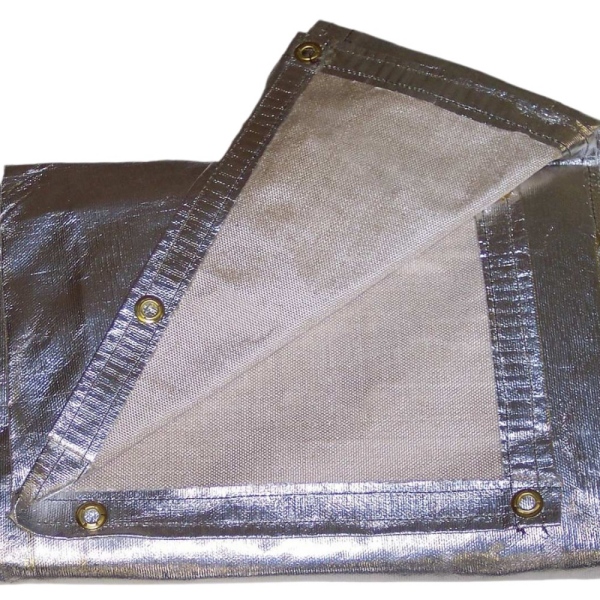
An aluminized welding blanket addresses a different thermal problem.
Its main purpose is not simply to tolerate heat. Its reflective metallic surface is designed to reduce radiant heat transfer.
Radiant heat can travel across an air gap from welding arcs, hot metal, furnace openings, exhaust components or other high-temperature surfaces. In these environments, a reflective barrier can be more effective than relying only on a thicker conventional fabric.
BSTFLEX supplies Aluminum Foil Coated Fiberglass Welding Blankets for applications where radiant heat reflection is a primary requirement.
The reflective surface should generally face the radiant heat source so it can perform its intended function.
This is an important selection point.
An aluminized blanket may be excellent at controlling radiant heat but should not automatically be considered the best option for every heavy-spatter application.
Direct molten metal exposure, abrasion and repeated folding can create very different demands on a reflective surface.
For more information on this heat-transfer mechanism, see Aluminized Welding Blanket for Radiant Heat Protection.
Carbon felt differs significantly from fiberglass and silica because it is normally a nonwoven material rather than a woven cloth.
Its fiber network creates a soft, porous structure containing many small air spaces. This gives carbon felt useful insulating properties while allowing the blanket to remain lightweight and highly conformable.
A carbon felt blanket can therefore be valuable when the protection must wrap closely around pipes, components, irregular machinery or localized heat sources.
BSTFLEX supplies Carbon Fiber Felt Welding Blankets for high-temperature industrial heat protection.
The material should not be selected only by comparing a maximum temperature number with silica. Carbon felt and silica manage heat through different structures and behave differently during mechanical handling.
For that reason, our Carbon Felt Welding Blanket vs Silica Welding Blanket guide compares the materials from both thermal and structural perspectives.
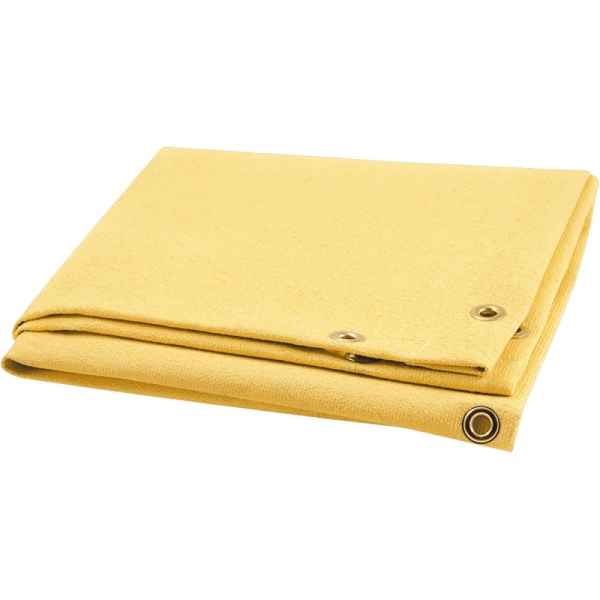
There is no single best welding blanket material for every industrial application.
A better selection method is to identify the dominant hazard first.
| Working Condition | Material to Consider | Reason |
|---|---|---|
| General welding and maintenance | Fiberglass | Economical and practical for routine spark protection |
| Repeated workshop use | Silicone or acrylic coated fiberglass | Improved surface durability and handling |
| Heavy welding and cutting | Silica | Higher thermal stability |
| High heat plus repeated handling | Silicone coated silica | High-temperature base fabric with durable surface |
| Strong radiant heat | Aluminized fiberglass or silica | Reflective surface reduces radiant heat transfer |
| Localized insulation around irregular shapes | Carbon felt | Soft, lightweight and highly conformable |
When comparing welding blanket materials, buyers often focus first on maximum temperature.
That number is useful, but it does not describe the complete working condition.
An industrial purchaser should also consider:
Two blankets made from the same basic fiber can perform very differently if their fabric weight, coating and construction are different.
Blanket orientation deserves particular attention.
A vertically hanging welding blanket mainly intercepts sparks and spatter as they travel away from the work area. The hot particles may contact the textile briefly before falling away.
A horizontal blanket can experience a more severe condition because molten particles may land on the surface and remain there.
For this reason, the same material should not automatically be assumed suitable for both positions under identical welding conditions.
Welding blanket materials can be supplied either as rolls for further fabrication or as finished protective blankets.
BSTFLEX can manufacture custom finished blankets with options including:
For distributors and fabricators, roll material may provide greater flexibility. For maintenance teams, shipyards and industrial facilities, finished blankets can reduce on-site fabrication work.
For custom industrial projects, BSTFLEX recommends selecting the material from the actual operating condition rather than choosing from a catalog description alone.
Useful information for material selection includes:
With this information, fiberglass, silica, silicone coated, aluminized or carbon felt constructions can be compared on a practical engineering basis.
Fiberglass is one of the most commonly used materials for general industrial welding blankets because it combines heat resistance, flexibility and economical cost. Higher-temperature applications may require silica or another specialized material.
The answer depends on the type of heat exposure. Silica is widely used for severe high-temperature hot work, while carbon felt can be useful where thermal insulation and conformability are important. Silicone coated silica provides an additional durable surface for demanding industrial handling.
The silicone coating improves surface durability, abrasion resistance, handling characteristics and resistance to moisture and certain contaminants. The base fiberglass or silica textile remains the primary structural material.
Aluminized blankets are used where radiant heat is a major hazard. The reflective metallic surface helps reduce radiant thermal transfer from hot equipment, furnaces, welding operations and other high-temperature sources.
Neither material is universally better. Silica is a woven high-temperature textile with good dimensional stability, while carbon felt is a soft nonwoven insulation material with excellent conformability. The correct choice depends on heat transfer, blanket position and mechanical requirements.
Yes. BSTFLEX can provide welding blankets in different materials, sizes, thicknesses, coatings, edge constructions and grommet configurations. Roll goods and finished OEM blankets are both available.
If your project requires an industrial welding blanket but the correct material is not clear, send BSTFLEX the working temperature, hot work process, blanket position, required size and expected exposure conditions.
Our team can compare fiberglass, silica, silicone coated, aluminized and carbon felt constructions and recommend a practical solution for your application.
View the complete BSTFLEX Welding Blanket and Welding Fire Blanket range or contact us for custom sizes, roll materials, OEM production and bulk supply.

 français
 Deutsch
 русский
 italiano
 español
 português
 Nederlands
 العربية
 日本語
日本語 한국의
한국의 Türkçe
 Polski
 Tiếng Việt
 slovenský
 Indonesia