
Replacing a worn machine bellows becomes difficult when there is no free end to slide a new cover over. A longitudinal zipper can provide another installation route: open the fabric body, position it around the existing component and close it in place. The benefit depends on the complete assembly, not the zipper alone.
BSTFLEX sewn zippered bellows are made for applications requiring removable protection around cylinder rods, screws, shafts and actuators. For retrofit work, the first question is whether the fabric body, end fittings and internal supports can all be installed without the component removal you are trying to avoid.
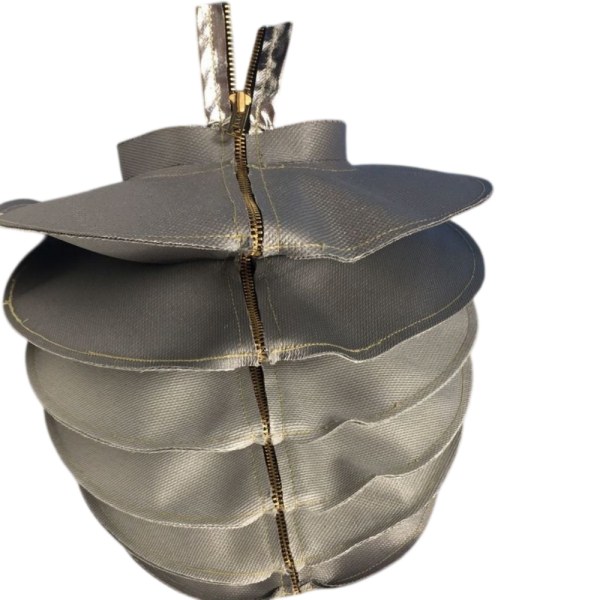
Sometimes, but not in every installation. A cover that opens along its length may still contain a closed mounting ring or an internal guide that cannot pass around the existing shaft. Nearby guards can also prevent access to the zipper or end fasteners.
Before ordering, identify which machine parts must remain assembled and which covers or brackets may be removed under the approved maintenance procedure. Use that information to check the proposed bellows construction.
| Installation condition | What to confirm before ordering |
|---|---|
| The fabric body opens fully along its length. | Check that the opening continues through the required end sections and can pass around the protected component. |
| A rigid, one-piece flange surrounds the shaft. | Confirm whether it can remain in place, be removed safely or be replaced by an approved split mounting arrangement. |
| Internal guides or supports form closed loops. | Check their assembly route separately. An open fabric body does not make a closed support removable. |
| The zipper faces a fixed guard or machine frame. | Confirm that an accessible opening position can be specified without creating interference elsewhere. |
| The cover fits while extended but becomes crowded when retracted. | Evaluate the folded fabric, closure, end transitions and hardware together at the shortest installed length. |
The most convenient zipper position on a loose cover may be inaccessible once the bellows is mounted. Show the service side on the machine drawing, including the space needed for a hand, the slider and tools used on the end fasteners.
For a round cover, mark the opening position on an end view and state the viewing direction. For a rectangular cover, identify the specific face and its relationship to the mounting frames. Also show where the slider rests when the cover is fully closed.
Check the position against the actual working environment. A closure directly beneath a chip stream or coolant outlet may need a different orientation or additional protection. An opening that is convenient at mid-travel may be obstructed at the designated maintenance position.
Where a protective flap is proposed, review its overlap and clearance through the full movement. It must not become trapped between folds, catch on adjacent hardware or prevent access to the zipper.
On a collar-mounted cover, identify the receiving surface, the usable collar engagement and the clamp position. Check whether the clamp can be opened and removed around the installed component. Leave access to its tightening mechanism, and keep the clamp clear of the active folds and zipper termination unless the approved design specifies otherwise.
On a flange-mounted cover, show how both the fabric end and the backing plate attach. A split fabric flange combined with an inaccessible one-piece backing plate may still complicate replacement. Agree which hardware will be reused and which parts belong to the new bellows assembly.
End fittings must locate the cover without twisting it or pulling the zipper edges out of alignment. Do not use additional clamp force to compensate for a collar that does not fit. Attachment dimensions and tightening requirements should follow the approved drawing and hardware instructions.
Internal guides deserve the same attention as the mountings. State whether the protected screw or shaft rotates, and ask how the bellows will remain clear of it. Any guide or support needed for operation must also have a practical installation route.
A zipper joins the longitudinal edges of a purpose-designed split cover. Confirm whether it must separate completely for installation or only open sufficiently for a defined inspection task. The starting end, opening direction and slider access should be agreed before manufacture.
Hook-and-loop or snap closures can be considered where a different opening arrangement is appropriate. They should not be treated as interchangeable with a zipper: overlap, attachment spacing, contamination exposure and the folded package may change. Compare the proposed assemblies rather than choosing solely by how quickly a loose sample opens.
Likewise, a removable construction is not necessary for every application. Where a closed cover can be installed during equipment assembly and regular opening is unnecessary, evaluate that option within the custom sewn bellows range. Specify a longitudinal opening when it solves an actual installation or service problem.
A retrofit cover must fit in its operating condition, with the closure fastened and both ends secured. Evaluate clearance around the protected component, beside the slider and around the outside of the folds. The open cover's fabric width does not establish the installed clearance.
Provide the shortest and longest installed distances between the same mounting references. Include any defined maintenance position or additional travel requirement separately. The custom sewn bellows measurement guide explains how to record these lengths and distinguish the flexible body from the end fittings.
Do not obtain extra travel by leaving the zipper partly open, stretching the cover taut or forcing the folds into a smaller space. The finished assembly must accommodate the required movement within its approved operating range.
For closely enclosed or fast-moving covers, request an airflow review. A zipper is an access feature, not a specified breather. Any ventilation arrangement should be selected with the contamination conditions in mind.
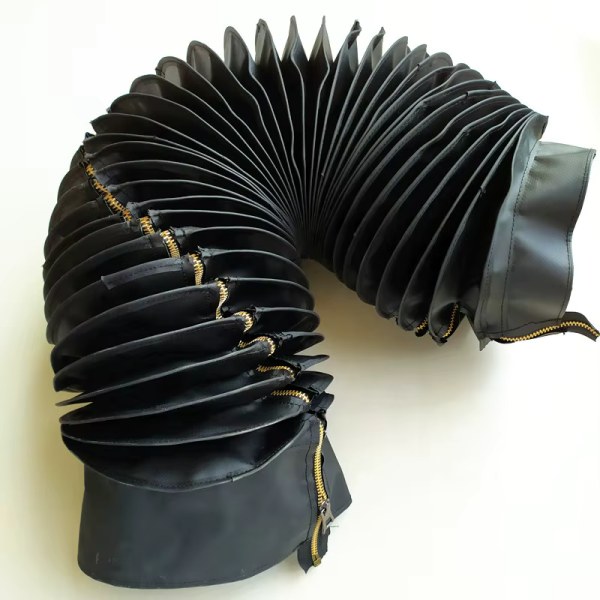
Specify the operating environment before choosing a fabric. Include coolant or cleaning-fluid details, oil contact, abrasive particles, hot chips, radiant heat and expected flexing frequency. A general description such as “high temperature” or “oil resistant” leaves important selection questions unresolved.
For heat-exposed applications, review the coating, base fabric, sewing thread, zipper tape, fastening elements and end hardware together. Neither a heat-resistant fabric nor metal zipper elements alone establish the temperature capability of the complete cover.
Do not assume that a closed sewn zipper provides a liquid-tight seal. Where coolant spray, washdown or fine-particle exclusion is critical, state the exposure and acceptance requirements so the seams, closure, ends and any vents can be evaluated as a system.
Heavy or sharp chip exposure may require a different protective construction or additional shielding. Describe the actual debris rather than treating every fabric bellows as suitable for every machining operation.
Installation should be performed by authorized personnel using the machine's maintenance procedure and the approved bellows drawing. Before hands-on work, isolate hazardous energy, control stored energy, secure components against unintended movement and verify the safe condition. Opening a zipper does not make an energized mechanism safe to service.
Before removing the old cover, record its orientation, mounting arrangement and any rubbing or damage. Clean the surrounding area using a method compatible with the equipment so loose debris is not introduced onto the protected component.
During fitting, keep the fabric body untwisted and align the mating closure edges. Do not use the slider to pull an undersized or misaligned cover around the component. When closure is obstructed, stop and check for trapped fabric, debris or incorrect positioning rather than applying more force.
Before return to service, confirm that both ends are secure, the zipper is fully engaged, loose parts are removed and the intended clearances are present. Restore required guards and follow the site's approved procedure for any controlled movement check. Keep personnel clear of moving parts; isolate the equipment again before making adjustments.
Observe whether the folds compress evenly, the closure remains aligned and the cover stays clear of surrounding hardware. Investigate rubbing, abnormal pulling or air-induced distortion before accepting the installation. A fabric contamination cover should not be assumed to replace required personnel guarding.
During scheduled maintenance, inspect the zipper engagement, slider, stitching, end transitions and mounting areas. Look for trapped chips, torn tape, damaged folds or signs that the cover has been pulled beyond its intended movement.
Use cleaning products and any lubricant only as approved for the selected closure and fabric. A zipper that repeatedly becomes difficult to operate calls for a check of alignment, contamination and access, not simply a harder pull. Set the inspection interval according to the equipment duty and operating environment rather than assuming one interval suits every machine.
It may be possible after a construction review, but cutting a slit is not an equivalent solution. The proposed opening needs suitable edge reinforcement, end transitions and closure alignment, and any internal supports must remain functional. Send photographs and construction details before modifying the cover.
They can be considered when the fabric opening, end mountings and service access permit installation around the rod. Confirm the receiving surfaces and assembly route at both ends; the zipper alone does not guarantee that no cylinder components need to be disconnected.
Not necessarily. Keep the existing position as a reference, but report any access problems, chip accumulation or rubbing. A revised position should be checked against the mounting arrangement and full travel before it is approved.
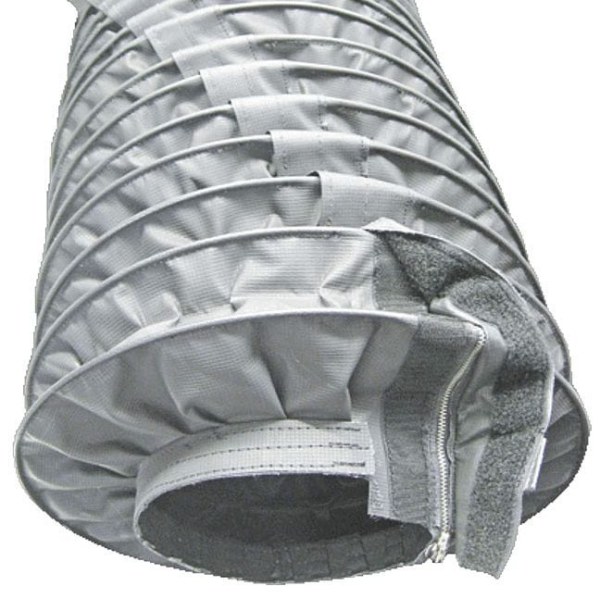
Send an installation photograph showing the service side, end views of both mountings and a dimensioned sketch. Include the required compressed and extended lengths, internal clearance, maximum outside space, proposed zipper position and any guides or supports.
State what must remain assembled during replacement, the operating conditions, quantity and whether existing mounting hardware will be reused. For OEM projects, include the drawing revision and the intended installation sequence.
BSTFLEX can evaluate custom zippered fabric bellows around these requirements. Request a bellows quotation with your drawings and application details, or email sales@pkfiresleeve.com. Confirm the mounting arrangement, closure access and final construction before production.

 français
 Deutsch
 русский
 italiano
 español
 português
 Nederlands
 العربية
 日本語
日本語 한국의
한국의 Türkçe
 Polski
 Tiếng Việt
 slovenský
 Indonesia