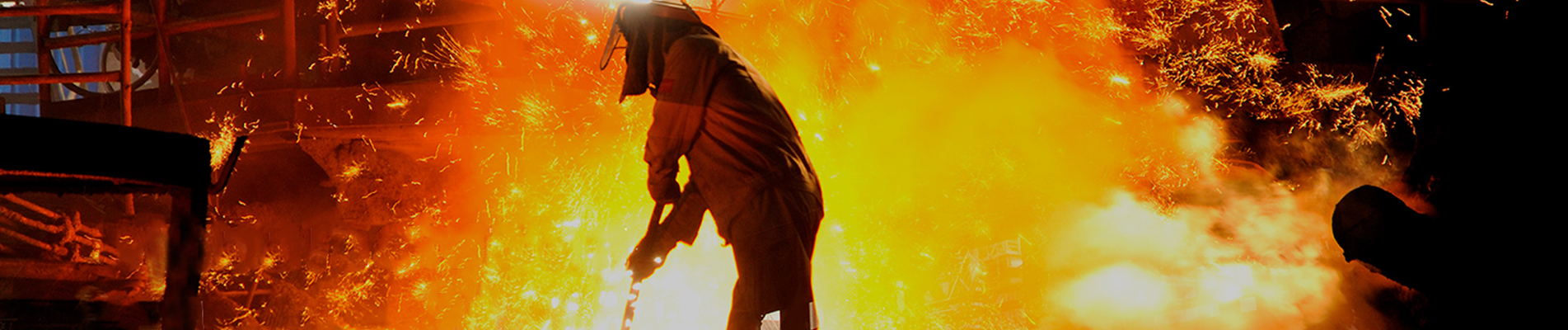
Vermiculite coated fiberglass fabric does not have one temperature rating that applies to every grade. Published working temperatures include 750°C and 815°C, while some constructions also carry a higher peak-exposure figure. These numbers are useful only when they identify the material, exposure conditions and performance that must be maintained.
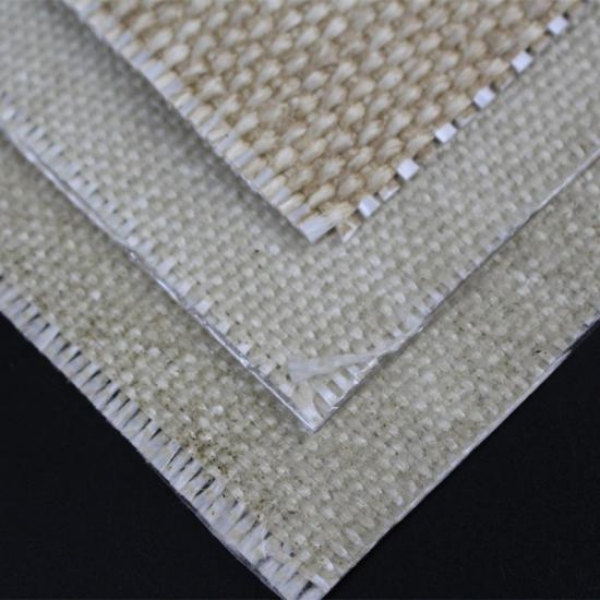
BSTFLEX Vermiculite Coated Fiberglass Fabric is published with continuous-temperature guidance up to 815°C / 1500°F, subject to application conditions. A requirement above that range needs a separate assessment of the proposed grade and exposure duration. A peak figure listed for another fabric should not be transferred to it.
For purchasing, separate three questions: what temperature reaches the cloth, how long that exposure lasts, and what the cloth must still do afterward. Preventing immediate burn-through is not the same requirement as remaining flexible for repeated removal or carrying a mechanical load while hot.
| Published figure | How to interpret it | What to confirm before ordering |
|---|---|---|
| 750°C / 1382°F | A working-temperature figure used for certain vermiculite-treated fiberglass constructions. | The exact grade, exposure basis and required retained properties. |
| 815°C / approximately 1500°F | A published continuous-service figure for specified constructions, including the BSTFLEX product range described above. | Suitability of the selected specification for the actual installation and operating duty. |
| A higher peak or intermittent figure | A separately defined exposure allowance, not an extension of the continuous-service rating. | Maximum duration, frequency, heat source, loading and acceptance criteria. |
| Flame or molten-metal temperature | The temperature of a heat source, not necessarily the temperature reached throughout the fabric. | An application-specific assessment of heat transfer, penetration and protection of the opposite side. |
The first two figures are not alternative unit conversions. They are different temperature values attached to particular product specifications. Likewise, a headline stating "up to 2000°F" must be checked against the detailed operating and peak-temperature information before it is used in a purchase specification.
The description "vermiculite coated fiberglass" identifies a material family, not a standardized thermal grade. Base yarn, fabric construction, treatment formulation and coating distribution can differ. Suppliers may also state temperature capability against different exposure arrangements and acceptance criteria.
A meaningful comparison therefore needs more than two catalogue maxima. Ask whether the quoted temperature concerns prolonged hot-air exposure, contact with a hot surface, a flame test or a particular fabricated assembly. Request the supporting conditions when they are not stated.
Do not average 750°C and 815°C to create a new rating. Equally, an 815°C label alone does not establish longer service life than a 750°C product under a different test. Compare the proposed materials against the same job requirements.
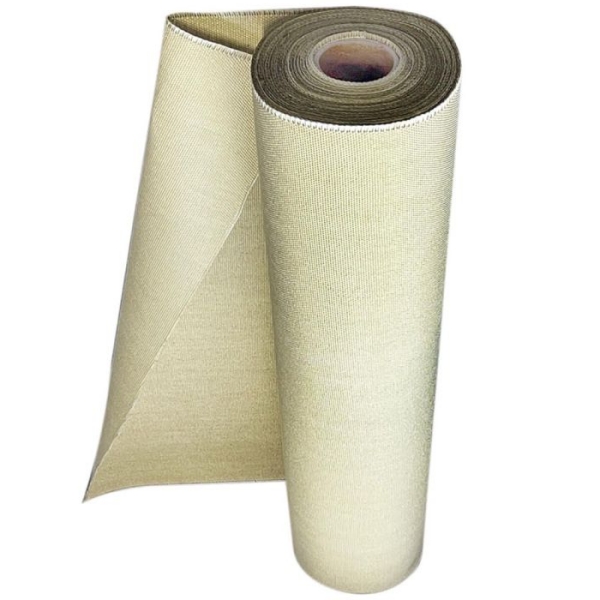
Vermiculite is applied as a mineral treatment to the fiberglass cloth. Suitable treatments improve protection of the yarn surface against severe heat exposure and abrasion. This is why treated fiberglass appears in welding protection, furnace curtains and insulation fabrication rather than being selected only as an untreated glass textile.
The treatment does not turn E-glass into high-silica fiber. It also does not establish that the cloth retains its original tensile strength at its highest published temperature. Thermal protection, dimensional stability and mechanical strength remain separate requirements.
For a supported thermal barrier, the main acceptance criterion might be barrier integrity. For a curtain that is pulled aside repeatedly, strength and flexibility after heating also matter. The same temperature number cannot answer both questions.
Continuous temperature describes the recommended range for extended operation under the conditions assigned to the grade. It is not a promise of unlimited service life, unchanged properties or suitability for every mechanical load.
Intermittent or peak temperature describes a separate temporary exposure. These labels do not carry a universal duration: "short term" might be defined differently between specifications, or left undefined altogether.
For any excursion, state the maximum temperature, duration of each event, number of events and cumulative exposure. Also establish whether the component must remain functional during the event and reusable afterward. A one-time protective barrier and a repeatedly cycled insulation cover need different acceptance criteria.
Do not use average temperature to approve operation above the continuous limit. Frequent excursions are part of the operating duty and must be included in qualification, even when cooler periods occur between them.
No. Some grade-specific vermiculite fiberglass literature lists 2000°F as a peak figure alongside a lower operating temperature. Those are distinct limits. Extended exposure at the peak can damage the fabric.
2000°F is approximately 1093°C. It must not be treated as a general continuous rating for vermiculite coated fiberglass or as a BSTFLEX specification simply because the coating has the same name.
For a project requiring exposure above the published continuous range, obtain written confirmation for the exact construction and duty. The confirmation should define what condition is acceptable after exposure, not merely state that a sample survived without a visible hole.
A furnace setpoint, duct-gas temperature and fabric-surface temperature describe different locations. Radiation, airflow, direct contact and the installed layer arrangement determine how heat reaches the cloth. Identify where each supplied temperature was measured or calculated.
A fabric outside a furnace opening should not automatically be assigned the furnace's internal temperature. Conversely, it should not be approved solely from the surrounding air temperature when it faces a strong radiant heat source. Ask for a representative thermal assessment when the exposure is uncertain.
Also specify the protection required behind the fabric. A cloth can remain physically intact while allowing enough heat through to damage the item underneath. A service-temperature rating is not an insulation value or a safe-touch temperature.
For hot-work protection, a maximum operating temperature is only part of the specification. A vertical curtain intercepting sparks and a horizontal barrier exposed to retained molten material face different conditions. Select the finished product for the actual exposure and installation orientation.
Request applicable evidence for burn-through resistance and heat transfer through the barrier. Do not assume that a welding blanket qualified for sparks and moderate heat is also suitable for heavy molten-metal contact.
A vertical flame test such as ASTM D6413/D6413M evaluates textile behavior under a defined ignition exposure, including afterflame, afterglow and char length. It does not establish an 815°C continuous-service rating or, by itself, qualify a finished blanket for molten-slag protection.
Review the welding and soldering area protection range against the required duty. Material selection remains part of the site's hot-work controls, not a replacement for them.
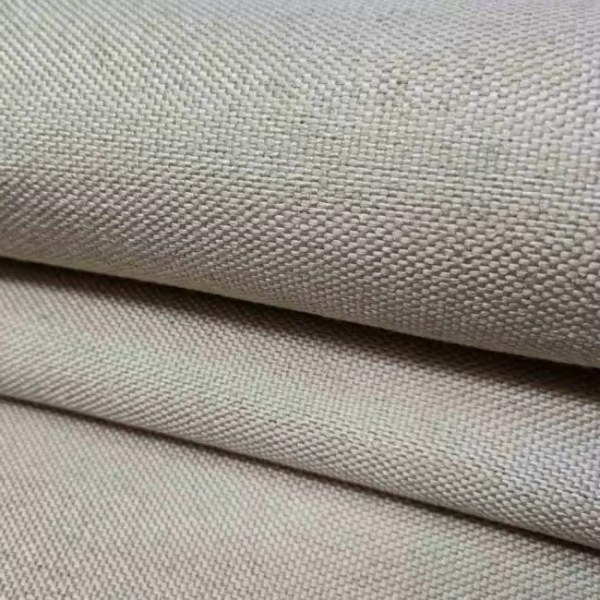
Identify whether the vermiculite fiberglass is the equipment-facing liner, a retaining layer or another part of the cover. Specify the exposure and handling requirements at that location. The insulation core, seams and closures need their own assessment.
For removable insulation blankets, include the expected removal frequency. A liner that remains in place throughout a heating cycle must also meet the agreed condition for handling during maintenance.
A temperature rating for cloth does not establish a joint's pressure rating, gas-tightness or movement capability. Thermal layers, gas-sealing layers and structural details perform different functions.
When specifying a non-metallic fabric expansion joint, provide gas composition, pressure, movement and the temperature expected at the proposed fabric layer. A heat-resistant mineral finish should not be assumed to provide a qualified gas seal.
For demanding service, agree on an evaluation that represents the installation rather than relying on a photograph of a flame test. Identify the specimen construction, heating method, measurement location, exposure time and any mechanical loading.
Specify the properties that matter after conditioning. Depending on the job, these may include dimensional change, retained tensile or tear strength, flexibility, coating integrity and seam condition. Set the acceptance criteria with the buyer or designer before testing.
Distinguish strength measured while hot from strength measured after cooling. Neither result should be presented as the other. A thermal exposure report also needs enough information to connect the tested sample to the material being supplied.
For an installed product, inspect according to its maintenance requirements. Holes, severe embrittlement, coating damage or failed seams require assessment; an intact outline is not sufficient evidence that the original protective function remains.
Review another construction when the fabric itself must remain above the selected grade's continuous range, excursions cannot be qualified, or mechanical requirements cannot be maintained after heating.
96% high-temperature silica fabric is one material family to evaluate for higher-temperature duty. Confirm its own exposure limits and fabrication requirements; changing the fiber does not eliminate the need to qualify the complete assembly.
More layers, greater thickness or wire reinforcement should not be used to invent a higher continuous-temperature rating. Each change needs assessment for the required thermal and mechanical performance. Compare alternatives through the high temperature fabric range.
| Information to provide | Detail needed |
|---|---|
| Normal operating duty | Temperature at the fabric and expected operating hours or cycle pattern. |
| Peak exposure | Maximum temperature, duration per event, frequency and cumulative duration. |
| Heat source | Hot air, radiation, direct surface contact, flame, sparks or molten material. |
| Installation | Layer position, orientation, support, contact points and adjacent materials. |
| Mechanical and environmental duty | Movement, loading, repeated handling, gas composition and contamination. |
| Acceptance requirement | Properties to maintain during service and after the agreed exposure. |
| Supply specification | Fabric grade, thickness, weight, usable width, quantity and any fabrication drawing. |
For example, an inquiry might specify 700°C at the fabric during normal operation, with 850°C excursions lasting 60 seconds six times per hour. This is an illustrative duty description, not an approved use condition. It requires review of the repeated excursions even though the normal temperature is below 815°C.
They are commonly paired as rounded commercial figures. The exact conversion of 815°C is 1499°F. Use the governing units and acceptance limit stated in the agreed specification rather than treating rounding as extra operating margin.
There is no universal duration. It must be defined for the exact grade, heat exposure and required condition afterward. A peak-temperature number without that information is insufficient for approval.
No. Greater thickness changes the construction and may affect heat transfer, but it does not multiply the material's approved continuous-service temperature. Evaluate the resulting assembly against the specified duty.
Send BSTFLEX the operating conditions together with your required thickness, width, quantity and application drawing. State whether the inquiry covers roll material, cut panels or a fabricated cover.
Use the published vermiculite coated fiberglass fabric specifications as the starting point, and identify any peak exposure or retained-strength requirement separately. Contact BSTFLEX for grade selection, sample requirements and a project quotation.

 français
 Deutsch
 русский
 italiano
 español
 português
 Nederlands
 العربية
 日本語
日本語 한국의
한국의 Türkçe
 Polski
 Tiếng Việt
 slovenský
 Indonesia