Hydraulic hose damage often begins close to a fitting, clamp or articulation point rather than in the middle of a straight hose run. Repeated bending, vibration, contact with steel structures and local crushing can concentrate stress in a short section of the assembly.
A stainless steel spring guard adds a flexible external coil around the hose to protect vulnerable bend points against kinking, crushing, abrasion and repeated mechanical contact. For OEM and maintenance applications, the guard should be specified by hose outside diameter, fitting geometry, protected length, bend location and installation method.
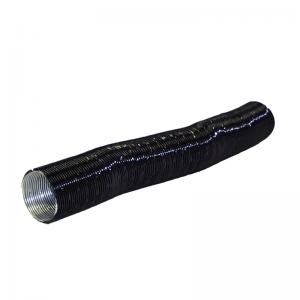
The BSTFLEX Stainless Steel Spring Guard Hose Protector is designed for hydraulic, pneumatic, fuel, lubrication and industrial hose assemblies where bend-point reinforcement and mechanical protection are required. This guide focuses on how to size and position that spring guard correctly.
A spring guard is most useful when the risk is localized around a bend, coupling, bracket, guide or exposed section that experiences repeated mechanical stress. Typical applications include excavators, loaders, cranes, drilling equipment, agricultural machinery, marine systems, heavy vehicles and industrial machines.
Before choosing the guard, identify the actual damage mechanism. A hose may be:
The guard should protect the full mechanical wear zone. If the entire hose run is exposed mainly to surface abrasion, a textile sleeve may be more appropriate for full-length coverage. A spring guard is especially useful where the problem is concentrated around a bend or routing point.
Start with the actual outside diameter of the finished hose. Hydraulic hose dash size or nominal bore does not directly define the external diameter that the spring guard must fit around.
| Dimension | What the Buyer Should Record |
|---|---|
| Hose outside diameter | Actual finished OD of the hose where the spring guard will be installed |
| Maximum fitting outside dimension | Largest ferrule, coupling or connector the guard must pass over or attach near |
| Required spring inside diameter | Guard ID or supplier-recommended fit range for the hose OD |
| Protected length | Distance from the fitting or bend point that requires mechanical reinforcement |
| Available clearance | Space between the guard and nearby brackets, frames, clamps or moving parts |
A spring guard that is too small can be difficult to install or may interfere with hose movement. A guard that is excessively large may not remain correctly positioned around the protected section. Confirm the supplier's recommended fit before production release.
Some spring guards are installed over the hose before the fittings are assembled. Others are designed to be positioned near or partly over the ferrule after hose assembly. The installation sequence affects the required inside diameter and end geometry.
If the guard must pass over an assembled fitting, record the maximum fitting outside dimension. If the guard has a close-pitched end intended to locate near the coupling, confirm that the spring geometry is compatible with the actual ferrule or coupling profile.
Do not assume that a spring guard sized for the hose body will automatically fit over the hose end. Check both dimensions on the first article.
The protected length should be based on where the hose bends and where stress is concentrated. A short guard positioned too far from the fitting may leave the critical area exposed. A very long guard can add unnecessary weight and may interfere with routing.
For a hose that repeatedly bends near the coupling, position the guard so that it supports the transition from the rigid fitting area into the flexible hose section. The exact location should be validated on the actual assembly.
For a hose that rubs against a bracket farther along the route, the guard may need to extend beyond the fitting area and cover the full contact zone. Mark the protected section on the assembly drawing rather than using a generic length for every hose size.
A spring guard can help resist localized kinking and excessive deformation, but it does not change the hose manufacturer's minimum bend radius. The hose must still be routed within its approved limits.
During sample evaluation, move the assembly through its full operating range and check that:
If the routing itself is incorrect, correct the hose path before using the spring guard as an additional protective measure.
A steel spring guard and a textile hose sleeve solve different protection problems.
| Protection Need | Typical Product Direction |
|---|---|
| Localized bend-point reinforcement | Stainless steel spring guard |
| Kink and crush resistance near fittings | Stainless steel spring guard |
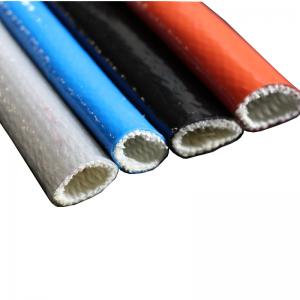
| Full-length external abrasion protection | Textile hose sleeve |
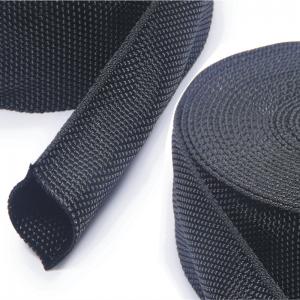
| Retrofit protection without disconnecting hose ends | Wrap-around textile sleeve |
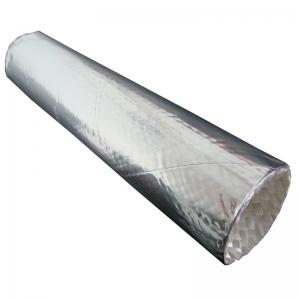
| High-temperature or flame exposure | Dedicated thermal or fire-sleeve construction |
For general abrasion along the hose length, compare the Nylon Sleeve Hose Guard. For already-installed hose assemblies that need removable external protection, compare the Wrap-Around Nylon Hose Sleeve.
A spring guard is a mechanical protector around the hose exterior. It is intended to address abrasion, kinking, crushing and localized bend damage. It should not be described as a hose whip restraint unless the complete restraint system has been specifically designed and tested for that function.
Hose-whip control addresses the movement of a failed or disconnected hose and requires a different engineering approach. Keep the product categories separate in purchasing documents and safety specifications.
The BSTFLEX p217 product is specified as stainless steel. For marine, outdoor, chemical-processing or washdown applications, confirm the stainless-steel grade when corrosion performance is a project requirement.
Do not assume that every stainless grade provides the same resistance to saltwater, chlorides, chemicals or elevated temperatures. If the application requires a particular alloy, surface finish or corrosion test, state it on the RFQ and request material confirmation for the supplied guard.
Inside diameter is not the only useful spring-guard dimension. For repeat OEM supply, the buyer may also need to control wire diameter, spring pitch, close-pitched end geometry and overall length.
These dimensions influence flexibility, mechanical support and installation. A tightly wound section can behave differently from a widely pitched section. If the guard uses different pitch zones, record their orientation relative to the fitting and hose.
Do not copy dimensions from another manufacturer's spring guard. The correct geometry should come from the approved BSTFLEX product drawing or sample.
A first-article hose assembly should be used to check more than basic fit. Confirm:
Before installing or inspecting protection on operating equipment, follow the machine manufacturer's shutdown, isolation and depressurization procedures.
| RFQ Item | Information to Provide |
|---|---|
| Hose | Hose OD, hose type and assembly drawing |
| Fitting | Maximum ferrule or coupling OD and fitting geometry |
| Spring guard | Required inside diameter, length, wire diameter and pitch if already specified |
| Protection zone | Bend point, abrasion point or routing section to be reinforced |
| Environment | Indoor, outdoor, marine, mining, agricultural or industrial exposure |
| Movement | Static, vibrating, bending or articulating hose route |
| Supply | Quantity, individual lengths, labeling and packaging |
| Validation | Sample quantity, drawing approval and first-article requirements |
For new OEM applications, send a routing photograph or drawing showing the coupling, bend point and nearby structures. This helps determine whether the spring guard should be concentrated near the hose end or extended farther along the route.
Not necessarily. Spring guards are often used around critical bend and contact zones. Full-length coverage can be considered where mechanical exposure exists along the entire route, but the required length should be based on the actual application.
That is one of the main reasons spring guards are used. The flexible steel coil can provide external support around the hose near a bend point, but the hose must still comply with its specified minimum bend radius.
Measure the actual hose outside diameter and check the installation path. If the guard needs to pass over or locate around a fitting, include the fitting dimensions as well. Confirm the recommended fit with the supplier.
No. A spring guard uses a metal coil and is commonly selected for localized mechanical reinforcement and bend protection. Plastic spiral guards use a different construction and are normally specified as a separate hose-protection product.
No such function should be assumed. A spring guard is a hose protector and bend-support accessory, not a hose-whip restraint system unless separately designed and tested for that purpose.
For the BSTFLEX Stainless Steel Spring Guard Hose Protector, send the hose OD, fitting dimensions, required guard length, bend location, movement conditions and operating environment.
BSTFLEX can review custom dimensions, samples and OEM production requirements through its OEM and custom manufacturing services.
Contact BSTFLEX with your hose assembly drawing or routing photograph. For applications requiring a different abrasion, retrofit or thermal protection method, review the complete hydraulic hose protection range.

 français
 Deutsch
 русский
 italiano
 español
 português
 Nederlands
 العربية
 日本語
 한국의
 Türkçe
 Polski
 Tiếng Việt
 slovenský
 Indonesia